
Essential Hammer Shredder Safety Tips for Industrial Operators: A Comprehensive Technical Guide

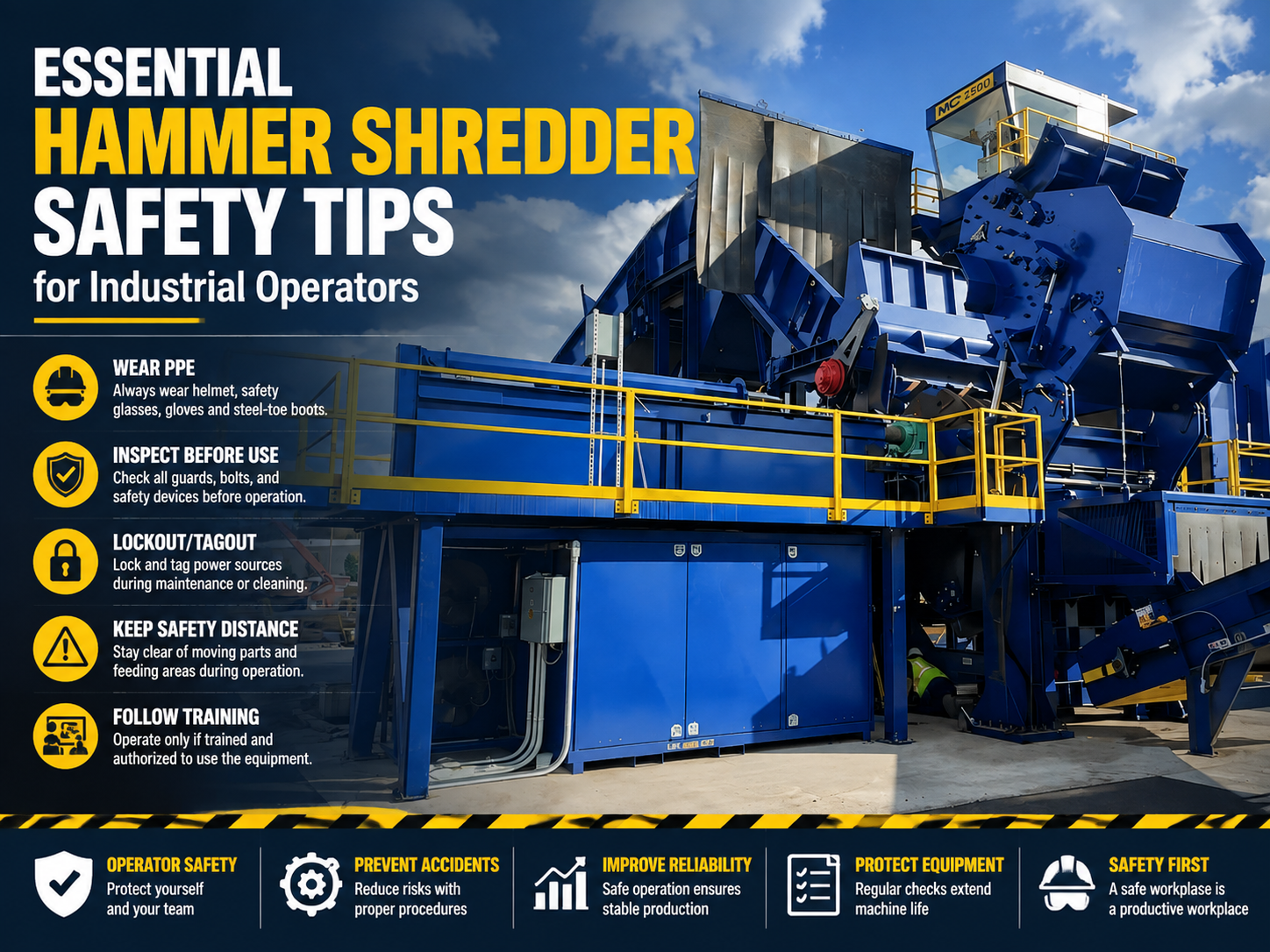
Technical Overview of Industrial Hammer Shredders
Industrial hammer shredders are the workhorses of the metal recycling and material processing industries. These machines utilize high-speed rotating shafts equipped with heavy-duty hammers to pulverize, tear, and crush materials ranging from aluminum scrap to entire automobile bodies. The fundamental principle relies on kinetic energy; as the rotor spins at high velocities, the hammers strike the incoming material against an anvil or breaker plate, reducing it to a size that can pass through a discharge grate. Because of the immense forces involved—often involving rotors weighing several tons spinning at over 500 RPM—safety is not merely a protocol but a critical operational requirement.
The architecture of a modern hammer shredder, such as those engineered by HARSLE, consists of a reinforced housing, a rotor assembly, replaceable liners, and a hydraulic power unit for maintenance access. The housing is typically lined with high-manganese steel plates to resist the extreme abrasion caused by flying debris. Understanding the internal dynamics is the first step in implementing Essential Hammer Shredder Safety Tips Industrial Operators must follow. When material enters the feed chute, it is subjected to primary impact by the hammers and secondary impact against the internal walls. This double-action processing ensures high throughput but also creates a high-vibration environment that can lead to mechanical fatigue if not monitored.
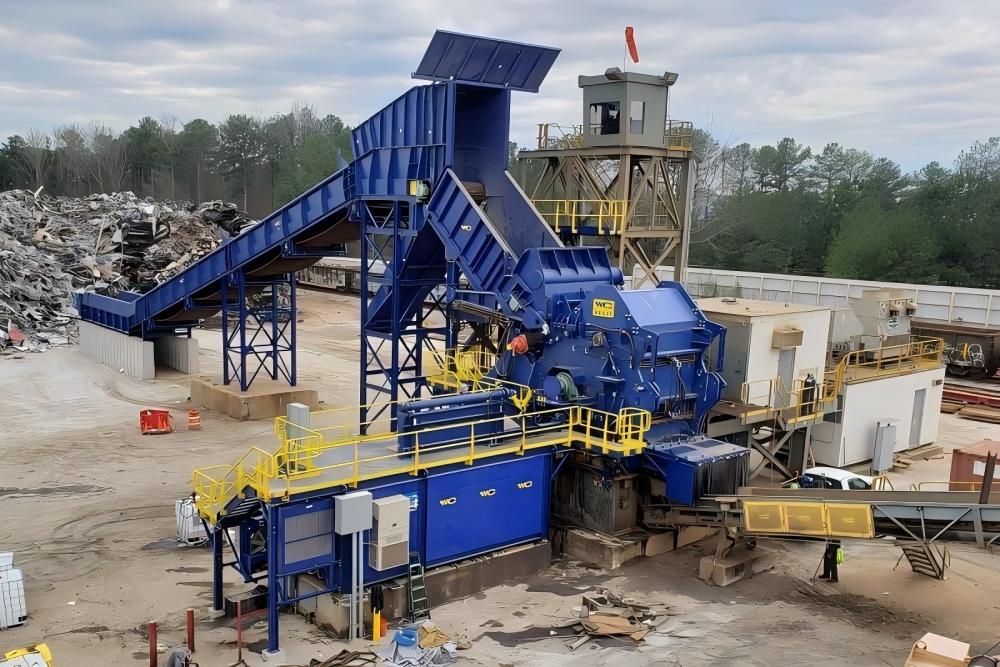
Safety in these environments is multifaceted, involving mechanical integrity, electrical safeguards, and rigorous operator training. The kinetic energy stored in a spinning rotor is sufficient to cause catastrophic structural failure if an “unshreddable” object—such as a solid steel shaft or a heavy engine block—is introduced without proper precautions. Therefore, modern shredders are equipped with ejection doors or “reject gates” that allow the machine to expel non-crushable items before they cause internal damage. Operators must be intimately familiar with these systems to ensure the longevity of the equipment and the safety of the facility.
Furthermore, the dust and noise generated by hammer shredders present long-term health risks. Industrial operators must implement dust suppression systems, often involving water mists or vacuum extraction, to prevent respiratory issues and reduce the risk of dust explosions, particularly when processing volatile materials like aluminum or magnesium scrap. Noise mitigation, through acoustic enclosures and high-grade PPE, is equally essential to prevent permanent hearing loss in the high-decibel environment of a recycling yard.
Core Parameters of Hammer Shredder Performance
To operate a hammer shredder safely and efficiently, one must understand the core technical parameters that govern its performance. These parameters dictate the machine’s capacity, the quality of the output, and the stress levels placed on the mechanical components. The primary parameter is the Rotor Diameter and Width, which defines the “swept area” of the hammers. A larger rotor can accommodate larger feed materials but requires significantly more torque and structural reinforcement to maintain stability at high speeds.
Hammer Weight and Geometry are also critical. Hammers are typically made from manganese steel or alloy steel with hard-facing. The weight of the hammer determines the impact force; however, heavier hammers increase the centrifugal load on the rotor pins and the main bearings. Operators must ensure that hammers are replaced in balanced sets. An unbalanced rotor is one of the most common causes of catastrophic bearing failure and excessive vibration, which can lead to structural cracks in the shredder housing. Regular weighing and documented replacement schedules are Essential Hammer Shredder Safety Tips Industrial Operators should never ignore.
Motor Power and Drive Configuration also play a vital role. Most industrial shredders use high-voltage electric motors or hydraulic drives. The motor must be sized to handle the peak loads encountered during the initial impact of large scrap pieces. Overloading the motor not only risks electrical failure but can also cause the rotor to stall, leading to a “plugged” machine that is dangerous and difficult to clear. Modern systems utilize Variable Frequency Drives (VFDs) to provide soft starts and to adjust the speed based on the material density, enhancing both safety and energy efficiency.
Calculation Method for Shredder Kinetic Energy and Throughput
Understanding the physics behind the shredder allows operators to predict how the machine will react to different materials. The most important calculation for safety and performance is the Kinetic Energy (K.E.) of the rotor assembly. The formula is expressed as:
K.E. = ½ Iω²
Where I is the moment of inertia of the rotor assembly (including hammers) and ω (omega) is the angular velocity in radians per second. Because the energy increases with the square of the speed, even a slight increase in RPM significantly raises the impact force and the potential danger if a component fails. Operators must never exceed the manufacturer’s rated RPM, as the centrifugal forces could exceed the tensile strength of the hammer pins.
Another vital calculation is the Throughput Capacity (T), which can be estimated using the formula:
T = V × ρ × η
Where V is the volume of the shredding chamber, ρ (rho) is the bulk density of the material, and η (eta) is the efficiency factor (usually between 0.6 and 0.8). Calculating the expected throughput prevents overfeeding. Overfeeding the shredder leads to “slugging,” where the material becomes packed so tightly that the hammers cannot swing freely. This creates immense heat and pressure, potentially leading to mechanical fires or the ejection of material back through the feed chute.
Industrial Hammer Shredder Parameter Table
The following table outlines standard specifications for industrial-grade hammer shredders. These values serve as a reference for selecting the right equipment and setting safety thresholds.
| Parameter | Small-Scale Industrial | Medium-Scale Industrial | Heavy-Duty (Auto Shredder) |
|---|---|---|---|
| Rotor Diameter (mm) | 600 – 800 | 1000 – 1400 | 1600 – 2200+ |
| Motor Power (kW) | 45 – 110 | 132 – 450 | 600 – 3000+ |
| Hammer Weight (kg) | 15 – 30 | 40 – 80 | 100 – 250 |
| Rotor Speed (RPM) | 900 – 1200 | 600 – 900 | 400 – 600 |
| Feed Opening (mm) | 600 x 800 | 1000 x 1200 | 1600 x 2000 |
| Throughput (Tons/Hr) | 3 – 8 | 10 – 30 | 40 – 150+ |
Common Engineering Mistakes in Shredder Operation
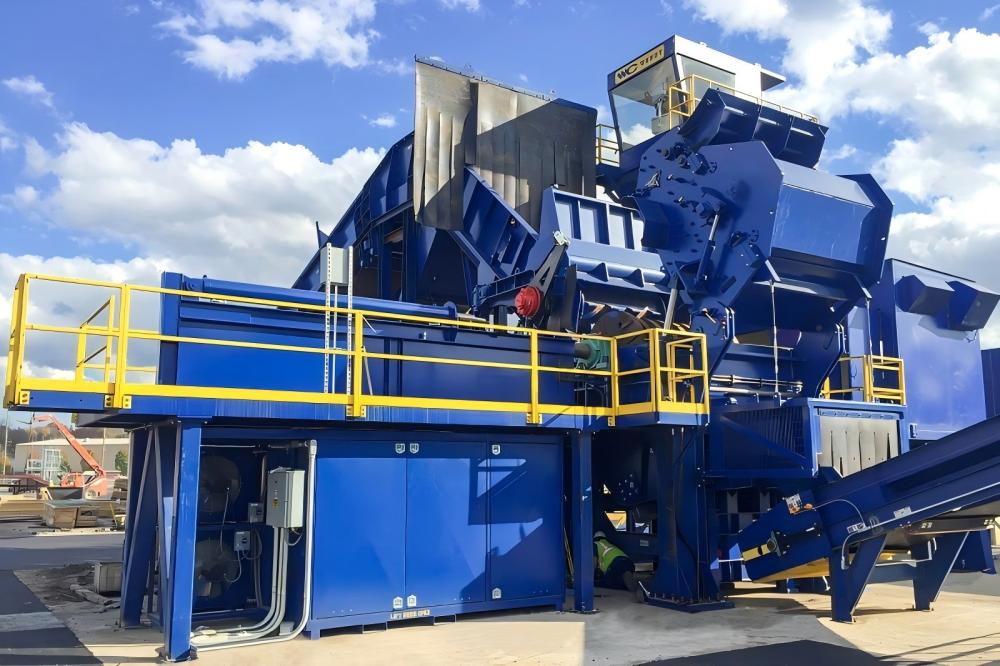
One of the most frequent engineering mistakes in shredder operation is the neglect of the “Unshreddable” protocol. Operators often assume the machine can handle any metal object, but solid steel blocks, thick-walled pressure vessels, or heavy engine cranks can cause the hammers to shear or the rotor shaft to bend. Failure to utilize a pre-shredder or a manual sorting station to remove these items is a leading cause of downtime and safety incidents. Essential Hammer Shredder Safety Tips Industrial Operators must include a strict material inspection phase before feeding.
Another common mistake is improper hammer balancing. When replacing hammers, some operators only replace the ones that look the most worn. This creates a weight imbalance. Even a difference of a few hundred grams can create centrifugal forces that vibrate the entire foundation of the plant. Hammers should always be replaced in diametrically opposed pairs or as a complete set, and they should be weighed to ensure they are within the manufacturer’s tolerance. Ignoring this leads to premature bearing failure and, in extreme cases, the disintegration of the rotor assembly.
Inadequate lubrication of the main bearings is a third critical error. Hammer shredder bearings operate under extreme loads and high temperatures. Using the wrong type of grease or failing to maintain a consistent lubrication schedule can lead to bearing seizure. A seized bearing at high RPM can cause the rotor to lock instantly, transferring all the kinetic energy into the machine frame, which can result in catastrophic structural failure. Automated lubrication systems are highly recommended for industrial shredders to mitigate this risk.
Finally, many facilities fail to account for the “Fly-back” phenomenon. This occurs when the hammers strike a piece of material in such a way that it is ejected back out of the feed chute at high velocity. Engineering controls, such as heavy-duty rubber curtains or hydraulic feed rollers, must be in place and maintained. Operators should never stand directly in line with the feed opening while the machine is running, regardless of the safety curtains in place.
Selection Checklist for Industrial Hammer Shredders
When purchasing or upgrading a hammer shredder, use this checklist to ensure the equipment meets the highest safety and performance standards:
- Structural Integrity: Is the housing made of reinforced, high-thickness steel? Are the internal liners replaceable and made of manganese steel (Mn13 or Mn18)?
- Safety Ejection System: Does the shredder feature a hydraulic reject gate or ejection door for unshreddable materials?
- Vibration Monitoring: Is the machine equipped with integrated vibration sensors that can trigger an emergency stop if thresholds are exceeded?
- Bearing Protection: Are the bearings housed in heavy-duty, water-cooled, or temperature-monitored blocks?
- Hydraulic Maintenance Access: Does the machine have a hydraulic opening mechanism for safe and easy access to the rotor and hammers?
- Dust Suppression: Is there an integrated port for water misting or a connection for a dust extraction system?
- Control System: Does the PLC include overload protection, auto-reverse functionality, and clear emergency stop integration?
- Drive System: Is the coupling between the motor and the rotor designed to shear or slip in the event of a catastrophic jam (e.g., fluid coupling or shear pin)?
Frequently Asked Questions (FAQ)
1. How often should hammers be inspected?
Hammers should be inspected at the end of every shift. Operators should look for rounding of the edges, cracks in the hammer body, and wear on the pin holes. Depending on the abrasiveness of the material, hammers may need to be flipped or replaced every few days or weeks. Consistent monitoring is one of the most Essential Hammer Shredder Safety Tips Industrial Operators can follow to prevent unplanned downtime.
2. What is the danger of processing sealed containers?
Sealed containers, such as gas cylinders, fire extinguishers, or even closed fuel tanks, pose a massive explosion risk. The impact of the hammers can cause a spark or mechanical heat that ignites residual gases or liquids. All containers must be punctured or sheared open before entering the hammer shredder to ensure they are depressurized and empty.
3. Why is the discharge grate size important for safety?
The grate size determines how long material stays in the shredding chamber. If the grate holes are too small for the material type, the chamber will overfill, causing the motor to draw excessive current and the internal temperature to rise. This increases the risk of mechanical failure and fires. Always match the grate size to the desired output and the motor’s capacity.
4. Can I shred stainless steel in a standard hammer shredder?
While possible, stainless steel is much tougher and work-hardens more rapidly than mild steel. Shredding large amounts of stainless steel will significantly increase the wear rate on the hammers and liners. It also requires more power. If your primary material is stainless, ensure your shredder is specifically rated for high-torque, high-impact applications.
5. What is the role of the flywheel in a hammer shredder?
Many hammer shredders use a large flywheel to store rotational energy. This helps the machine maintain its RPM when a large piece of scrap is hit, providing the necessary “punch” to break the material. However, the flywheel also means the machine takes a long time to come to a complete stop. Operators must never attempt to open the housing until the rotor has completely ceased all movement, verified by a zero-speed switch.
6. How do I handle a “plugged” shredder?
If the shredder stalls due to overfeeding, you must follow strict Lockout/Tagout (LOTO) procedures before attempting to clear it. The material must be removed manually or with specialized tools. Never try to “jog” the motor to clear a heavy jam, as this can cause electrical fires or snap the drive shaft. Safety first: ensure the power is disconnected and the rotor is blocked from moving before entry.


