Container Shear Hydraulic Temperature Too High? Troubleshooting Cooling System Issues

Introduction: Understanding Hydraulic Thermal Stress in Container Shears
In the high-stakes environment of scrap metal processing, the container shear stands as the backbone of operational efficiency. However, operators often face a critical challenge: Container Shear Hydraulic Temperature Too High? Troubleshooting Cooling System Issues is not merely a maintenance task; it is a vital necessity to prevent catastrophic equipment failure. When hydraulic fluid exceeds its optimal operating temperature—typically between 45°C and 60°C—the entire system begins to degrade, leading to reduced viscosity, internal leakage, and accelerated wear on pumps and valves.
HARSLE understands that industrial machinery is a significant investment. When your hydraulic system runs hot, it signals that energy is being converted into heat rather than useful mechanical work. This inefficiency increases electricity consumption and shortens the lifespan of seals, hoses, and electronic components. By addressing thermal issues early, you protect your production schedule and minimize the risk of costly emergency repairs.
This guide provides a comprehensive technical overview of why hydraulic temperatures spike in container shears and how to systematically troubleshoot the cooling infrastructure. Whether you are dealing with ambient heat, clogged heat exchangers, or internal system bypasses, understanding the root cause is the first step toward restoring peak performance.
Key Considerations for Hydraulic Thermal Management
The first step in troubleshooting is identifying the baseline. Hydraulic systems are designed to operate within a specific thermal window. When the temperature rises, the oil loses its lubricating properties, which can lead to metal-on-metal contact within the pump. This creates a feedback loop: friction generates more heat, which further thins the oil, leading to even more friction. Recognizing the early warning signs—such as sluggish cycle times or unusual noise from the hydraulic pump—is essential.
Environmental factors play a significant role in thermal management. If your container shear is located in an unventilated area or exposed to direct sunlight in a hot climate, the cooling system may be undersized for the ambient conditions. It is crucial to ensure that the machine has adequate clearance for airflow around the hydraulic power unit (HPU). Obstructions near the cooling fan intake can cause the system to recirculate hot air, rendering the cooling process ineffective.
Another key consideration is the duty cycle of the machine. Container shears are often pushed to their limits during peak production hours. If the machine is running continuously without adequate rest periods, the heat generated by the shearing process can overwhelm the cooling capacity. Operators should monitor the duty cycle and ensure that the hydraulic system is sized appropriately for the volume of scrap being processed.
Finally, consider the quality and condition of the hydraulic fluid itself. Over time, oil oxidizes and accumulates contaminants, which can change its thermal conductivity and viscosity index. Using the wrong grade of oil or failing to change it according to the manufacturer’s schedule can directly contribute to overheating. Always refer to the HARSLE maintenance manual for the recommended oil specifications for your specific model.
Technical Details: Troubleshooting the Cooling System
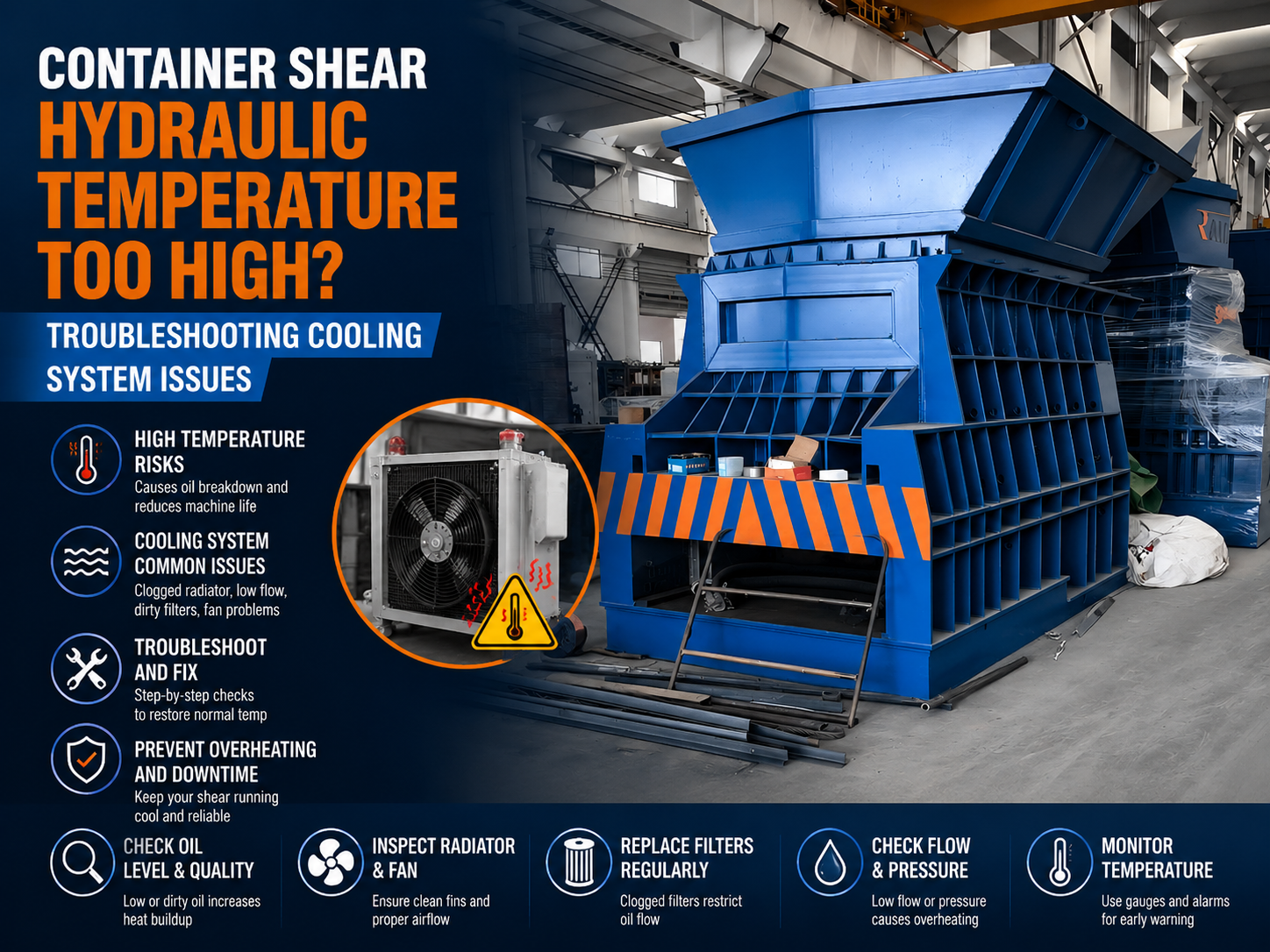
When the hydraulic temperature exceeds safe limits, the cooling system is the primary suspect. Most container shears utilize either air-oil coolers or water-oil heat exchangers. Troubleshooting begins with a visual inspection of the cooling fins. If the fins are clogged with dust, metal shavings, or debris, the heat transfer efficiency drops significantly. Use compressed air or a specialized cleaning agent to clear the fins, ensuring that air can pass through freely.
Next, inspect the cooling fan motor. If the fan is not spinning at the correct speed or is rotating in the wrong direction, the cooler will fail to dissipate heat. Check the electrical connections and the fan motor itself for signs of wear. In some cases, the thermostat that triggers the cooling fan may be faulty, causing the fan to remain off even when the oil temperature is high. Testing the thermostat with a multimeter can confirm if it is sending the correct signal to the fan relay.
If the cooling system appears to be functioning correctly but the oil remains hot, investigate the hydraulic circuit for internal bypasses. A worn-out pump or a leaking relief valve can cause high-pressure oil to bypass the actuator and return directly to the tank. This process generates massive amounts of heat. To diagnose this, use an infrared thermometer to check the temperature of the relief valve and the pump housing. If these components are significantly hotter than the reservoir, you likely have an internal leak that requires immediate repair.
The hydraulic filter is another critical component. If the return line filter is clogged, it creates backpressure, which forces the oil to work harder and generate more heat. Ensure that your maintenance schedule includes regular filter changes. A pressure gauge installed before and after the filter can help you monitor the pressure drop; if the drop exceeds the manufacturer’s recommendations, the filter element must be replaced immediately.
Selection Advice: Choosing the Right Cooling Infrastructure
When purchasing or upgrading a container shear, selecting the right cooling system is a strategic decision. For facilities in temperate climates, air-cooled systems are often sufficient and easier to maintain. However, for high-production environments or regions with high ambient temperatures, a water-cooled heat exchanger may be necessary. Water-cooled systems offer superior heat transfer rates and are less affected by the surrounding air temperature.
Consider the integration of a temperature-controlled bypass valve. This valve ensures that the hydraulic oil reaches its operating temperature quickly during startup and maintains it within the ideal range during operation. By preventing the oil from getting too cold or too hot, you extend the life of the hydraulic components and improve the energy efficiency of the machine. HARSLE engineers can assist in calculating the heat load of your specific application to recommend the appropriate cooler size.
It is also wise to invest in a real-time temperature monitoring system. Modern container shears can be equipped with sensors that provide digital readouts and trigger alarms if the temperature approaches a critical threshold. This proactive approach allows operators to shut down the machine before permanent damage occurs. When selecting a machine, prioritize models that offer integrated diagnostic interfaces for easier troubleshooting.
Finally, evaluate the accessibility of the cooling system for maintenance. A machine that requires hours of disassembly to clean the cooler will inevitably suffer from neglect. Choose a design where the cooling unit is easily accessible for daily inspections and routine cleaning. This simple design choice will pay dividends in reduced downtime and lower maintenance costs over the life of the machine.
FAQ: Common Questions About Container Shear Overheating
- Q: How often should I clean the hydraulic oil cooler?
A: In a standard scrap metal environment, we recommend inspecting the cooler weekly and cleaning it at least monthly. If your facility is particularly dusty, increase the frequency to weekly. - Q: Can low oil levels cause overheating?
A: Yes. Low oil levels mean there is less fluid to absorb the heat generated by the system. This causes the oil to circulate more rapidly and reach higher temperatures faster. Always maintain the oil level at the recommended mark on the sight glass. - Q: What is the ideal operating temperature for my HARSLE shear?
A: Most hydraulic systems perform best between 45°C and 60°C. Temperatures consistently above 75°C will significantly degrade the oil and damage seals. - Q: Should I use a thicker oil to prevent overheating?
A: No. Using oil with the wrong viscosity can increase internal friction and actually make the overheating problem worse. Always follow the viscosity grade specified in your HARSLE operation manual. - Q: Why does the machine run hot only during the afternoon?
A: This is likely due to ambient heat. As the temperature in your facility rises throughout the day, the cooling system has a harder time dissipating heat. Ensure your facility has adequate ventilation or consider upgrading to a more powerful cooling unit.
Conclusion: Maintaining Peak Performance
Addressing the issue of “Container Shear Hydraulic Temperature Too High? Troubleshooting Cooling System Issues” is a fundamental aspect of industrial asset management. By understanding the relationship between hydraulic pressure, friction, and thermal dissipation, you can transform your maintenance strategy from reactive to proactive. Regular cleaning of cooling fins, monitoring of oil quality, and timely replacement of filters are simple yet powerful steps that ensure your HARSLE container shear remains a reliable workhorse in your facility.
Remember that heat is the silent killer of hydraulic systems. When you notice the temperature creeping up, do not ignore it. Investigate the cooling system, check for internal leaks, and ensure your operating environment is optimized for the machine’s requirements. By prioritizing thermal health, you not only extend the lifespan of your equipment but also ensure consistent production quality and safety for your operators. For further technical support or to discuss cooling system upgrades for your specific HARSLE model, contact our support team today.