How to Repair a Horizontal Baler That Keeps Tripping the Circuit Breaker: A Comprehensive Industrial Guide

Introduction to Horizontal Baler Electrical Failures
In the high-pressure environment of metal fabrication and waste management, the horizontal baler stands as a cornerstone of operational efficiency. However, when you encounter a scenario where you must repair a horizontal baler that keeps tripping the circuit breaker, the entire production line can grind to a halt. This issue is not merely an inconvenience; it is a critical indicator of underlying electrical or mechanical stress that requires immediate, systematic investigation.
At HARSLE, we understand that industrial machinery is designed for longevity and high-output performance. When a circuit breaker trips, it is performing its primary function: protecting your equipment and facility from catastrophic electrical damage. Rather than simply resetting the breaker, operators and maintenance teams must delve into the root cause. This guide provides a deep dive into the diagnostic steps, safety protocols, and technical solutions required to restore your horizontal baler to peak operational status.
Understanding the relationship between your baler’s motor, the hydraulic pump, and the facility’s electrical infrastructure is the first step in effective troubleshooting. Whether you are dealing with a brand-new installation or a legacy machine that has served your facility for years, the principles of electrical load management remain consistent. By following this guide, you will be better equipped to identify whether the fault lies within the motor windings, the hydraulic system, or the electrical distribution panel itself.
Safety is the paramount concern when dealing with high-voltage industrial equipment. Before attempting any repair, ensure that all Lockout/Tagout (LOTO) procedures are strictly followed. Never attempt to bypass a circuit breaker or install a higher-amperage fuse without professional consultation, as this can lead to fire hazards, equipment destruction, or severe injury to personnel. Let us explore the technical nuances of resolving these persistent electrical interruptions.
Key Considerations for Electrical Troubleshooting
When you set out to repair a horizontal baler that keeps tripping the circuit breaker, the first consideration is the timing of the trip. Does the breaker trip immediately upon startup, or does it occur after the baler has been running for several minutes? An immediate trip usually points toward a direct short circuit or a ground fault, whereas a delayed trip often indicates an overload condition or a thermal issue within the motor or wiring.
Environmental factors play a significant role in the health of your electrical system. Horizontal balers are often located in areas with high dust, metal shavings, or fluctuating temperatures. Over time, conductive debris can accumulate inside the control cabinet, creating unintended electrical paths that lead to intermittent shorts. Regular cleaning and the use of proper NEMA-rated enclosures are essential to prevent these environmental contaminants from impacting your circuit integrity.
Another critical consideration is the condition of the power supply lines. Voltage drops or phase imbalances can cause a three-phase motor to draw excessive current, which will inevitably trigger the thermal overload protection or the main circuit breaker. Using a high-quality multimeter or a power quality analyzer, maintenance teams should verify that the voltage across all three phases is consistent and within the manufacturer’s specified tolerance range.
Finally, consider the age and wear of the electrical components themselves. Contactors, relays, and breakers have a finite service life. As these components age, their internal resistance can increase, leading to heat buildup and nuisance tripping. If your baler is over a decade old, it may be time to perform a comprehensive audit of the electrical cabinet to replace worn-out contactors and ensure that all connections are tightened to the correct torque specifications.
Technical Details: Diagnosing the Root Cause
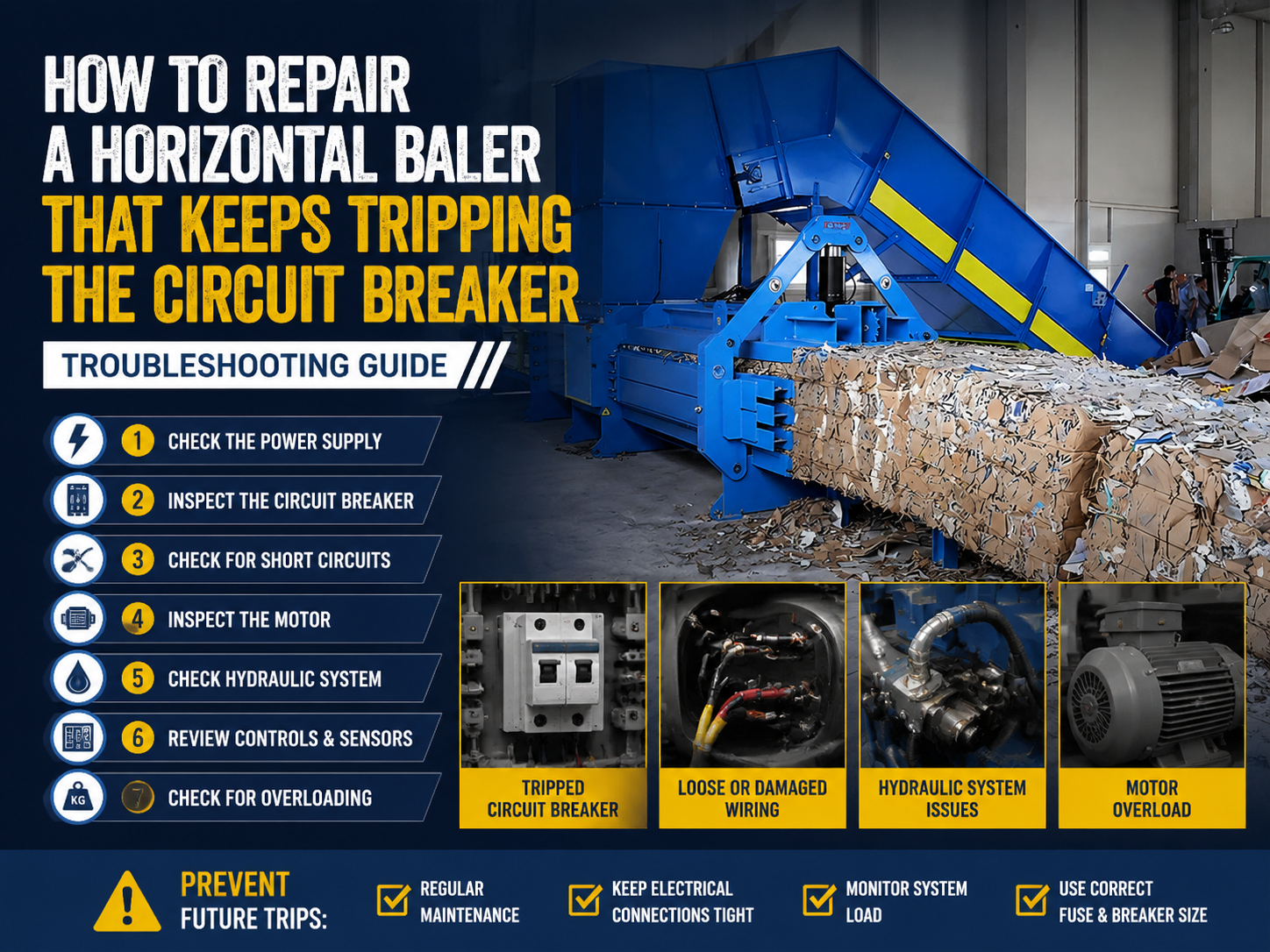
To effectively repair a horizontal baler that keeps tripping the circuit breaker, you must perform a systematic diagnostic process. Start by inspecting the motor. A motor that is struggling due to a failing bearing or a seized hydraulic pump will draw significantly more current than its rated full-load amperage (FLA). Use a clamp-on ammeter to measure the current draw during the compression cycle. If the current spikes well above the motor’s nameplate FLA, the issue is likely mechanical resistance rather than an electrical fault.
Next, examine the hydraulic system. A horizontal baler relies on a hydraulic pump to generate the force required to compress materials. If the hydraulic oil is too thick due to cold temperatures, or if the relief valve is set too high, the motor will work harder than intended. Check the hydraulic pressure settings against the HARSLE manual specifications. If the pressure is set beyond the recommended limit, the motor will experience an overload, causing the breaker to trip as a safety measure.
The wiring and connections within the baler are frequent culprits. Vibration is inherent in metal fabrication equipment, and over time, it can cause terminal screws to loosen. Loose connections create high-resistance points, which generate heat. This heat can cause the breaker to trip prematurely. Perform a thermal scan of the electrical cabinet while the machine is under load to identify any “hot spots” that indicate loose or corroded connections.
Consider the circuit breaker itself. Sometimes, the breaker is simply doing its job because it has become weak or faulty. If you have ruled out motor issues, hydraulic overloads, and loose wiring, test the breaker for proper operation. If the breaker trips at a current level significantly lower than its rating, it may need to be replaced. Always ensure that the replacement breaker matches the exact specifications of the original, including the trip curve characteristics.
Selection Advice and Equipment Maintenance
When selecting a horizontal baler, it is vital to match the machine’s electrical requirements with your facility’s power capacity. Many industrial facilities struggle with tripping breakers because they have added too much equipment to a single electrical sub-panel. Before purchasing a new baler, consult with a licensed electrician to ensure that your existing infrastructure can handle the startup surge current (inrush current) of the baler’s motor.
Preventative maintenance is the most effective way to avoid the need to repair a horizontal baler that keeps tripping the circuit breaker. Establish a monthly maintenance schedule that includes checking the tightness of all electrical connections, cleaning the control cabinet with non-conductive compressed air, and inspecting the motor cooling fan for obstructions. A motor that cannot cool itself will run hot, leading to increased resistance and potential tripping.
Invest in high-quality hydraulic oil and adhere to a strict oil change schedule. Contaminated or degraded hydraulic oil can lead to increased friction within the pump and valves, forcing the motor to work harder. By keeping the hydraulic system clean and properly lubricated, you reduce the mechanical load on the motor, which directly translates to a more stable electrical load and fewer breaker trips.
Finally, consider the installation of a soft-start device or a Variable Frequency Drive (VFD). These devices manage the power delivery to the motor during startup, significantly reducing the inrush current that often causes breakers to trip. While this is an additional investment, it can extend the life of your motor and electrical components, providing a significant return on investment through reduced downtime and lower maintenance costs.
Frequently Asked Questions (FAQ)
Why does my baler trip the breaker only when it is full?
When the baler is full, the hydraulic system must exert maximum force to compress the material. This increases the load on the motor. If the motor is drawing high current, it is likely due to the increased mechanical resistance of the material or a potential issue with the hydraulic relief valve setting.
Can a bad capacitor cause a baler to trip the breaker?
Yes, if your baler uses a single-phase motor with a start capacitor, a failing capacitor can prevent the motor from reaching its operating speed, causing it to draw excessive current and trip the breaker. Always check the capacitor if the motor hums but fails to turn.
How often should I tighten electrical connections?
In a high-vibration environment like a metal fabrication shop, you should inspect and tighten electrical connections at least every six months. Use a torque wrench to ensure connections meet the manufacturer’s specifications.
Is it safe to replace a 20A breaker with a 30A breaker?
Absolutely not. The circuit breaker is sized to protect the wiring in your walls and the motor itself. Replacing it with a higher-amperage breaker creates a severe fire hazard, as the wiring may overheat and melt before the breaker trips.
Conclusion
Learning how to repair a horizontal baler that keeps tripping the circuit breaker is a process of elimination that requires patience, technical knowledge, and a commitment to safety. By systematically checking the motor, hydraulic system, electrical connections, and the breaker itself, you can identify the root cause of the failure and implement a lasting solution. Remember that HARSLE equipment is built for reliability, and most electrical issues can be traced back to environmental factors, mechanical resistance, or simple wear and tear.
If you find that the issue persists despite your best efforts, do not hesitate to contact a certified technician or the HARSLE support team. Attempting to force a machine to run when it is signaling an electrical fault can lead to permanent damage to the motor or the control system. By prioritizing regular maintenance and adhering to proper electrical standards, you ensure that your horizontal baler remains a productive asset in your metal fabrication workflow for years to come.