How to Fix a Vertical Baler That Won’t Start: Step-by-Step Troubleshooting

Introduction to Vertical Baler Troubleshooting
In the fast-paced environment of metal fabrication and waste management, downtime is the enemy of productivity. A vertical baler is a cornerstone piece of equipment, designed to compress bulky materials into manageable, transportable bales. When you encounter a situation where your machine simply refuses to power on, it can halt your entire operational flow. Understanding how to fix a vertical baler that won’t start: step-by-step troubleshooting is an essential skill for facility managers and maintenance technicians alike.
At HARSLE, we prioritize the longevity and reliability of our industrial machinery. However, even the most robust hydraulic systems can experience electrical or mechanical hiccups due to environmental factors, wear and tear, or safety interlock triggers. This guide is designed to walk you through the systematic process of identifying the root cause of a non-responsive baler, ensuring you can get back to work safely and efficiently.
Before diving into the technical aspects, it is crucial to emphasize safety. Always follow Lockout/Tagout (LOTO) procedures before opening electrical panels or inspecting hydraulic components. Troubleshooting industrial machinery requires a methodical approach; jumping to conclusions often leads to unnecessary part replacements and wasted time. By following this structured guide, you will be able to isolate whether the issue is electrical, hydraulic, or a simple safety switch misalignment.
Key Considerations Before You Begin
The first step in any troubleshooting process is observation. Before reaching for a multimeter or a wrench, take a moment to assess the environment surrounding the vertical baler. Often, the reason a machine won’t start is not a catastrophic failure, but a simple environmental or operational oversight. Check the immediate area for signs of fluid leaks, loose wiring, or debris that might be obstructing moving parts.
Consider the recent history of the machine. Did the baler stop mid-cycle, or did it fail to start after a scheduled shutdown? If it stopped mid-cycle, the issue is likely related to a pressure switch, a jammed ram, or a tripped thermal overload. If it failed to start after being idle, the problem is more likely to be electrical—such as a blown fuse, a tripped circuit breaker, or a faulty emergency stop button.
Another key consideration is the status of the safety interlocks. Modern vertical balers are equipped with multiple safety sensors on the loading door, the bale ejection door, and the main power disconnect. If any of these doors are not perfectly aligned or if a sensor has been damaged, the machine’s PLC (Programmable Logic Controller) will prevent the motor from starting to protect the operator. Always verify that all doors are fully closed and latched before assuming a deeper mechanical failure.
Finally, ensure that the power supply to the facility is stable. Fluctuations in voltage can cause industrial motor starters to trip. If other machines in your facility are also experiencing power issues, the problem may lie with your building’s electrical infrastructure rather than the baler itself. Documenting these initial observations will save significant time if you eventually need to contact a HARSLE technical support representative.
Technical Details: Step-by-Step Troubleshooting
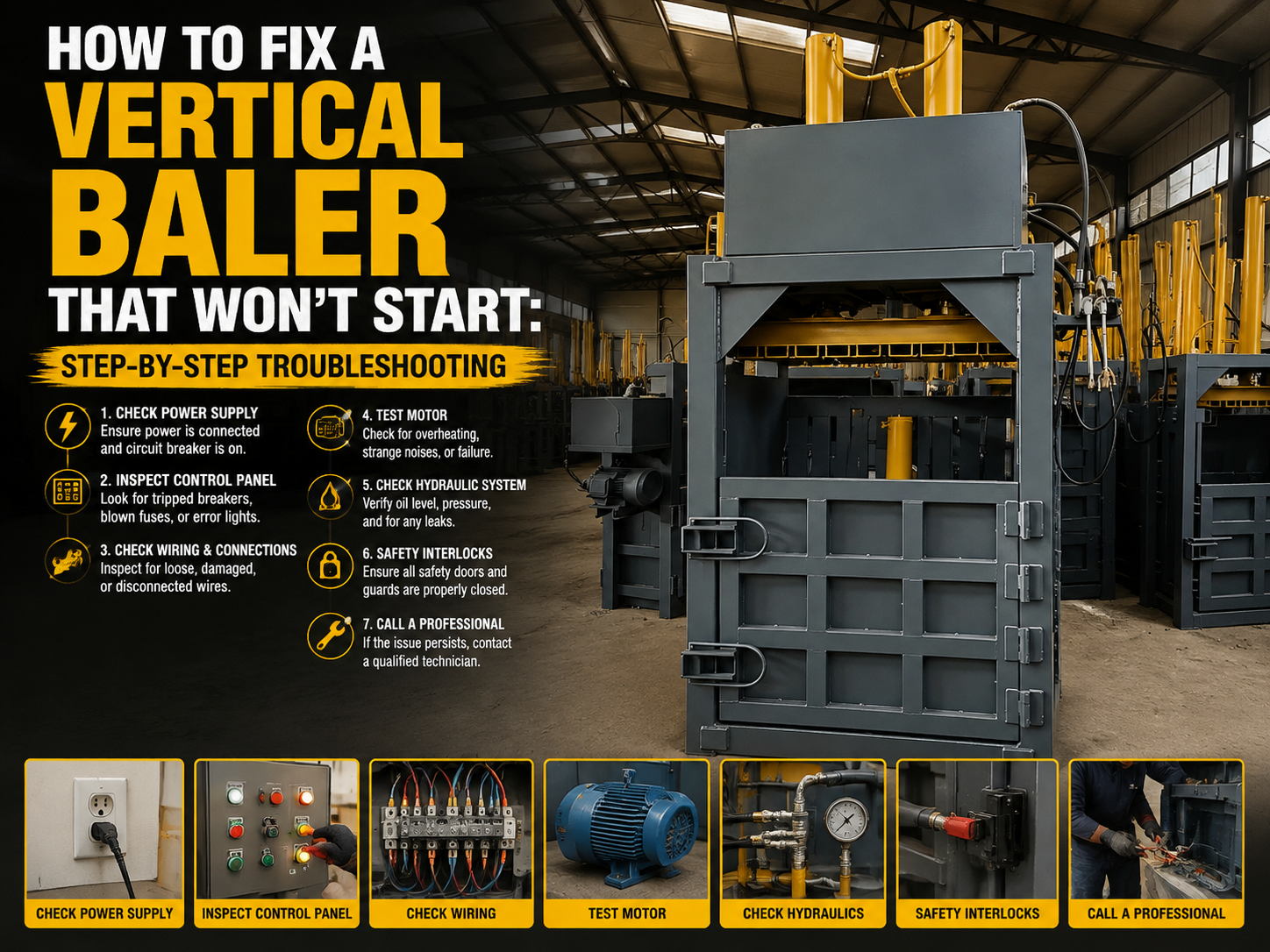
When you are ready to perform a technical inspection, start with the power source. Verify that the main disconnect switch is in the ‘ON’ position. Use a multimeter to check for incoming voltage at the main terminal block. If there is no power, check your facility’s main breaker panel. If power is present at the terminal block but the machine remains dead, the issue lies within the baler’s internal control circuit.
Next, inspect the emergency stop (E-stop) buttons. These are common failure points in industrial environments. An E-stop button that has been bumped or not fully reset will break the control circuit, preventing the motor from engaging. Check all E-stop buttons on the machine; pull them out to ensure they are in the ‘run’ position. If the machine still won’t start, use your multimeter to check for continuity across the E-stop contacts.
Examine the motor starter and thermal overload relay. If the motor has been working hard, the thermal overload may have tripped to prevent the motor from burning out. Look for a reset button on the overload relay inside the electrical cabinet. If it has tripped, wait for the motor to cool down before resetting it. If it trips again immediately upon starting, you may have a mechanical bind in the ram or a failing motor that requires professional repair.
Check the hydraulic oil level and the pressure relief valve. While a low oil level might not prevent the motor from starting, it will prevent the ram from moving, which can be mistaken for a ‘won’t start’ issue. Ensure the oil is at the recommended level and that the hydraulic pump is not making unusual grinding noises. If the pump is silent, the motor is not turning, which brings us back to the electrical control circuit.
Inspect the limit switches. These small devices tell the PLC where the ram is located. If a limit switch is stuck or covered in debris, the PLC may think the ram is in a position that prevents a new cycle from starting. Clean the switches and ensure they click audibly when pressed. If a switch is physically damaged, it must be replaced to restore functionality.
Selection Advice and Maintenance Best Practices
Preventing downtime starts with the selection of the right equipment. When purchasing a vertical baler, consider the volume of material you process and the duty cycle of the machine. A machine that is undersized for your workload will experience premature wear on the motor, hydraulic seals, and structural components. HARSLE offers a range of balers tailored to different industrial needs, ensuring you have the right power-to-load ratio.
Regular maintenance is the most effective way to avoid the ‘won’t start’ scenario. Implement a weekly inspection schedule that includes checking hydraulic fluid levels, inspecting hoses for leaks, and cleaning debris from around the ram and door sensors. Lubricating moving parts according to the manufacturer’s manual will reduce friction and prevent the motor from working harder than necessary.
Keep a logbook of all maintenance activities. This helps in identifying recurring issues before they lead to a total machine failure. For example, if you notice the motor starter tripping more frequently, it may indicate that the hydraulic oil is degrading or that the pump is beginning to fail. Proactive replacement of these components is far cheaper than an emergency repair during peak production hours.
Train your operators on the proper use of the baler. Many ‘mechanical’ failures are actually the result of improper loading or attempting to bale materials that the machine was not designed to handle. Ensure that all staff understand the safety protocols and the importance of keeping the machine clean. A well-maintained machine is not only more reliable but also safer for everyone in the facility.
Frequently Asked Questions (FAQ)
Why does my baler motor hum but not start?
A humming motor often indicates a start capacitor failure or a mechanical bind. If the motor is receiving power but cannot turn, check for obstructions in the ram chamber. If the chamber is clear, the start capacitor may need replacement.
How often should I change the hydraulic oil?
Generally, hydraulic oil should be changed every 2,000 to 4,000 operating hours, or once a year, depending on the intensity of use. Always check your HARSLE manual for specific viscosity and interval recommendations.
Can I bypass a safety interlock to get the machine running?
Absolutely not. Bypassing safety interlocks is extremely dangerous and can lead to severe injury or death. If a sensor is faulty, replace it immediately with a genuine HARSLE part.
What should I do if the ram is stuck in the down position?
If the ram is stuck, do not attempt to force it. Check the hydraulic pressure gauge. If pressure is high, there may be a blockage. If pressure is zero, the pump may have failed or the directional valve may be stuck. Contact a technician for safe extraction.
Conclusion
Learning how to fix a vertical baler that won’t start: step-by-step troubleshooting is an invaluable asset for any industrial operation. By systematically checking the power supply, safety interlocks, motor starters, and hydraulic components, you can resolve the majority of common issues without the need for external service calls. Remember that safety is paramount; never bypass safety features and always adhere to LOTO protocols.
At HARSLE, we are committed to providing not only high-quality metal fabrication equipment but also the knowledge required to keep your operations running smoothly. If you have exhausted these troubleshooting steps and your baler still refuses to start, our technical support team is ready to assist you. Regular maintenance, proper operator training, and choosing the right equipment for your specific needs will ensure that your vertical baler remains a productive asset for years to come.