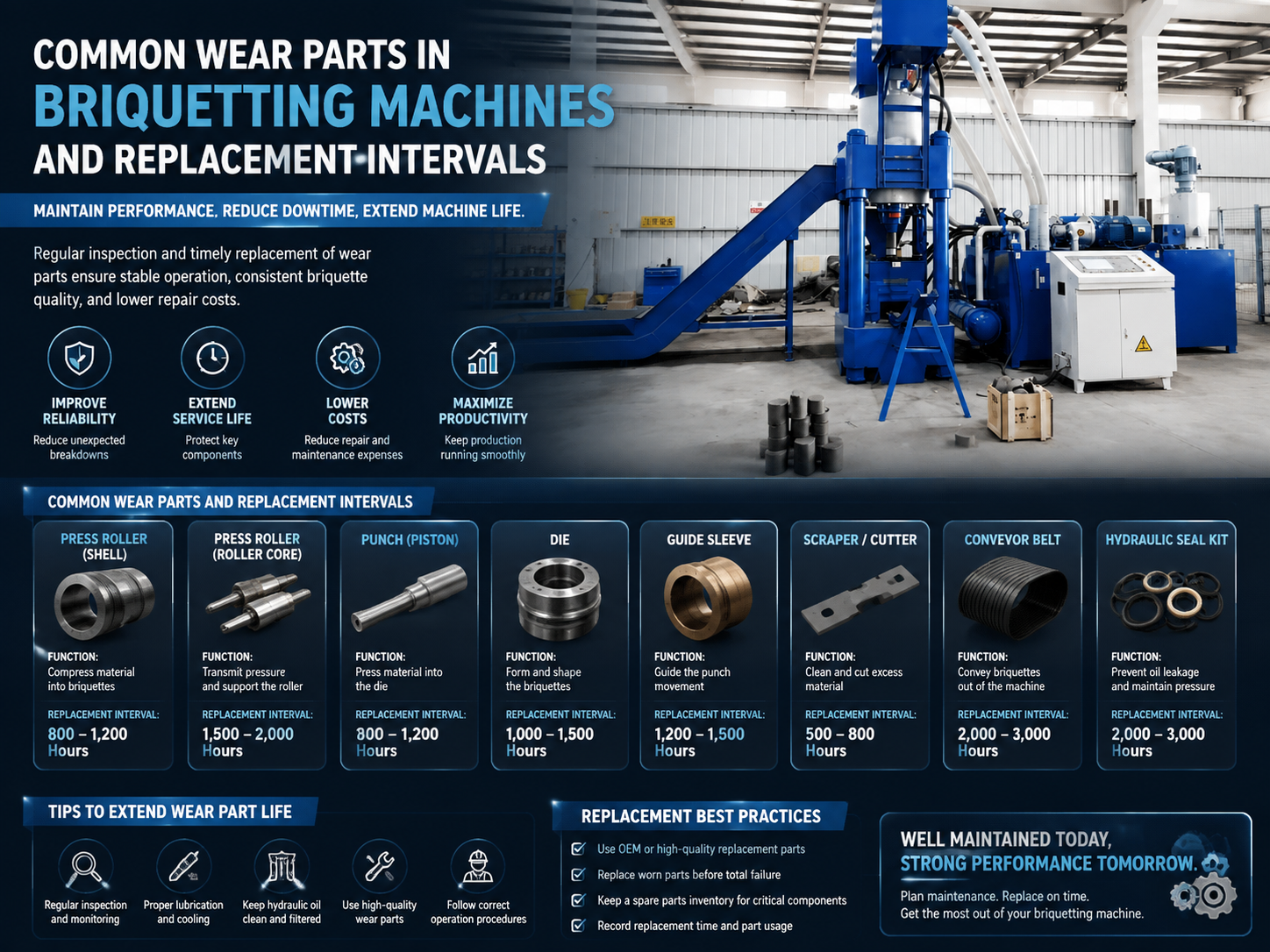
Common Wear Parts In Briquetting Machines Replacement Intervals: A Comprehensive Maintenance Guide

Technical Overview: Understanding Briquetting Machine Dynamics
Briquetting machines are the backbone of modern metal recycling and waste management facilities. By compressing loose metal chips, swarf, or dust into dense, manageable briquettes, these machines significantly reduce volume, recover expensive cutting fluids, and increase the scrap value of metal waste. However, the high-pressure environment required to transform loose material into solid blocks places immense mechanical stress on internal components. Understanding the lifecycle of these parts is critical for operational continuity.
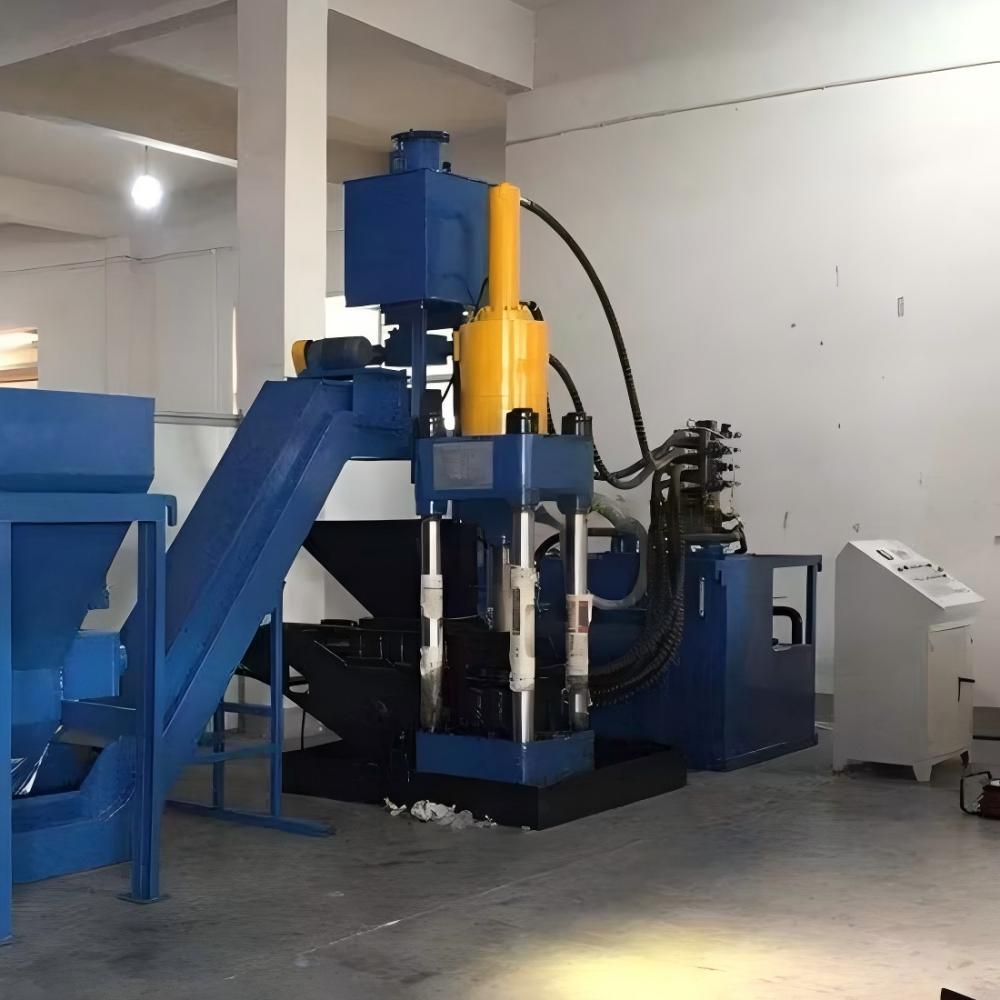
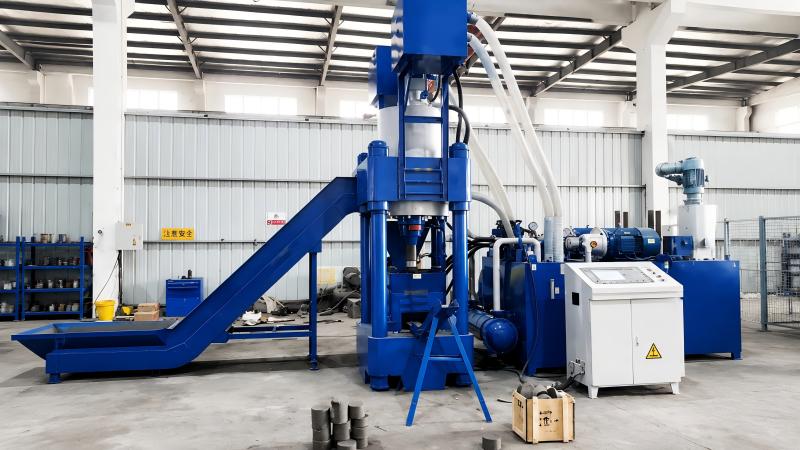
At the heart of a HARSLE briquetting machine lies a complex hydraulic system coupled with a robust mechanical compression chamber. The process involves feeding material into a hopper, where a pre-compression ram forces the material into the main die. A high-pressure main ram then executes the final compression. This repetitive, high-force cycle creates friction, heat, and abrasive wear, particularly on surfaces that come into direct contact with the metal feedstock.
The longevity of these components is not merely a function of time but a result of material hardness, feed consistency, and lubrication quality. When components like the die, ram, or seals begin to degrade, the machine loses its ability to maintain consistent pressure, leading to lower-quality briquettes and potential damage to the hydraulic system. Proactive monitoring of these wear parts is the most effective way to prevent catastrophic failure.
Engineers and maintenance teams must recognize that wear is inevitable. The goal is not to eliminate wear, but to manage it through a structured maintenance program. By tracking the performance of the machine against the manufacturer’s recommended intervals, operators can schedule replacements during planned downtime rather than reacting to an emergency breakdown that halts production entirely.
Core Parameters: Factors Influencing Component Longevity
Several core parameters dictate how quickly wear parts in briquetting machines reach their end-of-life. The most significant factor is the abrasiveness of the material being processed. For instance, hardened steel chips or cast iron swarf are significantly more abrasive than aluminum or copper. The hardness of the feedstock directly correlates to the erosion rate of the die and the ram face.
Another critical parameter is the pressure setting. While higher pressure produces denser briquettes, it also accelerates the fatigue of the die walls and the seals. Operating a machine consistently at its maximum rated pressure without accounting for the material density can lead to premature structural fatigue. HARSLE machines are designed with safety margins, but these are intended for peak loads, not continuous maximum-pressure operation.
Lubrication and cooling systems also play a vital role. The friction generated during the compression stroke produces significant heat. If the lubrication system is not functioning correctly, or if the cooling fluid is contaminated, the heat will cause the metal surfaces to gall or seize. This leads to rapid surface degradation that cannot be corrected without replacing the entire component.
Finally, the feed rate and uniformity of the material impact wear. If the hopper is overloaded or if the material contains tramp metal—such as bolts, nuts, or carbide inserts—the impact on the ram and die can be instantaneous and severe. Maintaining a clean, consistent feed is one of the most effective ways to extend the service life of internal wear parts.
Calculation Method: Determining Replacement Intervals
Calculating the replacement interval for wear parts requires a combination of empirical data and predictive maintenance. The most reliable method is to track the number of cycles (briquettes produced) rather than just calendar time. By logging the total count of cycles since the last replacement, maintenance teams can establish a baseline for their specific operating conditions.
To calculate the expected life, use the following formula: Expected Life (Cycles) = (Design Life Cycles) / (Abrasiveness Factor × Pressure Intensity Factor). The Design Life Cycles are provided by HARSLE based on standard testing. The Abrasiveness Factor is a multiplier (typically 1.0 to 2.5) based on the material type, and the Pressure Intensity Factor accounts for the average operating pressure relative to the machine’s maximum capacity.
It is also essential to perform periodic dimensional inspections. Using precision calipers or ultrasonic thickness gauges, maintenance teams should measure the internal diameter of the die and the clearance between the ram and the die wall. When these dimensions deviate from the manufacturer’s tolerance by more than 0.5mm, the part should be scheduled for replacement, regardless of the cycle count.
Finally, monitor the quality of the briquettes. A decrease in density or an increase in the amount of loose material falling out of the briquette is a primary indicator of wear. When the die walls become worn, the friction decreases, and the material may not compress as tightly. This performance degradation is often the first sign that a replacement is necessary.
Parameter Table: Recommended Maintenance Intervals
| Component | Inspection Interval | Typical Replacement Interval (Cycles) | Warning Signs |
|---|---|---|---|
| Main Compression Ram | Monthly | 500,000 – 800,000 | Surface pitting, loss of pressure |
| Compression Die | Weekly | 300,000 – 600,000 | Internal scoring, loose briquettes |
| Hydraulic Seals | Quarterly | 1,000,000 – 1,500,000 | Oil leakage, pressure drop |
| Feed Auger/Screw | Monthly | 400,000 – 700,000 | Uneven feed, motor strain |
| Pressure Sensors | Annually | 2,000,000+ | Inconsistent readings |
Common Engineering Mistakes in Maintenance
One of the most common mistakes is the “run-to-failure” approach. Many facilities wait until a machine stops producing quality briquettes before ordering replacement parts. This is a costly error, as the downtime required to source and install parts often exceeds the cost of the parts themselves. Furthermore, running a machine with a severely worn die can cause damage to the ram or the main cylinder, turning a simple part replacement into a major overhaul.
Another frequent error is the use of non-OEM replacement parts. While third-party components may appear identical and cost less, they often lack the metallurgical specifications required for high-pressure briquetting. Using inferior steel for a die can lead to cracking under pressure, which poses a significant safety risk to operators. Always source components directly from HARSLE to ensure compatibility and material integrity.
Ignoring the hydraulic fluid condition is also a critical oversight. The hydraulic system is the lifeblood of the briquetting machine. If the fluid is contaminated with metal particles or moisture, it will accelerate the wear of internal seals and valves. Regular oil analysis should be part of the maintenance routine to detect early signs of component degradation before they manifest as mechanical failures.
Finally, failing to document maintenance activities is a missed opportunity. Without a detailed log of when parts were replaced and what the machine’s condition was at that time, it is impossible to optimize the maintenance schedule. A robust maintenance management system (CMMS) or even a simple digital logbook can provide the data needed to refine replacement intervals and improve machine uptime over the long term.
Selection Checklist for Replacement Parts
When the time comes to replace wear parts, follow this checklist to ensure you are getting the right components for your HARSLE machine:
- Verify Part Numbers: Always cross-reference the serial number of your machine with the HARSLE parts catalog. Even within the same model series, minor design revisions can occur.
- Material Specification: Ensure that the replacement die and ram are made from the specified hardened alloy steel. Do not accept substitutes that claim to be “equivalent” without verified hardness testing.
- Check Tolerance Levels: Confirm that the dimensions of the replacement parts match the original factory specifications. Tight tolerances are essential for maintaining the compression force required for high-density briquettes.
- Include Seal Kits: Whenever you replace a ram or a cylinder, always replace the associated seals. Reusing old seals is a false economy that often leads to leaks shortly after the repair.
- Consult Technical Support: If you are unsure about the installation process, contact HARSLE technical support. Improper installation can lead to immediate failure of the new part.
FAQ: Frequently Asked Questions
Q: How can I tell if my briquetting machine die is worn out?
A: Look for signs of scoring on the inner surface of the die. Additionally, if you notice that the briquettes are becoming less dense or if the machine requires more pressure to achieve the same result, the die is likely worn.
Q: Can I weld a worn ram face to extend its life?
A: Generally, no. Welding can alter the heat treatment of the steel, making it brittle and prone to cracking under the extreme pressures of a briquetting cycle. It is always safer and more cost-effective to replace the part.
Q: How often should I change the hydraulic oil?
A: Hydraulic oil should be changed according to the manufacturer’s recommendations, typically every 2,000 to 4,000 operating hours, or sooner if oil analysis indicates contamination or degradation.
Q: Does the type of metal I process affect the wear rate?
A: Yes, absolutely. Harder metals like steel and cast iron cause significantly more wear on the die and ram than softer metals like aluminum or brass. You should adjust your inspection intervals accordingly.
Q: Why is it important to use OEM parts?
A: OEM parts are manufactured to the exact metallurgical and dimensional specifications required for HARSLE machines. Using non-OEM parts can lead to premature failure, void your warranty, and create safety hazards.
By adhering to these maintenance guidelines and monitoring the common wear parts in your briquetting machine, you can ensure that your HARSLE equipment continues to operate at peak efficiency, maximizing your return on investment and minimizing costly downtime.