Safety Operation Guide for Industrial Briquetting Machines: A Comprehensive HARSLE Manual

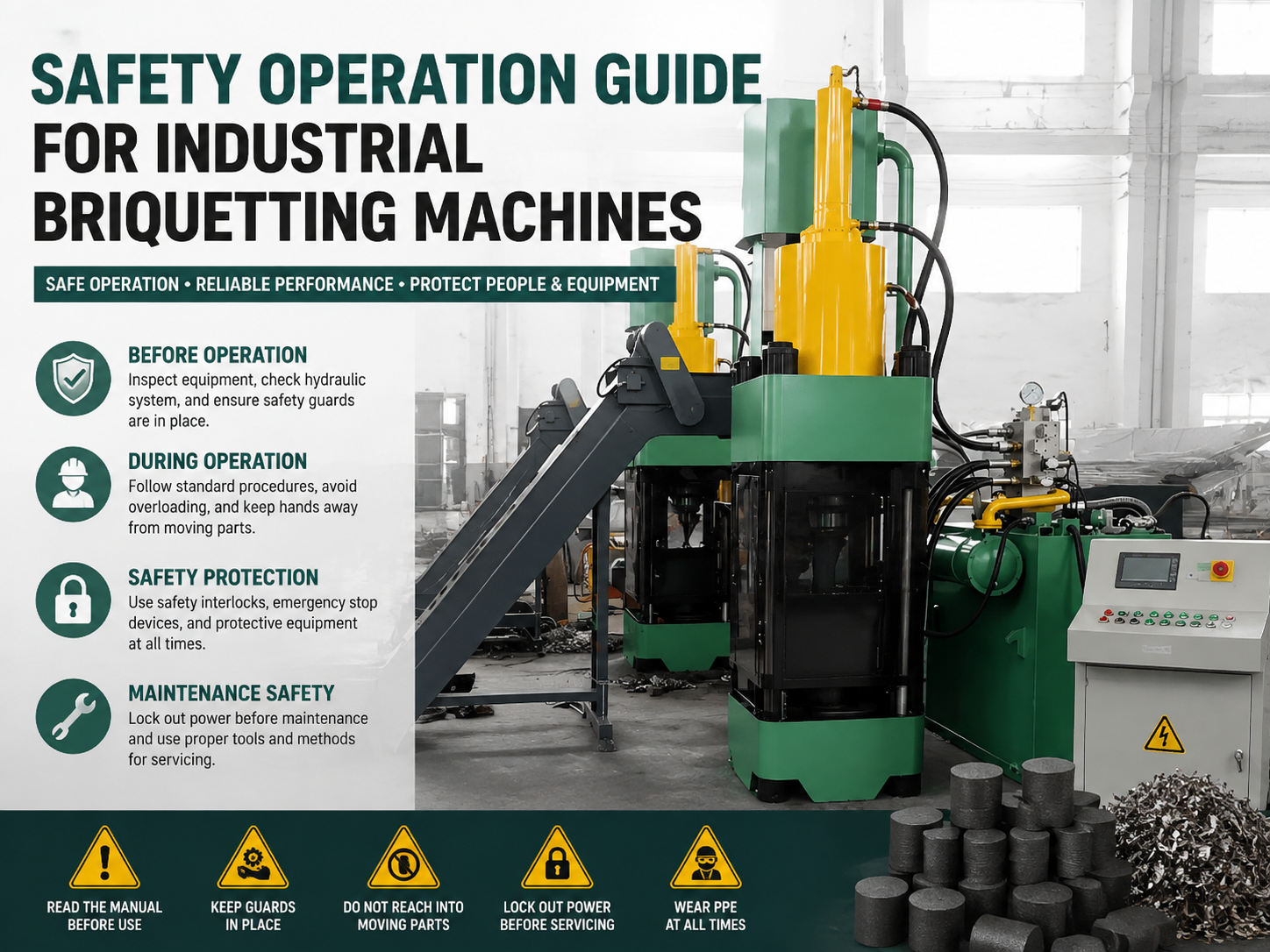
Technical Overview
Industrial briquetting machines represent a critical advancement in modern metal fabrication and waste management. By utilizing high-pressure hydraulic systems, these machines compress loose metal chips, turnings, and swarf into dense, manageable briquettes. This process not only reduces the volume of metal waste by up to 90% but also facilitates the recovery of expensive cutting fluids and increases the market value of scrap metal. At HARSLE, we emphasize that the efficiency of these machines is inextricably linked to the strict adherence to safety protocols.
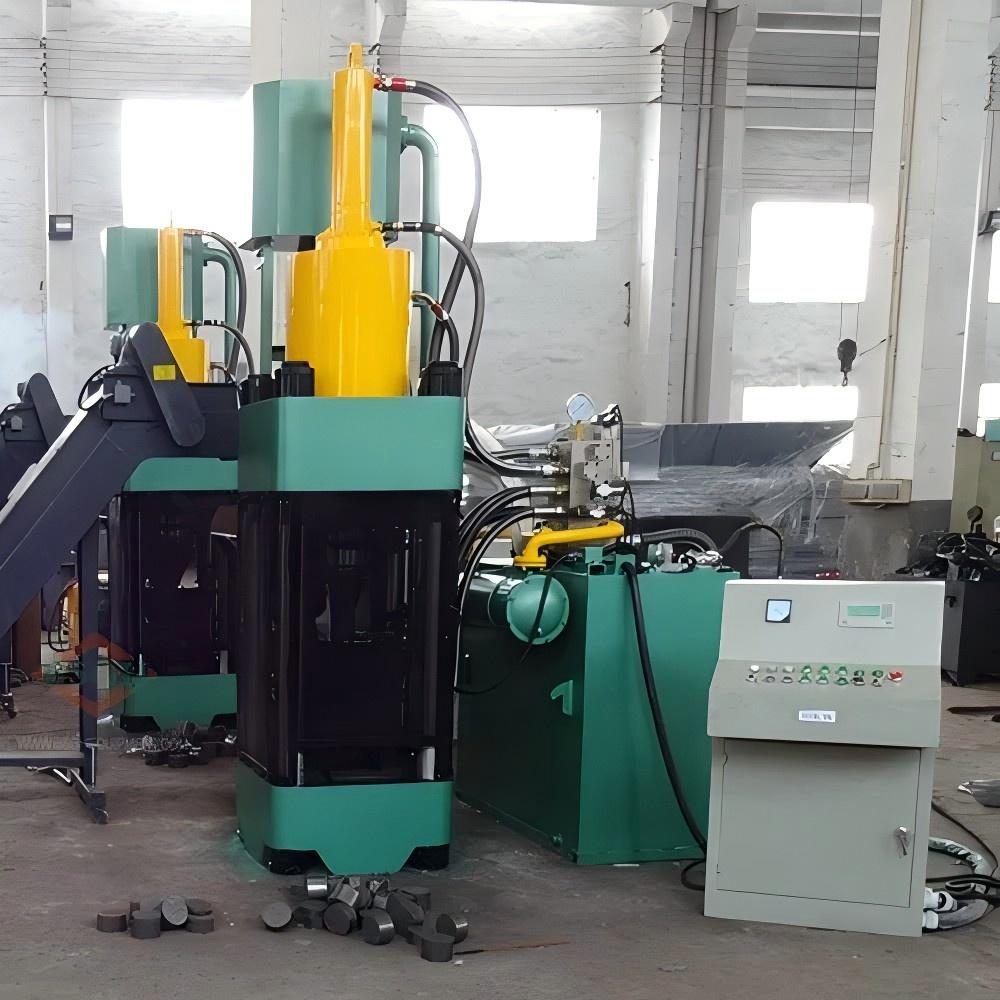
The core mechanism of a briquetting machine involves a feeding hopper, a pre-compression chamber, and a main hydraulic cylinder. The material is fed into the chamber where a ram applies immense pressure, forcing the metal particles to bond together through cold welding. Because these machines operate under extreme hydraulic pressures—often exceeding 300 bar—the structural integrity and the safety interlocks are paramount. Understanding the mechanical flow is the first step in ensuring a safe working environment.
Safety operation industrial briquetting machines require a deep understanding of the hydraulic circuit. The hydraulic fluid acts as the lifeblood of the system, and any compromise in the lines or seals can lead to catastrophic failure. Operators must be trained to recognize the sound of a healthy pump versus one that is cavitating or struggling under load. Furthermore, the electrical control systems, typically managed by PLC (Programmable Logic Controller) units, must be shielded from metal dust and debris to prevent short circuits or erratic machine behavior.
Beyond the mechanical aspects, the environmental safety of the workspace is vital. Metal chips are often sharp and coated in hazardous cutting oils. The briquetting process inherently creates a risk of slip-and-fall accidents due to oil leakage or stray metal particles. Therefore, the installation of drip trays, proper ventilation systems to manage oil mist, and the use of personal protective equipment (PPE) are non-negotiable components of the operational framework. HARSLE recommends a holistic approach where the machine, the operator, and the facility work in harmony.
Core Parameters
When discussing the safety operation industrial briquetting machines, one must first master the technical specifications that define the machine’s limits. The primary parameter is the ‘Specific Pressure,’ measured in N/mm². This determines the density of the final briquette. If an operator attempts to process material that exceeds the machine’s rated pressure capacity, the risk of structural fatigue or hydraulic rupture increases exponentially. Operators must verify that the material type matches the machine’s pressure settings.
The second core parameter is the ‘Cycle Time.’ This is the duration required to complete one full compression cycle. While faster cycle times increase throughput, they also generate more heat within the hydraulic oil. Excessive heat degrades the oil’s viscosity, which in turn reduces the lubrication efficiency of the pump and valves. A safe operation requires monitoring the oil temperature gauge; if the temperature exceeds 60°C, the machine should be allowed to cool, or the cooling system must be inspected for blockages.
Another critical parameter is the ‘Briquette Density.’ This is a function of the material’s bulk density and the compression ratio. Operators should be aware that different metals—such as aluminum, copper, and steel—have varying compression ratios. Attempting to force a high-density material into a cycle designed for low-density swarf can cause the main ram to stall. Stalling under pressure is a dangerous condition that can lead to pressure spikes, potentially damaging the hydraulic hoses or seals.
Finally, the ‘Feeding Rate’ is a parameter that directly impacts safety. Overloading the hopper can cause material bridging, where the metal gets stuck and then suddenly collapses into the compression chamber. This sudden shift can cause the machine to jerk or vibrate violently. Operators must ensure that the feeding mechanism is calibrated to the machine’s throughput capacity to maintain a steady, predictable flow of material, thereby minimizing mechanical stress and operator exposure to vibration hazards.
Calculation Method
Calculating the required force for a briquetting operation is essential for safety. The formula used is F = P × A, where F is the total force in Newtons, P is the pressure in the hydraulic system in Pascals, and A is the surface area of the piston. To ensure safety, operators must never exceed the manufacturer’s maximum pressure rating. If the required force to compress a specific volume of metal exceeds the machine’s capability, the machine will enter an overload state, triggering the pressure relief valve.
The pressure relief valve is the most critical safety component in the hydraulic circuit. It is designed to bypass fluid back to the reservoir if the pressure exceeds a pre-set safety limit. Operators should never attempt to adjust this valve to increase the machine’s output. Tampering with the relief valve is a common cause of catastrophic machine failure and severe injury. Regular calibration checks by a certified technician are required to ensure the valve opens at the correct pressure threshold.
Another calculation involves the ‘Compression Ratio.’ This is calculated by dividing the volume of the loose material by the volume of the resulting briquette. If the ratio is too high, the machine may not be able to achieve the desired density, leading to ‘crumbly’ briquettes that can break apart and cause jams in the discharge chute. A safe operation involves testing the compression ratio with small batches before running the machine at full capacity to ensure the material is suitable for the current settings.
Thermal load calculations are also vital. The power loss in a hydraulic system is calculated as the product of the flow rate and the pressure drop across the components. This energy is converted into heat. By calculating the expected heat generation, facility managers can determine if the standard air-cooled heat exchanger is sufficient or if a water-cooled chiller is required. Operating without adequate cooling is a recipe for hydraulic failure, which can lead to oil fires or high-pressure fluid injection injuries.
Parameter Table
| Parameter | Typical Range | Safety Impact |
|---|---|---|
| System Pressure | 200 – 350 Bar | High pressure; risk of injection injury |
| Oil Temperature | 30°C – 60°C | Overheating leads to seal failure |
| Cycle Time | 15 – 45 Seconds | Faster cycles increase thermal load |
| Motor Power | 7.5 – 45 kW | High voltage; requires proper grounding |
| Briquette Diameter | 40 – 120 mm | Affects structural stability of output |
Common Engineering Mistakes
One of the most frequent engineering mistakes in the operation of briquetting machines is the failure to properly filter the hydraulic oil. Metal dust is ubiquitous in a fabrication shop. If this dust enters the hydraulic reservoir, it acts as an abrasive, wearing down the internal surfaces of the pump and valves. This leads to internal leakage, which reduces the machine’s efficiency and forces the operator to increase pressure settings to compensate, creating a dangerous cycle of mechanical abuse.
Another common error is the neglect of the ‘Emergency Stop’ (E-Stop) testing. Operators often become complacent and assume that the E-Stop will function when needed. However, if the electrical contacts are corroded or the relay is stuck, the machine will not stop in an emergency. HARSLE mandates that every shift must begin with a functional test of all E-Stop buttons and safety light curtains. If a machine does not stop immediately upon activation, it must be locked out and tagged out until repaired.
Improper material sorting is a major safety hazard. Mixing incompatible materials, such as steel chips with aluminum, can lead to unpredictable compression results. Some materials may cause the briquette to expand or ‘spring back’ after ejection, which can damage the discharge mechanism or even cause the briquette to fly out of the chute. Operators must ensure that the feed stock is clean and consistent to maintain the predictability of the machine’s output.
Finally, ignoring the maintenance schedule for hydraulic hoses is a critical mistake. Hydraulic hoses have a finite lifespan and are subject to fatigue from the constant pressure cycling. A burst hose can spray high-pressure oil, which can penetrate human skin and cause severe internal tissue damage. All hoses should be inspected for signs of wear, abrasion, or weeping. If a hose shows any sign of degradation, it must be replaced immediately, regardless of its age.
Selection Checklist
When selecting a briquetting machine, safety must be the primary filter. First, ensure the machine is CE-certified or meets the equivalent safety standards for your region. This certification guarantees that the machine has undergone rigorous testing for electrical safety, mechanical guarding, and pressure containment. A machine without proper certification is a liability that no facility should accept.
Second, evaluate the safety interlocks. A high-quality machine will have interlocks on all access panels, the hopper, and the discharge chute. These interlocks should be designed so that the machine cannot operate if any panel is open. This prevents accidental contact with moving parts. During the selection process, ask the manufacturer for a detailed schematic of the safety control circuit to ensure it meets your facility’s safety requirements.
Third, consider the ease of maintenance. A machine that is difficult to clean or service will inevitably be neglected. Look for features like easy-access filter housings, clearly labeled hydraulic test ports, and a centralized lubrication system. A machine that is easy to maintain is a machine that will be maintained, which is the cornerstone of long-term operational safety.
Finally, assess the manufacturer’s support and training programs. A reputable company like HARSLE provides comprehensive training for operators and maintenance staff. This training should cover not just the basic operation, but also troubleshooting, emergency procedures, and the identification of potential hazards. Investing in a machine from a manufacturer that prioritizes education is an investment in the safety of your workforce.
FAQ
What is the most important safety feature on a briquetting machine?
The most important safety feature is the combination of the pressure relief valve and the emergency stop system. The relief valve prevents over-pressurization, while the E-stop provides an immediate mechanical halt in case of an incident.
How often should hydraulic oil be changed?
Hydraulic oil should be changed according to the manufacturer’s schedule, typically every 2,000 to 4,000 operating hours. However, if the oil shows signs of contamination or degradation, it should be changed immediately.
Can I process different types of metal in the same machine?
Yes, but you must ensure the machine is cleaned thoroughly between batches to prevent cross-contamination, and you must adjust the pressure settings to match the specific material being processed.
What should I do if the machine makes an unusual noise?
Stop the machine immediately using the E-stop. Unusual noises often indicate mechanical failure, pump cavitation, or loose components. Do not attempt to operate the machine until the source of the noise has been identified and repaired.
Is personal protective equipment required?
Yes, operators should wear safety glasses, steel-toed boots, and oil-resistant gloves. If the machine generates significant noise, hearing protection is also mandatory.