Extrusion Ram and Container Maintenance Guide for Aluminium Extrusion Press

Technical Overview
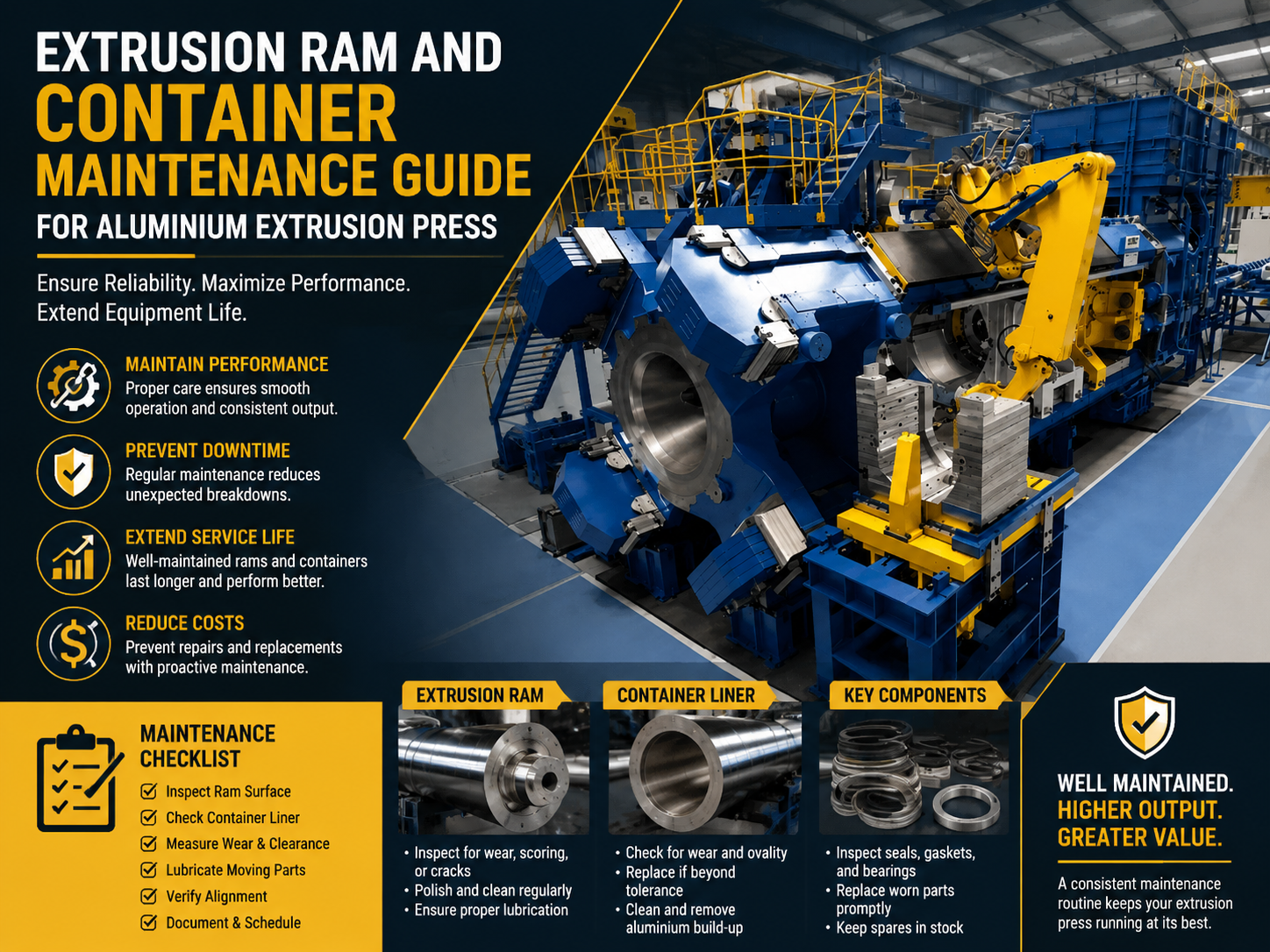
In the high-stakes world of metal fabrication, the aluminium extrusion press stands as the backbone of production. At the heart of this process lie two critical components: the extrusion ram and the container. The extrusion ram, or stem, is responsible for applying the immense hydraulic force required to push the aluminium billet through the die. The container, conversely, acts as the pressure vessel that holds the heated billet during the extrusion cycle. Understanding the interplay between these two components is essential for any facility manager looking to optimize output and minimize downtime.
The extrusion ram must maintain perfect alignment with the container bore. Even a slight deviation can lead to uneven pressure distribution, resulting in internal structural defects in the extruded profile. Furthermore, the ram face is subjected to extreme thermal cycling and mechanical stress. Over time, this can lead to surface cracking or deformation, which directly impacts the quality of the finished product. Proper maintenance of these parts is not merely a suggestion; it is a fundamental requirement for operational excellence.
The container is equally susceptible to wear. As the billet is compressed, the inner liner of the container experiences significant friction and heat. If the container is not properly preheated or if the lubrication system fails, the liner can suffer from galling or thermal fatigue. Maintaining the integrity of the container liner is vital to ensuring that the billet flows smoothly and that the extrusion force remains within the design parameters of the press.
HARSLE emphasizes that a proactive maintenance strategy for the extrusion ram and container involves regular inspection, precise alignment checks, and strict adherence to thermal management protocols. By integrating these practices into your daily workflow, you can prevent catastrophic failures and extend the service life of your aluminium extrusion press significantly. This guide provides the technical foundation required to manage these components effectively.
Core Parameters
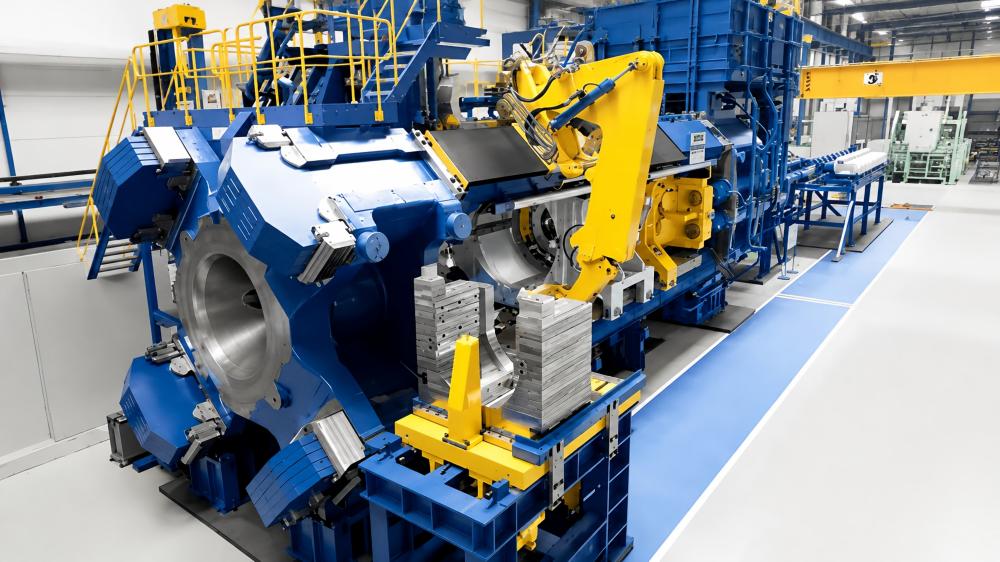
When discussing the maintenance of the extrusion ram and container, several core parameters must be monitored. The first is the clearance between the ram and the container liner. This clearance is critical; if it is too large, aluminium can back-flow around the ram, creating a ‘skull’ that can damage the press. If it is too small, the risk of metal-to-metal contact increases, which can lead to catastrophic seizing of the ram within the container.
Thermal expansion coefficients are another vital parameter. Because both the ram and the container are subjected to high temperatures, they expand at different rates depending on the material composition. Maintenance teams must account for these expansion rates when setting up the press. Failure to do so can result in binding during the extrusion cycle, which puts excessive strain on the main hydraulic cylinder and the press frame.
Surface finish and hardness are also critical. The ram face should be maintained to a specific roughness average (Ra) to ensure optimal contact with the dummy block. Similarly, the container liner must be inspected for signs of scoring or pitting. Even minor surface imperfections can act as stress concentrators, leading to crack propagation under the high pressures typical of aluminium extrusion.
Finally, the alignment of the ram axis relative to the container axis is a parameter that requires periodic calibration. Using laser alignment tools, technicians should verify that the ram enters the container perfectly centered. Any angular deviation will cause uneven wear on the container liner and may lead to premature failure of the ram guide system. Monitoring these parameters through a digital maintenance log is highly recommended for long-term reliability.
Calculation Method
To determine the required maintenance intervals for the extrusion ram and container, engineers use a calculation method based on the ‘Total Extrusion Force Cycles.’ This method involves tracking the cumulative tonnage applied over the life of the component. By establishing a baseline for the expected lifespan of a liner or ram face, maintenance teams can predict failure before it occurs.
The formula for calculating the wear rate is: W = (F × T) / H, where W represents the wear factor, F is the average extrusion force, T is the total cycle time, and H is the material hardness of the component. By calculating this factor for every 500 hours of operation, you can identify trends that indicate when a component is approaching the end of its useful life.
Another essential calculation involves the thermal stress analysis of the container. The hoop stress on the container liner can be calculated using the formula for thick-walled cylinders. By monitoring the internal pressure and the temperature differential between the inner and outer walls of the container, you can ensure that the operating conditions remain within the elastic limits of the steel alloy used in the container construction.
Finally, the dummy block clearance calculation is crucial. The clearance should be calculated based on the billet diameter and the thermal expansion of the aluminium alloy being processed. A common rule of thumb is to maintain a clearance of 0.5mm to 1.0mm, depending on the press size. Adjusting this calculation based on the specific alloy’s flow characteristics will significantly improve the quality of the extrusion and reduce the frequency of ram-related maintenance.
Parameter Table
| Parameter | Recommended Range | Maintenance Frequency |
|---|---|---|
| Ram-to-Container Clearance | 0.5mm – 1.2mm | Weekly |
| Container Liner Hardness | 45 – 52 HRC | Quarterly |
| Ram Face Roughness (Ra) | 0.8 – 1.6 μm | Monthly |
| Alignment Deviation | < 0.1mm | Semi-Annually |
| Preheating Temperature | 350°C – 450°C | Every Cycle |
Common Engineering Mistakes
One of the most frequent mistakes in extrusion ram and container maintenance is the neglect of proper preheating. If the container is not heated uniformly to the required temperature, the thermal shock upon the first billet insertion can lead to micro-cracking in the liner. This is particularly common in facilities that rush the startup process after a weekend shutdown. Always ensure that the container heating elements are fully functional and that the temperature is stable throughout the entire mass of the container.
Another common error is the improper selection or application of lubricants. Using a lubricant that is not rated for the specific extrusion temperature can lead to carbon buildup on the ram face. This buildup acts as an abrasive, accelerating the wear of both the ram and the container liner. Furthermore, inconsistent application of lubricant leads to uneven friction, which causes the billet to flow non-uniformly, resulting in profile defects.
Many operators also fail to monitor the condition of the dummy block. The dummy block is the sacrificial interface between the ram and the billet. If it is worn or deformed, it will transfer that deformation to the ram face. Replacing the dummy block at the first sign of wear is significantly cheaper than repairing a damaged ram face or a scored container liner. Treat the dummy block as a consumable item rather than a permanent fixture.
Finally, ignoring the hydraulic system’s cleanliness is a major oversight. Contaminated hydraulic oil can cause the ram to ‘chatter’ or move unevenly. This vibration is transmitted directly to the container, causing premature fatigue of the structural components. Regular oil analysis and filter changes are essential to maintaining the smooth, consistent motion required for high-quality aluminium extrusion.
Selection Checklist
When selecting replacement parts or upgrading your extrusion press components, use this checklist to ensure you are making the right investment:
- Material Compatibility: Ensure the ram and container liner materials are compatible with the specific aluminium alloys you process most frequently.
- Thermal Stability: Verify that the components are rated for the maximum operating temperatures of your press.
- Surface Treatment: Look for nitriding or other surface hardening treatments that extend the life of the ram face and liner.
- Dimensional Accuracy: Always verify that the tolerances meet the original equipment manufacturer (OEM) specifications.
- Supplier Reputation: Choose suppliers who provide detailed material certifications and technical support for their products.
- Ease of Installation: Consider the design of the container housing to ensure that liner replacement can be performed with minimal downtime.
- Warranty and Support: Ensure that your purchase includes a comprehensive warranty and access to technical assistance for installation and calibration.
FAQ
Q: How often should I check the alignment of the extrusion ram?
A: We recommend a full laser alignment check every six months, or immediately if you notice uneven wall thickness in your extruded profiles.
Q: What is the primary cause of container liner cracking?
A: Thermal shock is the most common cause. This happens when a cold billet is introduced into a container that has not been properly preheated, or when the heating cycle is too rapid.
Q: Can I use a universal lubricant for all aluminium alloys?
A: No. Different alloys have different flow characteristics and temperature requirements. Always consult the lubricant manufacturer’s guidelines for the specific alloy you are extruding.
Q: How do I know when it is time to replace the container liner?
A: You should replace the liner when the internal diameter exceeds the maximum allowable tolerance or when visible scoring and pitting cannot be removed by honing.
Q: Is it necessary to replace the ram and container at the same time?
A: Not necessarily. However, if you are replacing the container liner, it is often a good practice to inspect the ram face and dummy block, as they work in tandem and wear at similar rates.
Q: How does HARSLE support maintenance for these components?
A: HARSLE provides comprehensive technical manuals, spare parts, and expert consultation to help our clients maintain their aluminium extrusion presses at peak performance levels.