
A Beginner’s Guide to Hammer Shredder Working Parameters and Adjustments

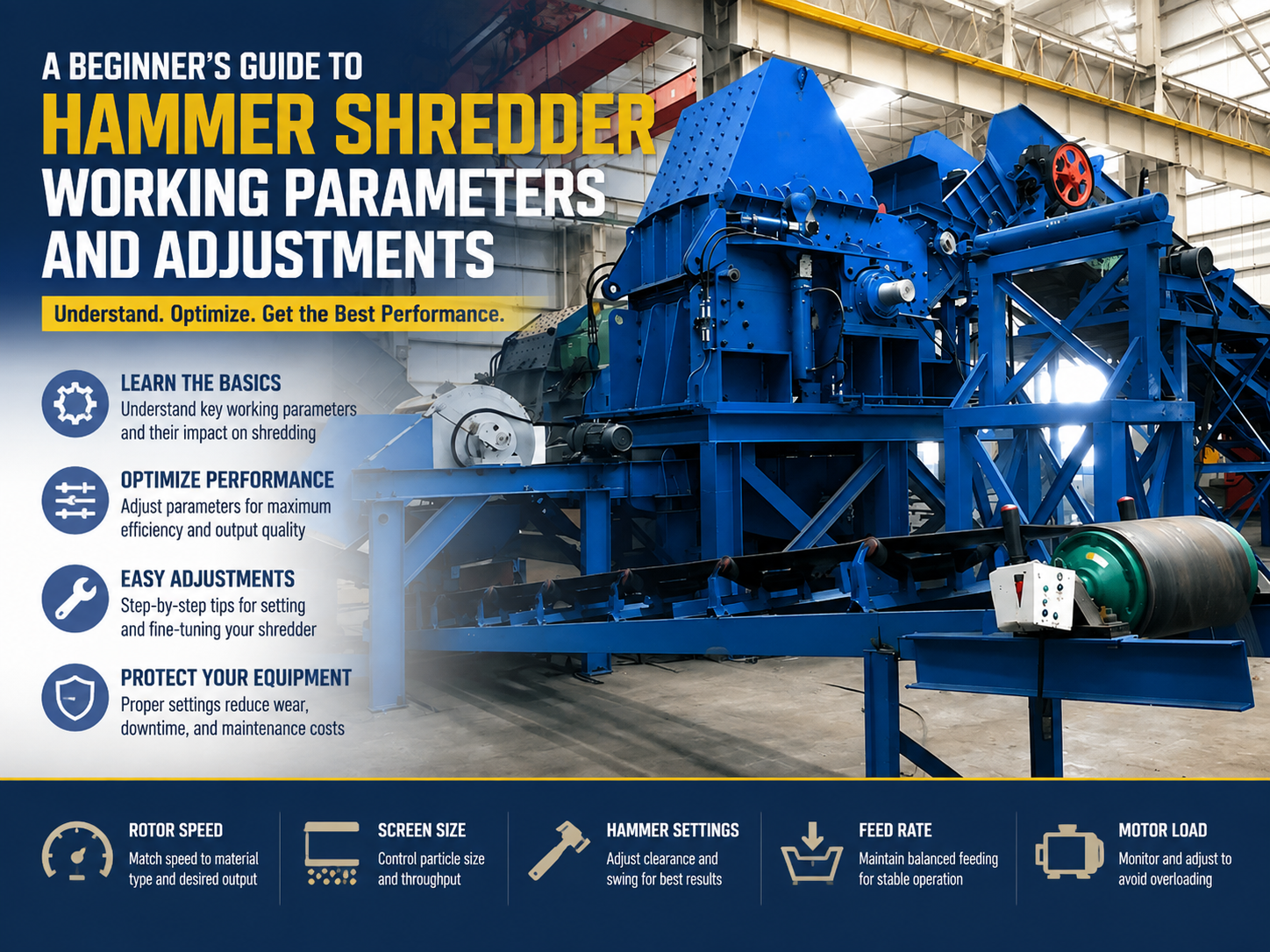
Technical Overview of Hammer Shredder Mechanics
The hammer shredder, often referred to as a hammer mill in the metal recycling industry, is a heavy-duty machine designed to reduce large pieces of scrap metal into smaller, denser, and more manageable fragments. At its core, the machine operates on the principle of high-velocity impact. A central rotor, equipped with heavy, free-swinging hammers, rotates at high speeds within a reinforced chamber. When material is fed into the chamber, it is struck by these hammers, which transfer massive amounts of kinetic energy to the scrap, causing it to fracture along natural lines of weakness or through sheer force.
Unlike shear shredders that use low-speed, high-torque cutting actions, the hammer shredder relies on momentum. This makes it particularly effective for brittle materials and light-to-medium gauge steels. The process involves three primary stages: the initial impact, the secondary impact against the internal liner plates, and the final sizing through the discharge grates. Understanding this mechanical flow is essential for any beginner looking to master A Beginner’s Hammer Shredder Working Parameters Adjustments. Without a grasp of the physics involved, adjustments to the machine can lead to inefficiency or catastrophic mechanical failure.
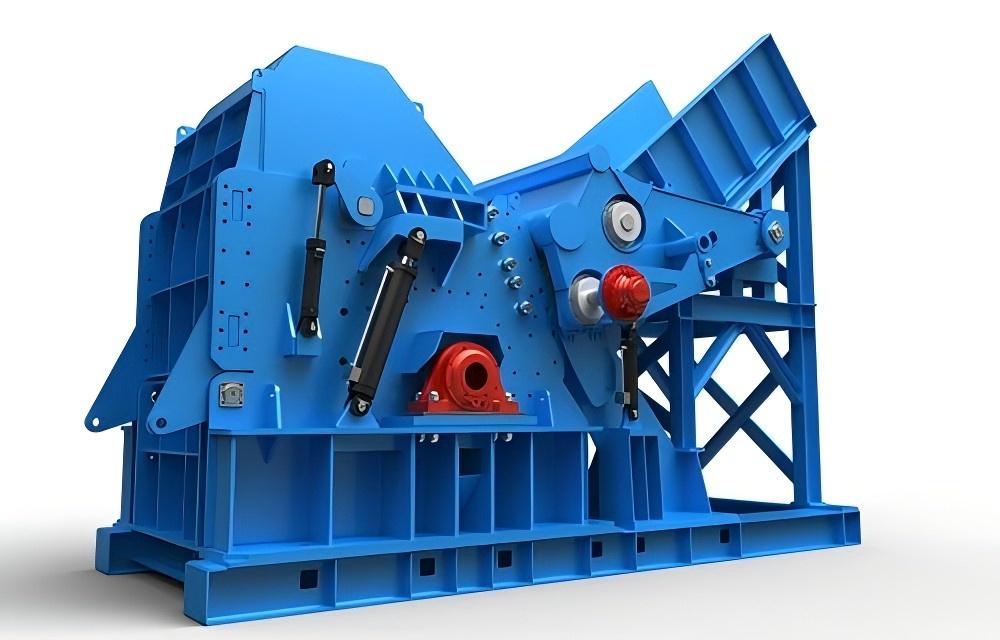
The internal environment of a hammer shredder is incredibly violent. To withstand these forces, the machine is lined with high-manganese steel or other wear-resistant alloys. The hammers themselves are the primary wear parts and are designed to be replaced or rotated. As a beginner, you must recognize that the performance of the shredder is not just about raw power; it is about the harmony between the rotor speed, the hammer mass, and the clearance between the hammers and the anvil or grate bars. This guide will delve into how these variables interact to produce the desired output quality.
Core Working Parameters for Optimal Performance
When discussing A Beginner’s Hammer Shredder Working Parameters Adjustments, we must first identify the primary variables that an operator can control. The most critical parameter is the rotor speed, measured in Revolutions Per Minute (RPM). The rotor speed determines the tip speed of the hammers, which directly correlates to the kinetic energy available for crushing. If the speed is too low, the hammers may ‘bounce’ off the material rather than breaking it, leading to jams. If the speed is too high, excessive heat and vibration can occur, shortening the lifespan of the bearings and the motor.
Another vital parameter is the hammer weight and geometry. Hammers come in various shapes—bell-shaped, rectangular, or offset—and weights ranging from a few kilograms to over 100 kilograms for massive industrial units. The choice of hammer depends on the density and thickness of the scrap. Heavier hammers provide more ‘punch’ for thick steel, while lighter, faster hammers are better for thin aluminum or electronic waste. Adjusting the hammer configuration on the rotor (e.g., staggered vs. inline) also affects the throughput and the smoothness of the operation.
The clearance between the hammer tips and the grate bars (or the anvil) is the third pillar of shredder adjustment. This gap determines the ‘dwell time’ of the material inside the chamber. A tighter gap results in a smaller, more uniform output but increases the power consumption and wear rate. Conversely, a wider gap allows material to exit faster, increasing throughput but resulting in larger, less processed pieces. Beginners must learn to balance these trade-offs based on the specific requirements of the end-user or the next stage in the recycling process.
Calculation Methods for Shredder Efficiency
To truly master A Beginner’s Hammer Shredder Working Parameters Adjustments, one must move beyond guesswork and utilize basic engineering calculations. The most fundamental calculation is the Kinetic Energy (E) of the hammer, expressed by the formula: E = ½mv², where ‘m’ is the mass of the hammer and ‘v’ is the velocity at the moment of impact. Because velocity is squared, even a small increase in rotor RPM significantly increases the crushing force. This is why speed adjustments are the most common way to handle tougher materials.
Throughput calculation is another essential skill. This is generally estimated by the formula: Q = 60 × A × v × ρ × η, where ‘Q’ is capacity, ‘A’ is the discharge area of the grates, ‘v’ is the discharge velocity, ‘ρ’ is the bulk density of the material, and ‘η’ is the efficiency coefficient. For a beginner, understanding that the discharge area (the total size of the holes in the grates) is the primary bottleneck for capacity is a ‘lightbulb’ moment. If you need more tons per hour, you either need larger grate openings or a faster rotor to push material through those openings more quickly.
Power consumption calculations are also necessary to prevent motor overloads. The specific energy consumption (kWh per ton) varies wildly depending on the material. For example, shredding light aluminum might require 5-10 kWh/ton, while heavy steel scrap could require 30-50 kWh/ton. By monitoring the ammeter on the control panel and comparing it to the calculated expected load, an operator can determine if the feed rate is too high or if the hammers have become too dull to work efficiently.
Detailed Parameter Table for Different Materials
The following table provides a baseline for A Beginner’s Hammer Shredder Working Parameters Adjustments across common scrap types. Note that these are starting points and should be refined based on specific machine models and moisture levels.
| Material Type | Recommended Rotor Tip Speed (m/s) | Hammer Type | Grate Opening Size (mm) | Typical Power Demand (kW/ton) |
|---|---|---|---|---|
| Aluminum Cans (UBC) | 45 – 55 | Lightweight / Flat | 25 – 40 | 3 – 6 |
| Electronic Waste (WEEE) | 50 – 65 | Medium / Serrated | 15 – 30 | 8 – 15 |
| Light Steel Scrap (< 3mm) | 60 – 75 | Heavy / Bell-shaped | 50 – 80 | 20 – 35 |
| Mixed Municipal Waste | 40 – 50 | Blunt / Heavy | 100 – 150 | 5 – 10 |
| Copper Wire / Radiators | 55 – 70 | Sharp / Knife-edge | 10 – 20 | 12 – 25 |
Common Engineering Mistakes in Shredder Adjustment
One of the most frequent mistakes beginners make is ignoring the ‘hammer-to-grate’ clearance as the hammers wear down. As the leading edge of the hammer rounds off, the distance between the hammer and the grate increases. This leads to a massive drop in efficiency, as material simply slides around the chamber instead of being crushed against the grates. Operators often try to compensate by increasing the rotor speed, which only accelerates wear and increases electricity costs. The correct adjustment is to either rotate the hammers to a fresh edge or move the grate bars closer if the machine design allows.
Another common error is inconsistent feeding. Hammer shredders perform best when the chamber is ‘choke-fed’ to a certain percentage of its volume. If the feed is too sparse, the hammers strike the material and send it flying against the liners without much secondary crushing, leading to ‘slugging’ and high vibration. If the feed is too heavy, the rotor can ‘bog down,’ causing the motor to trip. Beginners should focus on maintaining a steady, automated feed rate that keeps the motor load at approximately 80% of its rated capacity for maximum longevity and throughput.
Finally, many operators neglect the importance of air-flow management. In many hammer shredders, the spinning rotor acts like a giant fan. This creates internal air pressure that can either help or hinder the discharge of fine materials. If the dust extraction system is poorly tuned or the vents are clogged, the ‘backpressure’ can keep small particles circulating in the chamber longer than necessary, leading to over-grinding and wasted energy. Proper A Beginner’s Hammer Shredder Working Parameters Adjustments must include a check of the pneumatic balance of the system.
Selection Checklist for New Operators
Before starting a shift or adjusting a machine for a new material batch, use this checklist to ensure all parameters are optimized:
- Material Assessment: Is the scrap free of ‘unshreddables’ like heavy engine blocks or thick structural I-beams that could break a hammer?
- Hammer Condition: Check for rounding of the impact face. Are the hammers swinging freely on their pins, or are they bound by debris?
- Grate Integrity: Inspect the grate bars for bending or widening. Ensure the bolts securing the grates are torqued to specification.
- Lubrication: Are the main rotor bearings greased? High-speed operation generates significant heat; ensure the cooling system (if applicable) is active.
- Vibration Analysis: Start the rotor empty. Is there excessive vibration? This could indicate a lost hammer or uneven wear that has put the rotor out of balance.
- Safety Systems: Ensure the ‘reject door’ (the emergency exit for unshreddable items) is functional and the hydraulic pressure is correct.
Frequently Asked Questions (FAQ)
How often should I rotate the hammers in a shredder?
Hammer rotation frequency depends entirely on the abrasiveness of the material. For clean aluminum, you might rotate every 100 hours. For sandy or contaminated scrap steel, you might need to rotate every 20-30 hours. The key indicator is a noticeable drop in throughput or an increase in the size of the output material.
What happens if the rotor speed is too high?
Excessive rotor speed leads to exponential increases in wear on the hammers and liners. It also generates significant heat, which can cause certain plastics or metals to melt and ‘smear’ across the grates, eventually clogging them. Furthermore, it increases the risk of bearing failure due to centrifugal forces and heat expansion.
Can I shred different materials at the same time?
While possible, it is not efficient. Different materials have different ‘shredding characteristics.’ For example, mixing brittle cast iron with ductile copper wire will result in the iron being over-pulverized while the copper remains under-processed. It is always better to batch-process similar materials and adjust the A Beginner’s Hammer Shredder Working Parameters Adjustments accordingly for each batch.
Why is my shredder vibrating excessively?
Vibration is usually caused by an unbalanced rotor. This happens if one hammer has worn significantly more than the others, if a hammer has broken off, or if material is stuck to one side of the rotor. Stop the machine immediately and perform a balance check, as excessive vibration can destroy the main bearings and the machine frame.
How do I choose the right grate size?
The grate size should be chosen based on the requirements of your downstream separation equipment (like eddy current separators or magnets) or the specifications of the foundry buying your scrap. Generally, a smaller grate produces a cleaner, higher-density product but at a higher cost per ton in terms of energy and wear.


