
How to Reduce Dust and Noise in Hammer Shredder Operations: A Comprehensive Technical Guide

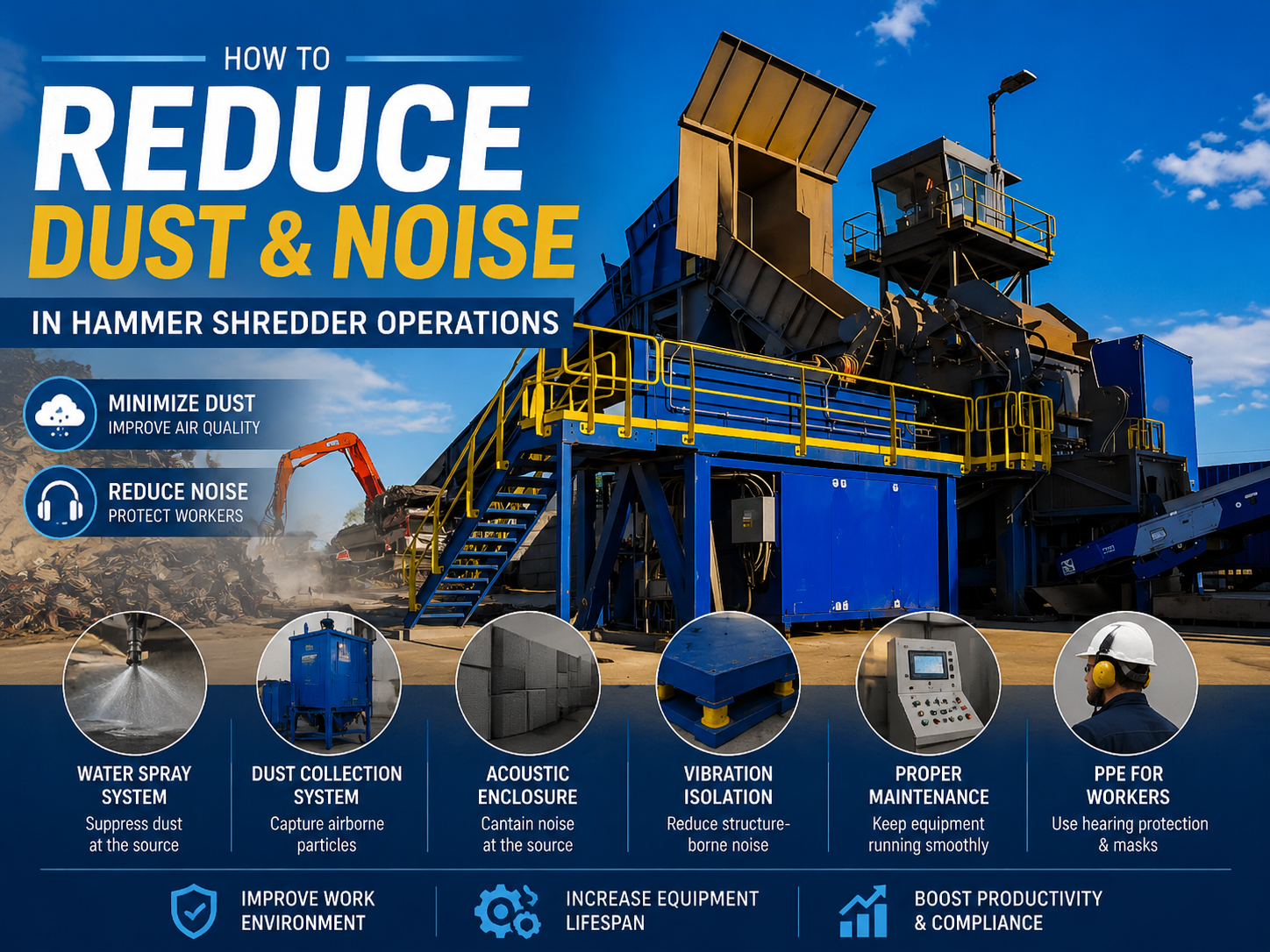
Technical Overview of Hammer Shredder Environmental Impact
In the modern metal fabrication and recycling industry, the hammer shredder stands as a cornerstone of material processing. However, the very mechanics that make it effective—high-speed kinetic impact—are also the primary sources of significant environmental challenges: noise pollution and airborne particulate matter. To reduce dust and noise in hammer shredder operations, one must first understand the physics of the machine. A hammer shredder operates by rotating a series of heavy-duty hammers at high velocities, striking the input material against anvils and grates. This process releases energy in the form of sound waves and breaks down materials into fine particles that can easily become airborne.
Noise in hammer shredder operations is categorized into three types: mechanical noise, aerodynamic noise, and impact noise. Mechanical noise arises from the vibration of the machine’s frame, bearings, and motor. Aerodynamic noise is generated by the high-speed rotation of the rotor, which acts like a large fan, moving air through the internal chamber. Impact noise, the most significant and difficult to manage, occurs when the hammers strike the scrap metal. This creates high-decibel peaks that can exceed 110 dB if not properly mitigated. Understanding these sources is the first step toward implementing effective reduction strategies.
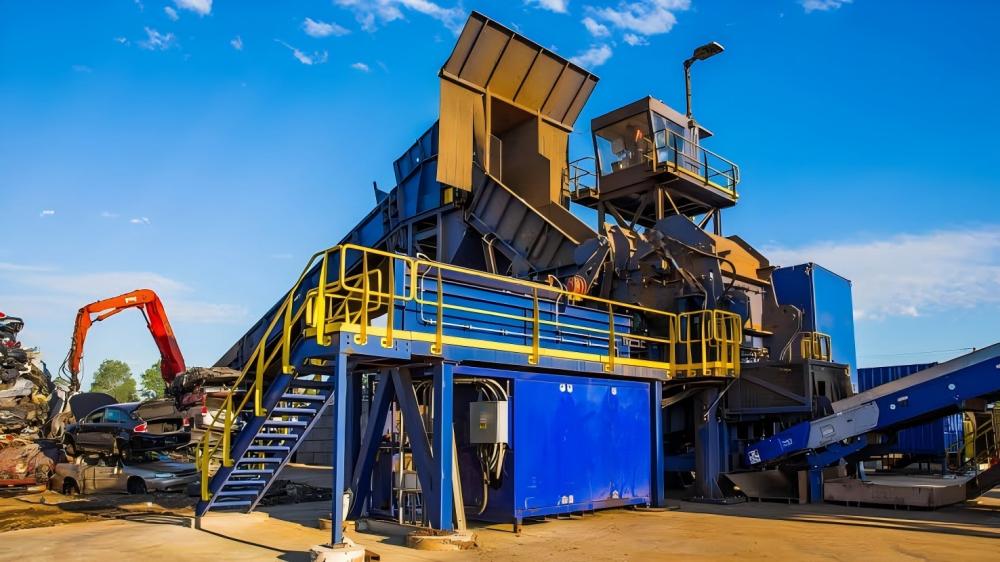
Dust generation is a byproduct of material fragmentation. As the hammers pulverize metal, glass, or plastic, the friction and impact create micro-particles. Without a controlled environment, these particles are expelled from the shredder through the discharge chute or the feed hopper due to the internal air pressure created by the rotor. Effective dust management requires a combination of containment, suppression (using moisture), and extraction (using negative pressure). HARSLE engineering focuses on optimizing these three pillars to ensure a cleaner, safer workspace that complies with international environmental standards.
Furthermore, the health and safety implications of unmanaged dust and noise cannot be overstated. Long-term exposure to high-decibel environments leads to permanent hearing loss, while fine metal dust (PM2.5 and PM10) poses severe respiratory risks. By implementing the technical strategies outlined in this guide, operators can significantly reduce dust and noise in hammer shredder operations, thereby protecting their workforce and extending the operational lifespan of the machinery by preventing abrasive dust from infiltrating sensitive mechanical components.
Core Parameters Influencing Environmental Output
To effectively manage the environmental footprint of a hammer shredder, several core operational parameters must be monitored and adjusted. The first is the Rotor Tip Speed. The velocity at which the hammers strike the material is directly proportional to the noise level. While higher speeds increase throughput and fragmentation efficiency, they also exponentially increase aerodynamic noise. Finding the “sweet spot” between processing speed and noise output is critical for sustainable operations.
The second parameter is the Hammer-to-Anvil Clearance. If the clearance is too tight, the impact is more violent, leading to sharper noise peaks and finer dust. Conversely, if the clearance is too wide, the machine loses efficiency, requiring more passes and increasing the total duration of noise exposure. Precision adjustment of the anvil position allows for controlled fragmentation, which helps to reduce dust and noise in hammer shredder operations by ensuring the material is processed correctly on the first strike.
Thirdly, the Feed Rate and Material Density play a vital role. An empty or under-fed shredder is often louder than a fully loaded one because the hammers strike the internal liners directly or with minimal cushioning. Maintaining a consistent, dense feed creates a “muffling” effect where the material itself absorbs a portion of the impact energy. However, over-feeding can lead to clogging, which increases mechanical strain and vibration noise. Automated feeding systems are often recommended to maintain this balance.
Lastly, the Internal Airflow Volume must be considered. As mentioned, the rotor acts as a centrifugal fan. If the shredder is not equipped with a balanced air management system, this internal pressure will force dust out of every seal and opening. By calculating the required CFM (Cubic Feet per Minute) for the extraction system based on the rotor’s displacement, engineers can create a negative pressure environment that keeps dust contained within the machine and its ducting.
Calculation Method for Noise and Dust Mitigation
Engineering a solution to reduce dust and noise in hammer shredder operations requires precise calculations rather than guesswork. To calculate the expected noise reduction from an acoustic enclosure, we use the Sound Transmission Loss (STL) formula: STL = 20 log10(f * m) – 47 dB, where ‘f’ is the frequency of the sound and ‘m’ is the surface density of the enclosure material. For a hammer shredder, focusing on low-frequency dampening is essential, as the heavy impacts generate significant energy in the 60Hz to 250Hz range.
For dust extraction, the calculation of the Capture Velocity is paramount. Capture velocity is the air speed required at the source to pull dust into the hood. For heavy metal dust, a capture velocity of at least 3,500 to 4,500 feet per minute (fpm) is required. The total air volume (Q) needed can be calculated using the formula: Q = V * (10X² + A), where ‘V’ is the capture velocity, ‘X’ is the distance from the dust source to the hood, and ‘A’ is the area of the hood opening. Ensuring the fan is sized correctly based on this ‘Q’ value is the only way to guarantee dust containment.
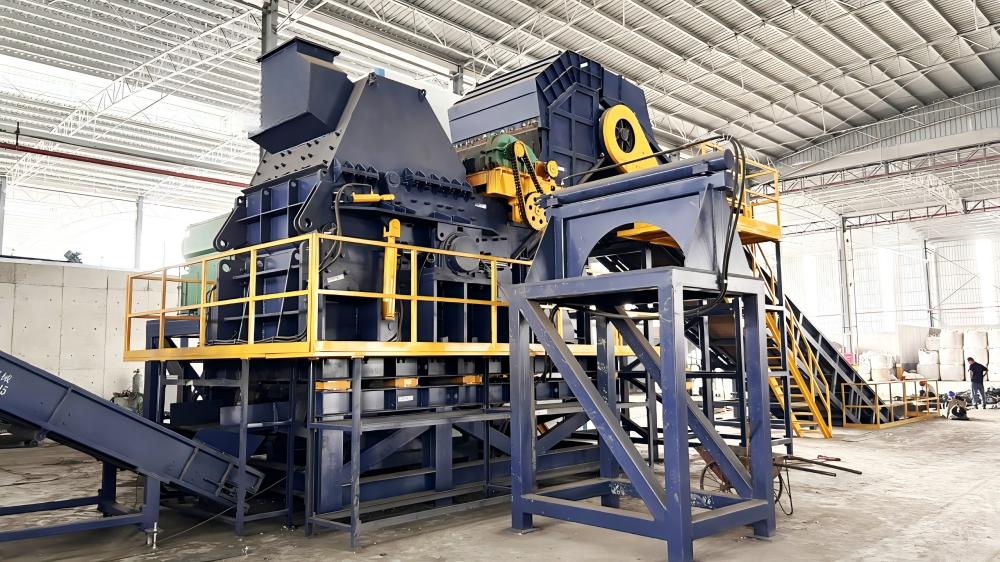
Another critical calculation involves the Water-to-Material Ratio for wet suppression systems. While adding water is effective for dust, too much water can lead to material clumping and increased corrosion. A standard starting point is 0.5% to 2% water by weight of the material being processed. Using atomizing nozzles that create a fine mist (droplet size between 10-50 microns) is more effective than high-flow sprays because the small droplets attach more readily to fine dust particles without over-saturating the scrap metal.
Parameter Table: Shredder Specifications and Environmental Targets
The following table provides a reference for typical hammer shredder configurations and the associated environmental targets when proper mitigation strategies are applied. These values are based on HARSLE industrial standards for heavy-duty metal processing.
| Model Capacity (Tons/Hr) | Rotor Speed (RPM) | Baseline Noise (dB) | Target Noise w/ Enclosure (dB) | Required Airflow (CFM) | Dust Suppression Type |
|---|---|---|---|---|---|
| 5 – 10 | 1200 – 1500 | 105 | 82 – 85 | 4,000 | Dry Baghouse |
| 15 – 30 | 1000 – 1200 | 110 | 85 – 88 | 8,500 | Wet Scrubber / Mist |
| 40 – 60 | 800 – 1000 | 115 | 88 – 92 | 15,000 | Hybrid (Mist + Bag) |
| 80+ | 700 – 900 | 120+ | 90 – 95 | 25,000+ | Advanced Multi-Stage |
Note: The “Target Noise” levels are measured at a distance of 1 meter from the enclosure. Achieving these targets requires a combination of high-density acoustic panels and vibration isolation mounts for the motor and shredder body.
Common Engineering Mistakes in Dust and Noise Control
One of the most frequent mistakes in trying to reduce dust and noise in hammer shredder operations is the use of thin-walled ducting for dust extraction. High-velocity metal particles are extremely abrasive; thin ducts will wear through quickly, leading to leaks that destroy the negative pressure system. Engineers should specify heavy-gauge steel or reinforced flexible hosing and ensure that all bends have a large radius to prevent material buildup and turbulence, which itself creates additional noise.
Another common error is neglecting Vibration Isolation. Many operators focus solely on the airborne noise (the sound you hear through the air) but ignore structure-borne noise. If the shredder is bolted directly to a concrete floor without vibration dampening pads or springs, the entire building can act as a sounding board, amplifying the low-frequency thuds of the hammers. This can cause structural damage over time and makes noise mitigation nearly impossible in adjacent rooms.
In terms of dust control, a major mistake is the improper placement of suction hoods. Placing a hood too far from the discharge point or the feed opening significantly reduces its effectiveness, as capture velocity drops off following the inverse square law. Furthermore, many facilities fail to account for the “pumping effect” of the rotor. If the air being pulled out by the dust collector is less than the air being pushed by the rotor, the system will fail. The extraction system must always exceed the rotor’s natural air displacement.
Finally, the “Set and Forget” mentality regarding hammer maintenance is a significant hurdle. Worn hammers do not cut or break material cleanly; they rub and grind, which generates significantly more heat, fine dust, and high-pitched screeching. Regular hammer rotation and replacement are not just production requirements; they are essential environmental controls. Using hard-faced hammers can also help maintain the original geometry longer, keeping noise and dust levels consistent throughout the maintenance cycle.
Selection Checklist for Low-Noise and Low-Dust Shredders
When procuring new equipment or upgrading existing lines, use this checklist to ensure the machinery is designed to reduce dust and noise in hammer shredder operations effectively:
- Acoustic Housing: Does the machine come with a factory-designed enclosure, or is there space to install one? Look for double-walled construction with mineral wool or specialized foam insulation.
- Vibration Damping: Are the motor and the shredder chamber mounted on heavy-duty rubber isolators or spring mounts?
- Sealing Integrity: Check the feed and discharge transitions. Are they equipped with heavy-duty rubber curtains or gaskets to prevent dust escape?
- Rotor Design: Is the rotor balanced to G2.5 standards? A balanced rotor minimizes mechanical vibration and bearing noise.
- Integrated Mist Systems: Does the shredder have internal ports for water injection? Internal misting is far more effective than external spraying.
- Variable Frequency Drive (VFD): Does the motor have a VFD? This allows operators to reduce rotor speed for lighter materials, significantly lowering noise levels.
- Liner Material: Are the internal wear liners made of manganese steel or other dampening alloys that reduce the “ringing” effect of impacts?
- Access for Maintenance: Is the dust extraction ducting easy to remove for cleaning? Clogged ducts are a primary cause of system failure.
- Compliance Certification: Does the equipment meet local OSHA or EU noise and emission standards?
- Automated Monitoring: Are there sensors to detect pressure drops in the dust collector or excessive vibration in the bearings?
Frequently Asked Questions (FAQ)
1. What is the most effective way to reduce impact noise in a hammer shredder?
The most effective method is a combination of a full acoustic enclosure and maintaining a consistent material feed. The enclosure blocks airborne sound, while the material inside the chamber acts as a buffer, preventing the hammers from striking the liners directly and reducing the overall resonance of the machine.
2. Can I use water to control dust if I am shredding mixed metal scrap?
Yes, but it must be managed carefully. Using a high-pressure, low-volume misting system (dry fog) allows you to suppress dust without significantly increasing the moisture content of the scrap. This prevents rust and ensures that downstream separation processes (like eddy current separators) are not hindered by wet, sticky material.
3. How often should I check my dust collection filters?
In high-volume shredding operations, differential pressure gauges should be monitored daily. A significant rise in pressure indicates that the filters are clogged, which will immediately reduce the suction at the shredder and lead to increased dust in the work area. Most modern systems have automated pulse-jet cleaning, but manual inspection should occur monthly.
4. Does the shape of the hammers affect noise levels?
Yes. Hammers with a more aerodynamic profile or those that are properly balanced produce less windage noise. Furthermore, sharp, well-maintained hammers process material faster, reducing the duration of the noise and preventing the grinding action that creates fine dust and high-frequency sounds.
5. Is it possible to retrofit an old hammer shredder for better noise control?
Absolutely. Retrofitting typically involves installing vibration-isolating mounts, adding rubber liners to the feed hopper, and building an external acoustic room around the machine. While retrofitting is more complex than buying a pre-designed low-noise unit, it can still result in a 15-20 dB reduction in noise levels.
6. Why is my dust collector not catching all the dust even though the fan is running?
This is usually due to either a leak in the ducting, a clogged filter, or improper hood placement. If the air velocity at the point of generation (the capture velocity) is lower than the speed at which the dust is being expelled by the rotor, the dust will escape. Check for “dead zones” in your ducting where dust may have settled, blocking the airflow.


