
Hammer Shredder vs Jaw Crusher: Which Machine Is Better for Scrap Size Reduction?

Technical Overview: Understanding the Mechanics of Size Reduction
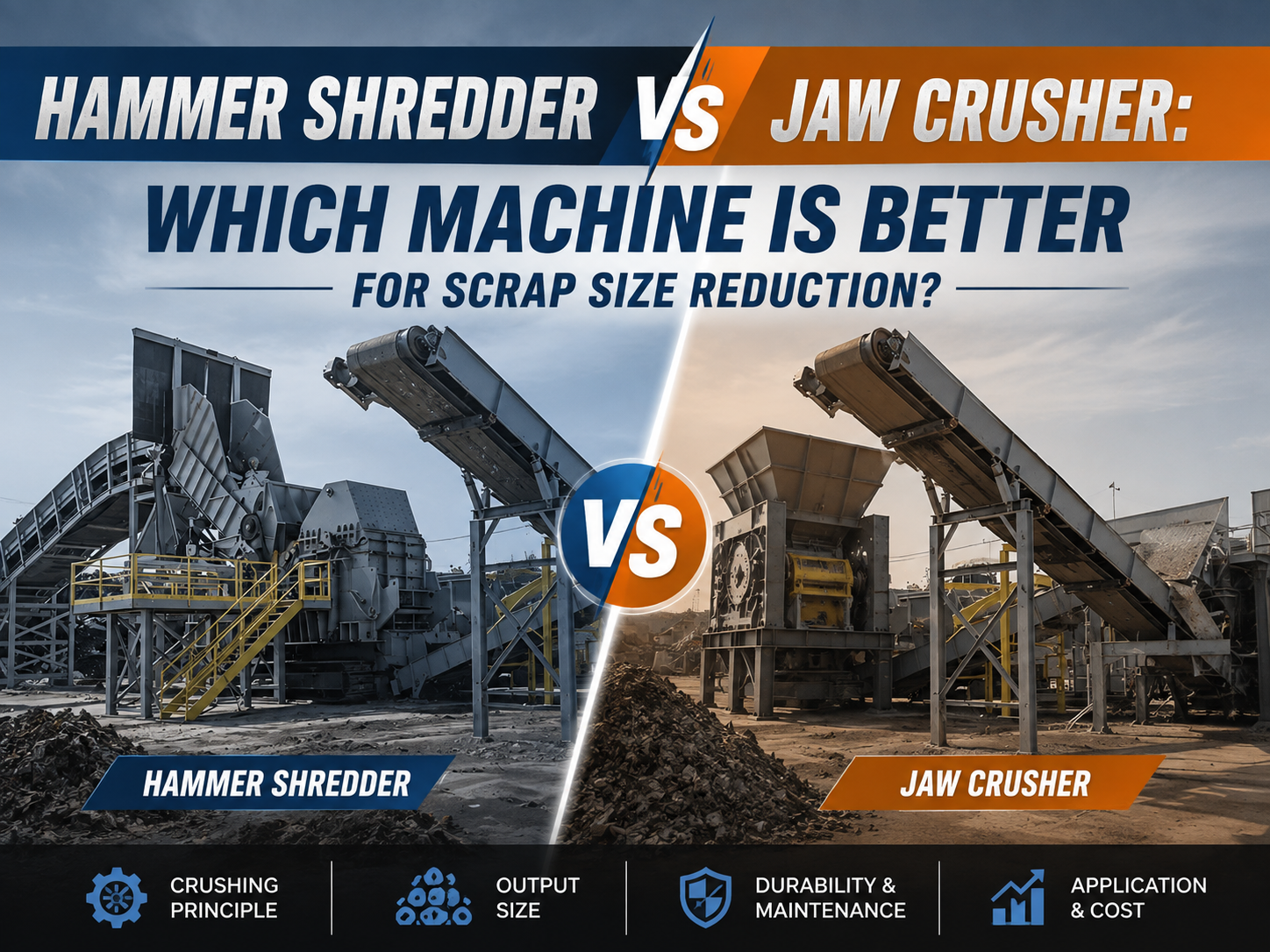
In the world of industrial scrap processing and metal fabrication, size reduction is the critical first step toward efficient recycling and material recovery. Choosing between a Hammer Shredder Vs Jaw Crusher: Which Machine Is Better Scrap Size Reduction? requires a deep dive into the physics of material failure. While both machines aim to reduce large volumes of material into manageable sizes, they utilize fundamentally different mechanical principles: impact versus compression.
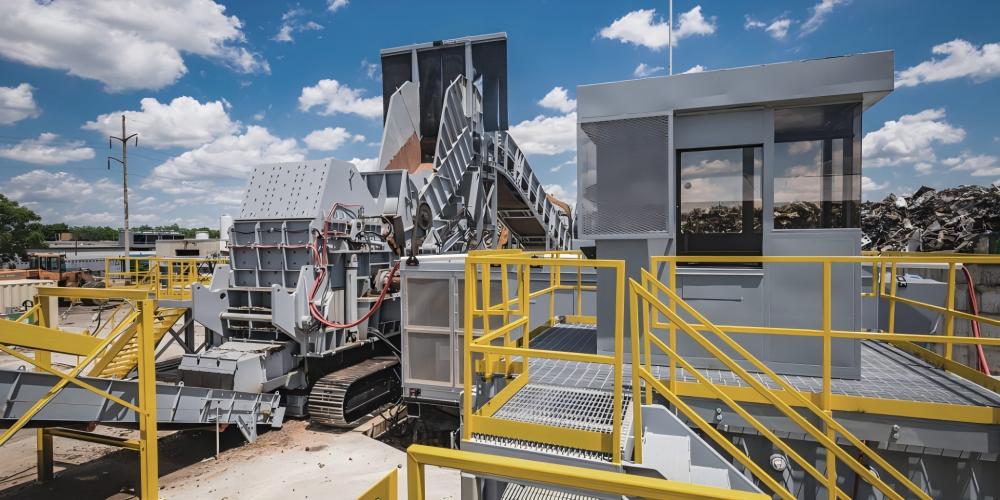
A hammer shredder, often referred to as a hammer mill, operates on the principle of high-velocity impact. Inside the crushing chamber, a high-speed rotor equipped with heavy-duty hammers strikes the incoming scrap. The kinetic energy transferred from the hammers shatters the material against internal breaker plates and grates. This process is particularly effective for ductile materials and scrap that requires significant liberation of different components, such as separating copper windings from steel housings in electric motors. The high-speed nature of the hammer shredder also helps in densifying the scrap, producing a ‘nuggetized’ end product that is highly valued in secondary smelting operations.
Conversely, a jaw crusher utilizes compressive force to achieve size reduction. It features two jaw plates: one fixed and one moving (the swing jaw). The swing jaw moves back and forth against the fixed jaw, creating a ‘V’ shaped chamber known as the crushing cavity. As material enters the top of the chamber, the reciprocating motion of the swing jaw squeezes the scrap until it reaches its compressive strength limit and fractures. Jaw crushers are the workhorses of primary reduction, especially for brittle materials, large bulky castings, and heavy ferrous scrap that might be too resilient for a high-speed impactor to handle without excessive wear.
The choice between these two technologies often hinges on the specific characteristics of the input material. For instance, if the goal is to process light-gauge sheet metal, aluminum extrusions, or electronic waste, the hammer shredder’s ability to tear and impact is superior. However, for heavy-duty primary crushing of slag, large engine blocks, or reinforced concrete scrap, the sheer force of a jaw crusher is often indispensable. HARSLE engineers emphasize that understanding the ‘feed-to-product’ ratio is essential before selecting the machinery, as each has a distinct sweet spot in the production line.
Core Parameters: Comparing Performance Metrics
When evaluating Hammer Shredder Vs Jaw Crusher: Which Machine Is Better Scrap Size Reduction?, several core parameters must be analyzed to ensure the equipment aligns with operational goals. These parameters include throughput capacity, reduction ratio, power consumption, and the morphology of the final product. Each of these factors plays a pivotal role in the Total Cost of Ownership (TCO) and the overall profitability of a recycling facility.
Throughput capacity is perhaps the most visible metric. Hammer shredders generally offer higher throughput for lighter materials due to their continuous high-speed operation. They are designed to handle a steady stream of material, converting it into a uniform size quickly. Jaw crushers, while potentially slower in terms of ‘pieces per minute,’ can handle significantly larger individual feed sizes. A large jaw crusher can accept a massive piece of scrap that would simply bounce off the hammers of a shredder or cause a catastrophic rotor jam.
The reduction ratio—the ratio of the size of the feed material to the size of the output—is another critical differentiator. Hammer shredders typically offer a higher reduction ratio in a single pass, often reaching 20:1 or higher, depending on the grate size. This is because the material stays in the chamber until it is small enough to pass through the discharge screens. Jaw crushers usually operate at a reduction ratio of 4:1 to 6:1. This means that for significant size reduction, a jaw crusher is often used as a primary stage, followed by a secondary crusher or shredder.
Power consumption and energy efficiency are increasingly important in modern industrial settings. Hammer shredders require significant startup power to bring the heavy rotor up to speed and maintain that inertia during impact. However, their efficiency in liberating mixed materials can offset the energy cost. Jaw crushers are generally more energy-efficient for primary crushing of hard, brittle materials because they rely on mechanical advantage and lower speeds, resulting in less energy lost to heat and sound compared to the violent impacts of a hammer mill.
Calculation Method: Determining the Right Fit
To scientifically determine which machine is better for your specific application, engineers use several calculation methods. The most common is the Reduction Ratio (R) calculation, defined as:
R = F80 / P80
Where F80 is the size at which 80% of the feed material passes through a sieve, and P80 is the size at which 80% of the product passes. If your required R is greater than 7, a hammer shredder or a multi-stage jaw-to-shredder system is necessary. If R is between 3 and 6, a single jaw crusher may suffice.
Another vital calculation involves the Work Index (Wi), originally developed by Fred Bond. While primarily used in mining, it is highly applicable to scrap metal. The formula for the power required (P) in kilowatts is:
P = 10 * Wi * (1/√P80 – 1/√F80) * Capacity
By inputting the Work Index of the specific scrap (e.g., steel scrap vs. aluminum castings), operators can estimate the motor size required for both a jaw crusher and a hammer shredder. Generally, hammer shredders require a higher ‘installed power’ to handle the peak loads during impact, whereas jaw crushers require high ‘torque’ to overcome the compressive resistance of the material.
Furthermore, for hammer shredders, the Tip Speed of the hammers is a crucial calculation. Tip speed (V) is calculated as V = π * D * n / 60, where D is the rotor diameter and n is the RPM. For effective metal shredding, tip speeds usually need to exceed 50-60 meters per second to ensure the kinetic energy is sufficient to fracture the metal rather than just pushing it around the chamber.
Parameter Table: Hammer Shredder vs. Jaw Crusher
| Feature | Hammer Shredder | Jaw Crusher |
|---|---|---|
| Primary Action | High-speed Impact / Tearing | Slow-speed Compression |
| Best For | Ductile metals, E-waste, Light scrap | Brittle metals, Large castings, Slag |
| Reduction Ratio | High (15:1 to 30:1) | Low to Medium (4:1 to 6:1) |
| Output Shape | Spherical / Cubical (Nuggets) | Angular / Flaky |
| Wear Parts | Hammers, Grates, Liners | Fixed & Swing Jaw Plates |
| Maintenance Frequency | High (Hammer rotation/replacement) | Moderate (Jaw plate flipping) |
| Material Liberation | Excellent (Separates mixed metals) | Poor (Mostly size reduction only) |
Common Engineering Mistakes in Machine Selection
One of the most frequent mistakes in the Hammer Shredder Vs Jaw Crusher: Which Machine Is Better Scrap Size Reduction? debate is ignoring the ‘Tramp Metal’ factor. In a jaw crusher, uncrushable items (like a solid steel shaft in a batch of aluminum scrap) can cause the toggle plate to shear or, worse, damage the eccentric shaft. While modern jaw crushers have hydraulic relief systems, they are still less ‘forgiving’ than hammer shredders, which often feature a ‘reject door’ or ‘tramp metal trap’ where heavy, un-shreddable items are ejected by centrifugal force before they cause damage.
Another common error is underestimating the importance of moisture and ‘stickiness.’ If the scrap is contaminated with wet soil, grease, or heavy oils, a hammer shredder’s grates can become clogged, leading to a massive drop in efficiency and potential overheating. In such cases, a jaw crusher, which has an open discharge bottom, is much less likely to suffer from clogging, although the material might ‘pancake’ between the jaws if it is too ductile.
Engineers also frequently overlook the metallurgy of the wear parts. Using standard manganese steel hammers for high-abrasion scrap will lead to rapid wear and frequent downtime. Conversely, using high-chrome brittle alloys in a jaw crusher handling high-impact scrap can lead to premature cracking of the plates. Matching the metallurgy to the specific scrap profile is as important as choosing the machine type itself. HARSLE recommends a thorough material analysis before finalizing the wear part specifications.
Finally, many facilities fail to account for the ‘fines’ production. Hammer shredders, due to their high-impact nature, produce a higher percentage of fine particles and dust. If the material is valuable (like gold-bearing e-waste), these fines must be captured via sophisticated dust collection systems to avoid significant value loss. A jaw crusher produces fewer fines, which might be preferable in specific high-value recovery applications where dust mitigation is a challenge.
Selection Checklist: Choosing Your Machine
Before investing in new scrap size reduction machinery, go through this comprehensive checklist to ensure you are making the right choice for your facility:
- Material Type: Is the scrap primarily ductile (steel sheet, wire) or brittle (cast iron, slag)? Ductile favors shredders; brittle favors crushers.
- Input Size: What is the maximum dimension of the largest piece? If it exceeds the feed opening of a standard shredder, a primary jaw crusher is required.
- Desired Output: Do you need ‘nuggets’ for a furnace or just smaller pieces for transport? Shredders provide better density and shape.
- Contamination Level: Does the scrap contain non-metallics, wood, or plastics? Hammer shredders are better at liberating and separating these materials.
- Maintenance Capability: Do you have the facility to perform frequent hammer hard-facing or replacements? Shredders require more hands-on maintenance.
- Budget vs. OpEx: Jaw crushers often have a lower operating cost per ton but may require more passes or secondary equipment to reach the final size.
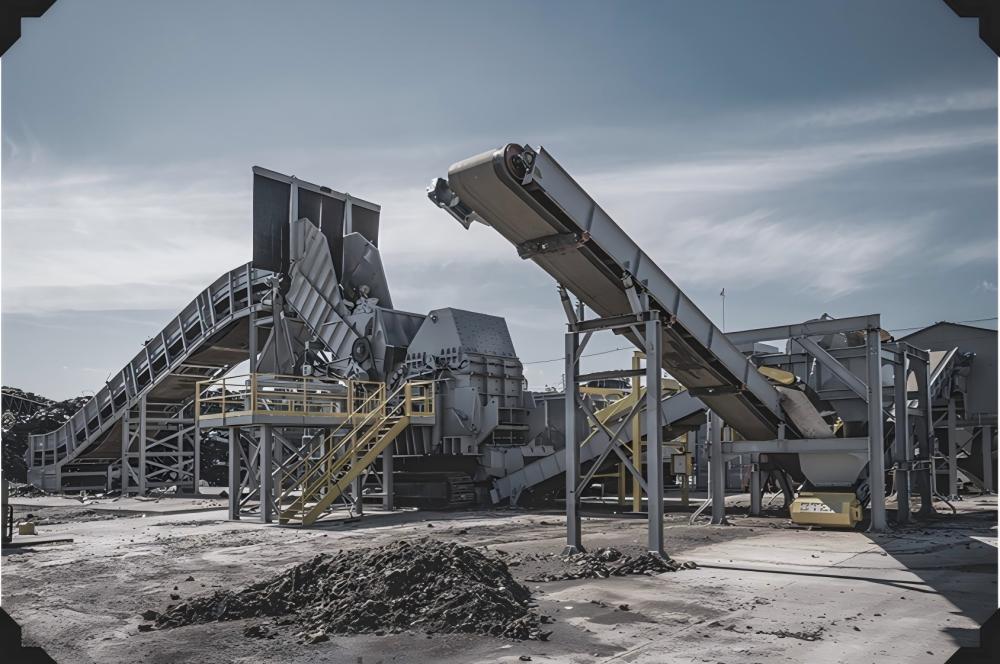
By systematically answering these questions, you can narrow down the Hammer Shredder Vs Jaw Crusher: Which Machine Is Better Scrap Size Reduction? dilemma to a data-driven decision. HARSLE provides consultation services to help simulate these conditions and select the optimal configuration for your specific scrap stream.
Frequently Asked Questions (FAQ)
1. Can a jaw crusher be used for aluminum cans?
Technically yes, but it is highly inefficient. Aluminum cans are too light and ductile; they will likely just flatten or ‘pancake’ between the jaws without significant size reduction or densification. A hammer shredder is the industry standard for UBC (Used Beverage Can) processing because it shreds and nuggets the cans for optimal melting.
2. Which machine is louder during operation?
The hammer shredder is significantly louder. The high-speed impacts and the air turbulence created by the rotor generate high decibel levels, often requiring acoustic enclosures. Jaw crushers operate at much lower speeds and, while still noisy, produce a lower-frequency sound that is easier to manage.
3. How often do hammers need to be replaced compared to jaw plates?
Hammers typically need attention every 40 to 100 hours of operation, depending on the abrasiveness of the scrap. They can often be rotated or hard-faced before full replacement. Jaw plates can last several hundred or even thousands of hours, especially if they are made of high-quality manganese steel and the material is not excessively abrasive.
4. Is a hammer shredder better for E-waste?
Yes. E-waste consists of many different materials (plastics, copper, gold, steel) bonded together. The impact action of a hammer shredder is excellent at breaking these bonds and liberating the individual components for downstream sorting (like eddy current separators or optical sorters), which a jaw crusher cannot do effectively.
5. Can I use a jaw crusher as a secondary stage?
It is uncommon. Jaw crushers are almost always used as primary crushers because their reduction ratio is limited. If you need further reduction after a jaw crusher, you would typically move to a cone crusher, a hammer mill, or a fine shredder.
6. What is the impact of ‘tramp metal’ on a hammer shredder?
Tramp metal (un-shreddable items) can cause significant damage if not handled. Most industrial hammer shredders include a ‘tramp metal trap’ or a ‘reject door.’ Centrifugal force throws the heavy, solid object into a separate chamber, protecting the rotor and grates from catastrophic failure.
7. Does HARSLE offer custom configurations for these machines?
Yes, HARSLE specializes in tailoring the rotor design, hammer metallurgy, and jaw plate profiles to match the specific scrap characteristics of the client, ensuring maximum efficiency and longevity of the equipment.


