
Four-Shaft Shredder Wear Parts Guide: How to Extend Blade and Cutter Life

Technical Overview of Four-Shaft Shredder Wear Parts
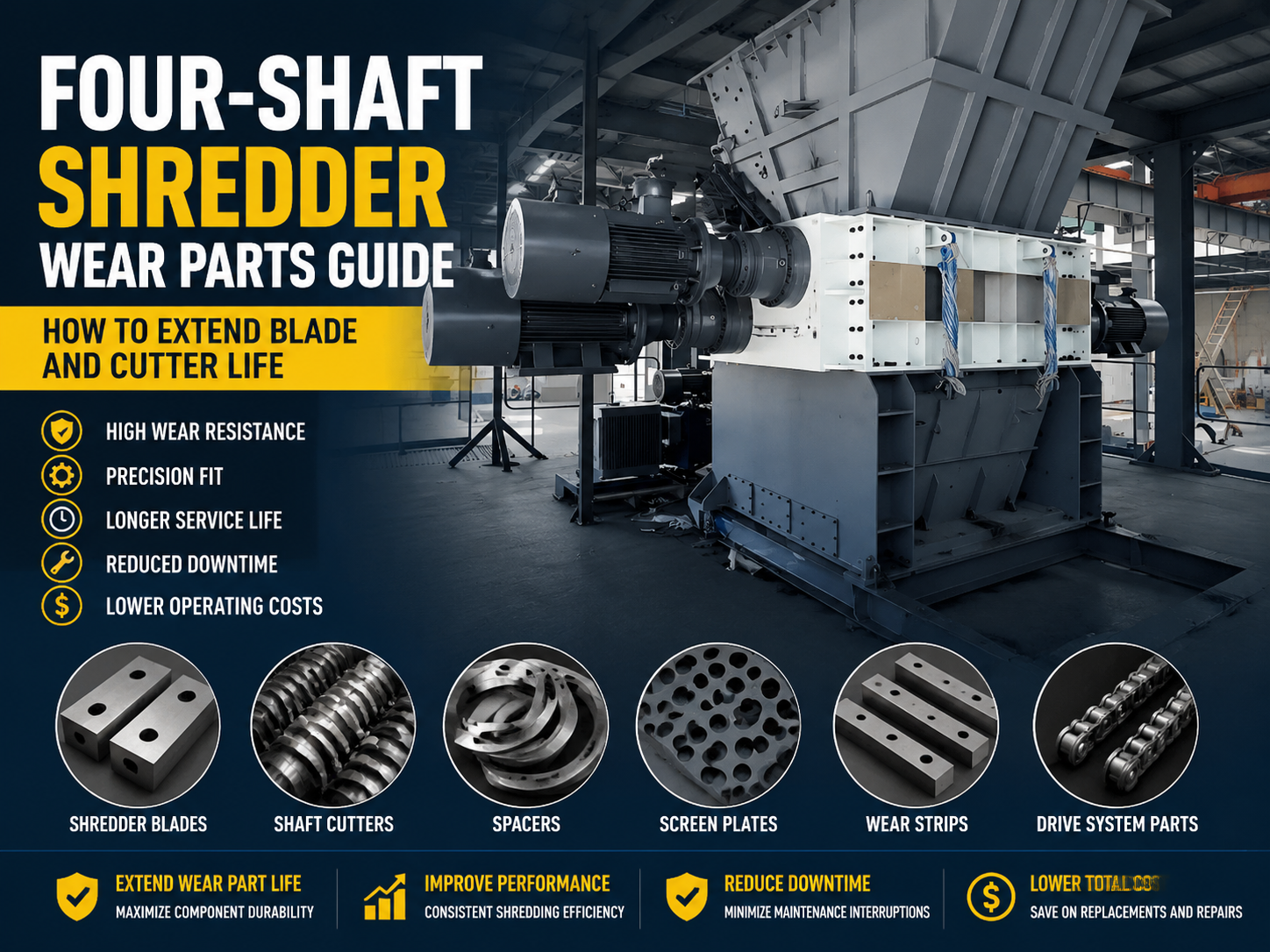
The four-shaft shredder is a cornerstone of modern industrial recycling and waste management, designed to handle the most demanding materials ranging from electronic waste and plastics to tires and light metals. Unlike single or double-shaft variants, the four-shaft design utilizes two primary cutting shafts and two secondary cleaning/feeding shafts. This configuration ensures that material is consistently fed into the cutting zone, preventing bridging and ensuring a uniform output size. However, the complexity of this machine means that the Four-Shaft Shredder Wear Parts : Extend Blade Cutter Life strategy is critical for operational efficiency.
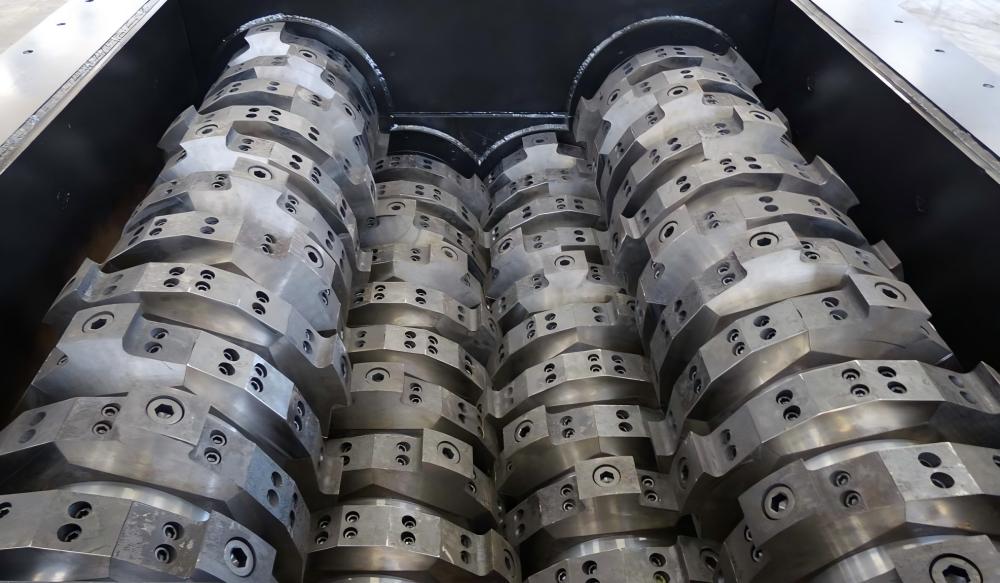
At the heart of the machine are the cutters (blades), spacers, and the shafts themselves. These components are subjected to extreme mechanical stress, including high torque, abrasive friction, and impact loads. The interaction between the four shafts creates a multi-directional shearing force. While this is highly effective for shredding, it also accelerates wear if the components are not properly maintained or if the material selection for the blades is mismatched with the application. Understanding the metallurgy and the mechanical dynamics of these parts is the first step in maximizing their lifespan.
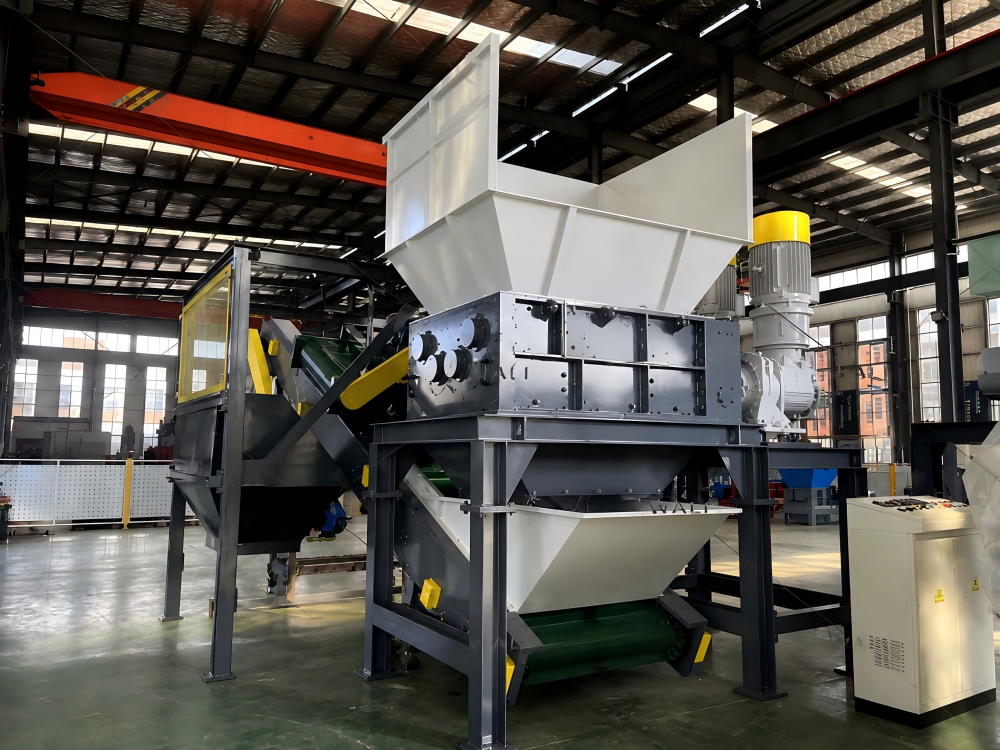
Wear in a four-shaft shredder typically manifests in three forms: abrasive wear, adhesive wear, and fatigue. Abrasive wear occurs when hard particles in the waste stream grind against the blade surface. Adhesive wear happens when high pressure causes localized welding and tearing between the blade and the material. Fatigue is the result of repeated cyclic loading, leading to micro-cracks and eventual chipping. By focusing on the Four-Shaft Shredder Wear Parts : Extend Blade Cutter Life, operators can mitigate these issues, reducing downtime and replacement costs significantly.
HARSLE emphasizes that the longevity of wear parts is not just about the quality of the steel but also about the precision of the assembly. The clearance between the cutting disks on the upper and lower shafts must be maintained within microns. Even a slight deviation can lead to increased friction, heat buildup, and premature failure. This guide explores the technical parameters and maintenance protocols necessary to keep these machines running at peak performance.
Core Parameters Influencing Wear Part Longevity
To effectively manage the lifespan of shredder components, one must understand the core technical parameters that govern their performance. The most critical parameter is the material composition of the blades. Common materials include D2 (DIN 1.2379), SKD11, and specialized shock-resistant alloys like S7. Each material offers a different balance of hardness (measured in HRC) and toughness. For instance, a higher HRC provides better resistance to abrasive wear but makes the blade more prone to chipping under heavy impact.
Another vital parameter is the tooth profile and geometry. The number of teeth on a cutter disk determines the ‘bite’ size. More teeth generally result in a smaller, more uniform output but increase the frequency of contact, leading to faster wear. Conversely, fewer teeth can handle bulkier items but put more strain on the motor and the shaft due to higher individual impact forces. The thickness of the blade also plays a role; thinner blades offer sharper cutting but are more susceptible to lateral bending forces.
Hardness and Heat Treatment
The heat treatment process is what defines the ultimate durability of the wear parts. Vacuum quenching and multiple tempering cycles are standard for high-quality HARSLE blades. This process ensures a uniform martensitic structure, which provides the necessary hardness while maintaining a core toughness that prevents catastrophic failure. If the heat treatment is inconsistent, the blade may develop ‘soft spots’ that wear down rapidly, throwing the entire shaft out of balance.
Surface Coating and Treatments
In recent years, advanced surface treatments such as Cryogenic Treatment and Hard Chrome Plating have been used to further extend the life of Four-Shaft Shredder Wear Parts : Extend Blade Cutter Life. Cryogenic treatment involves cooling the blades to sub-zero temperatures to transform retained austenite into martensite, increasing wear resistance by up to 50%. Hard coating can also reduce the coefficient of friction, allowing material to slide off the blade more easily and reducing heat generation.
Calculation Method for Wear Life and Replacement Intervals
Predicting when to replace or sharpen blades is essential for preventing damage to the shafts and motors. A common engineering approach is to calculate the ‘Specific Wear Rate’ (SWR). This is determined by the volume of material processed (V) divided by the loss in blade mass (M) over a set period (T). However, for practical shop-floor management, we use a simplified formula to estimate the remaining life of a cutter set.
Estimated Life (Hours) = (Initial Blade Width – Minimum Functional Width) / (Average Wear per 100 Hours)
To find the ‘Average Wear per 100 Hours’, operators should measure the blade tip at regular intervals (e.g., every 200 hours of operation). For example, if a blade starts at 50mm and after 200 hours it measures 49.5mm, the wear rate is 0.25mm per 100 hours. If the minimum functional width before the gap becomes too wide is 45mm, the remaining life is (49.5 – 45) / 0.0025 = 1,800 hours.
Furthermore, the ‘Throughput-to-Wear Ratio’ is a valuable KPI. By tracking the tonnage of material processed against the cost of blade refurbishment, facilities can determine the most cost-effective time to sharpen. Sharpening too early wastes usable material, while sharpening too late requires more material to be ground away to reach a sharp edge, ultimately shortening the total number of possible sharpening cycles.
Technical Parameter Table for Blade Selection
Choosing the right material is the foundation of the Four-Shaft Shredder Wear Parts : Extend Blade Cutter Life strategy. The following table compares common materials used in HARSLE four-shaft shredders.
| Material Grade | Hardness (HRC) | Toughness | Wear Resistance | Best Application |
|---|---|---|---|---|
| D2 / 1.2379 | 58-62 | Moderate | High | Plastics, Paper, Electronic Waste |
| SKD11 | 56-60 | Moderate | High | General Purpose, Light Metals |
| H13 / 1.2344 | 48-52 | Very High | Moderate | Heavy Impact, Bulky Wood, Tires |
| S7 (Shock) | 54-56 | High | Moderate | Contaminated Waste, High Impact |
| DC53 | 60-64 | High | Very High | High-Performance, Abrasive Plastics |
Common Engineering Mistakes in Shredder Maintenance
One of the most frequent mistakes in maintaining four-shaft shredders is neglecting the ‘Spacer Tension’. The spacers keep the blades at a fixed distance. Over time, vibration can cause the locking nuts to loosen, leading to ‘blade float’. When blades float, they no longer shear the material cleanly; instead, they tear it, which significantly increases the torque required and generates excessive heat. This heat can eventually detemper the steel, ruining the blades permanently.
Another common error is the improper sharpening technique. Many operators use manual grinders that generate localized heat, which can create micro-cracks in the carbide structure of the steel. Professional sharpening should always be done with coolant and on a precision surface grinder to ensure that all blades in a set are ground to the exact same dimension. If one blade is even 0.5mm shorter than the others, it will not contribute to the cutting, placing an unfair load on the remaining blades.
Finally, ignoring the ‘Screen Condition’ is a major oversight. In a four-shaft shredder, the screen determines the final particle size. If the screen is clogged or damaged, material stays in the cutting chamber longer than necessary (over-shredding). This results in ‘parasitic wear’, where the blades are grinding against already-shredded material, leading to unnecessary abrasion and energy waste. Regular cleaning and inspection of the screen are vital components of the Four-Shaft Shredder Wear Parts : Extend Blade Cutter Life protocol.
Selection Checklist for Replacement Wear Parts
When it comes time to purchase new wear parts for your HARSLE shredder, use this checklist to ensure you are getting components that will last:
- Material Certification: Does the supplier provide a mill certificate for the steel grade (e.g., D2, DC53)?
- Heat Treatment Records: Are the blades vacuum-quenched and tempered at least twice?
- Dimensional Tolerance: Are the blades manufactured to a tolerance of +/- 0.02mm?
- Tooth Geometry: Is the tooth profile optimized for your specific material (e.g., hooked teeth for plastic film vs. blunt teeth for wood)?
- Surface Finish: Is the surface ground to a smooth finish to reduce friction and material adhesion?
- Spacer Compatibility: Are the spacers made from a hardened material to prevent compression over time?
- Shaft Fit: Is the internal bore of the blade precision-machined to match the hexagonal or splined shaft perfectly?
- Weight Balancing: For high-speed shredders, are the blades weight-matched to prevent shaft vibration?
Frequently Asked Questions (FAQ)
How often should I sharpen my four-shaft shredder blades?
The frequency depends entirely on the material being processed. For clean plastics, you might sharpen every 500-800 hours. For abrasive materials like glass-filled nylon or contaminated e-waste, you may need to sharpen every 200 hours. The best indicator is a drop in throughput or an increase in motor amperage.
Can I weld-repair chipped shredder teeth?
While possible, it is generally not recommended for high-performance four-shaft shredders. Welding introduces intense heat that changes the molecular structure of the surrounding steel, often leading to a ‘brittle zone’ where the tooth will likely chip again. It also throws off the balance of the shaft.
What is the benefit of a four-shaft design over a two-shaft design for wear?
The four-shaft design actually helps extend blade life by ensuring a more consistent feed. In a two-shaft shredder, material can often ‘bounce’ on top of the shafts, causing unnecessary friction. The upper shafts in a four-shaft system force the material down, ensuring every rotation results in a productive cut, thereby reducing ‘idle wear’.
Does lubrication affect blade life?
While the cutting edges themselves are not typically lubricated, the bearings and the seals that protect the shaft assembly are critical. If a bearing fails or a seal leaks, the shaft can become misaligned, leading to catastrophic blade-on-blade contact. Using high-temperature, extreme-pressure (EP) grease is essential.
How do I know if my blades are made of the right material?
If your blades are chipping frequently, the material is likely too hard or brittle for the application (e.g., using D2 for heavy metal scrap). If the blades are dulling very quickly without chipping, the material is likely too soft or lacks sufficient carbide content. Consult with HARSLE technical support to match the alloy to your waste stream.
What is the ‘Gap’ and why does it matter?
The gap is the distance between the cutting edge of a blade on one shaft and the side of the blade on the opposing shaft. For thin materials like film, this gap must be very tight (0.1mm – 0.3mm). For bulky items, a larger gap is permissible. A gap that is too wide will cause material to jam, increasing the load on the wear parts.


