
Four-Shaft Shredder vs. Dual-Shaft Shredder: Technical Differences and Selection Guide

Technical Overview: Understanding the Mechanics of Industrial Shredding
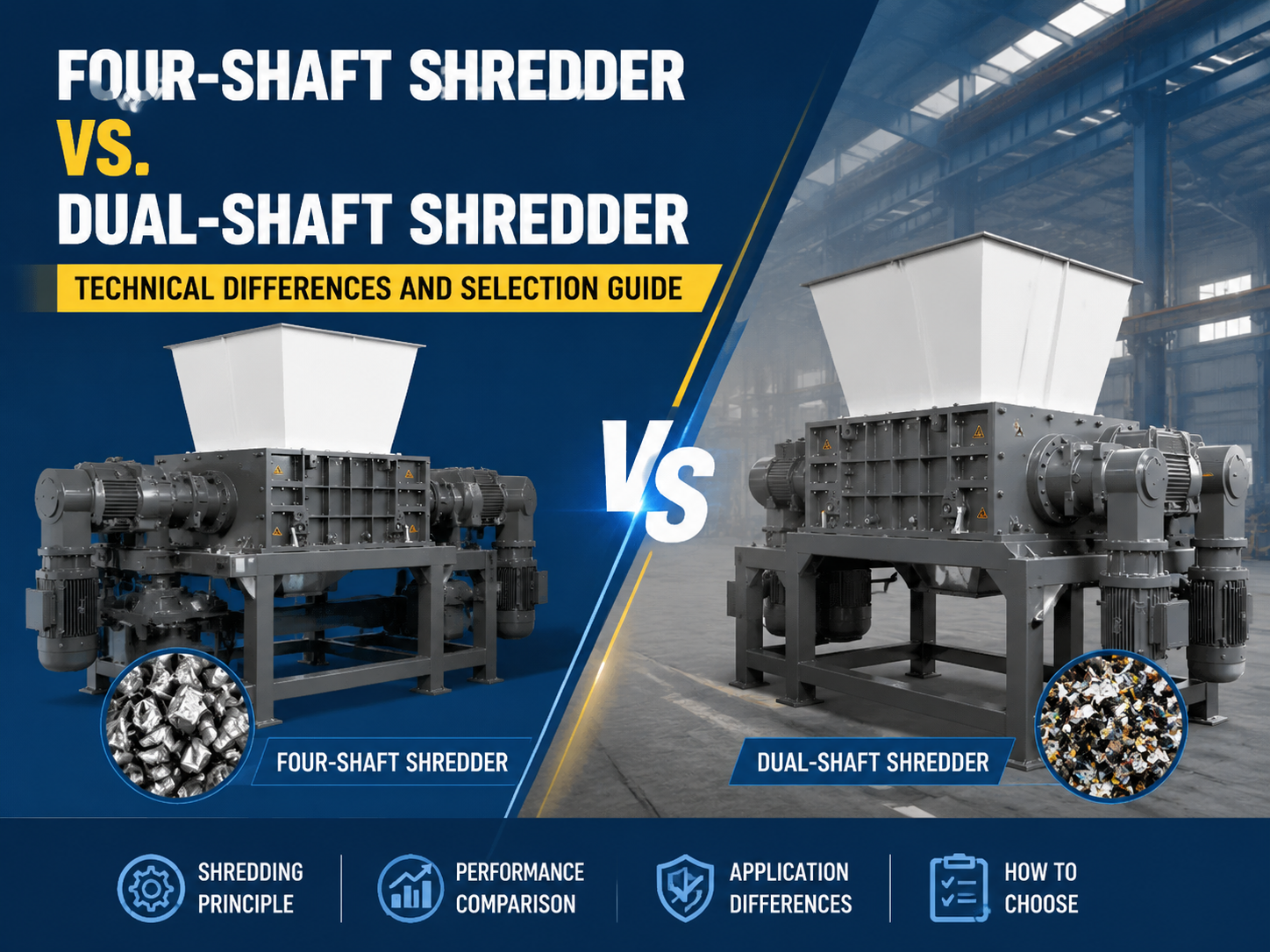
In the realm of industrial waste management and material recycling, the choice between a dual-shaft shredder and a four-shaft shredder is a critical decision that impacts throughput, output quality, and operational costs. Both machines operate on the principle of low-speed, high-torque shearing, but their mechanical architectures serve distinct purposes. HARSLE, a leader in metal fabrication and processing machinery, emphasizes that selecting the right configuration depends entirely on the physical characteristics of the input material and the required final particle size.
A dual-shaft shredder, often referred to as a twin-shaft shredder, consists of two parallel shafts equipped with interlocking cutting disks. These disks rotate toward each other at relatively low speeds. As material is fed into the hopper, the hooks on the blades grab the material and pull it through the cutting zone, where it is sheared between the blades of the opposing shafts. This design is exceptionally robust and is primarily used for the primary reduction of bulky materials such as scrap metal, tires, plastic drums, and electronic waste. The primary advantage of the dual-shaft system is its ability to handle massive, irregularly shaped objects without frequent jamming, thanks to its high-torque drive systems.
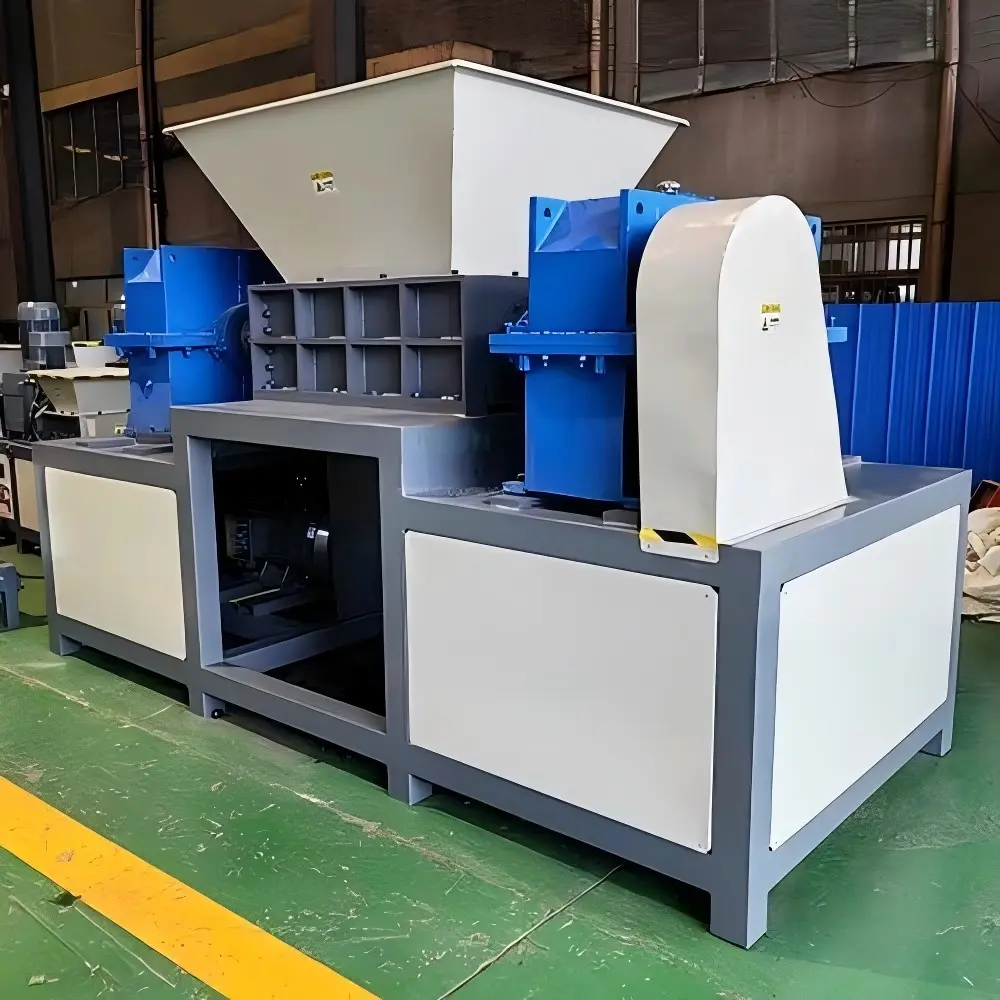
In contrast, a four-shaft shredder incorporates two additional shafts—often called auxiliary or cleaning shafts—positioned above or beside the two main cutting shafts. This four-shaft configuration creates a more complex cutting environment. The upper shafts act as feeders, grabbing material and forcing it down into the lower cutting shafts. More importantly, four-shaft shredders are typically equipped with a screen (sieve) located beneath the cutting chamber. Material that is not yet small enough to pass through the screen is recirculated by the auxiliary shafts back into the cutting zone. This ensures a consistent, uniform output size in a single pass, which is a significant departure from the dual-shaft design where output size is largely determined by blade width and hook geometry.
The fundamental difference lies in the “closed-loop” nature of the four-shaft shredder versus the “open-loop” nature of the dual-shaft shredder. While a dual-shaft machine is a workhorse for volume reduction, the four-shaft machine is a precision tool for size control. For industries requiring specific grain sizes for downstream processes—such as plastic pelletizing or RDF (Refuse Derived Fuel) production—the four-shaft shredder is often the superior choice despite its higher mechanical complexity.
Core Parameters: Defining Performance and Efficiency
When evaluating these machines, several core parameters must be analyzed to ensure the equipment meets the application’s demands. These parameters include torque, shaft speed, blade geometry, and motor power. In HARSLE’s engineering standards, these factors are balanced to maximize the lifespan of the cutting tools while maintaining high throughput.
1. Torque and Cutting Force: Torque is the most critical factor in shredding. It determines the machine’s ability to shear through tough materials like reinforced rubber or thick-walled metal. Dual-shaft shredders generally offer higher torque per shaft because the power is distributed across only two shafts. In four-shaft models, the power is distributed across four shafts, which requires a more sophisticated gearbox design to maintain high cutting forces at the primary shearing points.
2. Shaft Speed (RPM): Both types operate at low speeds, typically between 10 and 40 RPM. This low-speed operation is intentional; it minimizes dust generation, reduces noise levels, and prevents the material from melting due to friction. However, the four-shaft shredder often runs the auxiliary shafts at slightly different speeds than the main shafts to optimize the feeding and recirculation process.
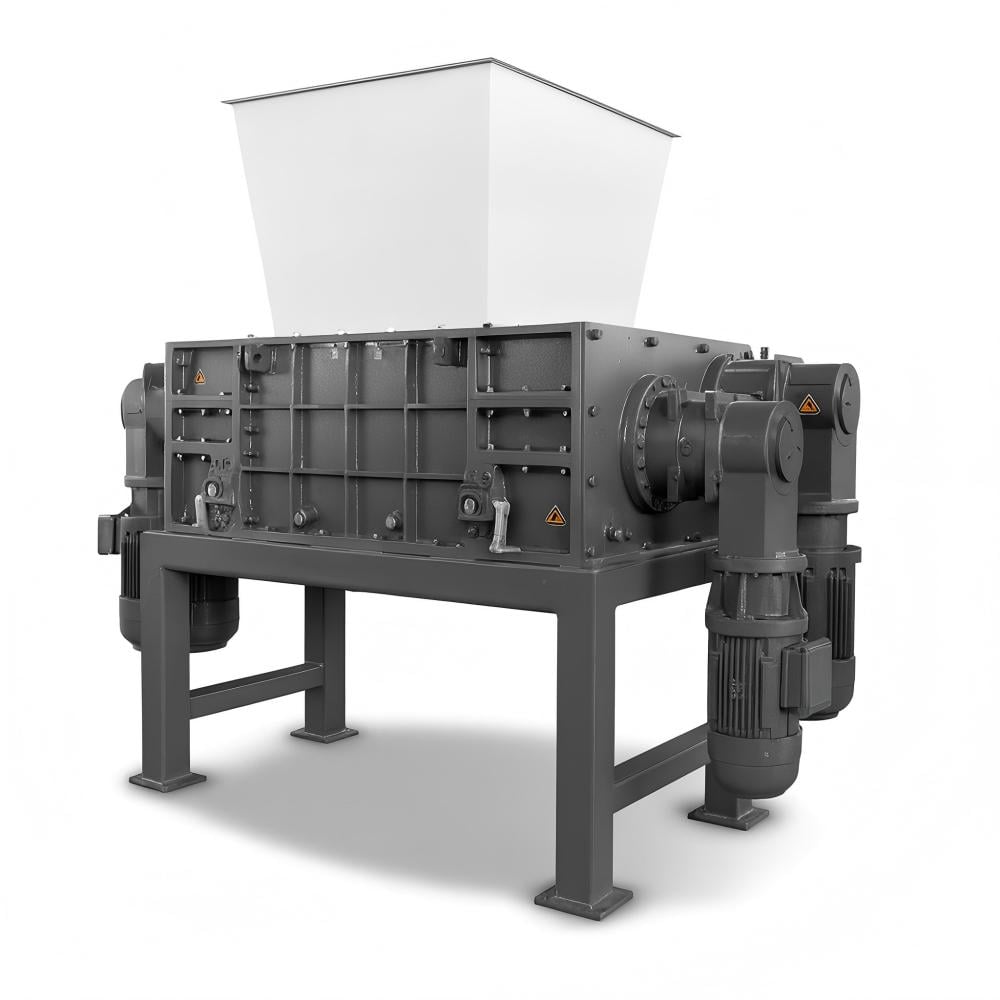
3. Blade Geometry and Material: The blades (or cutters) are the heart of the shredder. For dual-shaft machines, blades are usually thicker with fewer hooks to handle heavy-duty crushing. Four-shaft machines use blades designed for finer shearing. HARSLE utilizes high-strength alloy steels like Cr12MoV or D2, which undergo specialized vacuum heat treatment to achieve a hardness of HRC 58-62, ensuring long-term wear resistance even when processing abrasive materials.
4. Screen Integration: This is a defining parameter for four-shaft shredders. The screen size determines the maximum dimension of the output material. In a dual-shaft shredder, the output is typically long, strip-like pieces. In a four-shaft shredder, the output is more cubic and uniform. If your process requires an output smaller than 50mm, a four-shaft shredder with an integrated screen is almost always necessary.
Calculation Method: Engineering the Right Shredding Force
To select the correct shredder, engineers must calculate the required torque and power based on the material’s shear strength. The basic formula for calculating the torque (T) required for a shredder shaft is derived from the motor power (P) and the rotational speed (n).
Torque Calculation:
The standard formula is: T = 9550 × (P × η) / n
Where:
T = Torque in Newton-meters (Nm)
P = Motor power in Kilowatts (kW)
η = Efficiency of the gearbox (typically 0.9 to 0.95)
n = Shaft speed in Revolutions Per Minute (RPM)
For example, if a HARSLE dual-shaft shredder uses a 45kW motor and operates at 20 RPM, the total torque generated is approximately 20,418 Nm. This torque must be sufficient to overcome the shear resistance of the material. The shear resistance is calculated by multiplying the shear strength of the material (e.g., 250 MPa for certain plastics) by the cross-sectional area being cut by the blade hook.
Throughput Estimation:
Throughput (Q) can be estimated using the formula: Q = V × ρ × n × k
Where:
V = Volume of material displaced per revolution
ρ = Density of the material
n = RPM
k = Filling coefficient (usually 0.2 to 0.5 depending on material bulkiness)
In a four-shaft shredder, the calculation becomes more complex because the screen limits the throughput. The “recirculation rate” must be factored in. If 30% of the material is recirculated because it doesn’t pass the screen on the first attempt, the effective throughput is reduced, requiring either higher speeds or larger cutting chambers to meet production targets.
Parameter Table: Dual-Shaft vs. Four-Shaft Comparison
The following table provides a technical comparison between standard HARSLE dual-shaft and four-shaft shredder models to assist in the selection process.
| Feature | Dual-Shaft Shredder | Four-Shaft Shredder |
|---|---|---|
| Primary Function | Volume reduction / Primary shredding | Size control / Secondary shredding |
| Output Shape | Irregular strips / Large chunks | Uniform, cubic particles |
| Screen Integration | Rarely used (causes clogging) | Standard (integrated sieve) |
| Material Feeding | Gravity fed, high-torque grab | Active feeding via auxiliary shafts |
| Recirculation | None (single pass) | Automatic internal recirculation |
| Maintenance Complexity | Lower (fewer shafts/bearings) | Higher (more moving parts) |
| Typical Applications | Car tires, metal drums, furniture | E-waste, medical waste, plastics |
| Torque Distribution | Concentrated on two shafts | Distributed across four shafts |
Common Engineering Mistakes in Shredder Selection
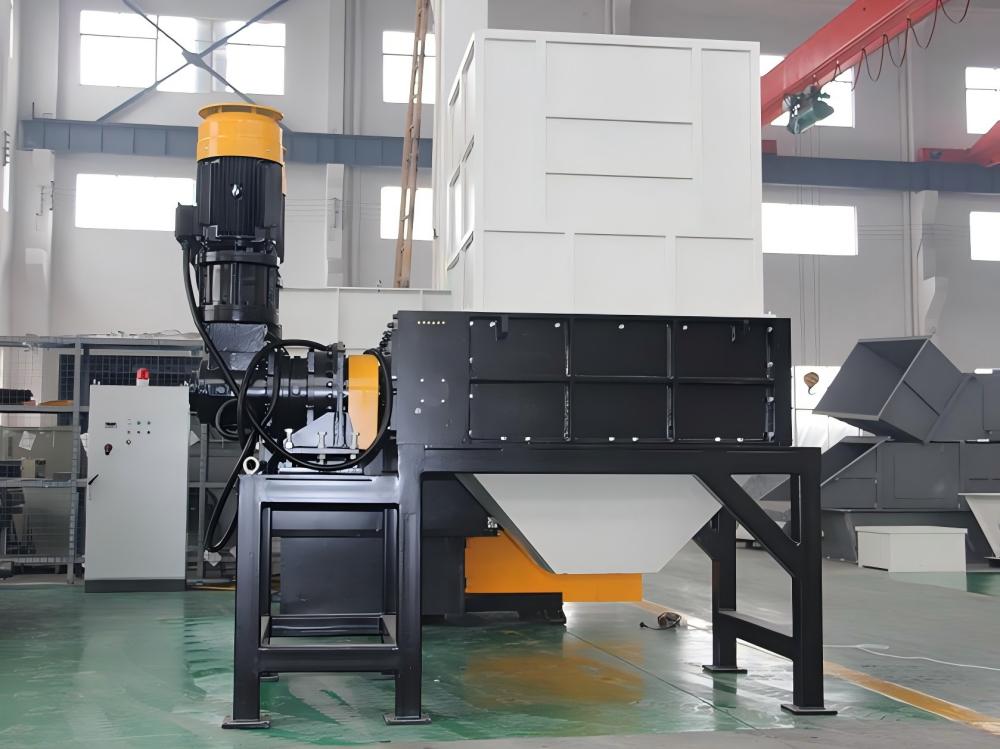
Selecting an industrial shredder involves more than just matching a machine to a material. Many engineering mistakes can lead to premature equipment failure or inefficient production. One of the most common errors is underestimating the motor power required for tough materials. While a lower-power motor might save on initial costs, it will lead to frequent motor stalls and excessive wear on the drive train as the machine struggles to shear through dense objects.
Another frequent mistake is ignoring the material’s moisture and abrasiveness. For instance, shredding glass-filled plastics or sandy agricultural films with standard carbon steel blades will result in rapid blunting. In such cases, HARSLE recommends specialized surface coatings or high-alloy tool steels. Furthermore, failing to account for “bridging” in dual-shaft shredders—where material sits on top of the shafts without being grabbed—can drastically reduce throughput. This is often solved by adding a hydraulic pusher or opting for a four-shaft design where the upper shafts force the material down.
In four-shaft shredders, a common mistake is improper screen sizing. If the screen mesh is too small for the material’s moisture content, the screen will blind (clog), leading to heat buildup and potential mechanical damage. Engineers must balance the desire for small output size with the physical realities of the material’s flow characteristics. Lastly, neglecting the maintenance of the “cleaning fingers” or spacers can lead to material buildup between the blades, increasing friction and energy consumption while reducing cutting efficiency.
Selection Checklist: Choosing the Right Machine for Your Facility
To ensure you select the most efficient shredder for your specific application, follow this comprehensive selection checklist:
- Define the Input Material: What is the toughest component? (e.g., steel reinforcement in tires, thick HDPE walls).
- Determine Required Output Size: Do you need a specific grain size (e.g., <30mm) or just volume reduction? If size control is critical, choose a four-shaft shredder.
- Calculate Required Throughput: How many tons per hour (TPH) do you need to process? Ensure the chamber size and motor power support this.
- Assess Material Contamination: Does the waste contain abrasives like sand, stones, or metals? This dictates blade material and hardness.
- Evaluate Space Constraints: Four-shaft shredders are often taller due to the auxiliary shafts and screen assembly. Ensure your facility can accommodate the height.
- Maintenance Access: Check if the machine allows for easy blade replacement and screen cleaning. HARSLE designs feature split-bearing housings for faster maintenance.
- Power Supply: Ensure your facility’s electrical grid can handle the high startup current of large shredder motors, or consider a Soft Starter/VFD.
- Budget vs. ROI: While four-shaft shredders have a higher initial cost, their ability to produce a finished product in one pass may eliminate the need for a secondary granulator, saving money in the long run.
Frequently Asked Questions (FAQ)
1. Can a dual-shaft shredder produce a uniform output size?
Generally, no. A dual-shaft shredder produces strips or chunks that vary in length. The width is consistent (determined by the blade thickness), but the length is random. If you need uniform dimensions, a four-shaft shredder or a secondary granulator is required.
2. How often do the blades need to be sharpened?
This depends entirely on the material. For clean plastics, blades may last 1,000+ hours. For abrasive materials like glass-filled nylon or contaminated scrap, they may need attention every 200-400 hours. HARSLE blades are designed to be multi-sided or weld-repaired to extend their service life.
3. Why are four-shaft shredders more expensive?
Four-shaft shredders require two additional shafts, more blades, a more complex gearbox to synchronize four shafts, and a screen mechanism. The increased engineering and component count naturally lead to a higher price point, but they offer greater functionality for specific sizing needs.
4. Is a hydraulic drive better than an electric drive?
Hydraulic drives offer excellent shock absorption and variable speed control, making them ideal for extremely heavy-duty, unpredictable scrap. Electric drives (with VFDs) are more energy-efficient and easier to maintain for most standard industrial recycling applications. HARSLE provides both options based on customer requirements.
5. Can these shredders handle wet materials?
Yes, but with precautions. Wet materials can cause “clumping” in four-shaft screens. Stainless steel components or specialized drainage systems in the cutting chamber may be necessary to prevent corrosion and clogging.


