Double-Shaft Shredder Technical Guide for Tire, Plastic, and Scrap Material Processing

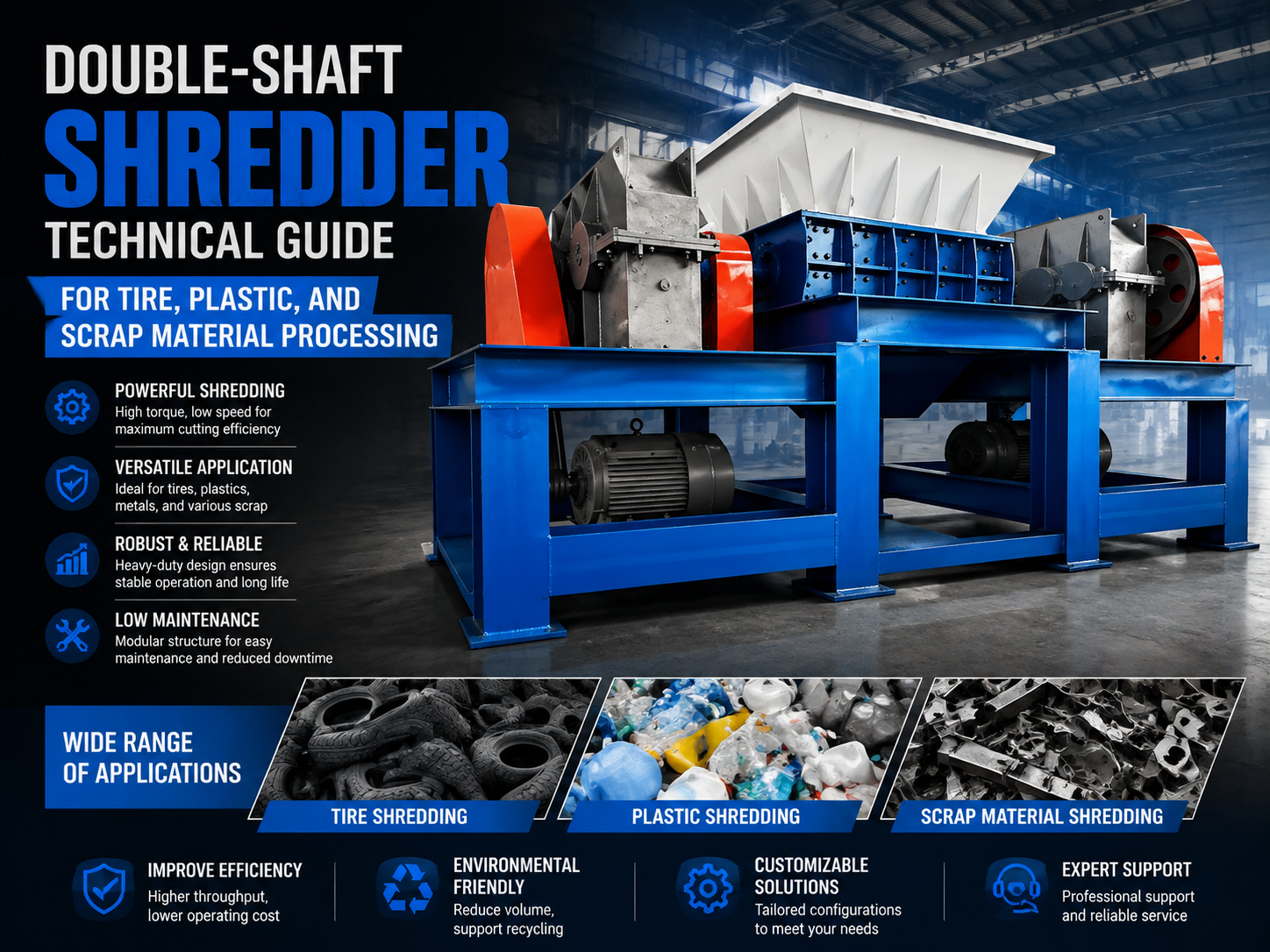
Technical Overview of Double-Shaft Shredders
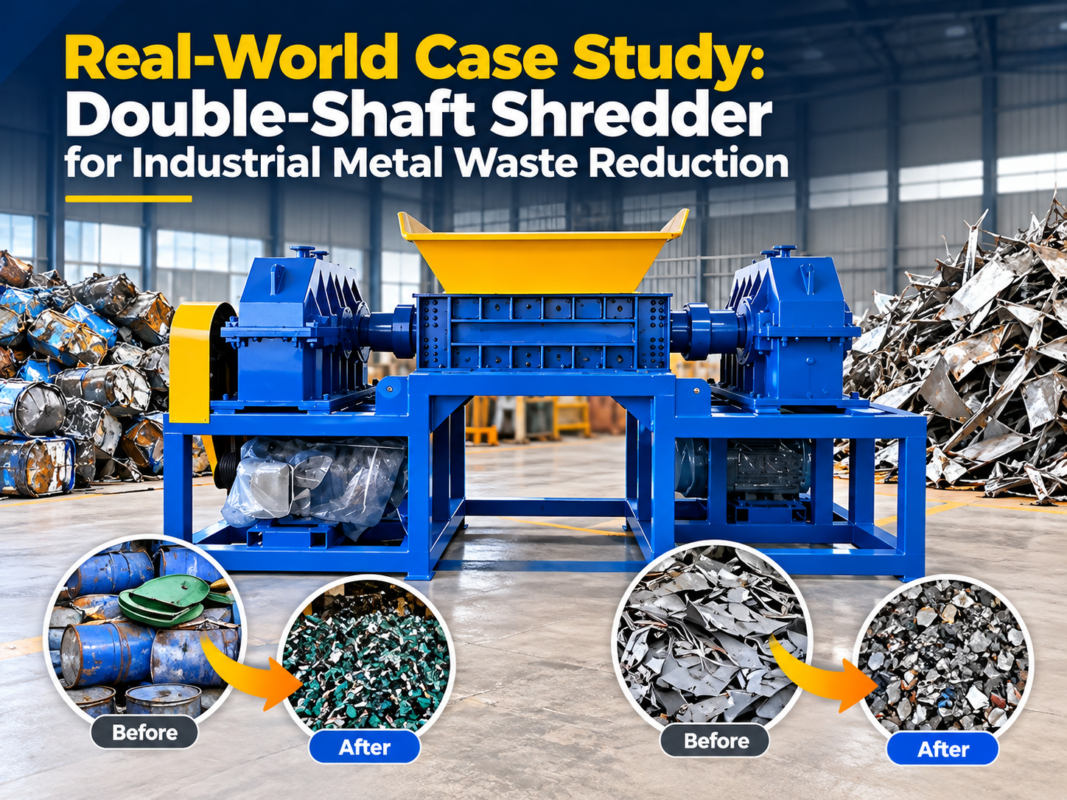
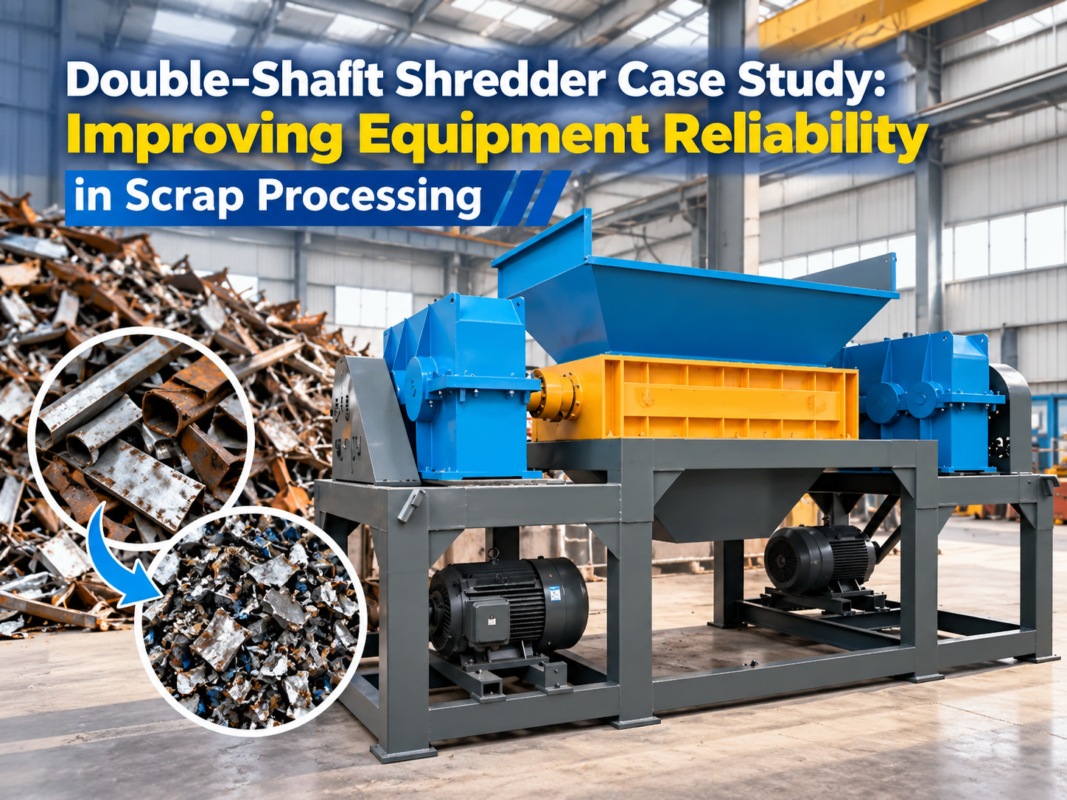
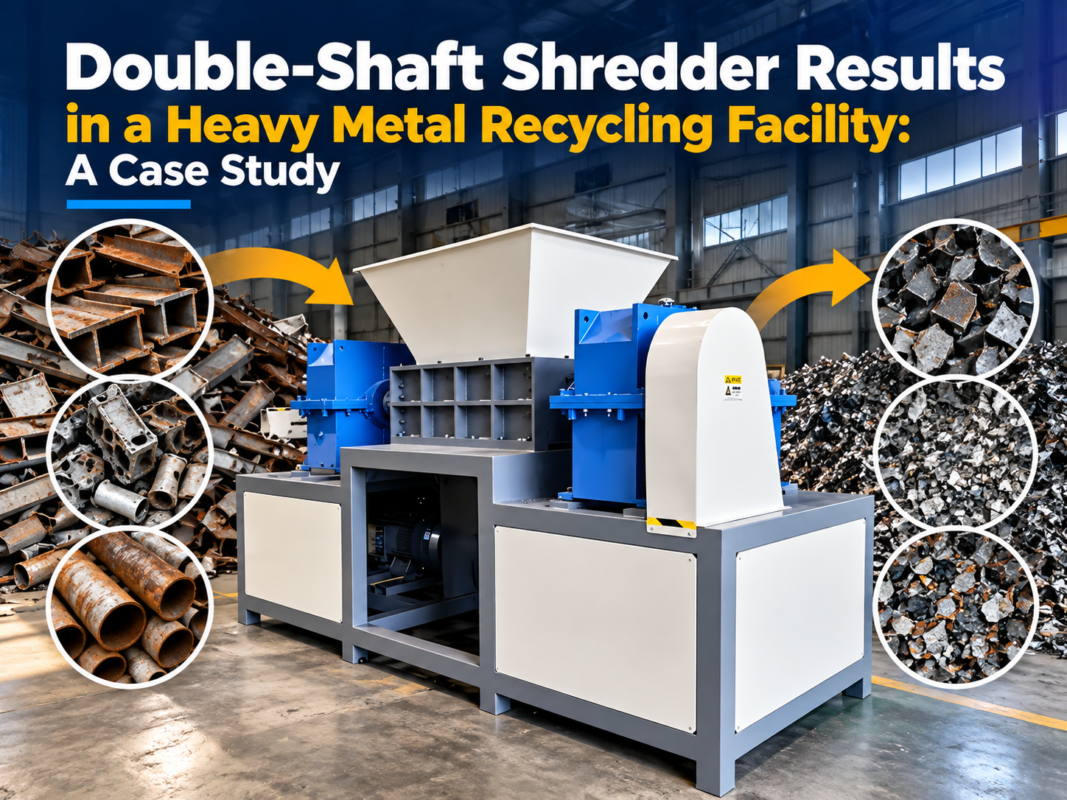
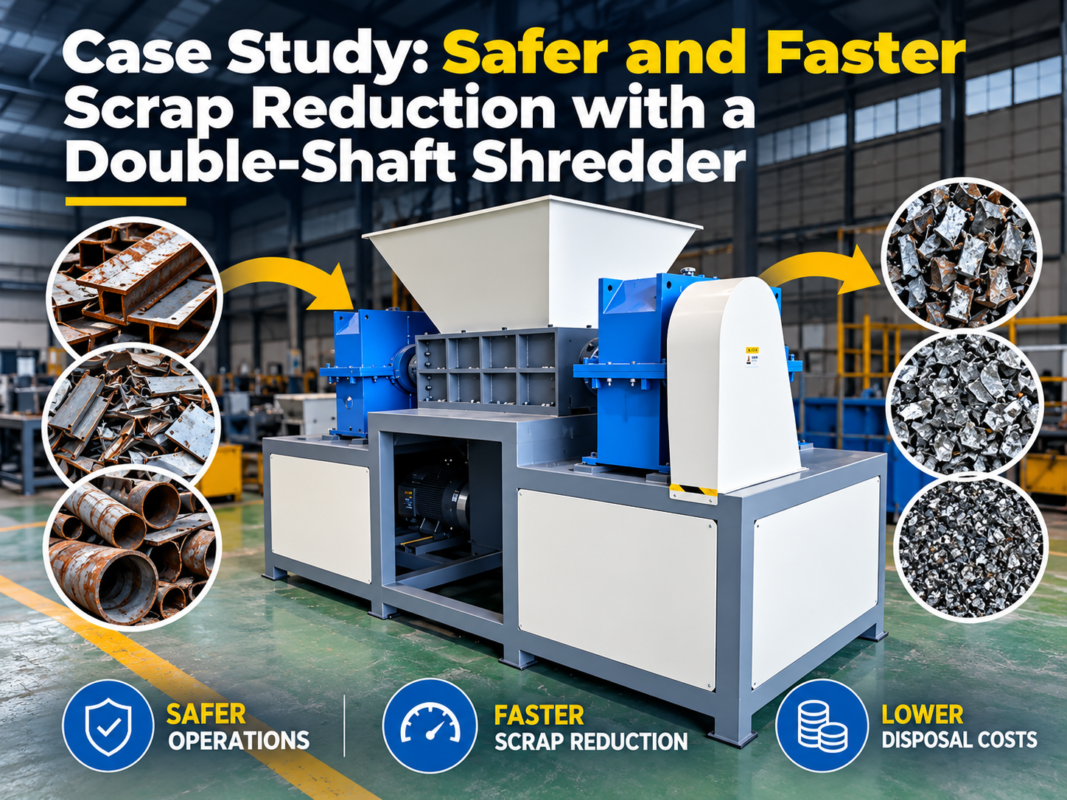
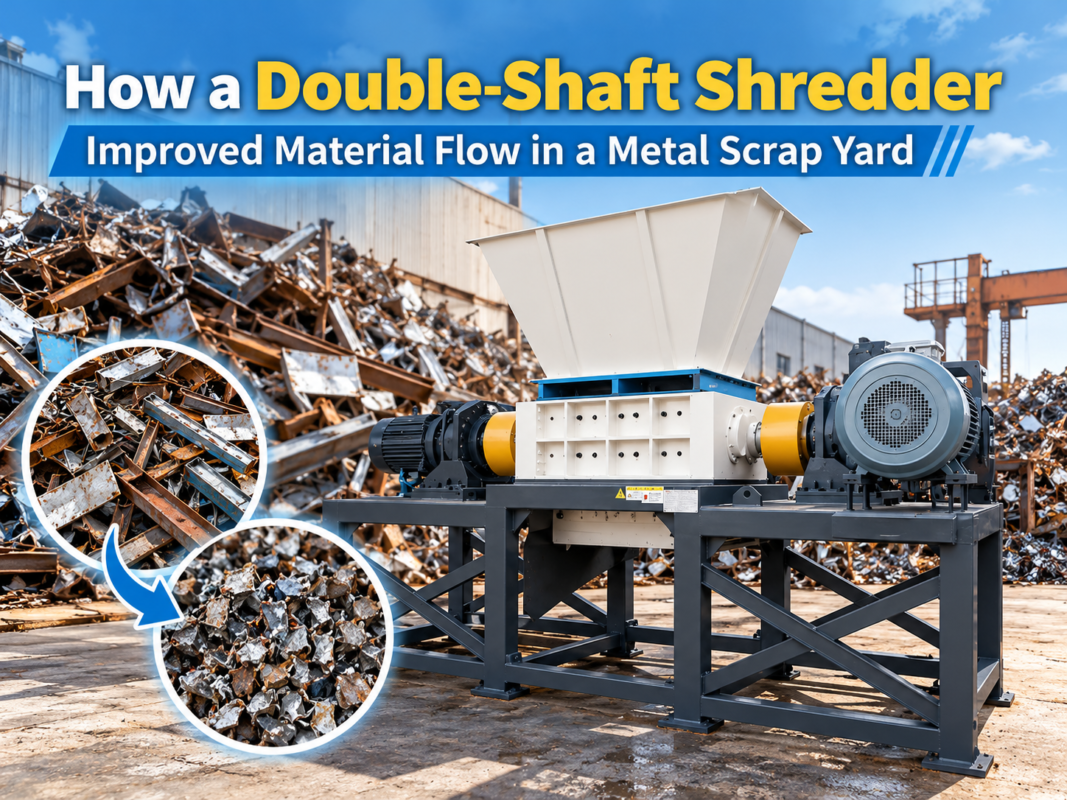
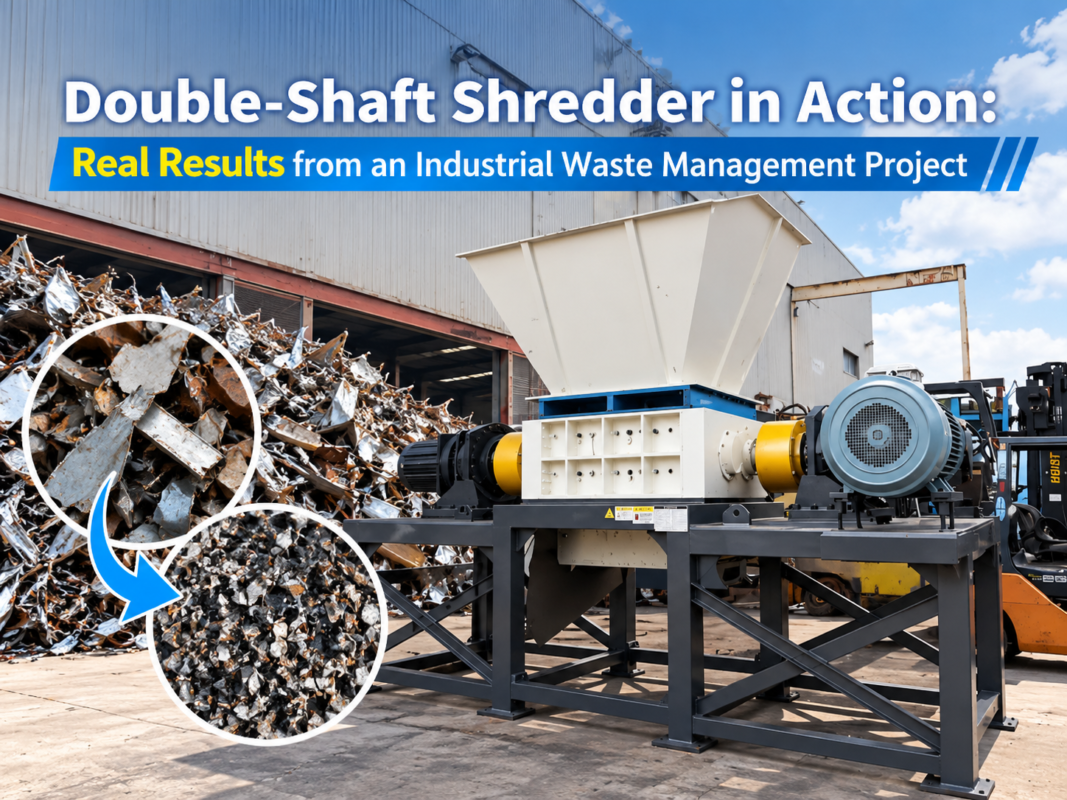
The double-shaft shredder, often referred to as a dual-shaft or shear shredder, represents the pinnacle of primary size reduction technology in the recycling and waste management industries. Unlike high-speed granulators that rely on impact, the double-shaft shredder operates on a low-speed, high-torque principle. This design allows it to process incredibly tough materials—ranging from steel-reinforced tires to bulky plastic drums and light scrap metal—with minimal dust generation and noise. At its core, the machine utilizes two parallel shafts equipped with interlocking cutting disks. As these shafts rotate toward each other, the hooks on the blades grab the material and pull it into the cutting chamber, where it is sheared, torn, and squeezed between the blade edges.
HARSLE’s engineering approach to double-shaft shredders focuses on structural rigidity and torque efficiency. The frame is typically constructed from high-strength steel plates, precision-machined to ensure perfect alignment of the shafts. This alignment is critical because even a millimeter of deviation can lead to uneven blade wear or catastrophic shaft failure under heavy loads. The low-speed operation (typically between 10 to 25 RPM) ensures that the machine can handle non-shreddable items by triggering an automated reverse cycle via the PLC, preventing damage to the motors and gearboxes.
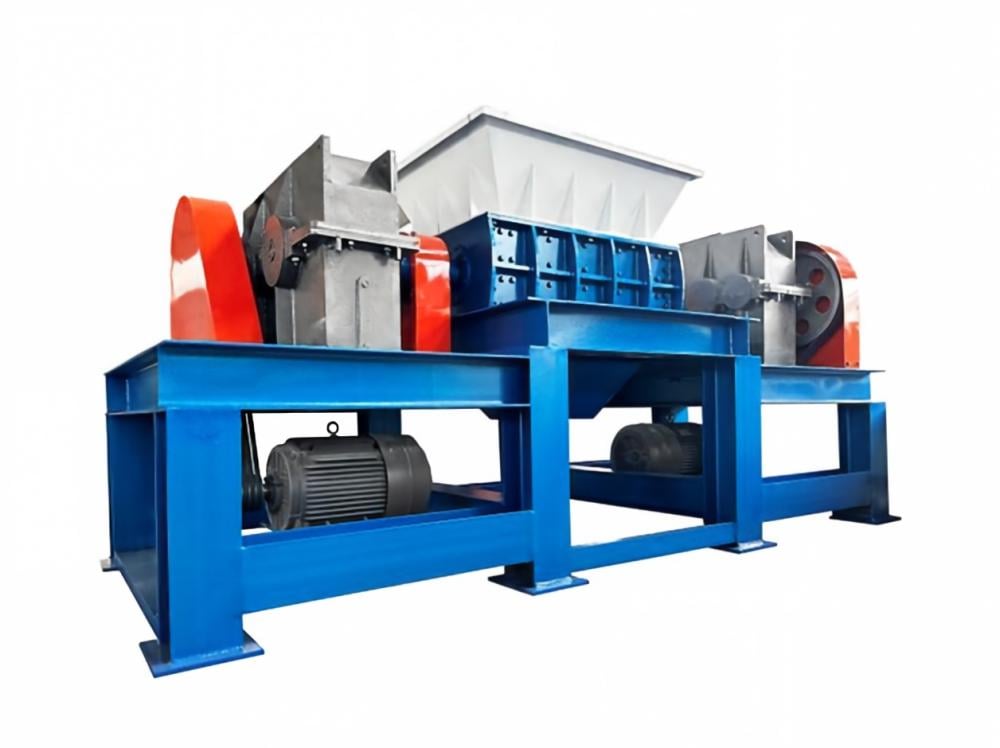
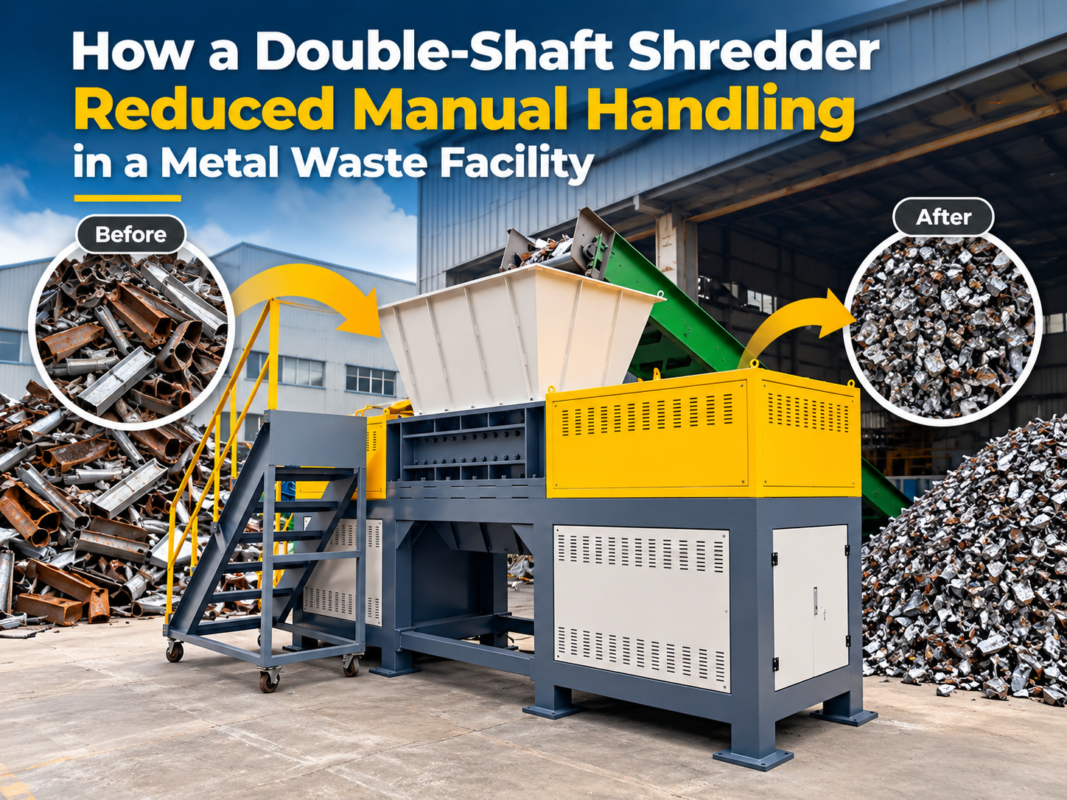
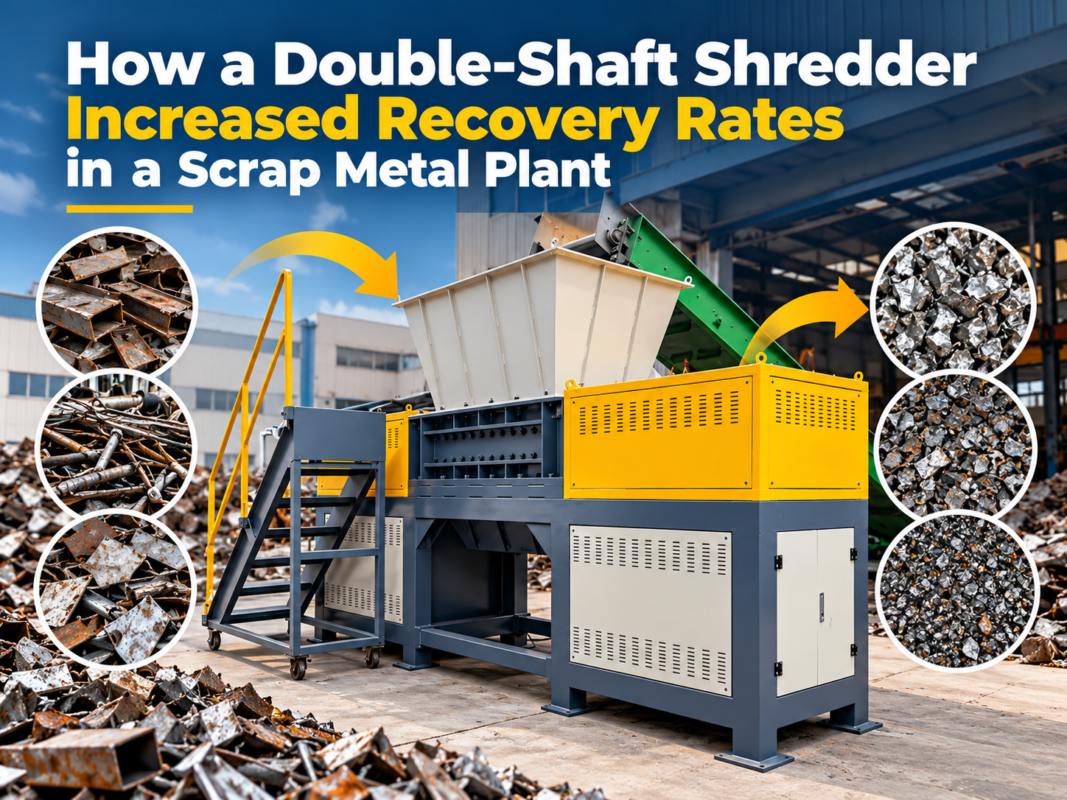
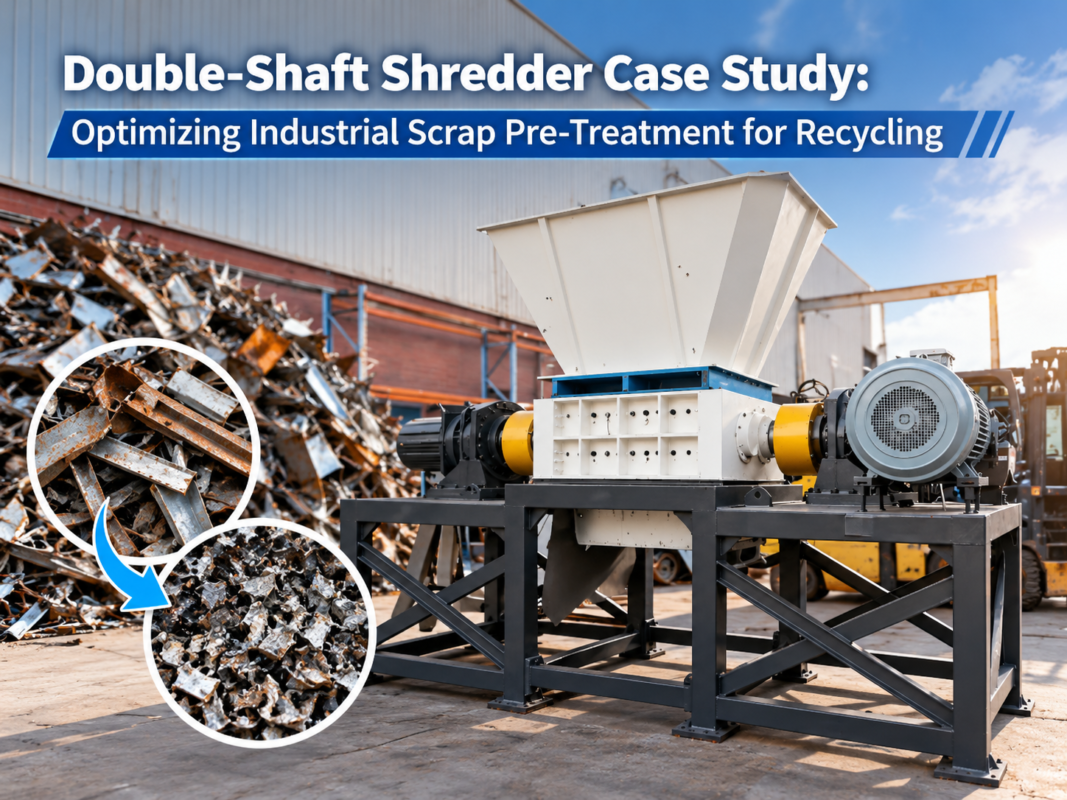
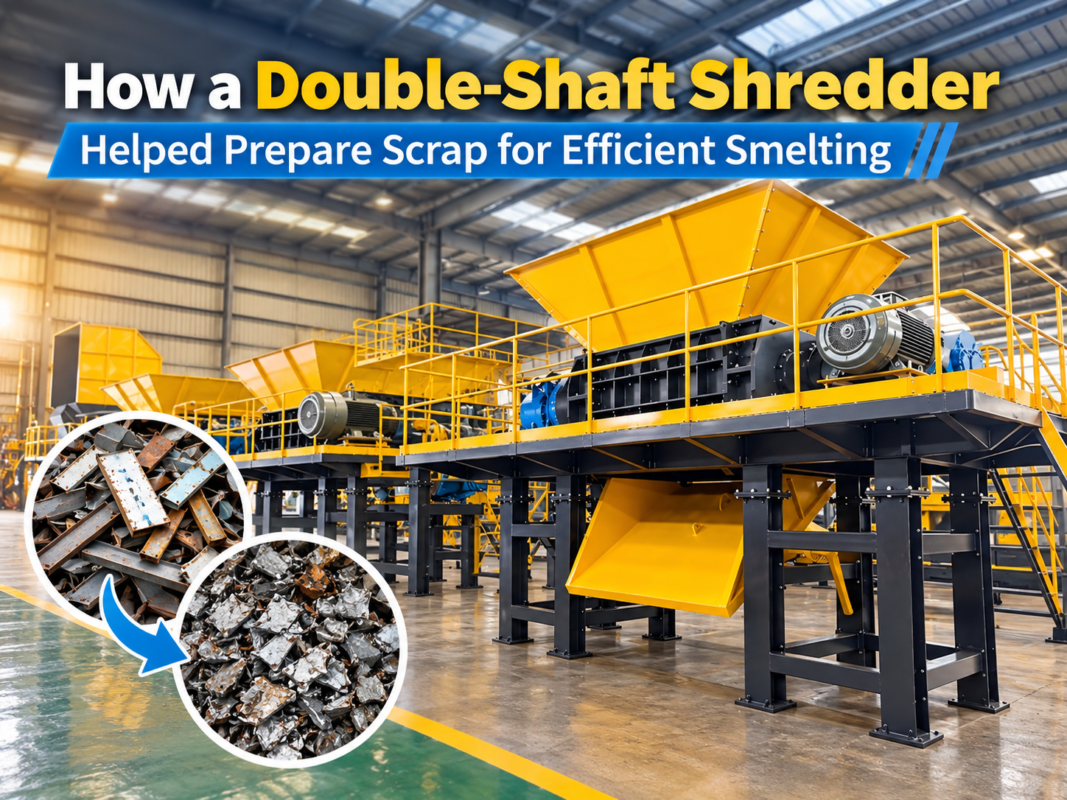
In the context of tire, plastic, and scrap material processing, the double-shaft shredder serves as the ‘workhorse’ that prepares raw waste for secondary processing. For instance, in tire recycling, the shredder must contend with high-tensile steel wires embedded in the rubber. A standard single-shaft shredder would struggle with the heat and friction, but the shearing action of the double-shaft design effectively cuts through the composite material. Similarly, for bulky plastics like HDPE pipes or automotive bumpers, the large intake throat of a dual-shaft system eliminates the need for manual pre-cutting, significantly reducing labor costs and increasing safety.
Core Parameters and Component Engineering
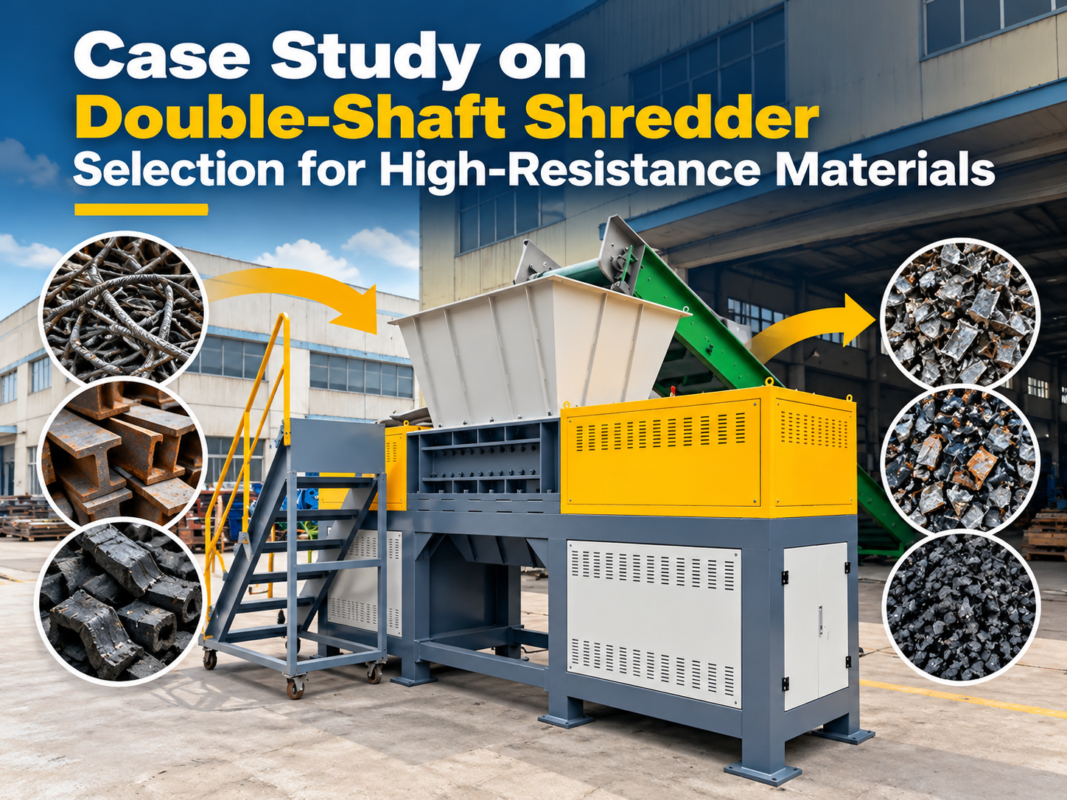
Understanding the core parameters of a double-shaft shredder is essential for optimizing throughput and ensuring machine longevity. The most critical components include the blades (cutters), the shafts, the gearbox, and the motor. Each of these must be synchronized to handle the specific resistance of the target material. For example, shredding scrap metal requires a significantly higher torque-to-speed ratio compared to shredding light plastics. HARSLE machines utilize planetary gearboxes, which offer superior torque density and shock resistance compared to traditional spur gearboxes.
The blade geometry is perhaps the most variable and vital parameter. Blades are defined by their thickness, the number of hooks (or teeth), and their material composition. For tire processing, blades are often made from D2 or SKD-11 tool steel, heat-treated to a Rockwell hardness (HRC) of 58-62. The number of hooks determines the ‘grab’ and the final particle size. A single-hook blade is ideal for heavy scrap metal as it provides maximum piercing force, while multi-hook blades (3 to 5 hooks) are better suited for plastics and rubber to increase the number of cuts per revolution.
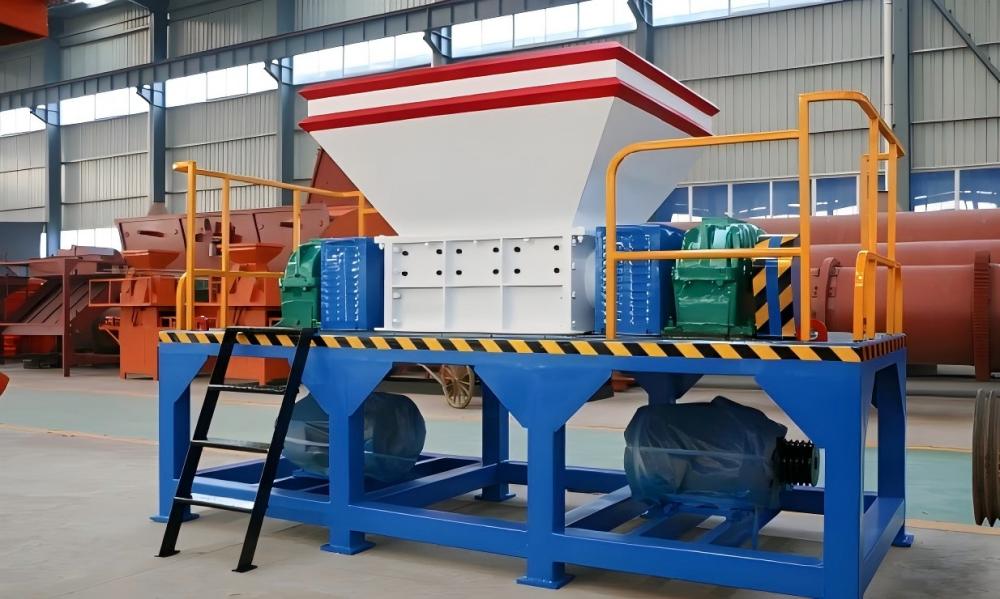
Another key parameter is the shaft design. HARSLE employs hexagonal shafts rather than keyed round shafts. The hexagonal shape provides a much larger surface area for torque transmission and eliminates the stress concentrations associated with keyways, which are common failure points in high-torque applications. Furthermore, the chamber size must be matched to the bulk density of the material. A chamber that is too small for bulky plastic crates will result in ‘bridging,’ where material sits on top of the shafts without being grabbed, leading to zero throughput despite the machine running.
Calculation Method for Shredder Performance
To accurately specify a double-shaft shredder for a project, engineers must calculate the required torque and estimated throughput. The fundamental formula for torque (T) in relation to power (P) and rotational speed (n) is: T = 9550 × P / n, where T is in Newton-meters (Nm), P is in kilowatts (kW), and n is in revolutions per minute (RPM). Because shredders face intermittent peak loads, the motor power must be calculated with a service factor of at least 1.5 to 2.0 to prevent frequent stalling.
Throughput calculation is more empirical and depends on the material’s bulk density and the ‘swept volume’ of the shredder. The theoretical capacity (Q) can be estimated as: Q = V × n × η × ρ, where V is the volume of material displaced by the blades per revolution, n is the RPM, η is the filling efficiency (usually 0.2 to 0.4 for bulky waste), and ρ is the material density. For example, when processing scrap tires, the filling efficiency is lower due to the irregular shape and elasticity of the tires, requiring a larger chamber for the same weight-based throughput compared to dense plastic regrind.
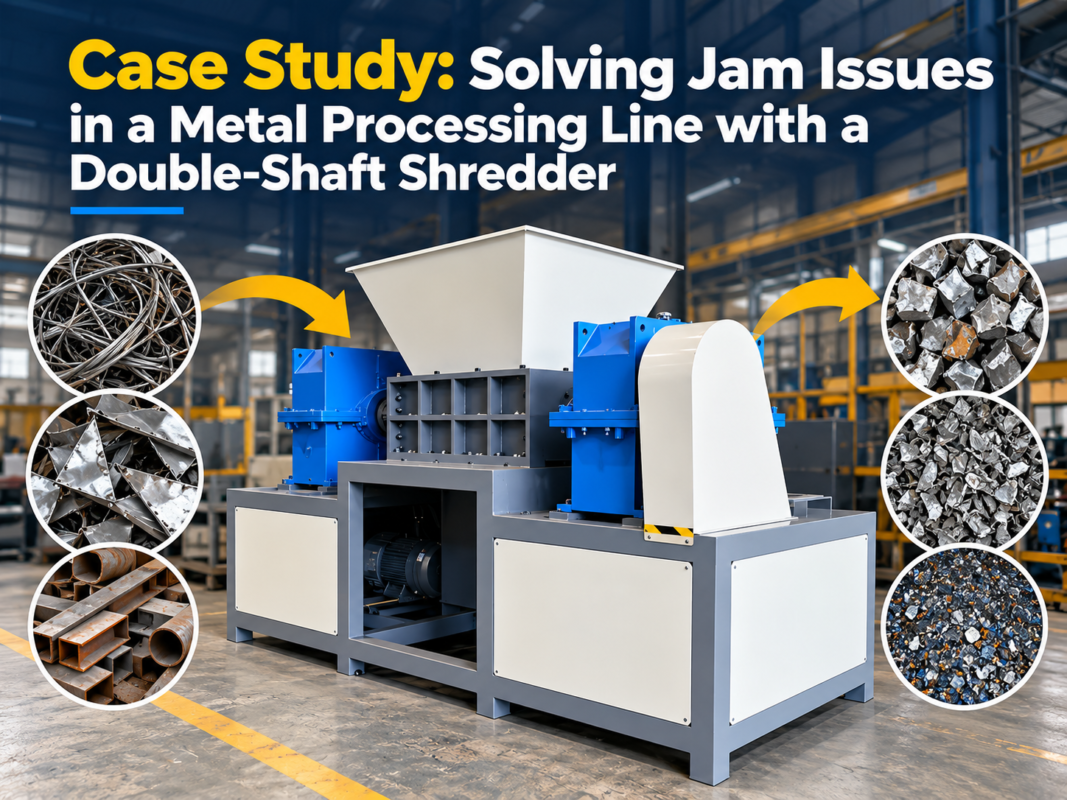
Shearing force is another critical calculation. The force (F) exerted by a blade hook is F = T / r, where r is the radius of the blade. This force must exceed the ultimate shear strength of the material. For scrap steel, this requires massive torque, which is why metal shredders feature lower RPM and higher-ratio gearboxes. If the calculated force is insufficient, the machine will constantly trigger its auto-reverse logic, leading to inefficient processing and excessive wear on the electrical contactors.
Technical Parameter Table
The following table outlines the typical specifications for HARSLE double-shaft shredders across different application scales. Note that these values are indicative and can be customized based on specific material requirements.
| Model Series | Motor Power (kW) | Shaft Speed (RPM) | Blade Thickness (mm) | Chamber Size (mm) | Target Material |
|---|---|---|---|---|---|
| HDS-800 | 30 – 45 | 15 – 20 | 20 – 40 | 800 x 600 | Plastic Drums, Electronic Waste |
| HDS-1200 | 75 – 110 | 12 – 18 | 40 – 60 | 1200 x 800 | Car Tires, HDPE Pipes, Light Metal |
| HDS-1500 | 132 – 200 | 10 – 15 | 60 – 100 | 1500 x 1000 | Truck Tires, Baled Plastics, Scrap Aluminum |
| HDS-2000 | 250+ | 8 – 12 | 100+ | 2000 x 1200 | Heavy Industrial Scrap, Car Bodies |
Common Engineering Mistakes in Shredder Implementation
One of the most frequent mistakes in implementing a double-shaft shredder is undersizing the motor for the sake of initial cost savings. While a smaller motor might handle the average load, it will fail during ‘slug’ loading—when a large, dense piece of material enters the chamber all at once. This leads to frequent motor overheating and premature gearbox failure. It is always better to have a surplus of torque, especially when dealing with unpredictable waste streams like scrap metal or mixed municipal waste.
Another common error involves blade metallurgy and maintenance. Using standard carbon steel blades for abrasive materials like glass-filled plastics or tires with high steel content will result in rapid dulling. Once blades lose their sharp edge, the machine stops shearing and starts ‘smearing’ the material. This increases friction, raises the temperature of the material (which can cause plastics to melt and clog the blades), and significantly increases power consumption. Furthermore, neglecting the gap between the blades and the spacers (the ‘clearing’ distance) can lead to material buildup that eventually forces the shafts apart, damaging the bearings.
Poor hopper design is a third critical mistake. If the hopper walls are too shallow, material will not feed into the shafts effectively. Conversely, if the hopper is too large and allows too much material to press down on the shafts simultaneously, it can create a ‘bridge’ or cause the machine to stall constantly. Engineers must also consider the discharge conveyor; if the shredded material is not removed quickly enough, it will back up into the chamber, causing ‘re-shredding’ which wastes energy and generates unnecessary heat.
Selection Checklist for Industrial Shredders
Choosing the right double-shaft shredder requires a systematic evaluation of your operational needs. Use the following checklist to ensure all technical bases are covered:
- Material Characterization: What is the toughest component in your waste stream? (e.g., steel wire in tires, stainless steel bolts in plastic assemblies).
- Required Output Size: Double-shaft shredders produce strips or chunks. If you need a specific 10mm grain, you will need a secondary granulator or a screen-equipped shredder.
- Throughput Requirements: Calculate your hourly tonnage needs. Remember to factor in a 20% buffer for material density variations.
- Blade Configuration: Choose the number of hooks and blade thickness based on the desired ‘bite’ and final product dimensions.
- Drive System: Decide between electric motor drives (standard) or hydraulic drives (better for extremely heavy-duty applications with frequent stalls).
- Maintenance Access: Ensure the machine design allows for easy blade removal and bearing lubrication without dismantling the entire frame.
- Safety Features: Verify the presence of emergency stops, limit switches on access doors, and robust PLC logic for overload protection.
Maintenance and Longevity Strategies
To maximize the lifespan of a HARSLE double-shaft shredder, a proactive maintenance schedule is non-negotiable. The most important task is regular blade inspection. Depending on the material, blades may need to be hard-faced (welded with a hard layer) or replaced every 500 to 2,000 hours. Keeping the cutting edges sharp reduces the load on the entire drive train. Additionally, the lubrication of the main bearings and the gearbox oil levels must be checked weekly. High-torque operations generate significant heat, which can degrade gear oil faster than in standard industrial applications.
Electrical maintenance is equally important. The vibration inherent in shredding can loosen terminal connections in the control panel over time. Loose connections lead to arcing and potential PLC failure. Furthermore, the auto-reverse function should be tested regularly to ensure the sensors are accurately detecting over-current conditions. By following these technical guidelines and selecting the appropriate parameters, operators can ensure that their double-shaft shredder remains a reliable asset in their tire, plastic, or scrap processing facility for decades.
Frequently Asked Questions (FAQ)
1. Can a double-shaft shredder produce a uniform particle size?
Generally, no. A standard double-shaft shredder produces strips or irregular chunks determined by the blade thickness and hook count. If you require a uniform, small particle size (e.g., for plastic injection molding), you must use a screen-equipped shredder or follow the double-shaft shredder with a high-speed granulator.
2. How do I handle non-shreddable items like heavy steel blocks?
HARSLE shredders are equipped with PLC-controlled auto-reverse logic. When the sensors detect a torque spike that exceeds the safety limit, the shafts stop and reverse to reposition the material. If the item remains unshreddable after several attempts, the machine will shut down and trigger an alarm for manual intervention, protecting the internal components.
3. What is the advantage of a hexagonal shaft over a keyed shaft?
Hexagonal shafts provide superior torque distribution across six faces, whereas keyed shafts concentrate all the stress on the key and keyway. In high-torque applications like scrap metal processing, keyed shafts are prone to shearing the key or cracking the shaft at the keyway. The hexagonal design is much more robust and easier to maintain when sliding blades on and off.
4. How often should I sharpen the blades?
This depends entirely on the material. Shredding clean plastic might allow for 2,000 hours of use, while shredding contaminated scrap metal or tires might require blade attention every 500-800 hours. Signs that sharpening is needed include increased power draw, reduced throughput, and the material appearing ‘torn’ rather than ‘cut’.
5. Is water cooling necessary for the shredding chamber?
For most scrap metal and tire applications, air cooling is sufficient. However, when shredding certain low-melting-point plastics or processing materials at very high volumes, friction can generate enough heat to soften the plastic. In these cases, integrated water-cooling jackets or misting systems can be added to the chamber to maintain material integrity and prevent blade fouling.