Gantry Shear Workflow Optimization for Faster Workshop Productivity

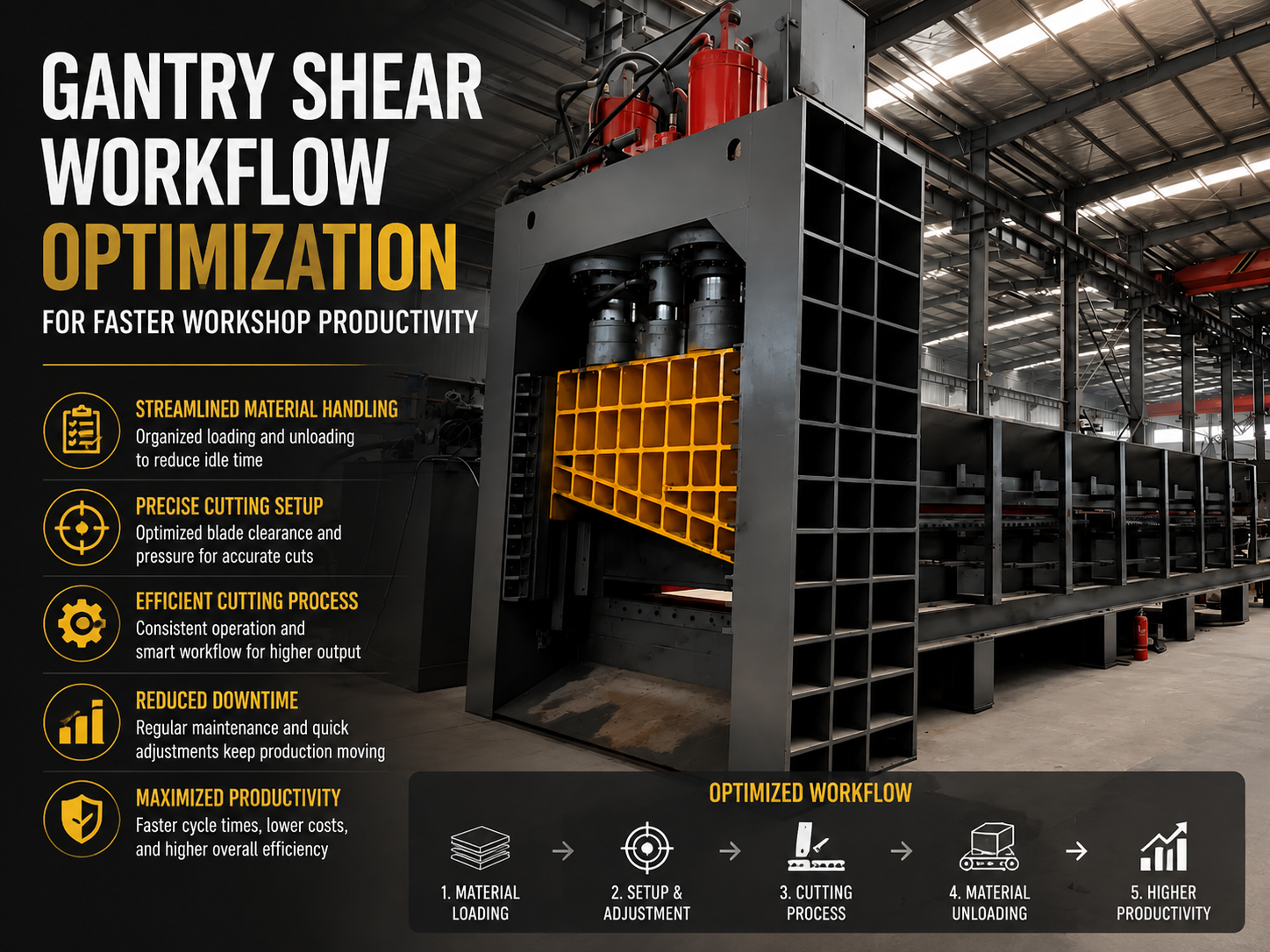
Introduction to Gantry Shear Workflow Optimization for Faster Workshop Productivity
In the modern metal recycling and fabrication industry, the efficiency of scrap processing is a primary determinant of profitability. The gantry shear, a powerhouse of hydraulic engineering, stands at the center of this operation. Achieving Gantry Shear Workflow Optimization for Faster Workshop Productivity is not merely about having a powerful machine; it is about the seamless integration of material handling, machine calibration, and operator expertise. As workshops face increasing pressure to process higher volumes of heavy-duty scrap, understanding the technical nuances of these machines becomes essential.
HARSLE has consistently engineered gantry shears that balance raw power with precision control. However, even the most advanced equipment requires a strategic approach to workflow. Optimization involves analyzing every second of the machine cycle—from the moment the scrap is loaded into the hopper to the final discharge of the sheared material. By focusing on reducing idle times and maximizing the effective cutting window, workshops can see a dramatic increase in daily throughput without necessarily increasing labor costs.
This guide explores the technical foundations of gantry shears and provides actionable strategies for workflow enhancement. We will delve into the mechanics of hydraulic systems, the importance of material pre-sorting, and the mathematical formulas that govern shearing efficiency. Whether you are managing a large-scale recycling yard or a specialized metal fabrication shop, the principles of Gantry Shear Workflow Optimization for Faster Workshop Productivity remain the same: precision, speed, and reliability.
Technical Overview: The Mechanics of High-Efficiency Shearing
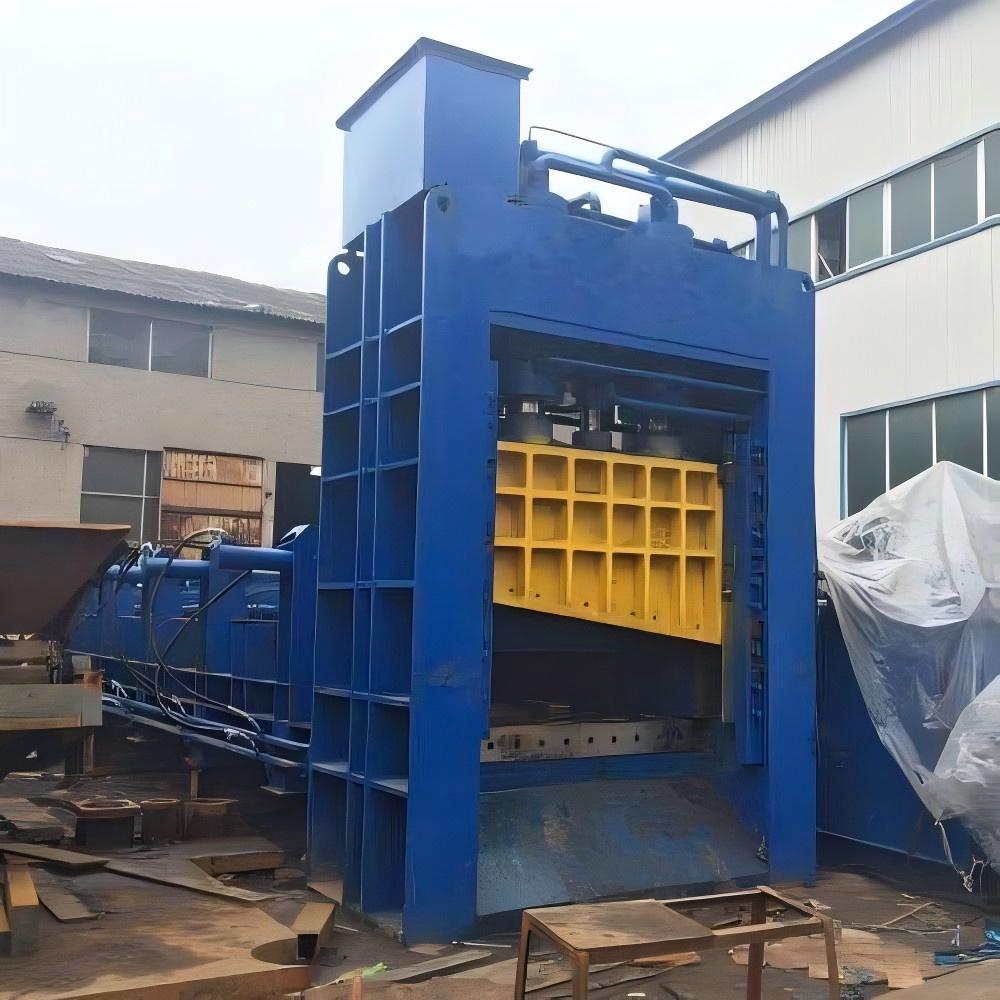
A gantry shear operates on a vertical cutting principle, where a heavy-duty blade slide moves downward within a rigid frame (the gantry) to shear metal placed on a bed. Unlike alligator shears, which use a jaw-like motion, the gantry shear provides uniform pressure across the entire length of the blade. This structural advantage allows for the processing of much larger and thicker sections of scrap, including I-beams, heavy plates, and automotive frames. The core of the machine consists of the hydraulic power unit, the shearing cylinder, the hold-down cylinder, and the feeding mechanism.
The hydraulic system is the heart of the gantry shear. Modern HARSLE machines utilize high-pressure piston pumps and sophisticated manifold blocks to direct oil flow with minimal pressure drop. Workflow optimization starts here; by utilizing variable displacement pumps, the machine can adjust its speed based on the resistance encountered. For thinner materials, the blade moves faster, while for thicker sections, the system automatically increases torque and slows down the stroke to ensure a clean cut without overloading the motor.
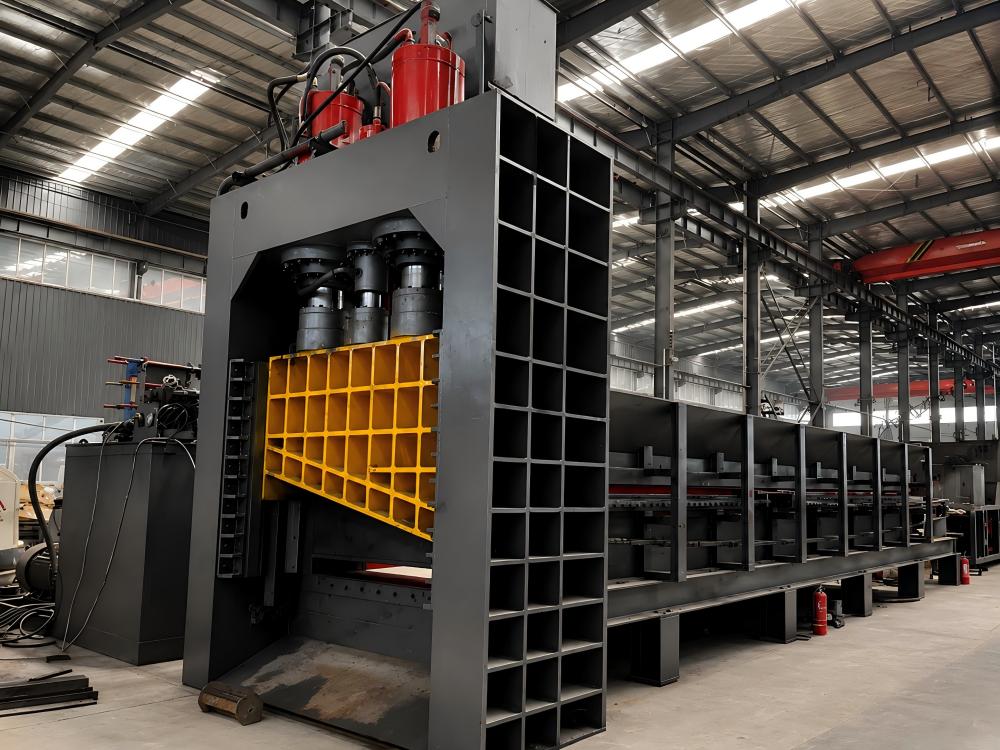
Another critical component is the automatic feeding hopper or “compression box.” In a high-productivity environment, the machine should never be waiting for material. The compression box pre-compacts the scrap into a manageable log before pushing it into the shearing zone. This dual-action—compressing while shearing—is a hallmark of Gantry Shear Workflow Optimization for Faster Workshop Productivity. It ensures that the blade is always engaging with a dense, stable mass of metal, which reduces blade wear and prevents the “skipping” effect that occurs with loose scrap.
Strategies for Workflow Enhancement
To truly optimize the workflow, one must look beyond the machine itself. Material logistics play a massive role. Implementing a “Just-In-Time” feeding strategy where cranes or loaders are synchronized with the shear’s cycle time can eliminate the 15-20% of downtime often lost to empty hoppers. Furthermore, the integration of PLC (Programmable Logic Controller) systems allows for automated cycles where the machine senses the material position and adjusts the stroke length accordingly, saving precious seconds on every cut.
Core Parameters of Gantry Shears
Understanding the technical parameters is vital for Gantry Shear Workflow Optimization for Faster Workshop Productivity. These specifications dictate the machine’s limits and its potential for high-speed operation. When evaluating a gantry shear, the following parameters are the most critical:
- Shearing Force: Measured in tons (kN), this defines the maximum thickness and hardness of the material the machine can cut. For industrial scrap, forces typically range from 400 to 2000 tons.
- Blade Length: This determines the width of the material that can be processed in a single stroke. A wider blade allows for larger scrap pieces but requires more force per square inch.
- Stroke Frequency: The number of cuts the machine can perform per minute. Optimization often involves increasing this frequency through faster hydraulic return strokes.
- Hold-down Force: The pressure applied to the material to keep it stationary during the cut. Insufficient hold-down force leads to jagged edges and increased blade stress.
- Motor Power: The total kilowatt (kW) rating of the electric motors driving the hydraulic pumps. Higher power generally allows for faster cycle times under load.
Calculation Method for Shearing Efficiency
To achieve Gantry Shear Workflow Optimization for Faster Workshop Productivity, engineers must calculate the required shearing force for specific materials. This ensures the machine is neither underutilized nor overstressed. The basic formula for shearing force (F) is:
F = L × S × τ
Where:
- F: Shearing Force (Newtons or Tons)
- L: Length of the cut (mm)
- S: Thickness of the material (mm)
- τ (Tau): Shear strength of the material (N/mm²)
For example, if you are shearing a mild steel plate that is 500mm wide and 20mm thick, with a shear strength of 350 N/mm², the calculation would be: 500 × 20 × 350 = 3,500,000 Newtons, or approximately 350 tons. To ensure longevity and workflow stability, it is recommended to operate at 70-80% of the machine’s rated capacity. This buffer accounts for variations in material hardness and prevents the hydraulic system from hitting peak pressure relief valves constantly, which generates heat and slows down the cycle.
Furthermore, calculating the “Cycle Time Efficiency” is essential. This is the ratio of actual cutting time to the total time the machine is powered on. Optimization aims to bring this ratio as close to 1.0 as possible by minimizing loading delays and using the “short stroke” setting for smaller materials.
Parameter Table for HARSLE Gantry Shears
The following table outlines typical specifications for various grades of gantry shears used in high-productivity environments.
| Model Series | Shearing Force (Tons) | Blade Length (mm) | Max Cutting Thickness (mm) | Stroke Rate (min⁻¹) | Power (kW) |
|---|---|---|---|---|---|
| HS-G400 | 400 | 1200 | 40 | 3 – 5 | 37 |
| HS-G630 | 630 | 1500 | 60 | 2 – 4 | 45 × 2 |
| HS-G800 | 800 | 1800 | 80 | 2 – 4 | 55 × 2 |
| HS-G1250 | 1250 | 2000 | 100 | 1.5 – 3 | 75 × 3 |
| HS-G1600 | 1600 | 2200 | 120 | 1 – 2.5 | 90 × 4 |
Common Engineering Mistakes in Gantry Shear Operation
Even with the best equipment, certain mistakes can derail Gantry Shear Workflow Optimization for Faster Workshop Productivity. One of the most common errors is neglecting the blade gap adjustment. As blades wear or when switching between very thick and very thin materials, the gap between the upper and lower blades must be calibrated. A gap that is too wide causes the metal to bend rather than shear, leading to massive structural stress on the gantry and poor cut quality. Conversely, a gap that is too tight can cause blade clashing and catastrophic failure.
Another frequent mistake is the mismanagement of hydraulic oil temperature. High-speed operation generates significant heat. If the cooling system is inadequate or the filters are clogged, the oil viscosity drops, leading to internal leakage in the pumps and valves. This results in a noticeable slowdown in cycle times—the very opposite of productivity. Operators often try to compensate by pushing the machine harder, which only accelerates the wear on seals and cylinders.
Finally, improper material loading is a major bottleneck. Overloading the compression box or attempting to shear materials that exceed the machine’s hardness rating (such as hardened alloy shafts) can trigger the safety bypass valves. Each time the machine hits a bypass, the cycle is interrupted, and the operator must reset the material. Consistent pre-sorting of scrap is a fundamental pillar of Gantry Shear Workflow Optimization for Faster Workshop Productivity.
Selection Checklist for High-Productivity Gantry Shears
When investing in a new machine to improve workshop throughput, use this checklist to ensure the equipment supports Gantry Shear Workflow Optimization for Faster Workshop Productivity:
- Frame Rigidity: Is the gantry made of high-tensile, stress-relieved steel? A rigid frame prevents deflection, ensuring consistent blade alignment.
- Hydraulic Component Brand: Does the machine use reputable valves and pumps (e.g., Rexroth, Parker)? Reliability is key to avoiding unplanned downtime.
- Automation Features: Does it include a PLC with a touch-screen interface? Look for features like “Auto-Cycle” and remote diagnostics.
- Cooling System: Is there an integrated air or water cooling system for the hydraulic oil? This is essential for multi-shift operations.
- Blade Accessibility: How easy is it to rotate or change the blades? Quick-change designs reduce maintenance downtime from hours to minutes.
- Feeding Mechanism: Does the machine come with a vibratory feeder or a heavy-duty conveyor? Automated feeding is the fastest way to boost productivity.
- Safety Systems: Are there light curtains, emergency stops, and pressure sensors to protect both the operator and the machine?
Maintenance for Sustained Productivity
Maintenance is the backbone of Gantry Shear Workflow Optimization for Faster Workshop Productivity. A machine that breaks down once a week will never be productive, regardless of its cycle speed. A rigorous preventative maintenance schedule should include daily checks of oil levels and lubrication points. The sliding guides of the gantry are under immense pressure and must be kept clean and well-greased to prevent galling.
Blade rotation is another critical task. Most gantry shear blades have four cutting edges. Rotating them regularly ensures that the machine always operates with a sharp edge, which reduces the load on the hydraulic system and produces cleaner scrap. Furthermore, annual ultrasonic testing of the main cylinders can detect internal cracks before they lead to a major failure, allowing for planned repairs during slow periods rather than emergency shutdowns during peak production.
FAQ: Optimizing Gantry Shear Performance
How can I increase the speed of my gantry shear?
Speed can be increased by optimizing the hydraulic flow. Ensure your pumps are performing at 100% efficiency and that the oil is at the correct temperature. Additionally, using the “short stroke” setting for smaller scrap pieces reduces the travel distance of the blade, significantly cutting down cycle time.
What is the best way to handle very long scrap pieces?
For long scrap, a continuous feeding system is best. The compression box should be equipped with a pusher that moves the material forward in increments equal to the desired cut length. This allows the machine to run in a fully automatic “continuous shear” mode.
Why is my gantry shear losing power during the cut?
This is usually due to internal hydraulic leakage or a failing pump. Check the pressure gauges during a cut; if the pressure drops while the blade is under load, oil is likely bypassing a seal in the main cylinder or a valve. It could also be caused by contaminated oil affecting the pump’s ability to maintain pressure.
How often should I change the hydraulic oil?
For high-productivity workshops running 8-16 hours a day, hydraulic oil should typically be changed every 2,000 to 3,000 operating hours. However, regular oil analysis is a better approach, as it can tell you the exact condition of the oil and whether it contains metal particles that indicate component wear.
Can I shear stainless steel with a standard gantry shear?
Yes, but you must account for the higher shear strength of stainless steel. It is much harder than mild steel, so you will need to reduce the maximum thickness processed or use a machine with a higher tonnage rating to maintain the same workflow speed without damaging the blades.
Conclusion
Achieving Gantry Shear Workflow Optimization for Faster Workshop Productivity is a multi-faceted challenge that requires the right equipment, smart logistics, and meticulous maintenance. By understanding the technical parameters and implementing the strategies outlined in this guide, workshop managers can significantly enhance their scrap processing capabilities. HARSLE remains committed to providing the heavy-duty machinery and technical support necessary to drive efficiency in the metal fabrication and recycling industries. Investing in optimization today ensures a more profitable and sustainable operation for years to come.