Understanding Gantry Shear Blade Clearance for Better Cut Quality: A Technical Guide

Technical Overview of Gantry Shear Blade Clearance
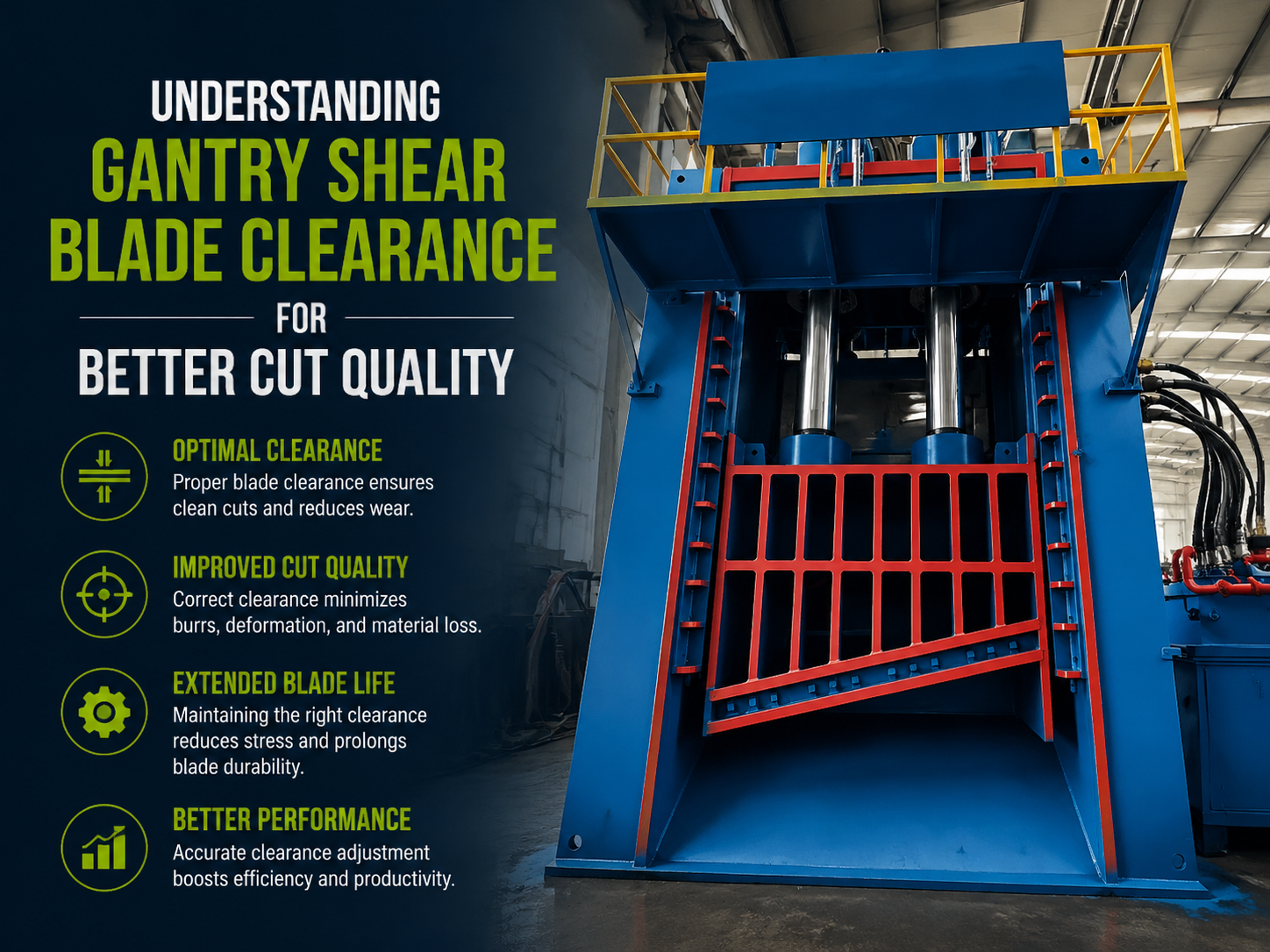
In the realm of heavy-duty metal fabrication, the gantry shear stands as a titan of productivity, capable of processing massive volumes of scrap metal and thick steel plates with relentless efficiency. However, the secret to the machine’s performance does not lie solely in its hydraulic tonnage or the size of its frame, but in the precision of its blade clearance. Understanding Gantry Shear Blade Clearance Better Cut Quality is essential for any operator or facility manager looking to optimize production and minimize tool wear.
Blade clearance, often referred to as the “blade gap,” is the physical distance between the upper moving blade and the lower stationary blade as they pass each other during the shearing cycle. This gap is not a static value; it must be meticulously adjusted based on the material’s thickness, tensile strength, and ductility. When the clearance is set correctly, the shear creates a clean, vertical break with minimal deformation. When it is incorrect, the results range from excessive burrs and rolled edges to catastrophic blade failure and hydraulic system strain.
The physics of shearing involves two distinct stages: plastic deformation and fracture. As the upper blade descends, it first pushes into the metal, causing it to flow plastically. Once the internal stress exceeds the material’s ultimate tensile strength, a crack initiates from both the top and bottom blade edges. In a perfectly calibrated gantry shear, these two cracks meet in the middle, resulting in a clean separation. The clearance is the primary variable that determines whether these cracks align or miss each other entirely.
HARSLE engineering emphasizes that maintaining the correct clearance is the single most effective way to extend the life of your equipment. A gap that is too tight increases the friction and force required to complete a cut, leading to heat buildup and premature dulling of the blade edges. Conversely, a gap that is too wide allows the material to bend or “fold” between the blades, which can jam the machine and cause structural damage to the gantry guides.
Core Parameters Influencing Shearing Quality
To achieve the best cut quality, one must look beyond the simple thickness of the metal. Several core parameters interact with the blade clearance to dictate the final outcome of the shear. The first and most critical parameter is the Material Tensile Strength. Harder materials, such as stainless steel or high-carbon alloys, resist the initial penetration of the blade more than mild steel. Consequently, they require a tighter clearance to ensure the fracture occurs quickly and cleanly without excessive work hardening of the edge.
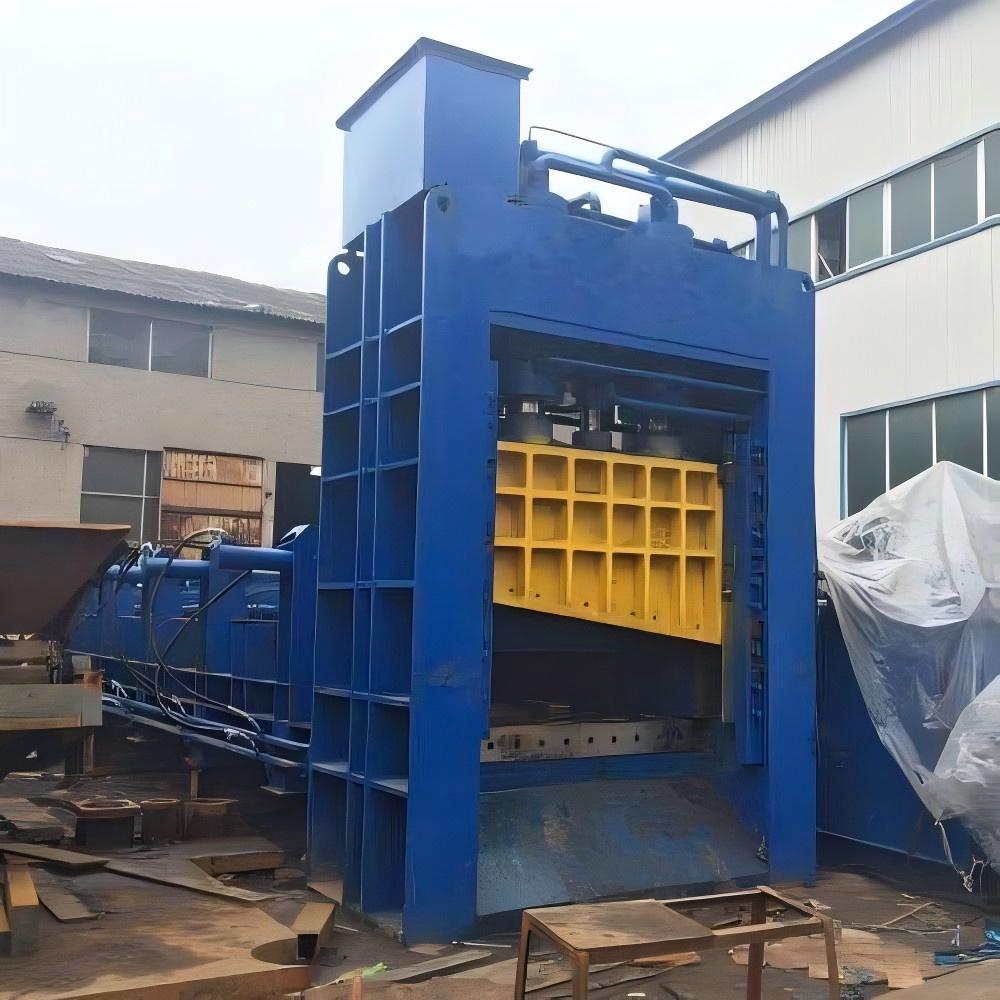
The Shear Angle is another vital factor. Gantry shears often utilize a raked or angled upper blade to reduce the total force required for the cut. While this allows the machine to cut thicker materials than a flat blade would permit, it also introduces a lateral force that tries to push the blades apart. The clearance must be robust enough to withstand this deflection. High-quality HARSLE gantry shears are designed with reinforced guide rails to maintain the set clearance even under the extreme lateral pressures generated by high shear angles.
Blade Sharpness and Geometry cannot be ignored. A dull blade effectively increases the clearance because the rounded edge cannot concentrate the stress at a single point. This leads to a larger “burnished” zone on the cut edge and a significant increase in burr height. Regular maintenance and rotation of the four-sided blades used in most gantry shears are necessary to keep the effective clearance within the desired technical specifications.
Finally, the Hydraulic Pressure and Speed play a supporting role. If the clearance is set for a specific material but the hydraulic pressure is insufficient, the blade may stall or deflect mid-cut. Modern gantry shears often feature automatic clearance adjustment systems that sync with the PLC (Programmable Logic Controller) to adjust the gap based on the operator’s input of material type and thickness, ensuring that the parameters are always optimized for the task at hand.
Calculation Method for Optimal Blade Gap
Calculating the correct blade clearance is both a science and an art, though most industrial standards provide a solid baseline. The general rule of thumb for mild steel is that the clearance should be approximately 5% to 10% of the material thickness. However, as the thickness increases, the percentage typically shifts toward the lower end of that spectrum to prevent excessive edge rolling.
The standard formula used by many engineers is: C = k × t, where C is the clearance, t is the material thickness, and k is a constant based on the material type. For mild steel (tensile strength ~400 MPa), the k factor is usually around 0.06. For harder materials like stainless steel (tensile strength ~600+ MPa), the k factor may drop to 0.04 or 0.05 to ensure a cleaner fracture. Conversely, for softer materials like aluminum, the k factor might increase to 0.10 to prevent the metal from sticking to the blades.
It is important to note that these calculations assume the blades are in good condition. If you are working with older blades that have been reground multiple times, you may need to compensate by slightly tightening the clearance. Furthermore, when shearing scrap metal of inconsistent thickness, the clearance should always be set for the thickest section of the material to avoid jamming the machine, even if this results in a slightly lower cut quality on the thinner sections.
In high-precision environments, operators often perform a “test cut” on a scrap piece of the same material. By examining the cross-section of the cut, they can fine-tune the clearance. A perfect cut will show a small burnished area (the part where the blade pushed in) and a larger, clean fracture area. If the fracture area is jagged or shows a “double shear” (two distinct fracture lines that don’t meet), the clearance is likely too tight. If the edge is heavily rolled or has a large burr, the clearance is too loose.

Blade Clearance Parameter Table
The following table provides a general guideline for setting blade clearance on a standard gantry shear when processing mild steel. Note that these values should be adjusted based on specific material grades and machine manufacturer recommendations.
| Material Thickness (mm) | Recommended Clearance (mm) | Clearance Percentage (%) | Expected Cut Quality |
|---|---|---|---|
| 6 – 10 | 0.4 – 0.7 | 7% | High Precision, Minimal Burr |
| 12 – 20 | 0.9 – 1.6 | 8% | Clean Fracture, Slight Roll |
| 25 – 40 | 2.0 – 3.6 | 9% | Standard Industrial Finish |
| 50 – 80 | 4.5 – 8.0 | 10% | Heavy Duty, Functional Edge |
| 100+ | 10.0 – 12.0 | ~10% | Scrap Grade, High Force |
When using this table, always prioritize the safety of the machine. If you notice the gantry shear laboring or hearing unusual “banging” sounds during the cut, stop the operation and re-verify the clearance and material hardness. Understanding Gantry Shear Blade Clearance Better Cut Quality involves constant monitoring of these variables during a production shift.
Common Engineering Mistakes in Blade Adjustment
One of the most frequent mistakes in gantry shear operation is the “set it and forget it” mentality. Operators often leave the clearance at a medium setting to accommodate a variety of thicknesses. While this may work for scrap processing where edge quality is secondary, it significantly accelerates blade wear. Cutting thin sheet metal with a gap set for thick plate causes the material to “draw” into the gap, resulting in a massive burr and potentially damaging the blade seats.
Another common error is ignoring the Thermal Expansion of the blades. During high-speed, continuous shearing operations, the blades generate significant heat. This heat causes the metal blades to expand. If the initial clearance was set very tight, the thermal expansion can reduce that gap to zero, leading to blade-on-blade contact. This not only destroys the cutting edges but can also shatter the blades, posing a serious safety risk. It is standard practice to allow for a slightly larger gap during long production runs or to use cooling systems to maintain a stable temperature.
Improper Blade Shimming is a technical pitfall during blade maintenance. When blades are reground, they become thinner. To maintain the correct geometry and clearance, shims must be placed behind the blade. If the shimming is uneven, the clearance will vary across the length of the blade. This results in a cut that is clean on one end but burred or folded on the other. Using precision-ground shims and a dial indicator to verify parallelism is non-negotiable for high-quality shearing.
Finally, many facilities fail to account for the Deflection of the Gantry Frame. No machine is perfectly rigid. Under maximum load, the gantry frame will flex slightly. If the machine is old or poorly maintained, this flex can be significant enough to alter the blade clearance during the actual cut. Regular inspection of the gibs and wear plates is necessary to ensure that the moving ram stays perfectly aligned with the lower bed, maintaining the clearance you’ve so carefully calculated.
Selection Checklist for Gantry Shear Equipment
When purchasing a new gantry shear or auditing your current equipment, use this checklist to ensure the machine is capable of maintaining the clearance necessary for better cut quality:
- Automatic Gap Adjustment: Does the machine feature a motorized or hydraulic system to change blade clearance quickly? This is vital for operations that switch between material thicknesses frequently.
- Blade Material Grade: Are the blades made of high-quality tool steel (like Cr12MoV or 6CrW2Si) that can hold an edge and resist deformation under heat?
- Rigidity of the Gantry: Check the weight and construction of the frame. A heavier, cast or heavy-plate welded frame will deflect less, preserving your clearance settings.
- Gib Adjustment System: Look for easily accessible and adjustable gibs (the guides for the ram). This allows you to take up any play that develops over years of use.
- Cooling and Lubrication: Does the machine have an integrated lubrication system for the blades and guides? Proper lubrication reduces friction and heat, keeping the clearance stable.
- PLC Integration: Can the machine store “recipes” for different materials? This reduces human error in setting the clearance.
- Safety Interlocks: Ensure the machine has sensors to detect if the blades are too close or if there is an obstruction in the gap.
Frequently Asked Questions (FAQ)
How often should I check the blade clearance on my gantry shear?
For high-volume production, blade clearance should be checked at the start of every shift and whenever the material thickness or type changes significantly. If you are processing consistent material, a weekly deep inspection of the blade edges and gap parallelism is recommended.
What are the signs that my blade clearance is too wide?
The most obvious signs are large burrs on the bottom edge of the cut piece, a visible “roll-over” or rounded top edge, and the material appearing to be torn rather than cut. You may also notice the machine requires less pressure to cut, but the output quality is poor.
Can I use the same clearance for stainless steel and mild steel?
No. Stainless steel work-hardens rapidly and has higher tensile strength. It generally requires a tighter clearance (about 1-2% tighter than mild steel) to ensure the fracture occurs before the material hardens too much, which would otherwise damage the blades.
Why does my gantry shear make a loud ‘bang’ at the end of a cut?
This is often caused by “breakthrough shock.” If the clearance is too tight, the energy builds up and is released instantly when the material finally fractures. While some noise is normal in heavy shearing, an excessive bang can indicate that the clearance needs to be widened slightly or that the nitrogen return cylinders need servicing.
How many times can gantry shear blades be reground?
Most industrial blades can be reground 3 to 5 times, depending on the amount of material removed each time. However, you must use shims to compensate for the lost thickness to maintain the proper relationship between the blade and the adjustment mechanism. Once the blade reaches its minimum thickness specified by the manufacturer, it must be replaced.
By mastering the nuances of blade clearance, operators can transform their gantry shear from a simple scrap-crunching machine into a precision instrument of fabrication. HARSLE remains committed to providing the technical expertise and robust machinery needed to achieve these high standards in the metalworking industry.