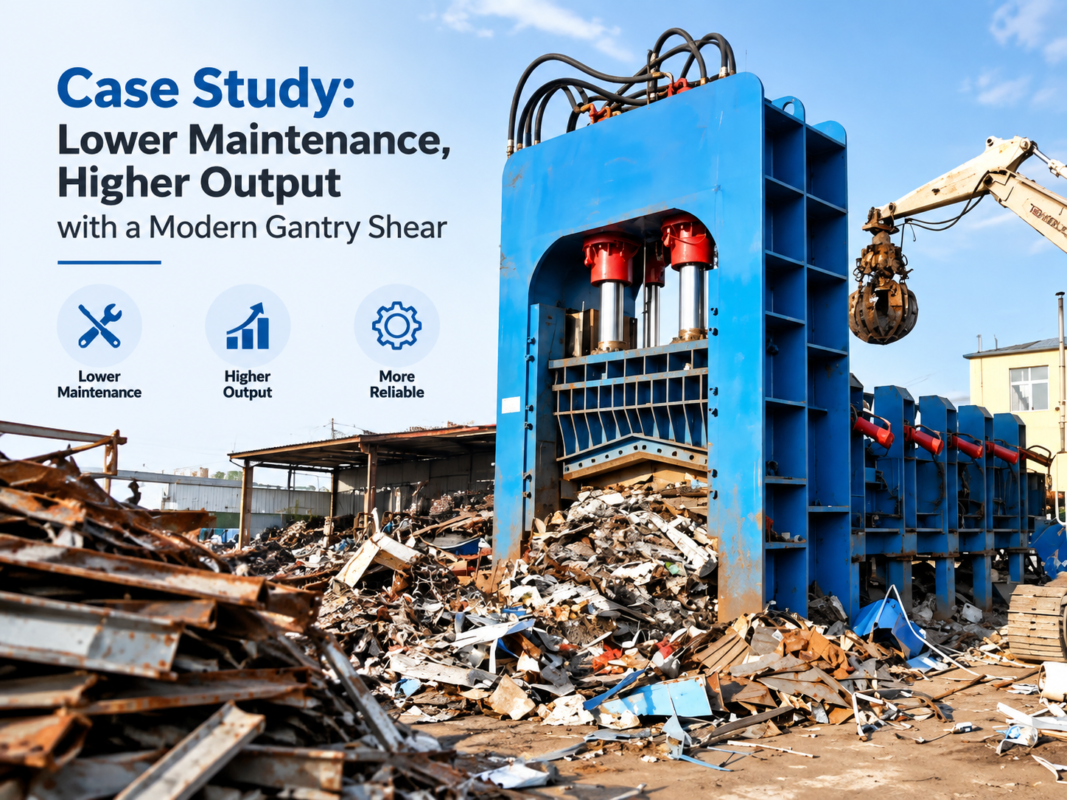
How Hydraulic Systems Affect Gantry Shear Performance and Reliability

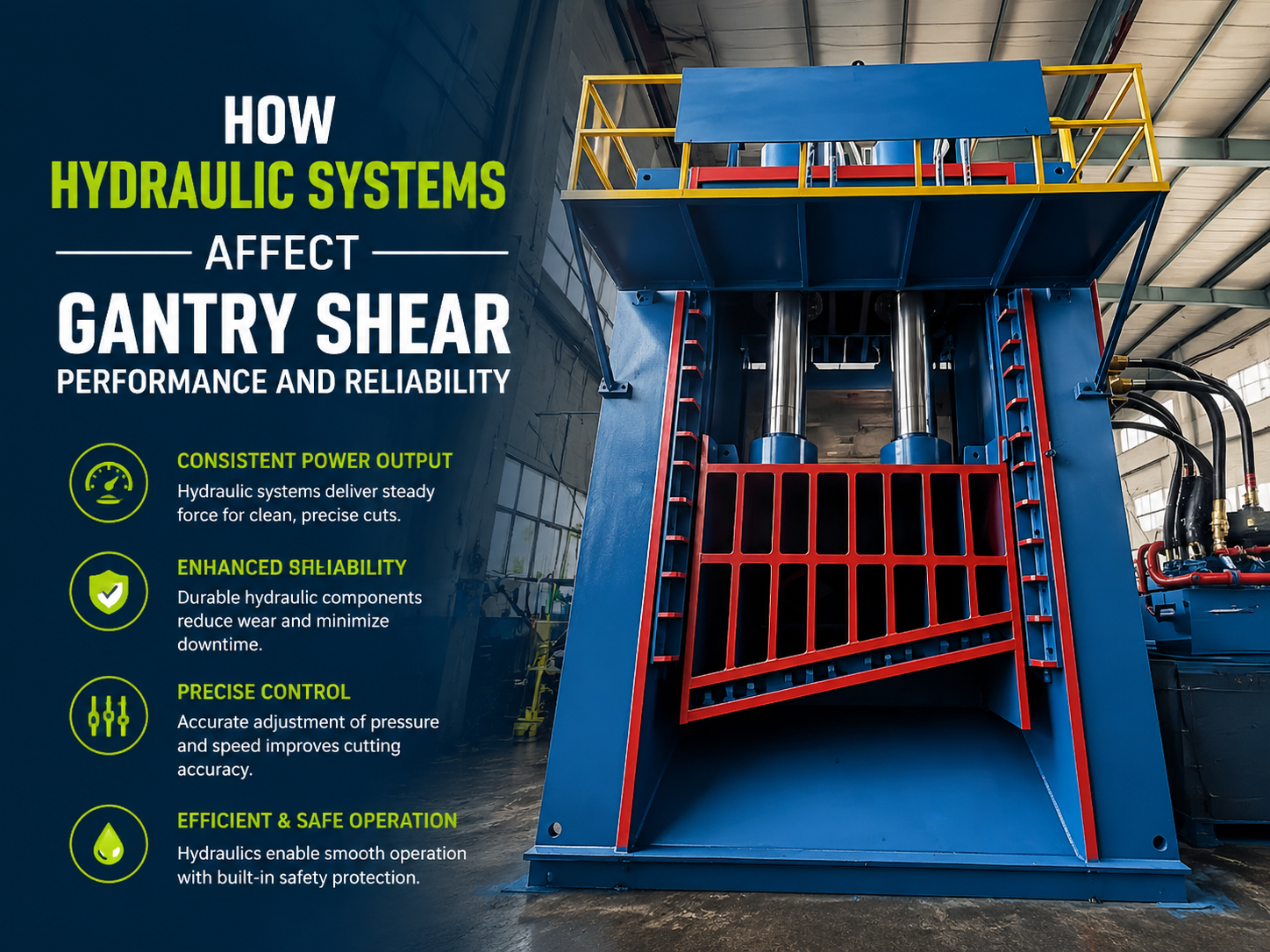
Technical Overview of Hydraulic Systems in Gantry Shears
In the world of heavy-duty metal recycling and industrial fabrication, the gantry shear stands as a titan of productivity. At the core of this massive machine lies its most critical component: the hydraulic system. Understanding how hydraulic systems affect gantry shear performance and reliability is essential for any facility looking to optimize its scrap processing throughput. The hydraulic system is responsible for converting electrical energy from the motor into mechanical force via fluid pressure, allowing the machine to slice through thick steel beams, plates, and mixed scrap with surgical precision.
A typical gantry shear hydraulic system consists of several high-pressure pumps, a series of control valves, a massive oil reservoir, cooling units, and the primary shearing cylinders. The complexity of these systems has evolved significantly over the last decade. Modern HARSLE gantry shears utilize advanced logic manifolds and variable displacement piston pumps to ensure that energy is not wasted during the idle phases of the shearing cycle. This evolution directly addresses the dual needs of high-speed operation and extreme force application.
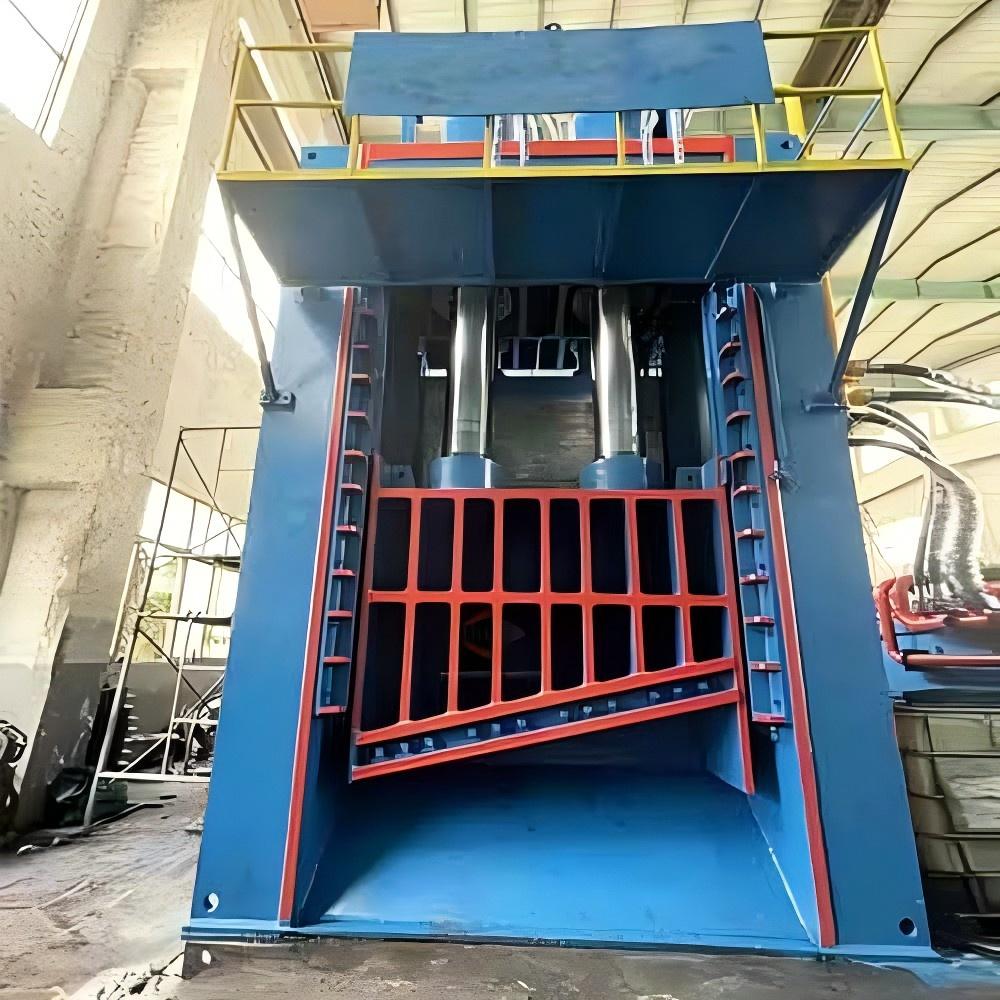
The reliability of a gantry shear is intrinsically linked to the stability of its hydraulic circuit. When we discuss how hydraulic systems affect gantry shear performance and reliability, we are looking at the system’s ability to maintain consistent pressure without overheating or experiencing fluid contamination. A well-designed system minimizes ‘hydraulic shock’—the sudden pressure spikes that occur when valves open or close rapidly. By integrating accumulators and soft-shift valve technology, manufacturers can significantly extend the lifespan of seals, hoses, and structural components.
Furthermore, the integration of PLC (Programmable Logic Controller) technology with hydraulic sensors allows for real-time monitoring. This synergy ensures that the hydraulic system operates within its optimal thermal and pressure envelopes. If a deviation is detected, the system can auto-adjust or alert the operator, preventing catastrophic failures that lead to expensive downtime. In essence, the hydraulic system is the nervous system and the muscular system of the gantry shear combined.
Core Parameters Influencing Performance
To fully grasp how hydraulic systems affect gantry shear performance and reliability, one must examine the core technical parameters that define the machine’s capabilities. The first and most obvious parameter is System Pressure. Most industrial gantry shears operate at pressures between 25 MPa and 31.5 MPa. Higher pressure allows for greater shearing force within a smaller cylinder footprint, but it also places higher demands on the quality of seals and the thickness of hydraulic lines.
The second parameter is Flow Rate, measured in liters per minute (L/min). While pressure determines *if* the machine can cut a piece of metal, the flow rate determines *how fast* it can do it. A high-flow system enables faster cycle times, which is the primary metric for productivity in scrap yards. However, managing high flow rates requires larger valve orifices and more robust cooling systems to prevent the oil from thinning out due to friction-induced heat.
Oil Viscosity and Temperature are often overlooked but are vital for reliability. Hydraulic oil serves three purposes: power transmission, lubrication, and cooling. If the oil becomes too hot (typically above 60°C), its viscosity drops, leading to increased internal leakage within pumps and valves. This reduces the volumetric efficiency of the system, meaning the machine moves slower and exerts less force. Consistent thermal management via air or water-cooled heat exchangers is a hallmark of a high-performance gantry shear.
Lastly, Filtration Micron Rating plays a decisive role in long-term reliability. Hydraulic components are manufactured with incredibly tight tolerances. Even microscopic particles of metal or dust can act as abrasives, wearing down pump pistons and valve spools. A system with multi-stage filtration (suction, pressure, and return line filters) ensures that the fluid remains clean, thereby protecting the massive investment the machine represents.
Calculation Method for Shearing Force and Power
Engineering a gantry shear requires precise calculations to ensure the hydraulic system is neither underpowered nor excessively wasteful. The most fundamental calculation is the Shearing Force (F). This is determined by the effective area of the hydraulic cylinder piston (A) and the system pressure (P). The formula is: F = P × A
For example, if a cylinder has a bore of 400mm and the system operates at 28 MPa, the theoretical force generated is approximately 350 tons. However, real-world performance must account for mechanical friction and seal resistance.
Another critical calculation is the Required Motor Power (W). This determines the size of the electric motors needed to drive the hydraulic pumps. The formula used by HARSLE engineers is: W = (P × Q) / (600 × η)
Where P is pressure in bar, Q is flow in L/min, and η is the total efficiency of the pump-motor group (usually around 0.85 to 0.9). This calculation ensures that the motor does not stall during peak pressure demands when the blade first contacts the scrap material.
The Cycle Time (T) is also calculated to estimate hourly production. It is the sum of the time taken for the cylinder to extend, the dwell time for the cut, and the time for the return stroke. Since the return stroke usually requires less force, many systems use a ‘differential circuit’ to speed up the return by redirecting oil from the rod side back to the piston side, effectively increasing the flow rate without needing a larger pump.
Gantry Shear Hydraulic Parameter Table
The following table illustrates how different hydraulic configurations affect the performance of various HARSLE gantry shear models. Note how the increase in motor power and pump flow directly correlates with higher shearing frequencies.
| Model Series | Shearing Force (Tons) | System Pressure (MPa) | Main Motor Power (kW) | Max Flow Rate (L/min) | Cycle Time (Cuts/min) |
|---|---|---|---|---|---|
| HGS-400 | 400 | 25 | 45 | 320 | 3-5 |
| HGS-630 | 630 | 28 | 75 | 480 | 3-4 |
| HGS-800 | 800 | 31.5 | 110 | 600 | 2-4 |
| HGS-1000 | 1000 | 31.5 | 150 | 850 | 2-3 |
| HGS-1250 | 1250 | 31.5 | 185 | 1100 | 1-3 |
Common Engineering Mistakes in Hydraulic Design
Despite the advanced nature of modern machinery, certain engineering pitfalls can compromise how hydraulic systems affect gantry shear performance and reliability. One of the most common mistakes is Undersized Cooling Systems. In high-ambient temperature environments, a cooling system designed for temperate climates will fail. When the oil overheats, seals harden and crack, leading to external leaks and internal bypass, which drastically reduces shearing efficiency.
Another frequent error is Poor Suction Line Design. If the suction pipe between the oil tank and the pump is too narrow or has too many bends, it can cause cavitation. Cavitation occurs when the pump cannot pull enough oil, creating vacuum bubbles that implode with violent force against the pump internals. This not only creates a loud ‘marbles in a blender’ noise but also destroys the pump’s precision surfaces in a matter of hours.
Incorrect Valve Sizing is a third major issue. If the directional control valves are too small for the flow rate, they create a ‘bottleneck.’ This results in excessive backpressure and heat generation. Conversely, if valves are oversized, the system may lose ‘metering’ capability, making the blade movement jerky and difficult to control. Achieving the ‘Goldilocks’ zone of valve sizing is crucial for smooth, reliable operation.
Finally, neglecting Pressure Shock Management can lead to structural fatigue. In a gantry shear, the sudden release of energy when a piece of metal finally snaps (the ‘breakthrough’ force) causes a massive pressure spike in the return lines. Engineering mistakes like omitting relief valves or using rigid piping where flexible hoses should be can lead to burst lines and cracked manifolds. HARSLE addresses this by using heavy-duty dampening valves and high-pressure accumulators to absorb these shocks.
Selection Checklist for Gantry Shear Buyers
When investing in a gantry shear, the hydraulic system should be your primary focus during the evaluation process. Use this checklist to ensure you are getting a machine built for long-term reliability.
- Pump Brand and Type: Does the machine use reputable axial piston pumps (e.g., Rexroth, Parker, or high-quality domestic equivalents)? Piston pumps are far more durable than gear pumps for high-pressure shearing.
- Manifold Block Design: Look for integrated logic manifolds rather than a ‘spaghetti’ of hoses. Integrated blocks reduce leak points and simplify maintenance.
- Cooling Capacity: Is the heat exchanger oversized for your climate? Does it have an independent circulation pump to ensure cooling even when the main cylinders are idle?
- Filtration System: Does the system include a visual or electronic clogging indicator for the filters? High-quality systems should have at least 10-micron filtration on the return line.
- Cylinder Construction: Are the cylinders forged or welded? Forged cylinders with chrome-plated rods offer much higher resistance to the side-loading forces common in scrap shearing.
- PLC Integration: Does the hydraulic system interface with a PLC for diagnostic monitoring? This is essential for modern predictive maintenance.
Frequently Asked Questions (FAQ)
1. How often should I change the hydraulic oil in my gantry shear?
Typically, hydraulic oil should be changed every 2,000 to 4,000 operating hours, or once a year. However, this depends on the environment. In dusty or hot scrap yards, more frequent changes or regular oil analysis is recommended to check for oxidation and particulate contamination.
2. Why is my gantry shear losing power when it gets hot?
This is usually due to a drop in oil viscosity. As the oil heats up, it becomes thinner and leaks past internal seals in the pumps and valves more easily. This is known as ‘volumetric loss.’ Check your cooling system and ensure you are using the correct grade of oil (usually ISO VG 46 or 68).
3. What causes the loud banging noise in the hydraulic lines?
This is likely ‘hydraulic hammer’ or pressure spikes. It occurs when the flow of oil is stopped or redirected too abruptly. It can be solved by checking the nitrogen pre-charge in your accumulators or adjusting the ramp-down speeds in the PLC settings.
4. Can I use generic seals for my hydraulic cylinders?
It is highly discouraged. Gantry shears operate at extreme pressures and experience significant side-loading. Genuine HARSLE seals are designed with specific material compositions to handle these stresses. Generic seals often fail prematurely, leading to oil leaks and potential cylinder wall damage.
5. How does a variable displacement pump improve efficiency?
A variable displacement pump only moves the amount of oil required for the current task. When the shear is idling or moving the blade without resistance, the pump ‘destrokes,’ consuming less electricity. This reduces heat generation and lowers energy costs compared to fixed-displacement pumps that dump excess oil over a relief valve.
6. What is the role of the accumulator in a gantry shear?
The accumulator acts as a hydraulic battery. It stores pressurized fluid to provide an extra burst of speed during the shearing stroke and, more importantly, it acts as a shock absorber to dampen pressure spikes, protecting the system from mechanical fatigue.