Container Shear Automation Options: Boosting Productivity In Modern Scrap Lines

Technical Overview: The Evolution of Container Shear Automation
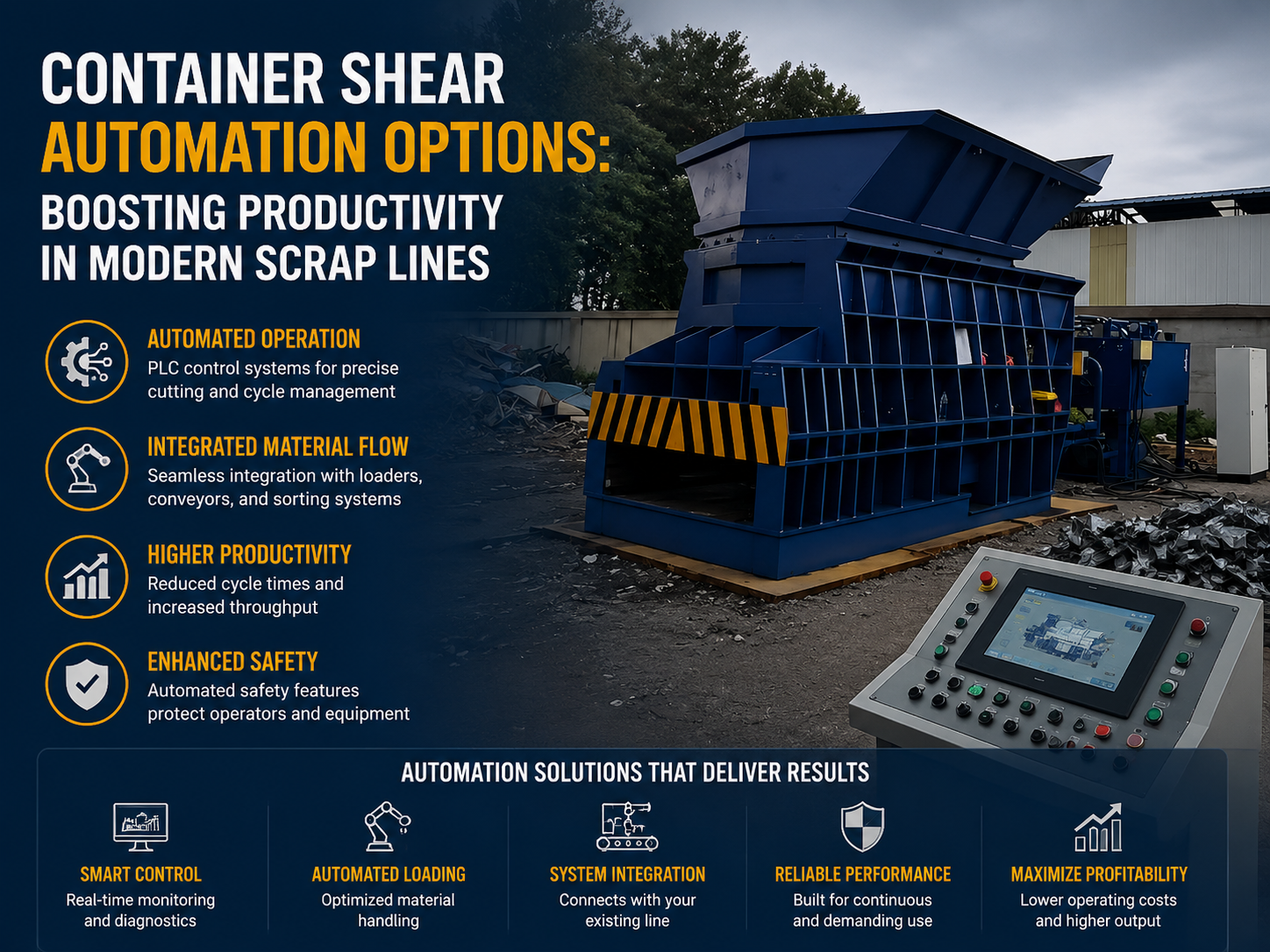
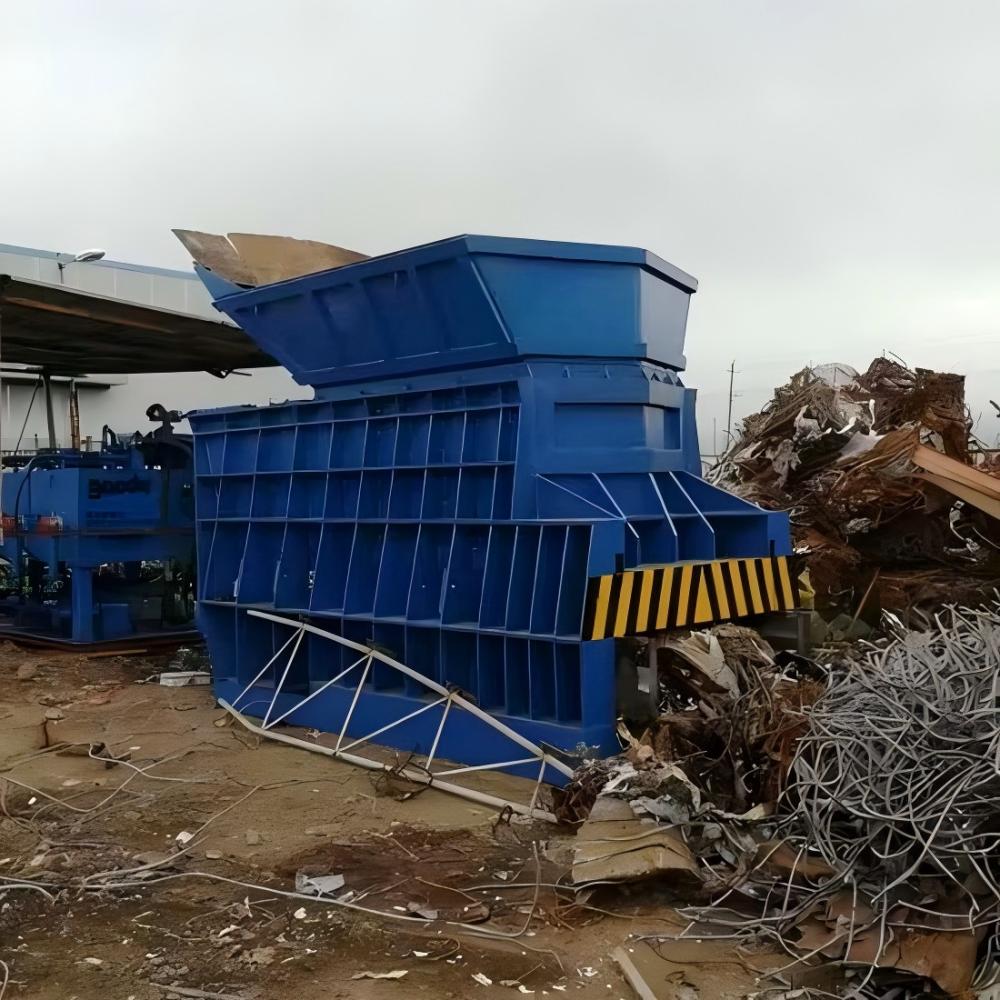
In the rapidly evolving landscape of metal recycling, the container shear has emerged as a cornerstone of efficiency. Unlike traditional alligator shears or vertical guillotine shears, the container shear—often referred to as a horizontal box shear—offers a continuous feeding mechanism that significantly reduces downtime. The core of modern container shear technology lies in its ability to process bulky scrap metal into dense, manageable pieces suitable for furnace charging. Automation in this sector is no longer a luxury but a necessity for scrap yards aiming to maintain profitability amidst rising labor costs and fluctuating commodity prices.
Automation options for container shears range from basic semi-automatic cycles to fully integrated, AI-driven systems. At the heart of these systems is the Programmable Logic Controller (PLC), typically sourced from high-end manufacturers like Siemens or Schneider. The PLC coordinates the movement of the feeding ram, the compression lids, and the shearing blade. By utilizing pressure transducers and linear encoders, the machine can ‘sense’ the density and position of the scrap, adjusting its force and speed in real-time. This prevents the common issue of ‘jamming’ and ensures that the hydraulic system operates within its optimal efficiency curve.

Another critical aspect of technical automation is the integration of remote diagnostics and IoT (Internet of Things) capabilities. Modern HARSLE container shears can be equipped with modules that transmit operational data to a cloud-based dashboard. This allows facility managers to monitor cycle times, oil temperatures, and energy consumption from a smartphone or office computer. Predictive maintenance algorithms can then analyze this data to alert operators before a component fails, transitioning the maintenance strategy from reactive to proactive. This level of oversight is essential for large-scale operations where a single hour of downtime can result in thousands of dollars in lost revenue.
The hydraulic architecture has also seen significant automated improvements. Variable displacement pumps, controlled by the PLC, ensure that the motor only draws the power necessary for the specific task at hand. For instance, during the rapid approach phase of the shear blade, the system prioritizes flow over pressure. When the blade encounters resistance from the metal, the system automatically shifts to high-pressure, low-flow mode to maximize shearing force. This ‘smart hydraulics’ approach not only boosts productivity but also extends the lifespan of the hydraulic fluid and seals by reducing heat generation.
Core Parameters of Automated Container Shears
When evaluating container shear automation options, understanding the core parameters is vital for matching the machine to the specific needs of a scrap line. The most prominent parameter is the Shear Force, usually measured in kilonewtons (kN) or tons. For container shears, this typically ranges from 400 to 1250 tons. However, automation allows for ‘force modulation,’ where the machine applies only the force required for the specific grade of scrap, thereby saving energy and reducing wear on the blades.
Cycle Time is another critical metric. In a manual setup, cycle time is heavily dependent on operator skill. In an automated system, the cycle time is standardized and optimized. This includes the time taken for the feeding ram to push the material forward, the lid to compress it, and the blade to complete its stroke. High-end automated models can achieve cycle times of under 40 seconds for a full stroke, significantly increasing the tons-per-hour (TPH) throughput. Automation also enables ‘short-stroke’ cycles for smaller materials, further shaving seconds off the process.
Blade Length and Throat Opening define the physical limits of what the machine can process. Automation options often include sensors that measure the height of the scrap pile within the feeding box. If the material is too high, the automated lid will perform a ‘pre-compression’ sequence to ensure the material fits the throat opening before the shear cycle begins. This prevents structural damage to the machine frame and ensures a clean cut every time. Additionally, the Feeding Box Dimensions are crucial; a larger box allows for the loading of oversized scrap, such as car bodies or structural beams, which the automation system then breaks down systematically.
Finally, the Motor Power and Hydraulic Flow Rate are the engines behind the automation. An automated system requires a robust electrical backbone to handle the frequent switching and high-torque demands of the hydraulic pumps. Modern systems often utilize soft-starters or Variable Frequency Drives (VFDs) to manage the electrical load, preventing voltage spikes in the facility’s power grid. The integration of these electrical components into the overall automation suite allows for a more harmonious operation between the mechanical and electrical systems.
Calculation Method for Throughput and Efficiency
To accurately assess how automation options will boost productivity, engineers must use specific calculation methods. The primary goal is to determine the Theoretical Throughput ($Q$) and compare it to the Actual Throughput. The formula for Theoretical Throughput in a container shear is generally expressed as:
Q = (V × ρ × 3600) / T
Where:
V = Volume of the material processed per cycle (m³)
ρ = Bulk density of the scrap material (kg/m³)
T = Total cycle time in seconds (including feeding, compression, and shearing)
Automation directly impacts ‘T’ by minimizing the idle time between cycles. For example, if an automated feeding system reduces the cycle time from 60 seconds to 45 seconds, the throughput increases by 33% without changing any other physical parameter of the machine. Furthermore, automation improves the ‘Fill Factor’ of the volume (V) by using sensors to ensure the feeding box is consistently loaded to its optimal capacity.
Another essential calculation is the Specific Cutting Force (Ks), which helps in determining if the machine can handle specific alloys. The formula is:
F = Ks × A
Where F is the shear force and A is the cross-sectional area of the material. Automated systems often have built-in ‘overload protection’ that uses this logic; if the pressure sensors detect that the required force (F) exceeds the machine’s rated capacity, the PLC will automatically reverse the blade and trigger a ‘re-positioning’ cycle to attempt the cut at a different angle or position.
Technical Parameter Table
The following table outlines the specifications for HARSLE’s flagship automated container shear series, demonstrating how different models cater to various production scales.
| Model Parameter | HCS-400 Auto | HCS-630 High-Pro | HCS-1000 Ultra | HCS-1250 Max |
|---|---|---|---|---|
| Shear Force (Tons) | 400 | 630 | 1000 | 1250 |
| Blade Length (mm) | 1200 | 1500 | 1800 | 2200 |
| Max Cutting Thickness (MS) | 40mm | 60mm | 85mm | 110mm |
| Feeding Box Length (mm) | 5000 | 6000 | 7000 | 8000 |
| Cycle Time (Seconds) | 45-55 | 40-50 | 35-45 | 40-50 |
| Motor Power (kW) | 45 x 2 | 75 x 2 | 90 x 3 | 110 x 4 |
| Automation Level | Semi-Auto PLC | Full-Auto / IoT | Full-Auto / AI | Full-Auto / Remote |
Common Engineering Mistakes in Scrap Line Automation
One of the most frequent mistakes in implementing container shear automation is ignoring material variability. Scrap is inherently inconsistent. An automation program designed for light-gauge aluminum will fail or operate inefficiently when processing heavy structural steel. Engineers often make the mistake of setting a ‘static’ automation cycle. The solution is to utilize ‘Recipe Management’ within the PLC, allowing operators to select the material type (e.g., HMS 1, HMS 2, Plate & Structural) so the machine can adjust its pressure thresholds and stroke lengths accordingly.
Another common error is neglecting the cooling system. Automated machines run more cycles per hour than manual ones, which leads to rapid heat buildup in the hydraulic oil. Many scrap yards fail to upgrade their cooling capacity when they switch to high-productivity automated cycles. Overheated oil loses its viscosity, leading to internal leakage in pumps and valves, which slows down the cycle time and eventually causes component failure. An automated container shear should always be paired with an oversized, thermostatically controlled air or water cooling system.
Improper Sensor Placement and Maintenance is a third pitfall. In the harsh environment of a scrap yard, sensors are subjected to extreme vibration, dust, and physical impact. Placing a delicate laser sensor in a high-impact zone without adequate shielding is a recipe for failure. Furthermore, if the sensors are not calibrated regularly, the automation system will receive ‘dirty data,’ leading to inefficient cycles or false emergency stops. Engineering teams must ensure that all feedback devices are industrial-grade and protected by heavy-duty housings.
Finally, many operators overlook the importance of blade gap adjustment. Even the most advanced automation cannot compensate for dull blades or an incorrect gap. A gap that is too wide will cause the metal to ‘fold’ rather than shear, which spikes the hydraulic pressure and can stall the machine. Automation should include a ‘blade life tracker’ that counts the number of cuts and alerts the maintenance team when it is time to rotate or sharpen the blades, ensuring the machine always operates at peak efficiency.
Selection Checklist for Automated Container Shears
Choosing the right container shear with the appropriate automation options requires a systematic approach. Use the following checklist to guide your procurement process:
- Material Analysis: What is the primary type of scrap? (HMS, sheet metal, rebar, or non-ferrous). This determines the required shear force and blade configuration.
- Throughput Requirements: Calculate your target tons-per-day. Ensure the machine’s automated cycle time and box volume can meet this goal with a 20% buffer for maintenance.
- Power Supply: Does your facility have the electrical capacity for multiple high-kilowatt motors? Consider if you need VFDs to manage start-up current.
- Automation Integration: Do you need the shear to communicate with other equipment, such as conveyor belts or magnetic separators? Ensure the PLC has the necessary I/O ports.
- Remote Monitoring: Is your management team looking for data-driven insights? Opt for models with IoT modules and cloud connectivity.
- Safety Features: Ensure the automation includes light curtains, emergency stop loops, and automatic pressure relief valves that meet international safety standards (CE/ANSI).
- Maintenance Support: Does the manufacturer offer remote troubleshooting? This is a key benefit of automated systems, allowing factory technicians to log in and fix software issues instantly.
- Climate Considerations: If operating in extreme heat or cold, ensure the automation suite includes oil heaters or enhanced cooling systems.
Frequently Asked Questions (FAQ)
1. Can an old container shear be retrofitted with automation?
Yes, many older hydraulic shears can be retrofitted with modern PLC systems and sensors. However, the cost-benefit analysis often favors purchasing a new, purpose-built automated machine like those from HARSLE, as the structural integrity and hydraulic efficiency of older frames may limit the gains from new electronics.
2. How does automation improve safety in scrap yards?
Automation removes the operator from the immediate vicinity of the shearing action. With remote controls and automated cycles, the operator can manage the machine from a protected cab or a distance, significantly reducing the risk of injury from flying debris or mechanical failure.
3. What is the typical ROI for an automated container shear?
While the initial investment is higher, most scrap yards see a Return on Investment (ROI) within 18 to 24 months. This is driven by a 20-40% increase in throughput, reduced labor costs (one operator can manage multiple machines), and lower energy consumption per ton of processed scrap.
4. Does automation make the machine harder to maintain?
While the systems are more complex, they are actually easier to maintain because they provide specific error codes and diagnostic data. Instead of guessing why a machine is slow, the PLC can tell you exactly which valve or sensor is underperforming.
5. What happens if the automation system fails?
Most high-quality container shears, including HARSLE models, feature a ‘Manual Override’ mode. This allows the operator to control the machine using traditional levers or buttons while the automation issue is being resolved, ensuring that production doesn’t come to a complete standstill.