Vertical Baler Spare Parts Guide: Components That Need Regular Replacement

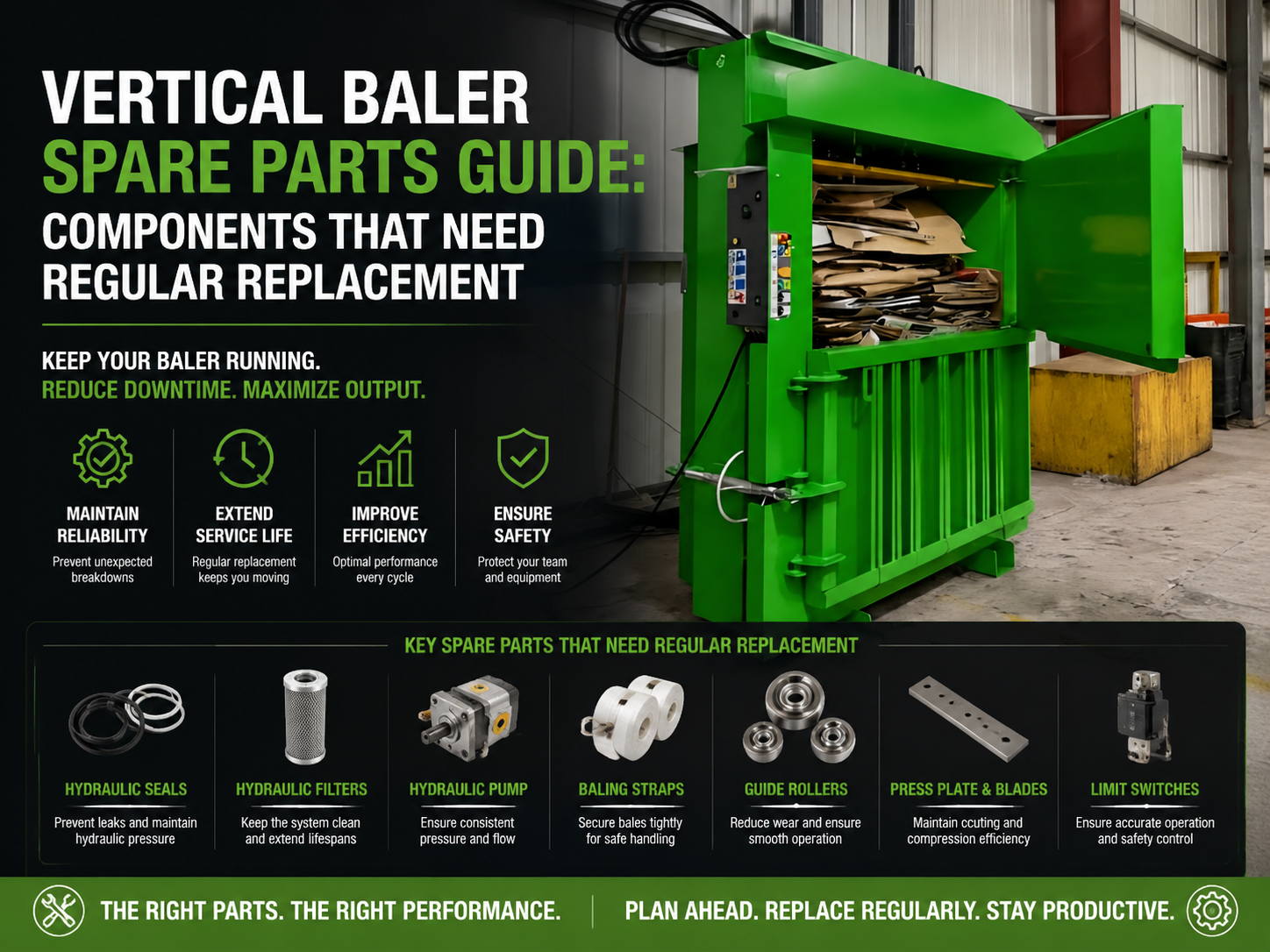
Technical Overview of Vertical Baler Systems
Vertical balers are essential machines in the recycling and waste management industries, designed to compress materials like cardboard, plastic, and light metals into dense, manageable bales. At HARSLE, we engineer these machines to withstand immense pressure, but the nature of high-force hydraulic operations means that certain components are subject to inevitable wear and tear. Understanding the technical ecosystem of a vertical baler is the first step in effective maintenance. The machine operates through a synergy of hydraulic power, electrical control, and mechanical structural integrity. When one component fails or degrades, it places undue stress on the rest of the system, potentially leading to catastrophic failure or decreased efficiency.
The hydraulic system is the heart of the vertical baler. It consists of a motor, a hydraulic pump, directional control valves, and the main cylinder. The cylinder exerts downward force on the platen, which compresses the material against the floor of the baling chamber. Because these systems operate under pressures often exceeding 2000 PSI, the seals and hoses are under constant thermal and mechanical stress. Over time, the hydraulic fluid itself can become contaminated with microscopic particulates, which act as an abrasive, wearing down the internal surfaces of valves and pumps. Regular replacement of filters and fluid is not just a recommendation; it is a technical necessity for machine longevity.
Mechanically, the vertical baler relies on a heavy-duty frame and a guided platen. The platen must move smoothly within the chamber to ensure even pressure distribution. This movement is facilitated by wear pads or guides, usually made of high-density plastics or specialized alloys. As the platen cycles thousands of times, these guides thin out. If they are not replaced, the platen can tilt, causing the hydraulic cylinder rod to bend or the chamber walls to score. Furthermore, the structural components like the door locking mechanism and the bale ejector system are subject to high impact forces during the final stages of the baling cycle, requiring periodic inspection for metal fatigue and bolt loosening.
From an electrical perspective, the control panel manages the timing and safety of the machine. Components such as limit switches, proximity sensors, and emergency stop buttons are critical for operator safety. In industrial environments, dust and vibration can cause electrical connections to loosen or sensors to misread the platen’s position. While these parts do not ‘wear’ in the traditional sense like a mechanical seal, their operational life is finite, and they must be treated as essential spare parts to keep in stock to avoid prolonged downtime.
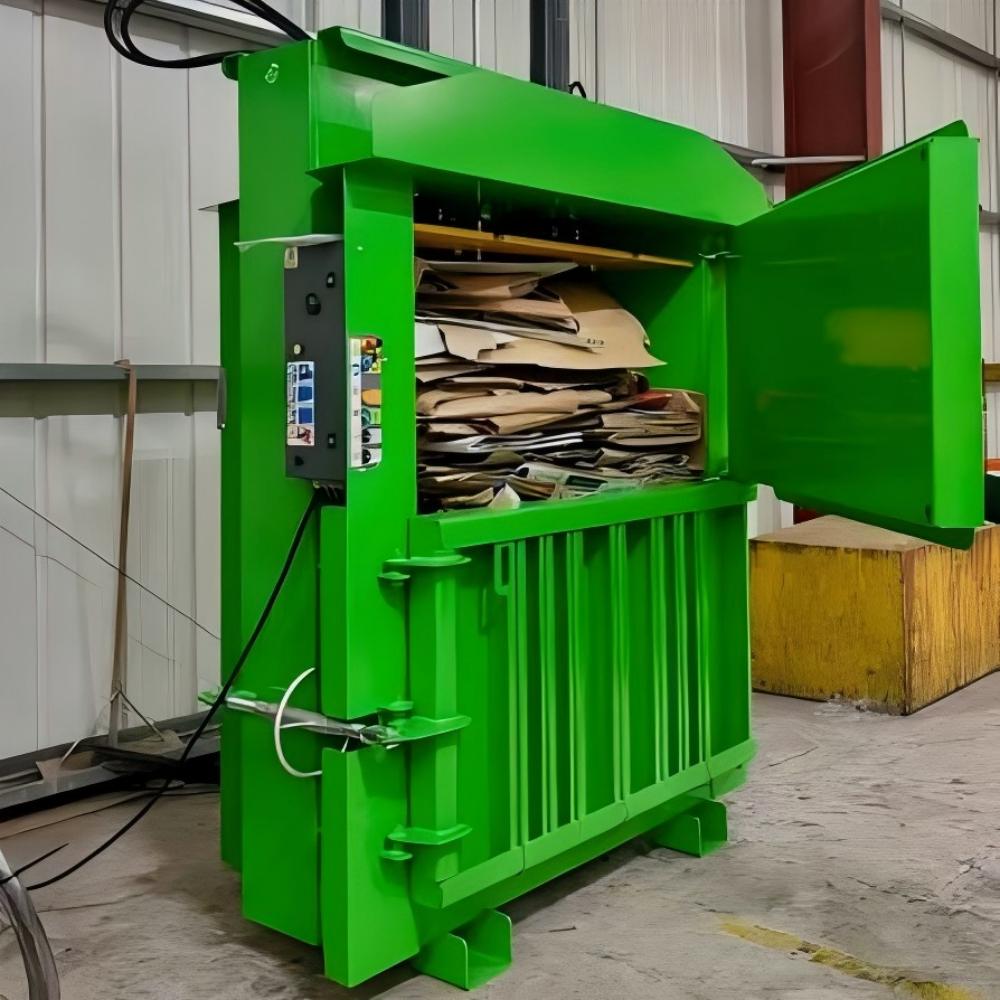
Core Parameters Influencing Part Longevity
The lifespan of vertical baler spare parts is directly influenced by several core operational parameters. The most significant of these is the ‘System Pressure.’ Most vertical balers are rated for a specific tonnage, such as 30 tons or 50 tons. Operating the machine at its maximum pressure limit consistently will accelerate the wear on hydraulic seals and the pump. If a facility is processing dense materials that require maximum force for every bale, the replacement interval for high-pressure hoses and cylinder seals should be shortened by approximately 25-30% compared to standard cardboard baling operations.
Another critical parameter is the ‘Cycle Time.’ This refers to the time it takes for the platen to travel from its home position to the bottom of the stroke and back. A faster cycle time often implies higher flow rates from the hydraulic pump, which generates more heat. Heat is the primary enemy of hydraulic systems. When the oil temperature exceeds 60°C (140°F), the viscosity drops, leading to poor lubrication and the hardening of Nitrile or Viton seals. Monitoring the cycle time and oil temperature provides a clear indicator of when the hydraulic cooling system or the oil itself needs attention.
The ‘Duty Cycle’ or the number of bales produced per hour also dictates the maintenance schedule. A machine running three shifts a day will require a completely different spare parts strategy than a machine used once a day in a retail backroom. For high-volume industrial applications, mechanical wear parts like the platen guides and the bale-tie guides (where the wire passes through) will need frequent inspection. The friction between the baling wire and the guide slots can eventually cut into the metal, leading to wire breakage and safety hazards during the tying process.
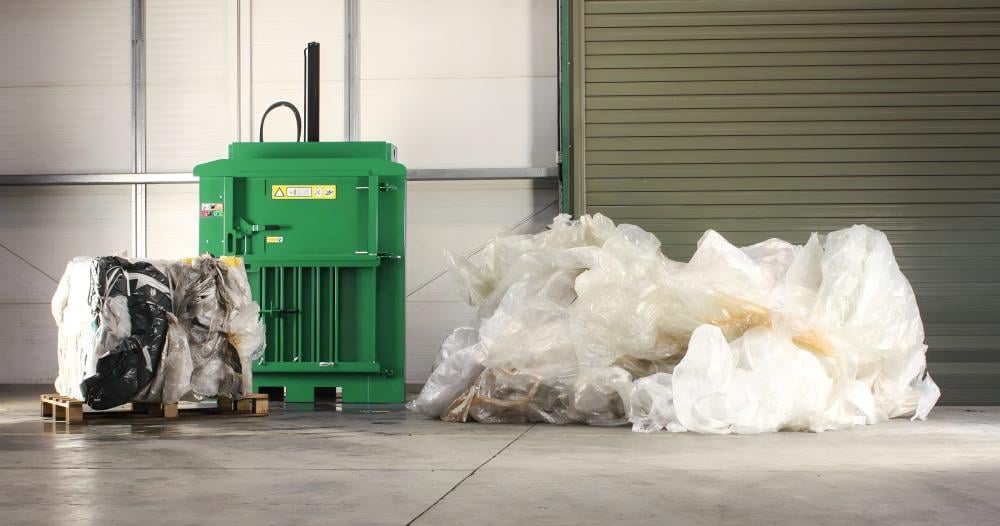
Finally, the ‘Material Type’ being baled plays a role in component degradation. For example, baling plastic film can create a ‘spring-back’ effect that puts sudden reverse pressure on the hydraulic valves when the platen retracts. Baling scrap metal or aluminum cans introduces abrasive dust and sharp edges that can damage the chamber liners and the platen face. Understanding these parameters allows maintenance managers to predict which Vertical Baler Spare Parts : Components That Need Regular Replacement will be required based on their specific usage profile.
Calculation Method for Maintenance Intervals
To move from reactive maintenance to a predictive model, engineers use specific calculation methods to determine when a component is likely to fail. One of the most common methods is the ‘MTBF’ (Mean Time Between Failures) calculation, adjusted for the ‘Load Factor.’ For a vertical baler, the Load Factor is a ratio of the actual operating pressure to the maximum rated pressure. If a machine is rated for 250 Bar but typically operates at 200 Bar, the Load Factor is 0.8. This factor is then used to adjust the manufacturer’s suggested part life.
For hydraulic seals, the calculation often involves ‘Stroke Count.’ A standard high-quality U-cup seal might be rated for 500,000 linear meters of travel. By calculating the stroke length of the cylinder (e.g., 1.2 meters) and the number of cycles per bale (usually 10-15 cycles to fill a chamber), one can estimate the number of bales a seal can produce before it is statistically likely to leak. Formula: Total Bales = (Rated Seal Travel) / (Stroke Length × Cycles per Bale × 2). This provides a data-driven approach to stocking seals before they fail.
Oil degradation can be calculated using the ‘Arrhenius Rule,’ which states that for every 10°C increase in temperature above the recommended operating range, the life of the oil is halved. If the standard oil life is 2,000 hours at 50°C, but the machine consistently runs at 60°C due to a clogged cooler or high ambient temperatures, the oil should be changed every 1,000 hours. This calculation is vital because degraded oil will rapidly destroy the hydraulic pump, a much more expensive spare part than a few gallons of fluid.
Mechanical wear on guides can be monitored using ‘Clearance Measurement.’ By measuring the gap between the platen and the frame at the start of the machine’s life and checking it monthly, maintenance teams can calculate the ‘Wear Rate’ (mm per 1,000 cycles). Once the clearance reaches the maximum allowable limit defined by the manufacturer (often 3-5mm), the guides must be replaced to prevent structural damage. This proactive measurement prevents the ‘domino effect’ where one worn part causes the failure of several others.
Detailed Parameter Table for Spare Parts
| Component Name | Primary Function | Material/Type | Estimated Life (Hours/Cycles) | Warning Signs of Failure |
|---|---|---|---|---|
| Hydraulic Cylinder Seals | Prevent fluid leakage and maintain pressure | Nitrile / Polyurethane | 2,000 – 4,000 Hours | Visible oil on rod, pressure drop, ‘creeping’ platen |
| Hydraulic Oil Filter | Remove contaminants from the system | 10-25 Micron Synthetic | 500 – 1,000 Hours | Filter bypass indicator, noisy pump, sluggish movement |
| Platen Wear Guides | Ensure straight travel of the platen | Nylon / HDPE / Bronze | 5,000 – 8,000 Cycles | Platen tilting, scraping noises, uneven bale density |
| High-Pressure Hoses | Transport hydraulic fluid under pressure | Wire-braided Rubber | 3 – 5 Years | Cracking, bulging, weeping at fittings |
| Directional Control Valve | Direct fluid flow to the cylinder | Spool Valve / Solenoid | 10,000+ Cycles | Erratic platen movement, failure to retract |
| Limit Switches | Detect platen and door position | Electromechanical | 1-2 Million Actuations | Machine won’t start, safety interlock errors |
| Bale Ejector Chain/Cable | Assist in removing the finished bale | High-tensile Steel | 2,000 Cycles | Stretching, frayed links, snapping during ejection |
Common Engineering Mistakes in Baler Maintenance
One of the most frequent mistakes in vertical baler maintenance is the use of incorrect hydraulic fluid. Many operators assume that any ‘ISO 46’ oil will suffice. However, vertical balers require oil with specific anti-wear (AW) additives and high viscosity index (VI) to handle the rapid pressure spikes. Using low-quality oil leads to cavitation in the pump and accelerated wear of the valve spools. Furthermore, mixing different brands or grades of oil can cause a chemical reaction that leads to sludge formation, which clogs the fine orifices in the hydraulic manifold.
Another common error is the over-tightening of hydraulic fittings in response to a leak. When a leak is detected at a hose connection, the instinct is to tighten the nut further. However, most modern balers use O-ring face seals or JIC fittings. Over-tightening can crush the O-ring or deform the flare, making the leak worse or causing the fitting to crack under pressure. The correct engineering approach is to depressurize the system, inspect the seal or the mating surface, and replace the damaged component rather than applying excessive torque.
Neglecting the ‘Air Breather’ on the hydraulic reservoir is a mistake that often goes unnoticed. As the cylinder extends and retracts, air is drawn into and pushed out of the tank. If the breather is clogged with dust (common in recycling centers), it creates a vacuum or overpressure in the tank. This can cause the pump to cavitate or the tank seams to stress. A clogged breather also allows moisture from the air to enter the oil, leading to oxidation and rust on the internal steel components of the hydraulic system.
Finally, many technicians fail to properly calibrate the pressure relief valve after replacing a pump or a cylinder. If the relief valve is set too high, the machine will exceed its structural design limits, leading to cracked welds in the chamber or a bent platen. If set too low, the machine will fail to produce bales of the required density, leading to higher shipping costs and inefficient operation. Calibration must always be done using a certified pressure gauge and following the manufacturer’s specific torque and pressure settings.
Selection Checklist for Vertical Baler Spare Parts
When selecting Vertical Baler Spare Parts : Components That Need Regular Replacement, it is crucial to follow a rigorous checklist to ensure compatibility and performance. Choosing the wrong part can not only lead to another failure but can also void the manufacturer’s warranty. Use the following checklist for your procurement process:
- Verify OEM Specifications: Always check the part number against the original equipment manufacturer (OEM) manual. Even small variations in dimensions or pressure ratings can cause significant issues.
- Material Compatibility: For seals and gaskets, ensure the material is compatible with the hydraulic fluid being used. For example, Viton seals are required for high-temperature or specific synthetic fluids where standard Nitrile would fail.
- Pressure Ratings: Ensure that replacement hoses and fittings have a working pressure rating that exceeds the machine’s maximum relief valve setting by at least 25%. Look for the ‘burst pressure’ rating as well for an extra safety margin.
- Electrical Certification: Replacement sensors, motors, and contactors should carry relevant certifications (UL, CE, or CSA) to ensure they meet industrial safety standards and can handle the voltage fluctuations common in factory environments.
- Wear Surface Hardness: When replacing chamber liners or shear blades (if equipped), verify the Rockwell hardness (HRC) of the steel. Parts that are too soft will wear quickly, while parts that are too brittle may crack under impact.
- Supplier Reputation: Purchase parts from reputable manufacturers like HARSLE or authorized distributors. Counterfeit hydraulic components are a major cause of industrial accidents.
- Lead Time and Availability: For critical ‘wear parts’ like seals and filters, maintain an on-site stock. For ‘insurance parts’ like pumps or cylinders, identify suppliers who can provide rapid shipping to minimize downtime.
Frequently Asked Questions (FAQ)
1. How often should I change the hydraulic oil in my vertical baler?
For most HARSLE vertical balers, we recommend a full oil change every 2,000 operating hours or once a year, whichever comes first. However, if the machine operates in a very dusty or hot environment, you should perform oil analysis every 500 hours and change it if the oxidation levels or particulate counts are high.
2. Why is my baler losing pressure during the compression stroke?
Pressure loss is usually caused by one of three things: a worn hydraulic pump that can no longer maintain flow, a leaking internal seal in the main cylinder (allowing oil to bypass the piston), or a malfunctioning relief valve that is opening too early. Check for external leaks first, then perform a ‘drift test’ on the cylinder to isolate the issue.
3. Can I use generic seals instead of OEM seal kits?
While generic seals may match the dimensions, they often lack the specific material compounds required for high-pressure industrial baling. OEM kits from HARSLE are designed to handle the specific thermal and chemical environment of our machines. Using generic seals often results in a much shorter service life and more frequent maintenance intervals.
4. What causes the platen to move unevenly or jerk?
Jerky movement, often called ‘stick-slip,’ is usually caused by worn platen guides or a lack of lubrication on the guide tracks. It can also be a sign of air trapped in the hydraulic system. Ensure the guides are within clearance specs and that the hydraulic reservoir is filled to the correct level to prevent air from being sucked into the pump.
5. How do I know when the hydraulic hoses need replacing?
Inspect hoses weekly for any signs of ‘weeping’ (small oil dampness), bulging, or cracking of the outer rubber cover. If you can see the wire reinforcement through the rubber, the hose is a safety hazard and must be replaced immediately. Hoses should generally be replaced every 3 to 5 years regardless of appearance as the internal rubber degrades over time.
6. Is it necessary to replace the oil filter if the oil looks clean?
Yes. Modern hydraulic filters are designed to catch particles as small as 10 microns, which are invisible to the naked eye. A filter can be completely clogged while the oil still appears clear. Most balers have a pressure gauge or a ‘pop-up’ indicator on the filter housing that signals when the element is restricted and needs replacement.