Vertical Baler Purchasing Guide for Metal Recycling and Fabrication Businesses

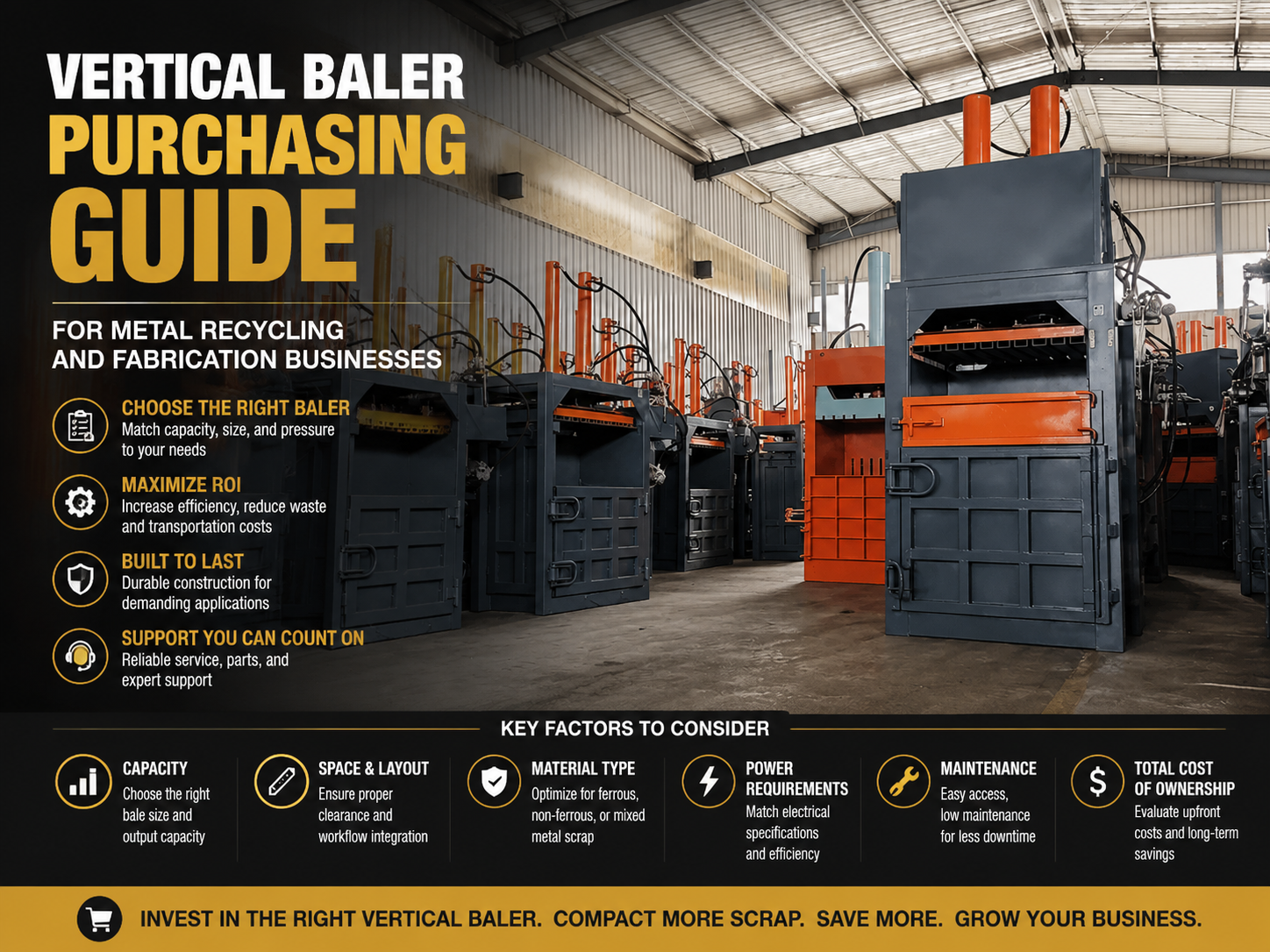
Technical Overview of Vertical Balers in Metal Fabrication
In the modern industrial landscape, efficiency in waste management is as critical as the production process itself. For metal recycling and fabrication businesses, the vertical baler stands as a cornerstone of operational efficiency. A vertical baler is a hydraulic press designed to compress recyclable materials—such as aluminum cans, copper wiring, light gauge steel scrap, and stainless steel shavings—into dense, manageable blocks known as bales. Unlike horizontal balers, which require significant floor space and are often used for high-volume continuous processing, vertical balers operate on a top-down compression principle, making them ideal for facilities with limited space but a consistent need for scrap volume reduction.
The technical architecture of a HARSLE vertical baler involves a heavy-duty steel frame, a high-pressure hydraulic system, and a precision-engineered ram. The process begins when scrap metal is loaded into the chamber. Once the safety gate is closed, the hydraulic cylinder exerts downward force, compacting the material against the floor of the chamber. This process is repeated until a full bale is formed. The structural integrity of the baler is paramount; because metal scrap is significantly more abrasive and resistant than cardboard or plastic, the chamber walls must be reinforced with wear-resistant liners to prevent deformation over time.
From an engineering perspective, the efficiency of a vertical baler is determined by its hydraulic circuit design. Modern HARSLE machines utilize high-efficiency pumps and manifold blocks that minimize heat generation and energy consumption. Furthermore, the integration of Programmable Logic Controllers (PLCs) allows for automated cycles, ensuring that the ram applies consistent pressure and returns to the starting position efficiently. This automation reduces the labor intensity of the recycling process, allowing fabrication shops to focus on their primary manufacturing tasks while maintaining a clean and organized workspace.
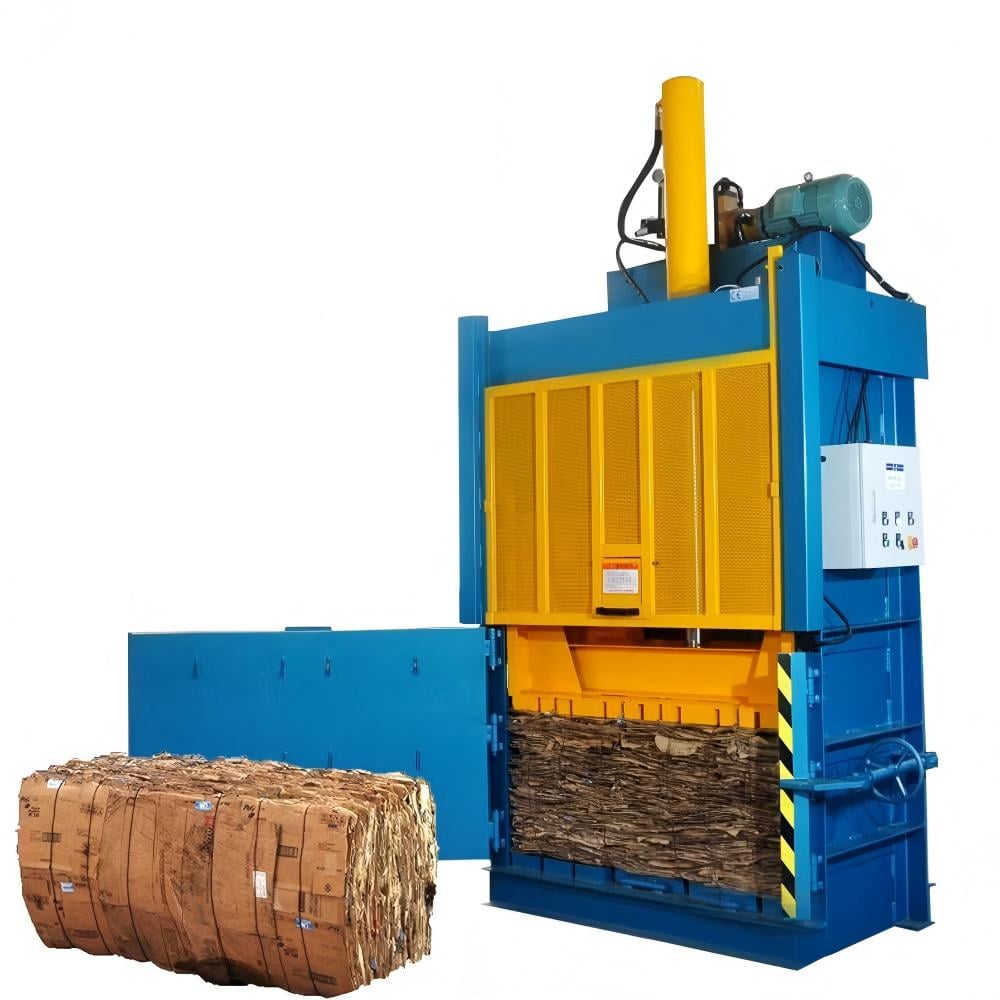
The application of vertical balers in metal fabrication extends beyond simple waste disposal. By densifying scrap, businesses can significantly reduce transportation costs. Loose metal scrap is bulky and expensive to haul; however, baled metal maximizes the weight capacity of transport vehicles, leading to higher payouts from scrap yards and refineries. Additionally, baling helps in segregating different types of alloys, which is essential for maintaining the purity of recycled streams and achieving the best market value for the material.
Core Parameters for Vertical Baler Purchasing Metal Recycling Fabrication Businesses
When evaluating a Vertical Baler Purchasing Metal Recycling Fabrication Businesses strategy, understanding the core technical parameters is essential to ensure the machine meets the specific demands of metal processing. Unlike softer materials, metal requires high “specific pressure” to overcome its inherent elasticity and structural memory. The first and most critical parameter is the Nominal Pressure (Tonnage). For metal applications, tonnage typically ranges from 30 to 150 tons. A 30-ton baler might suffice for aluminum cans and light foil, but for fabrication scrap like steel offcuts or copper busbars, a minimum of 60 to 100 tons is often required to achieve a stable bale.
The Chamber Dimensions and Bale Size are the next factors to consider. The chamber must be large enough to accommodate the largest pieces of scrap generated by your fabrication processes without requiring extensive pre-cutting. However, the resulting bale size must also be compatible with the handling equipment (forklifts or pallet jacks) and the requirements of the end-buyer. Standard bale sizes often align with pallet dimensions to simplify storage and shipping. A common bale size for industrial applications is 1100 x 700 x 900 mm, which provides a balance between weight and maneuverability.
Cycle Time is a vital metric for productivity. This refers to the time it takes for the ram to travel from its home position, compress the material, and return. In a fast-paced fabrication environment, a cycle time of 30 to 50 seconds is standard. Faster cycle times require more powerful hydraulic pumps and motors. It is important to balance speed with power; a machine that moves too quickly may not provide the necessary “dwell time” at the bottom of the stroke to ensure the metal stays compressed, leading to “spring-back” issues once the bale is tied.
Finally, the Motor Power and Electrical Configuration must be matched to the facility’s infrastructure. Most industrial vertical balers require three-phase power (e.g., 380V/415V). The motor power (measured in kW or HP) directly influences the hydraulic flow rate and the pressure the system can maintain. For heavy-duty metal baling, a motor of 7.5kW to 15kW is typical. Buyers must also ensure the hydraulic oil cooling system is sufficient for the intended duty cycle, especially in warmer climates or high-volume operations where the oil can overheat during continuous use.
Calculation Method for Bale Density and Throughput
To optimize the selection of a vertical baler, engineers and facility managers must perform specific calculations to determine the required machine capacity. The most important calculation is the Bale Density, which is the mass of the material divided by the volume of the bale. For metal recycling, achieving a high density is key to transport efficiency. The formula is: Density (kg/m³) = Bale Weight (kg) / (Bale Length × Width × Height in meters). For example, if you aim for a 300kg bale of aluminum in a 0.7m³ volume, your target density is approximately 428 kg/m³.
To determine if a specific baler can achieve this density, you must calculate the Platen Pressure. This is the total force of the hydraulic cylinder divided by the surface area of the press platen. Platen Pressure (kg/cm²) = Total Force (kg) / Platen Area (cm²). Metal scrap generally requires a platen pressure of at least 5 to 10 kg/cm² to form a cohesive bale. If the calculated pressure is too low, the bale will likely fall apart when the wires are removed, or it will not meet the density requirements of the recycler.
Another critical calculation is the Hourly Throughput. This helps in determining if one machine is sufficient for the daily scrap generation. The formula is: Throughput (kg/hr) = (3600 / Cycle Time in seconds) × Weight per Charge (kg) × Efficiency Factor. The efficiency factor (usually 0.6 to 0.8) accounts for the time taken to load the material and tie the bale. If a fabrication shop generates 2 tons of scrap per 8-hour shift, the baler must be capable of processing at least 250kg per hour. Calculating this ensures that the baler does not become a bottleneck in the production line.
Lastly, consider the Volume Reduction Ratio. This is the ratio of the loose scrap volume to the baled volume. For light metal scrap, a vertical baler can achieve a reduction ratio of 5:1 or even 10:1. Calculating this helps in planning the storage space required for processed scrap. If you know your monthly scrap volume is 100 cubic meters, a 10:1 reduction means you only need 10 cubic meters of storage space for the finished bales, significantly freeing up floor space for manufacturing equipment.
Technical Parameter Table for HARSLE Vertical Balers
The following table provides a comparison of typical specifications for vertical balers used in metal recycling and fabrication environments. These figures are representative of the HARSLE product line and should be used as a baseline for selection.
| Model Series | Nominal Force (Tons) | Chamber Size (L*W*H mm) | Bale Weight (kg – Alum/Steel) | Motor Power (kW) | Cycle Time (sec) |
|---|---|---|---|---|---|
| HVB-30 | 30 | 800 x 600 x 1000 | 100 – 150 | 5.5 | 35 |
| HVB-60 | 60 | 1000 x 700 x 1200 | 200 – 300 | 7.5 | 45 |
| HVB-100 | 100 | 1100 x 800 x 1300 | 400 – 550 | 11.0 | 50 |
| HVB-150 | 150 | 1200 x 1000 x 1500 | 600 – 800 | 15.0 | 60 |
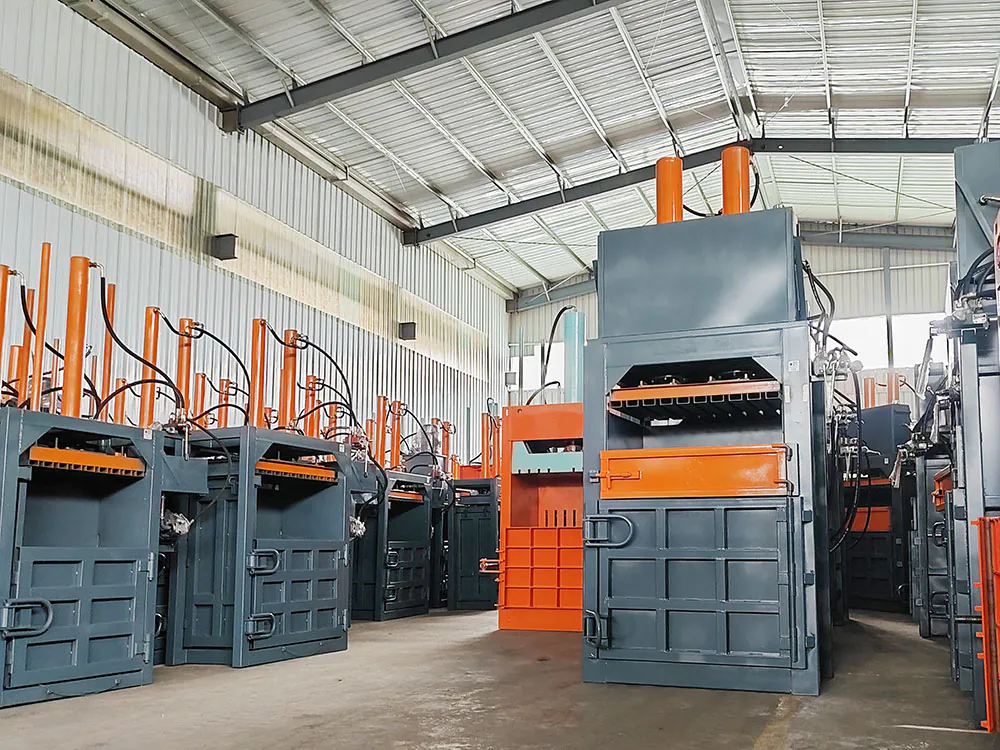
Common Engineering Mistakes in Baler Selection
One of the most frequent mistakes in Vertical Baler Purchasing Metal Recycling Fabrication Businesses is undersizing the machine’s tonnage. Many buyers look at the volume of their scrap rather than its structural resistance. Attempting to bale stainless steel offcuts or thick copper wire with a 30-ton baler designed for cardboard will lead to premature hydraulic seal failure, frame warping, and incomplete compaction. Metal requires a “brute force” approach; it is always better to have a 20% buffer in tonnage capacity than to run a machine at its absolute limit constantly.
Another common error is ignoring the material’s abrasive nature. Standard balers often have painted mild steel interiors. When processing metal scrap, this paint is stripped away instantly, and the underlying steel is subjected to intense friction and gouging. Engineering specifications for a metal baler should include replaceable Hardox or similar wear-resistant liners. Failing to specify these liners results in the structural walls of the chamber thinning over time, eventually leading to a catastrophic failure of the machine frame under pressure.
Poor electrical planning is a third pitfall. Industrial balers have high startup currents (Inrush current). If the facility’s electrical panel is not rated for the motor’s peak load, or if the wire gauge is too thin, the machine will experience voltage drops. This not only triggers the PLC’s safety shutdowns but can also damage the motor windings and contactors. Furthermore, many buyers forget to check if their facility requires a specific IP rating for the electrical cabinet, especially in dusty fabrication environments where metal particles can cause short circuits in the control system.
Finally, many businesses fail to consider the ergonomics of loading and tying. In a vertical baler, the material is loaded manually or via a small conveyor. If the loading height is too high, it leads to operator fatigue and potential injury. Similarly, the method of tying the bale (usually with wire or high-strength plastic strapping) must be robust. For metal, wire is almost always required. If the baler’s design makes it difficult to pass the wires through the channels, the “down-time” between bales increases, significantly lowering the overall ROI of the machine.
Selection Checklist for Industrial Buyers
To ensure a successful acquisition, follow this comprehensive selection checklist tailored for metal recycling and fabrication businesses:
- Material Assessment: Define the exact types of metal (Aluminum, Copper, Steel) and the maximum thickness of the scrap. This dictates the required tonnage and chamber reinforcement.
- Volume Requirements: Calculate the daily and weekly scrap weight. Ensure the baler’s cycle time and bale weight capacity can handle 1.2x your current peak volume to allow for future growth.
- Space Constraints: Measure the footprint of the machine AND the required clearance for the door to swing open and for the bale to be ejected. Don’t forget the ceiling height for the hydraulic cylinder extension.
- Safety Features: Ensure the machine complies with local safety standards (CE, OSHA, etc.). Look for dual-hand controls, emergency stops, and magnetic safety interlocks on all gates.
- Hydraulic System Quality: Inquire about the brand of the hydraulic valves and pumps. HARSLE uses reputable components that are easy to source globally for maintenance.
- Bale Tying System: For metal, ensure the machine has deep grooves for wire tying and that the bale ejection system is automated (usually a chain or hydraulic ejector).
- Maintenance Access: Check how easy it is to access the hydraulic reservoir, filters, and PLC. A machine that is hard to maintain will eventually be neglected.
- After-Sales Support: Confirm the availability of spare parts like seal kits, limit switches, and wear plates. A baler is a long-term investment that requires periodic servicing.
Frequently Asked Questions (FAQ)
1. Can a vertical baler handle all types of metal scrap?
Vertical balers are excellent for “light” to “medium” scrap. This includes aluminum cans, extrusions, copper wire, light-gauge sheet metal, and turnings. However, they are not designed for heavy structural steel, thick rebar, or engine blocks. Those materials require heavy-duty horizontal shear balers or scrap shredders.
2. How often does the hydraulic oil need to be changed?
For a HARSLE vertical baler operating in a standard fabrication environment, the hydraulic oil should typically be changed every 2,000 to 3,000 operating hours. However, the oil should be inspected monthly for clarity and scent. If the oil appears cloudy (water contamination) or smells burnt (overheating), it should be replaced immediately to protect the pump and valves.
3. Is it better to use wire or plastic strapping for metal bales?
For metal recycling, galvanized steel wire is the industry standard. Metal scrap has significant “memory” and will attempt to expand once the pressure is released. Plastic strapping often stretches or snaps under the sharp edges and high expansion force of metal. Wire ensures the bale remains secure during transport and melting processes.
4. What are the floor requirements for installing a 100-ton vertical baler?
A 100-ton baler exerts significant localized pressure. It should be installed on a reinforced concrete pad, typically at least 150mm to 200mm thick, depending on the machine’s weight and the soil’s bearing capacity. The floor must be level to prevent frame twisting, which can cause the ram to misalign and damage the seals.
5. Can the baler be used outdoors?
While some balers are used outdoors, it is not recommended without a proper enclosure. Rain can contaminate the hydraulic oil and cause rust on the ram and electrical components. If outdoor use is necessary, the machine must be equipped with a weather-proof electrical cabinet (IP65 or higher) and a protective roof structure.
6. How does a vertical baler improve the ROI of a fabrication shop?
The ROI comes from three main areas: reduced labor costs in handling scrap, significantly lower transportation fees due to increased density, and higher scrap value from the recycler. Most fabrication shops find that a well-chosen vertical baler pays for itself within 12 to 24 months through these savings and revenue increases.