How to Choose the Right Vertical Baler for Your Metal Fabrication Facility

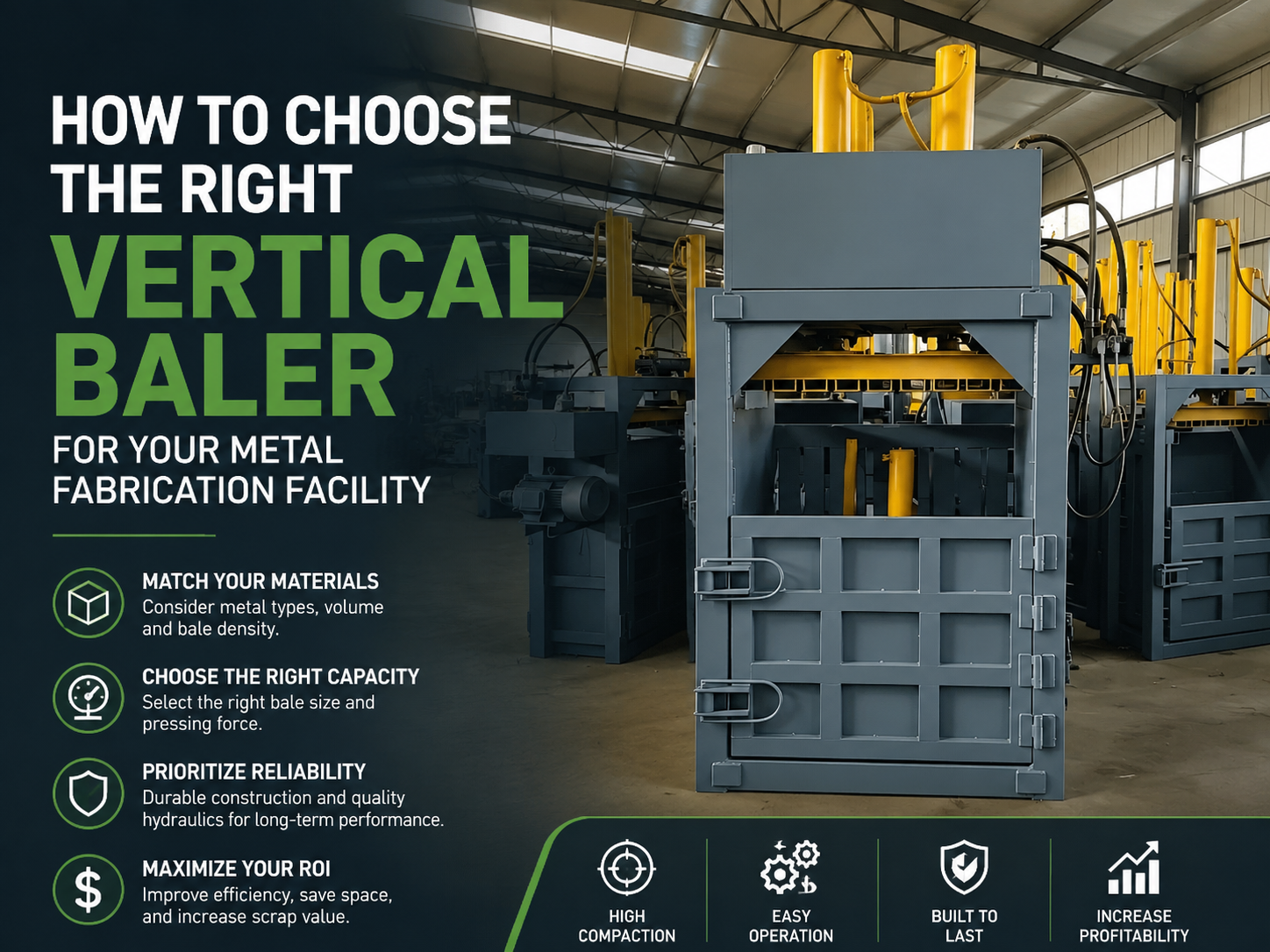
Technical Overview of Vertical Balers in Metal Fabrication
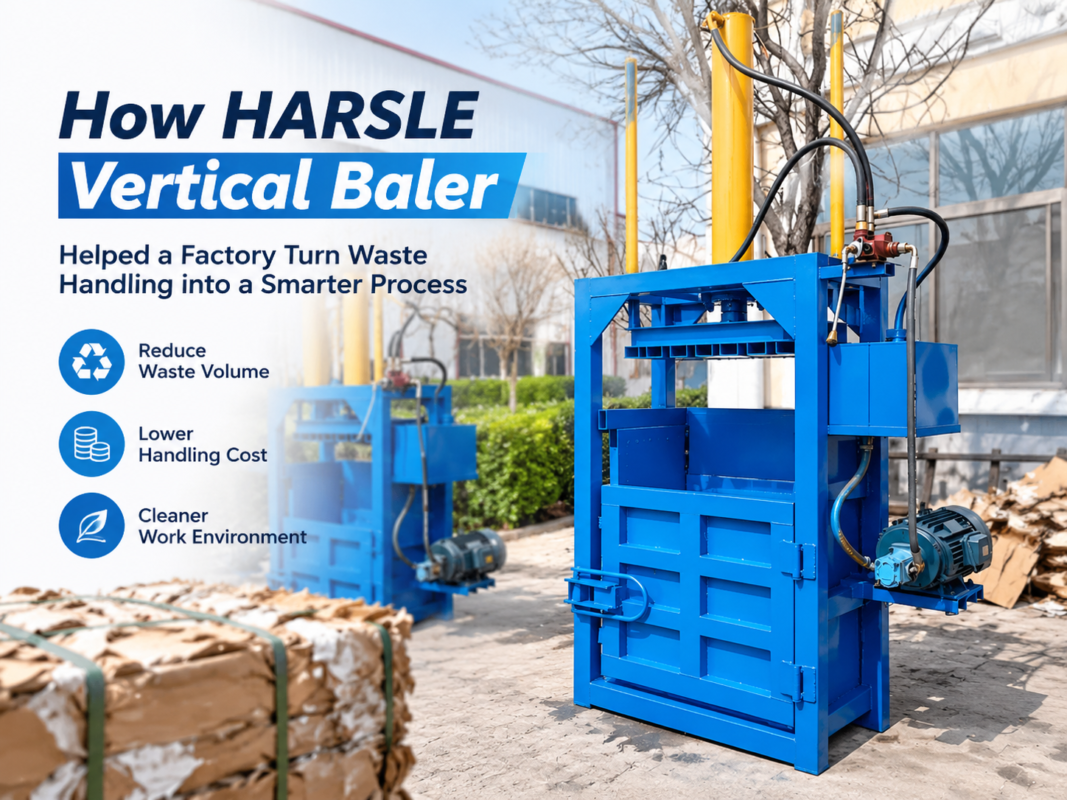
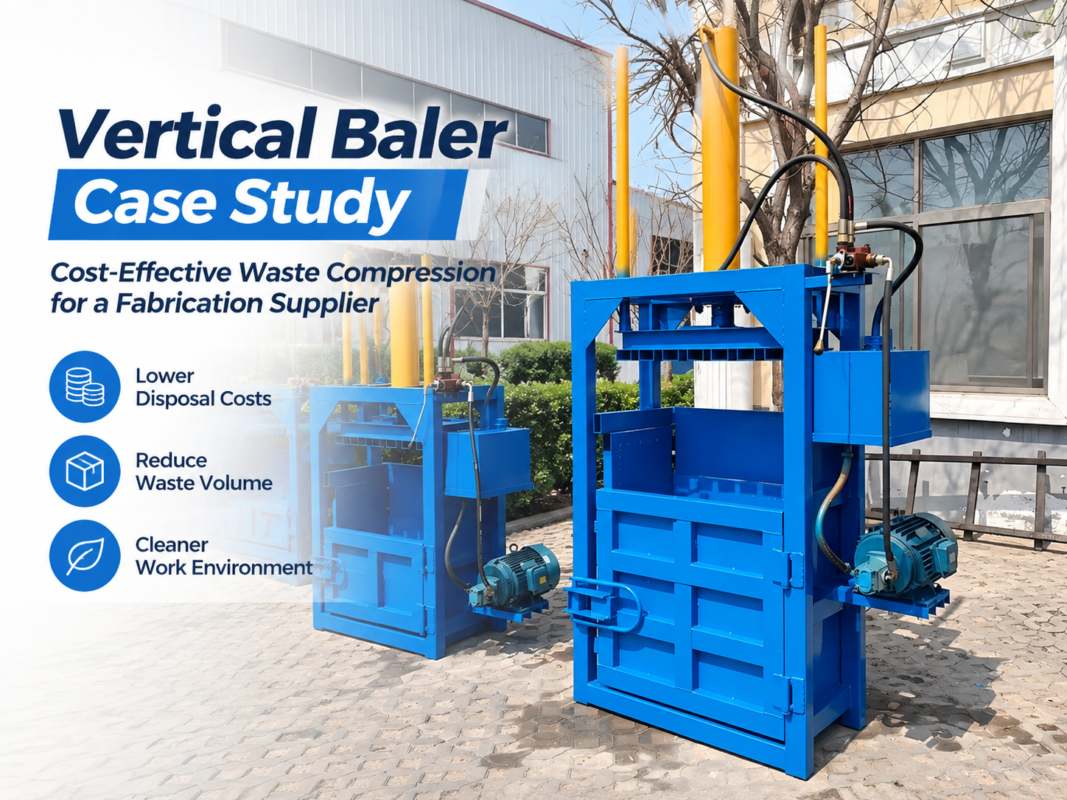
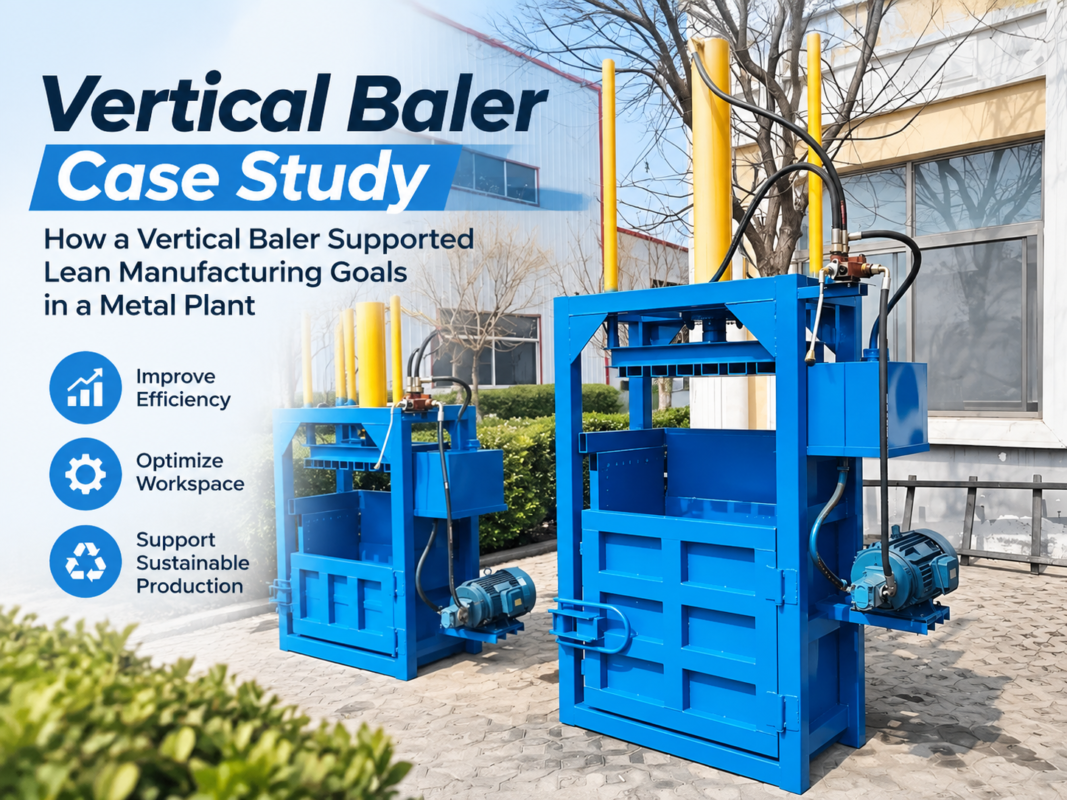
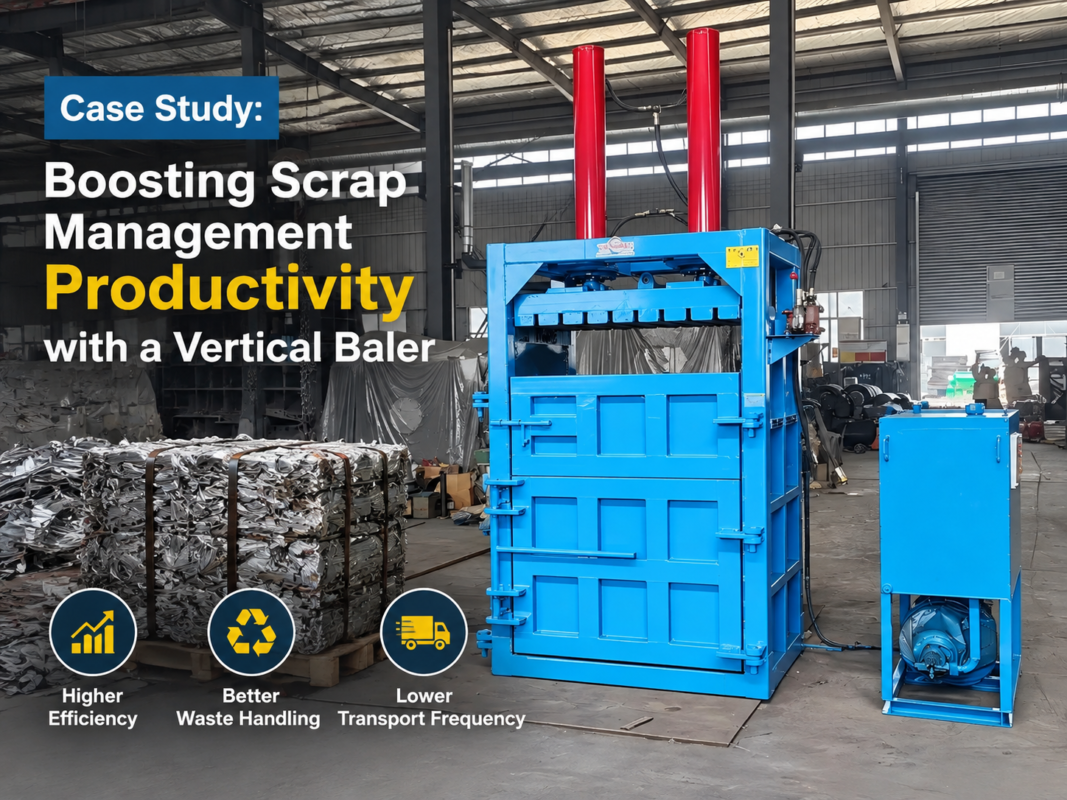
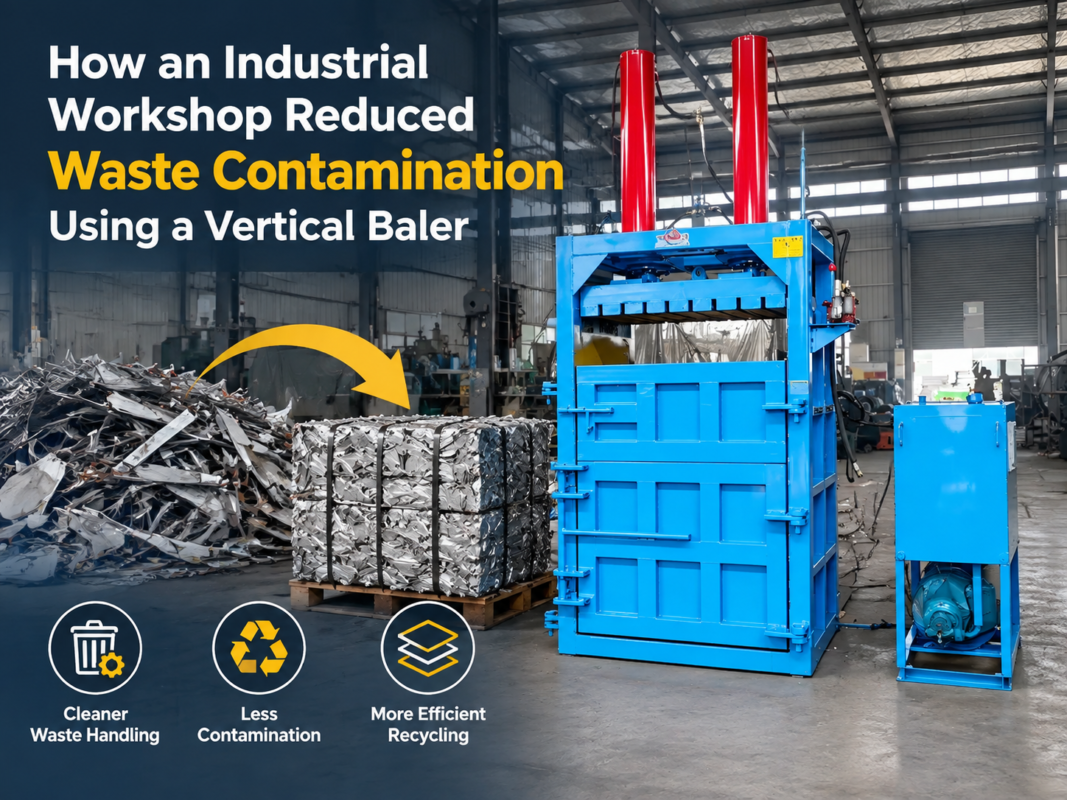
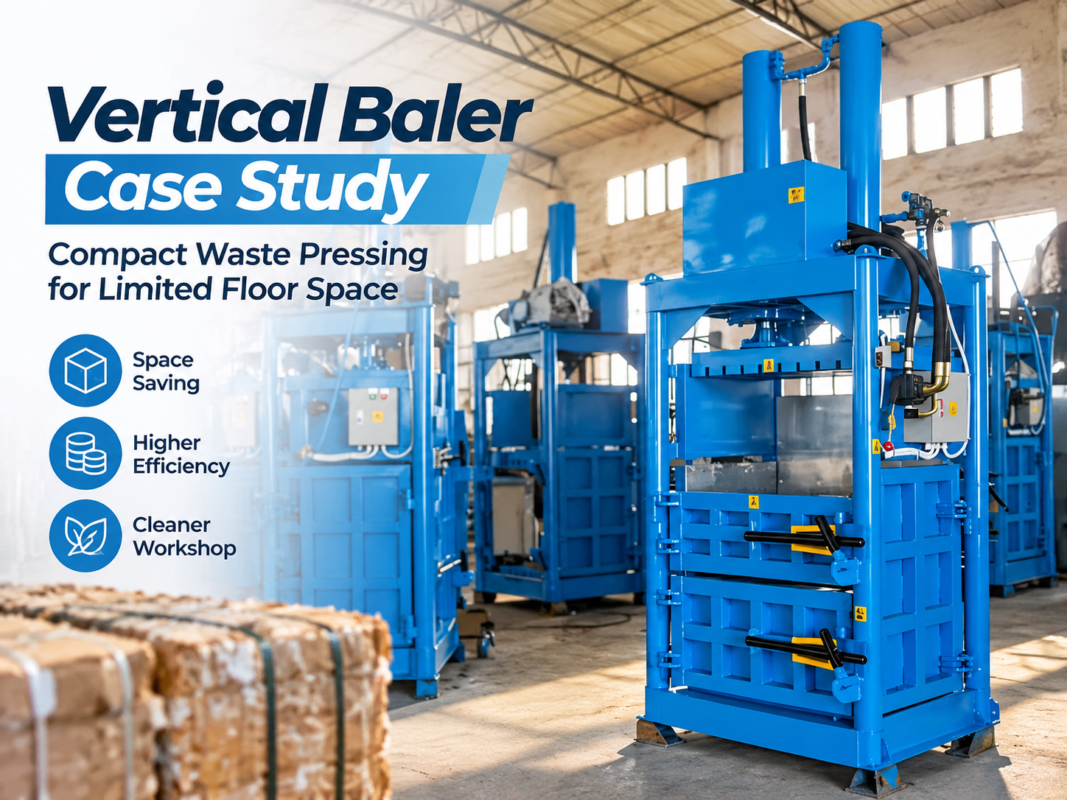
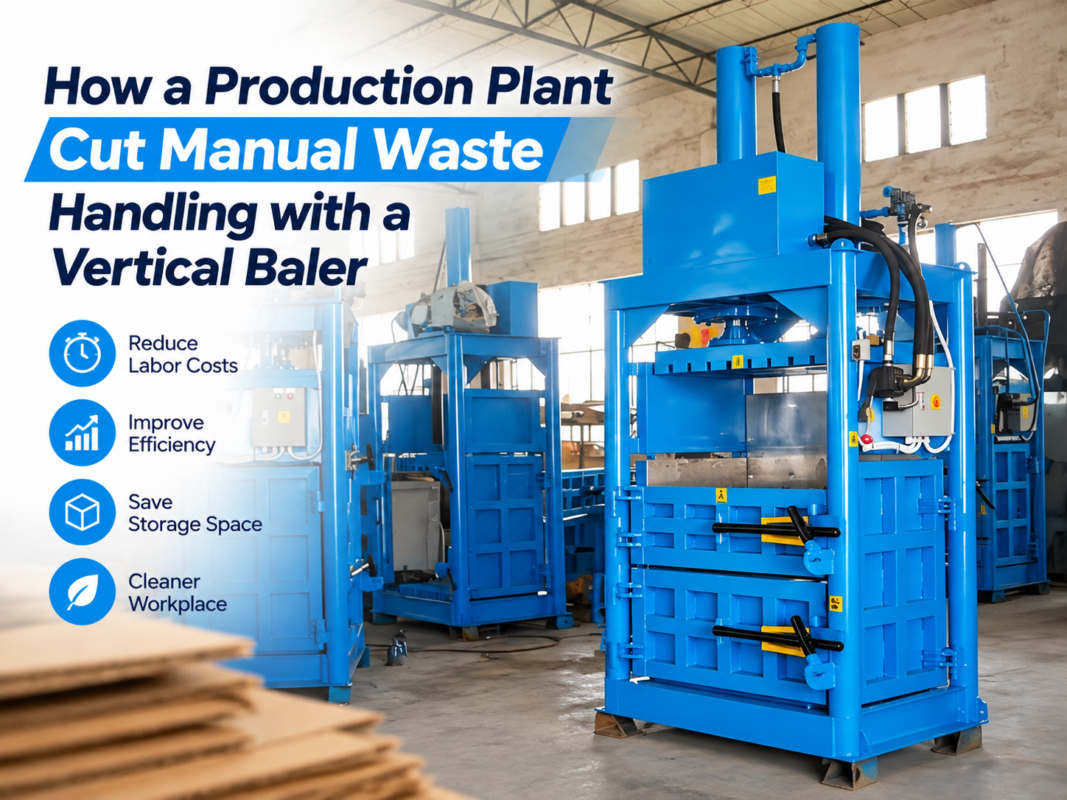
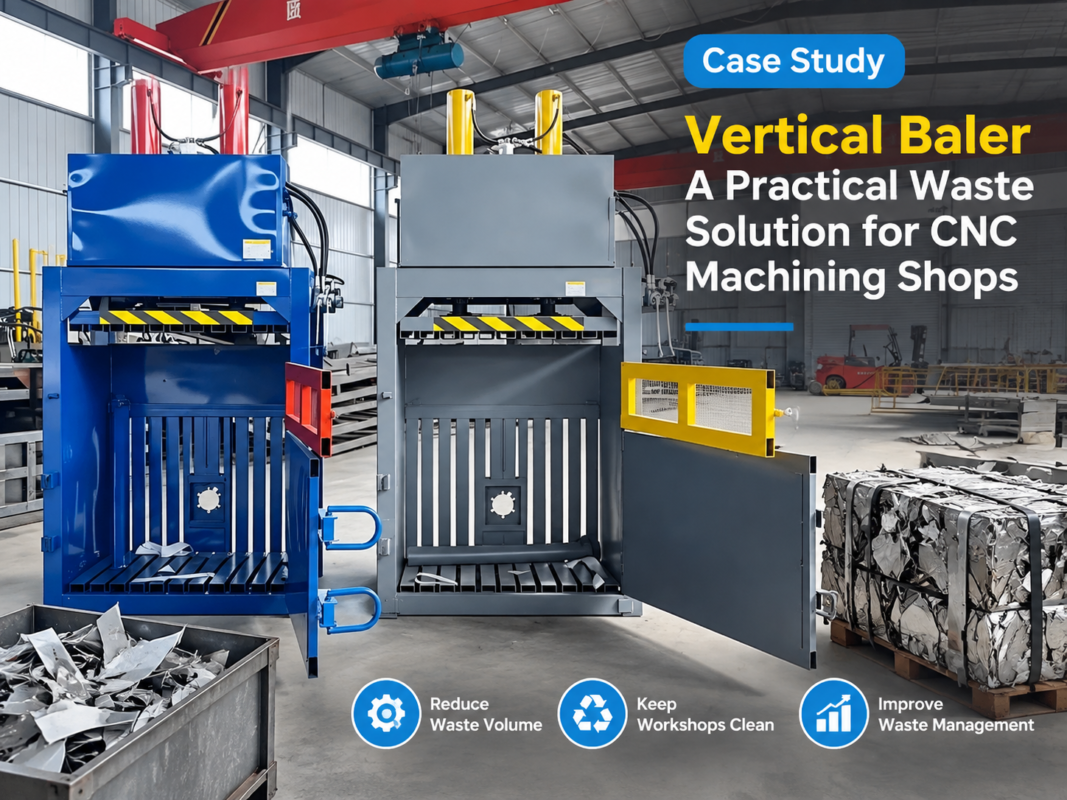
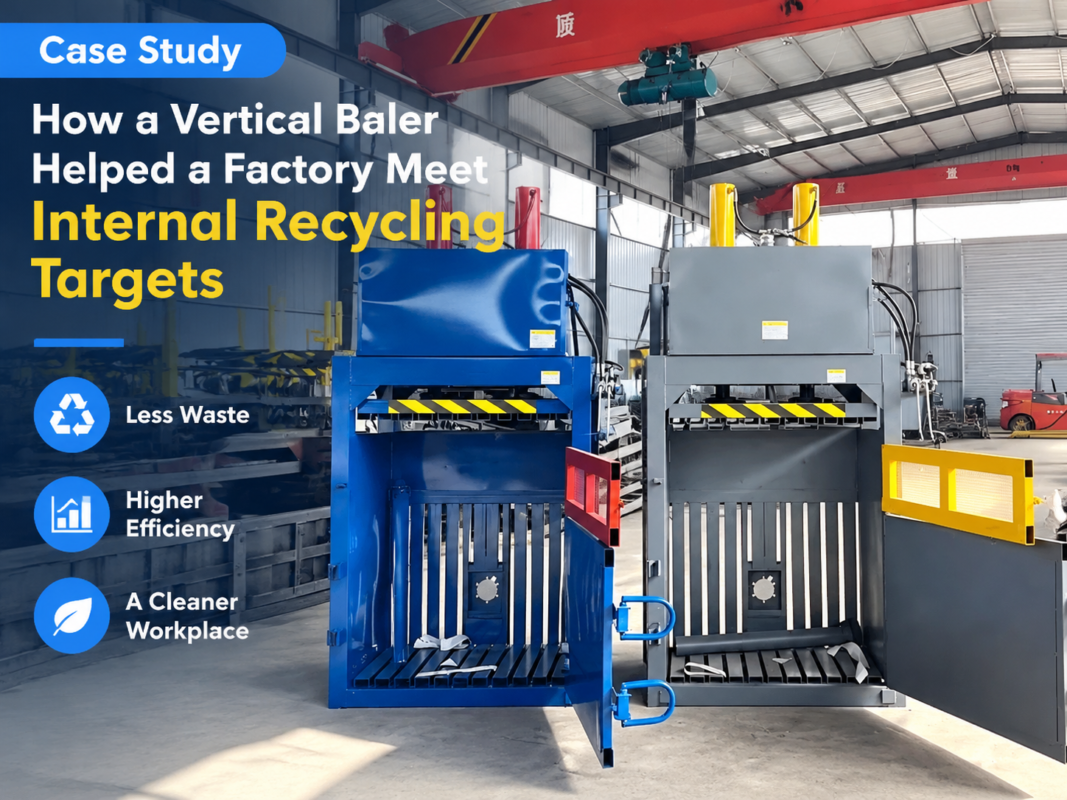
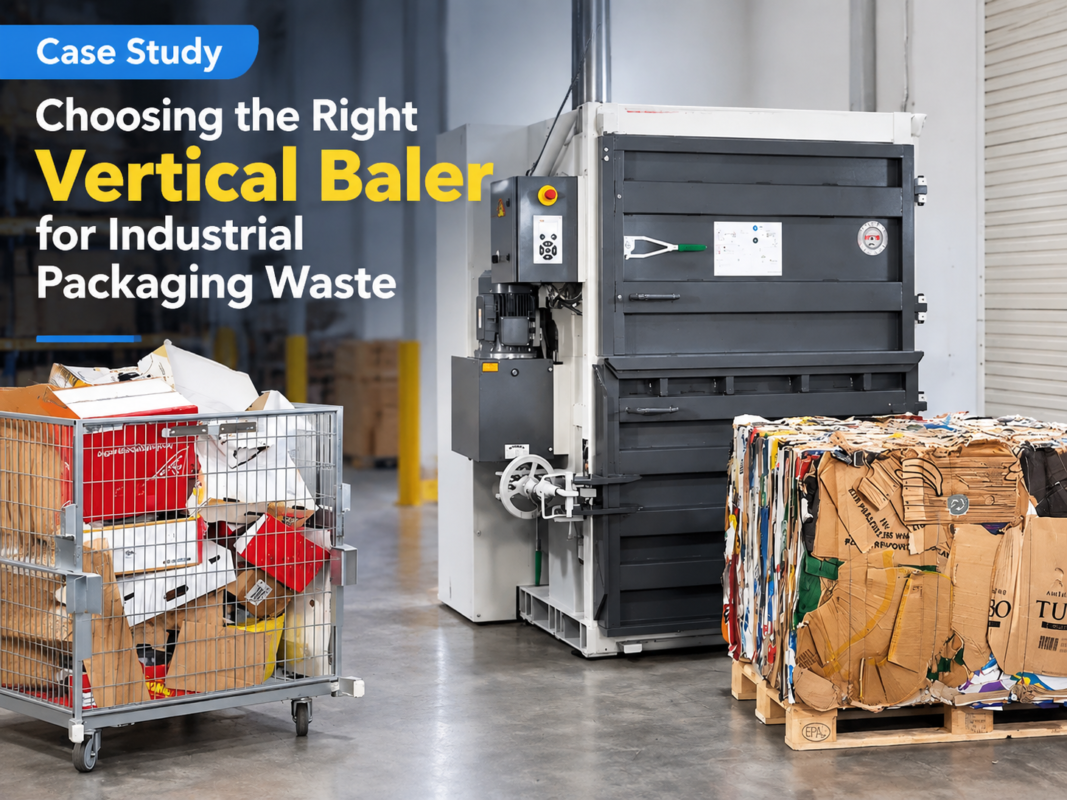
In the modern metal fabrication environment, efficiency is not just measured by the quality of the finished product but also by the management of the waste generated during production. A vertical baler is a critical piece of equipment designed to compress recyclable materials—such as aluminum scrap, light steel shavings, copper wire, and cardboard packaging—into dense, manageable blocks known as bales. Unlike horizontal balers, which occupy a significant footprint, vertical balers operate with a downward-stroke hydraulic ram, making them ideal for facilities where floor space is at a premium.
The technical foundation of a HARSLE vertical baler lies in its robust hydraulic system. The machine consists of a heavy-duty steel frame, a pressing plate (platen), hydraulic cylinders, and a power unit. When material is loaded into the chamber, the hydraulic cylinders force the platen downward with immense pressure, crushing the material. Once the desired density is reached, the bale is secured with wire or strapping and ejected. For metal fabrication facilities, the choice of a vertical baler depends heavily on the ‘spring-back’ nature of the metal scrap and the required throughput per shift.
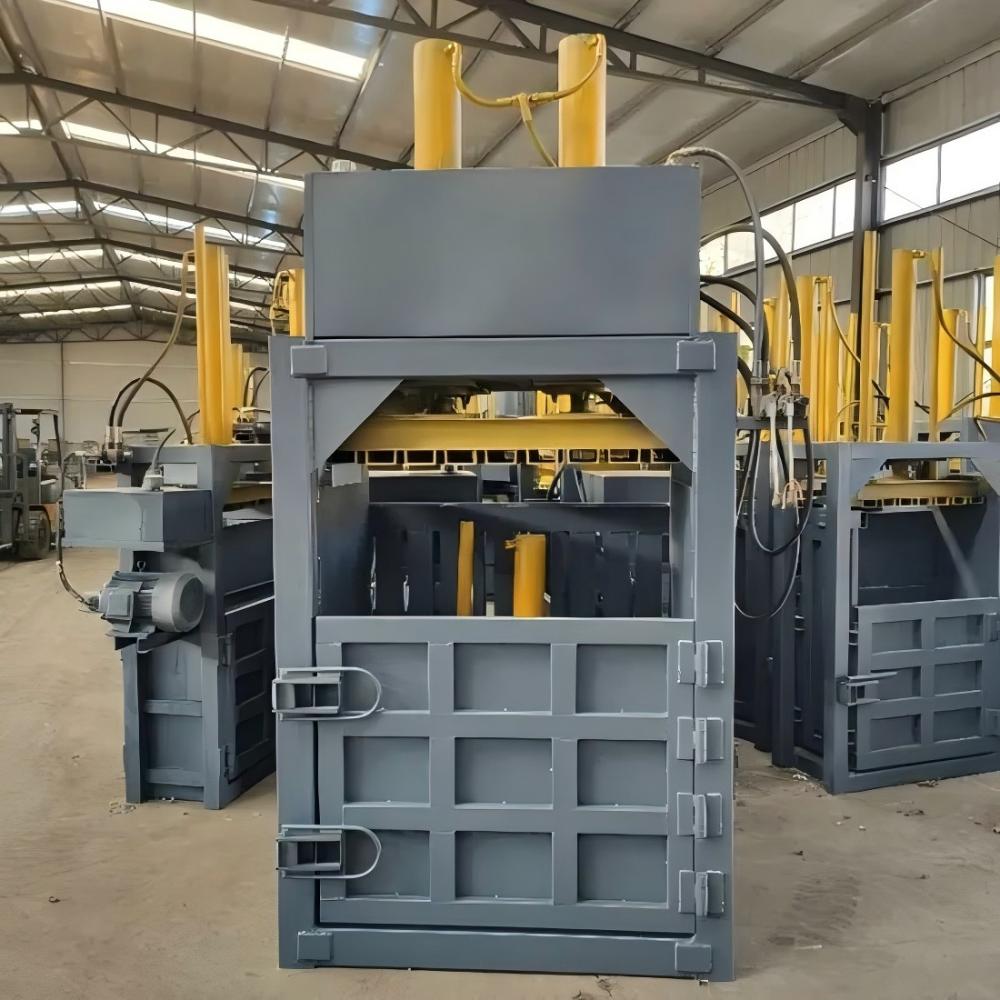
Modern vertical balers have evolved to include advanced PLC (Programmable Logic Controller) systems. These systems allow operators to adjust pressure settings based on the material type, ensuring that the machine doesn’t over-strain when processing softer materials like aluminum while providing maximum force for tougher steel scraps. Furthermore, safety interlocks and automatic door sensors have become standard, ensuring that the high-pressure environment of the baling chamber remains safe for facility personnel.
Core Parameters to Consider When You Choose Vertical Baler Metal Fabrication Facility
Selecting the right machine requires a deep dive into technical specifications. The first and most critical parameter is Nominal Pressure (Tonnage). In metal fabrication, standard 10-ton or 20-ton balers used for cardboard are often insufficient. Metal scrap requires higher density; therefore, facilities typically look at 30-ton to 100-ton models. The pressure must be sufficient to overcome the structural integrity of the metal scrap to prevent the bale from falling apart once the straps are applied.
The second parameter is Bale Dimensions and Weight. Logistics play a massive role in the ROI of a baler. If your bales are too small, you won’t maximize the weight capacity of the trucks transporting the scrap to the smelter. Conversely, if they are too large, they may be difficult to move with standard forklifts. Common bale sizes in the industry range from 800x600mm to 1200x1100mm. You must align the bale size with your recycler’s requirements to ensure you receive the highest possible scrap value.
Thirdly, Cycle Time is a measure of productivity. This refers to the time it takes for the ram to move from the top position to the bottom and back again. In a high-volume fabrication shop, a slow cycle time can create a bottleneck in the waste management workflow. Look for machines with high-efficiency hydraulic pumps that offer a cycle time of 30 to 60 seconds. Additionally, consider the Motor Power; a larger motor (e.g., 15kW vs. 7.5kW) generally provides faster cycle times and more consistent pressure throughout the stroke.
Calculation Method for Determining Required Baler Capacity
To accurately choose a vertical baler for a metal fabrication facility, you must calculate your daily waste volume and the density of your specific scrap. The goal is to determine the ‘Throughput Requirement.’ Use the following formula as a starting point:
Total Daily Waste (kg) / Desired Bale Weight (kg) = Number of Bales per Day
For example, if your facility generates 2,000 kg of aluminum scrap per day and you want to produce 200 kg bales, you need to produce 10 bales per day. If the machine has a cycle time of 45 seconds, but loading and tying the bale takes an additional 10 minutes, your total time per bale is approximately 11 minutes. Therefore, 10 bales will take 110 minutes of active operation. This calculation helps you decide if a single vertical baler is sufficient or if the volume necessitates a heavy-duty model with faster tying mechanisms.
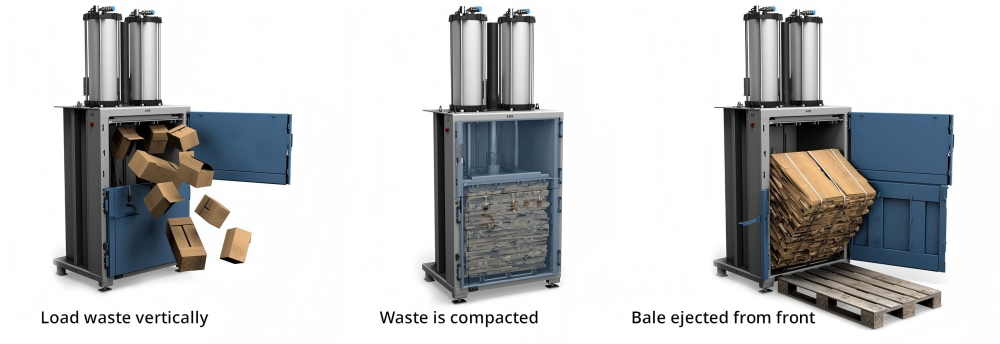
Another critical calculation is the Compression Ratio. Metal scrap has a high ‘void ratio.’ A vertical baler can typically achieve a compression ratio of 5:1 to 10:1 for light metals. By calculating the volume of your loose scrap versus the volume of the compressed bale, you can estimate how much floor space you will save. This is often the primary driver for the purchase, as it frees up valuable square footage for additional fabrication machinery like CNC lasers or press brakes.
Technical Parameter Comparison Table
The following table provides a comparison of typical HARSLE vertical baler models suitable for metal fabrication environments. Use this to narrow down your selection based on your facility’s specific output.
| Model Series | Pressing Force (Tons) | Bale Size (L*W*H mm) | Motor Power (kW) | Cycle Time (sec) | Ideal Material |
|---|---|---|---|---|---|
| HVB-30 | 30 Tons | 800 x 600 x 1000 | 7.5 kW | 40s | Cardboard, Plastic, Thin Al |
| HVB-60 | 60 Tons | 1100 x 700 x 1000 | 11 kW | 45s | Aluminum Cans, Light Steel |
| HVB-100 | 100 Tons | 1200 x 1100 x 1200 | 15 kW | 55s | Heavy Metal Scrap, Wire |
| HVB-150 | 150 Tons | 1500 x 1200 x 1200 | 22 kW | 65s | Industrial Metal Waste |
Common Engineering Mistakes in Baler Selection
One of the most frequent mistakes made by facility managers is underestimating the material’s ‘memory’ or spring-back. Unlike cardboard, metal scrap wants to return to its original shape. If you choose a baler with insufficient tonnage, the bale will expand significantly once the pressure is released, often snapping the bale wires. This leads to safety hazards and wasted labor. For metal applications, it is always recommended to ‘over-spec’ the tonnage by at least 20% compared to what you would use for paper products.
Another common error is ignoring the loading height and method. If the baler’s feed opening is too high, workers may struggle to load heavy metal scraps manually, leading to ergonomic injuries. Conversely, if you plan to use a conveyor or a forklift to load the machine, the vertical baler must be compatible with those systems. Many facilities forget to check the ceiling clearance; vertical balers require significant height when the hydraulic cylinders are fully extended. Always verify the ‘Extended Height’ specification against your facility’s ceiling and overhead crane clearance.
Finally, neglecting the hydraulic cooling system can be a fatal mistake for the machine’s longevity. In high-volume environments where the baler is running continuously, the hydraulic oil can overheat, leading to seal failure and loss of pressure. If your facility operates multiple shifts, ensure your vertical baler is equipped with an air-cooled or water-cooled oil system to maintain consistent performance and protect the hydraulic pump.
Comprehensive Selection Checklist
Before finalizing your purchase, go through this checklist to ensure the machine meets all operational requirements of a metal fabrication facility:
- Material Compatibility: Does the baler have a ‘shear blade’ or reinforced platen to handle sharp metal edges?
- Power Requirements: Does your facility have the necessary 3-phase power (e.g., 380V/415V/480V) to support the motor?
- Bale Ejection System: Is the machine equipped with an automatic chain or hydraulic ejector to safely remove heavy metal bales?
- Safety Standards: Does the machine comply with CE or ANSI safety standards, including emergency stop buttons and safety gates?
- Maintenance Access: Are the hydraulic components easily accessible for routine oil changes and seal replacements?
- Footprint vs. Height: Have you measured both the floor space and the vertical clearance (including the stroke of the ram)?
- Recycler Requirements: Have you confirmed that the bale size and weight produced by this machine are acceptable to your local scrap dealer?
Frequently Asked Questions (FAQ)
1. Can a vertical baler handle stainless steel scrap?
Yes, but it requires a high-tonnage model (usually 100 tons or more). Stainless steel is much harder than aluminum, so the machine must have a reinforced frame and a high-pressure hydraulic system to achieve a stable bale.
2. How often does the hydraulic oil need to be changed?
For most industrial vertical balers, the hydraulic oil should be changed every 2,000 operating hours or once a year, whichever comes first. Regular filtration and checking for contaminants are also essential in a dusty metal fabrication environment.
3. Is a vertical baler better than a horizontal baler for metal?
It depends on volume. A vertical baler is better for small to medium facilities (up to 5-10 tons of waste per day) because it is cheaper and saves space. Large-scale recycling centers with massive throughput usually opt for horizontal balers for their continuous feeding capabilities.
4. What kind of wire should I use for metal bales?
High-tensile galvanized steel wire is recommended for metal bales. Because metal scrap has high internal tension, standard plastic strapping or low-gauge wire will likely break during the expansion phase after the bale is ejected.
5. Does HARSLE provide installation and training?
Yes, HARSLE offers comprehensive technical support, including installation guidance and operator training. Proper training is vital to ensure that the machine is loaded correctly and that safety protocols are followed during the tying and ejection process.
Conclusion: Maximizing ROI with the Right Baler
Choosing the right vertical baler for your metal fabrication facility is a strategic decision that impacts your bottom line. By reducing the volume of your waste, you lower transportation costs and potentially increase the value of your scrap. A well-chosen machine from HARSLE not only cleans up your shop floor but also turns a waste stream into a revenue stream. Focus on tonnage, cycle time, and build quality to ensure your investment lasts for decades in the demanding environment of metal fabrication.