How to Choose the Right Scrap Metal Baler for Industrial Recycling Operations

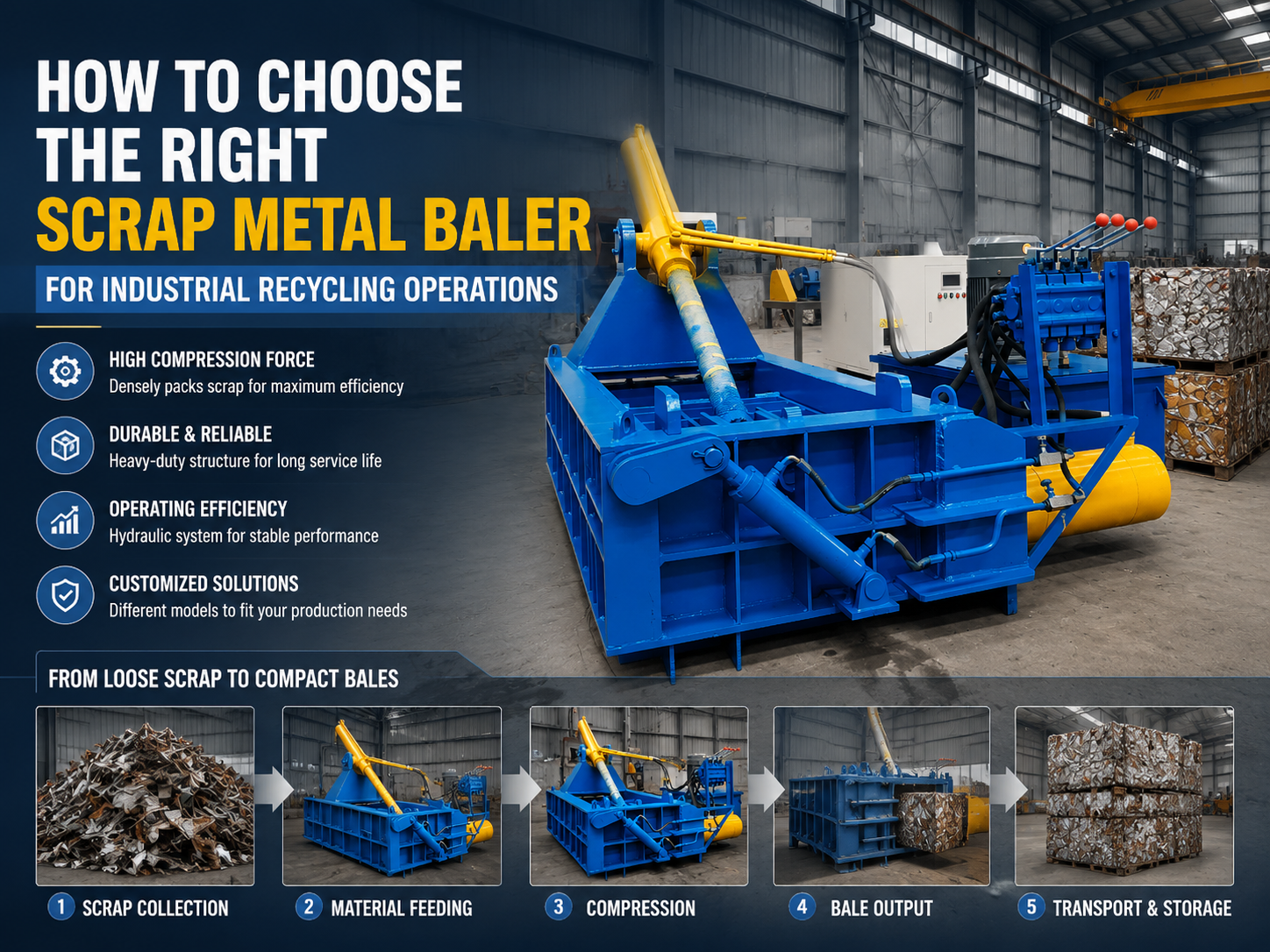
Technical Overview of Scrap Metal Balers
In the modern industrial landscape, the efficiency of a recycling facility is often measured by its ability to process large volumes of waste material into manageable, transportable units. A scrap metal baler is the cornerstone of this process. At its core, a scrap metal baler is a hydraulic machine designed to compress various types of metal scrap—ranging from aluminum cans and copper wiring to steel sheets and end-of-life vehicle parts—into dense, rectangular blocks known as bales. This reduction in volume is critical for optimizing storage space and significantly lowering logistics costs.
The technical architecture of a high-performance baler, such as those engineered by HARSLE, involves a complex interplay of hydraulic force, structural rigidity, and automated control systems. The process begins in the charging box, where loose scrap is loaded. Once the lid or side ram is engaged, hydraulic cylinders exert massive pressure, often exceeding several hundred tons, to deform the metal beyond its yield point. This ensures that the resulting bale retains its shape without the need for external strapping in many cases. The structural frame must be manufactured from high-tensile steel to withstand the repetitive stress cycles inherent in 24/7 industrial recycling operations.
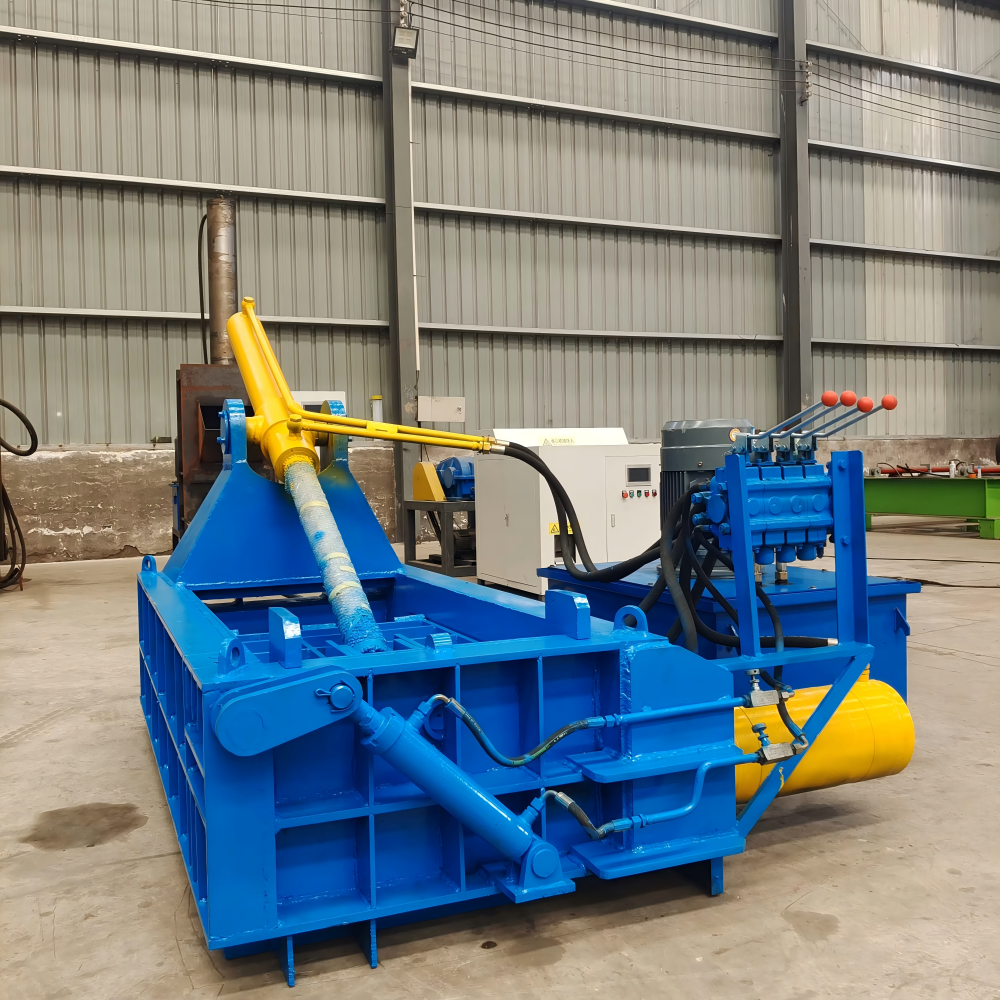
Modern balers are categorized primarily by their configuration: vertical or horizontal. Vertical balers are typically used for smaller volumes or softer metals, whereas horizontal balers are the workhorses of industrial recycling. Horizontal models often feature multi-stage compression (two-ram or three-ram systems) to achieve maximum density. Furthermore, the integration of PLC (Programmable Logic Controller) systems allows operators to fine-tune the compression cycles based on the specific material being processed, ensuring that energy consumption is minimized while throughput is maximized.
Understanding the metallurgy of the wear plates is also essential. Since scrap metal is inherently abrasive, the internal surfaces of the baler are lined with replaceable high-hardness liners (such as Hardox or similar alloys). These liners protect the main structure from premature wear, ensuring a service life that can span decades if properly maintained. When you choose a scrap metal baler for industrial recycling operations, you are not just buying a press; you are investing in a sophisticated material handling system that dictates the profitability of your entire recycling stream.
Core Parameters for Selection
When evaluating which machine to integrate into your facility, several core parameters must be analyzed. The first and most prominent is the Nominal Pressure (often measured in kilonewtons or tons). This represents the maximum force the main hydraulic cylinder can exert. For light non-ferrous metals like aluminum, a lower tonnage may suffice, but for heavy steel scrap or stainless steel, high-pressure models (250 tons and above) are mandatory to achieve the required bale density.
The Bale Size and Density are equally critical. Standard bale dimensions are often designed to fit perfectly into shipping containers or onto flatbed trucks to maximize the weight-to-volume ratio. If a bale is too loose, you are effectively paying to ship air; if it is too dense, you might exceed the weight limits of your transport vehicle. Therefore, the ability to adjust the stroke length and pressure settings is a vital feature for versatile operations.
Cycle Time refers to the duration it takes for the machine to complete one full compression and return to the starting position. In high-volume industrial recycling, every second counts. A machine with a 60-second cycle time will process significantly less material over an eight-hour shift than one with a 45-second cycle. This parameter is directly influenced by the hydraulic pump’s flow rate and the motor’s horsepower. High-efficiency motors, often equipped with variable frequency drives (VFDs), can provide the necessary power while reducing idle energy consumption.
Lastly, consider the Hopper and Chamber Dimensions. The size of the opening dictates the maximum size of the scrap pieces that can be fed into the machine without prior shearing or torch cutting. A larger chamber reduces the need for pre-processing, thereby saving labor costs. However, a larger chamber also requires more hydraulic fluid and larger cylinders to maintain pressure, which increases the initial capital expenditure and the machine’s footprint.
Calculation Method for Throughput Requirements
To accurately choose a scrap metal baler for industrial recycling operations, you must perform a throughput calculation. This ensures the machine can handle your peak loads without becoming a bottleneck. The basic formula for calculating the hourly production capacity (T) is as follows:
T = (V × D × 3600) / (C × 1000)
Where:
V = Volume of the bale in cubic meters (m³).
D = Target density of the bale (kg/m³).
C = Total cycle time in seconds, including loading and ejection.
3600 = Seconds in an hour.
1000 = Conversion factor from kg to metric tons.
For example, if you are aiming for a bale size of 0.6m x 0.6m x 1.0m (V = 0.36m³), a target density for steel of 2000 kg/m³, and a cycle time of 50 seconds, the calculation would be: (0.36 × 2000 × 3600) / (50 × 1000) = 51.84 tons per hour. However, this is a theoretical maximum. In real-world scenarios, you must account for “Efficiency Factor” (usually 0.7 to 0.8) to compensate for loading delays, operator breaks, and material inconsistencies.
Furthermore, consider the Bulk Density of the incoming scrap. Loose aluminum cans have a very low bulk density compared to structural steel beams. This means the baler’s chamber must be filled multiple times (multi-stroke) to produce a single dense bale of light material. If your primary material is light-gauge scrap, prioritize a machine with a fast “dry cycle” and a large hopper to minimize the number of strokes required per bale.
Technical Parameter Table
The following table provides a comparison of typical specifications for industrial-grade scrap metal balers to assist in your preliminary selection process.
| Model Series | Nominal Pressure (kN) | Bale Size (mm) | Cycle Time (s) | Motor Power (kW) | Production (T/h) |
|---|---|---|---|---|---|
| HBA-125 | 1250 | 300 x 300 | 50 – 60 | 15 – 22 | 1.5 – 2.5 |
| HBA-200 | 2000 | 400 x 400 | 60 – 70 | 30 – 37 | 3.0 – 5.0 |
| HBA-250 | 2500 | 500 x 500 | 70 – 80 | 45 – 55 | 5.0 – 8.0 |
| HBA-400 | 4000 | 600 x 600 | 80 – 90 | 75 – 90 | 10.0 – 15.0 |
| HBA-630 | 6300 | 800 x 800 | 90 – 110 | 110 – 132 | 15.0 – 25.0 |
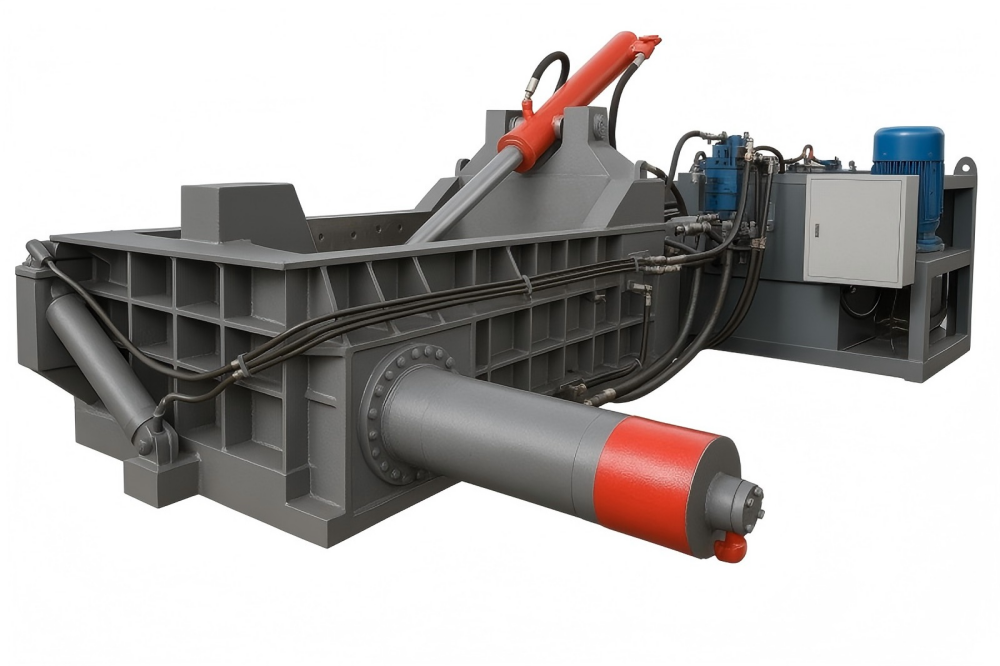
Common Engineering Mistakes in Selection
One of the most frequent mistakes when facilities choose a scrap metal baler for industrial recycling operations is underestimating the cooling requirements. Hydraulic systems generate significant heat during continuous operation. If the baler is not equipped with an appropriately sized oil cooler (air or water-cooled), the hydraulic oil will lose its viscosity, leading to seal failure, increased internal friction, and a drastic drop in pressure. In hot climates or high-intensity shifts, an oversized cooling system is a necessary insurance policy.
Another common error is ignoring the power grid capacity. Large balers require substantial startup current (Inrush current). If your facility’s electrical infrastructure is not rated for the peak load of a 110kW motor, you may experience frequent breaker trips or voltage drops that can damage the machine’s sensitive PLC components. Always consult with an electrician to ensure your power supply can handle the inductive load of the hydraulic pumps.
Furthermore, many buyers overlook the loading method compatibility. If you use a grapple crane to load the baler, the hopper must be wide enough to accommodate the grapple’s spread. If you use a conveyor belt, the baler must have integrated sensors to communicate with the conveyor to prevent overfilling. A mismatch between the feeding equipment and the baler’s intake results in spilled material, increased labor for cleanup, and potential safety hazards.
Finally, failing to specify shear blades can be a costly oversight. If you process long pieces of scrap that might hang out of the chamber, integrated shear blades on the lid or ram will cut the excess material as the chamber closes. Without these blades, the machine may jam, or the operator will have to manually cut the scrap, significantly slowing down the operation. Ensure the blades are made of high-quality tool steel and are easily accessible for sharpening.
Selection Checklist for Industrial Buyers
- Material Analysis: Define the primary and secondary metals you will process. Are they ferrous, non-ferrous, or mixed?
- Volume Targets: Calculate your daily and monthly tonnage requirements, accounting for future growth.
- Space Constraints: Measure the available floor space, including the area needed for loading, bale storage, and maintenance access.
- Automation Level: Decide between manual valve control (lower cost) or full PLC automation (higher efficiency and safety).
- Maintenance Support: Does the manufacturer provide local technical support and a ready supply of wear parts like seals and liners?
- Safety Features: Ensure the machine includes emergency stop buttons, safety interlocks on access doors, and pressure relief valves.
- Bale Ejection Style: Choose between “turn-out,” “side-push,” or “forward-out” based on your facility’s workflow and conveyor setup.
- Environmental Compliance: Check for oil leak containment systems and noise level ratings to meet local industrial regulations.
Frequently Asked Questions (FAQ)
1. How often should the hydraulic oil be changed in a scrap metal baler?
For industrial recycling operations running 8-16 hours a day, hydraulic oil should typically be tested every 2,000 hours and replaced every 4,000 to 5,000 hours. However, the use of high-quality filtration systems can extend this interval. Always monitor the oil’s color and clarity; a milky appearance indicates water contamination, while a dark, burnt smell indicates overheating.
2. Can one baler handle both aluminum and steel?
Yes, most modern balers can handle multiple types of metal. However, you must adjust the pressure settings. Compressing aluminum at the same pressure as heavy steel can result in overly dense bales that may be difficult for some smelters to process, or it may cause unnecessary wear on the machine. PLC-controlled machines often have “recipes” or presets for different materials.
3. What is the advantage of a three-ram baler over a single-ram model?
A three-ram baler applies pressure from three different directions (typically top, side, and end). This results in the highest possible bale density and a very uniform shape. These are ideal for high-value scrap where transport costs are a major factor. Single-ram models are simpler and faster but produce less dense bales.
4. How do I know if I need a horizontal or vertical baler?
If your throughput is more than 5 tons per day, a horizontal baler is almost always the better choice. Vertical balers require manual loading and tying, which is labor-intensive. Horizontal balers allow for continuous feeding via conveyor or grapple, making them the standard for industrial recycling operations.
5. What are the most common wear parts I should keep in stock?
You should always have a set of hydraulic seals, oil filters, and a set of shear blades (if applicable). Additionally, keeping a few spare wear plates (liners) for the high-impact zones of the chamber will prevent long downtimes when the original liners eventually wear thin.