Scrap Metal Baler Technical Guide: How It Works and Where It Fits in a Recycling Line

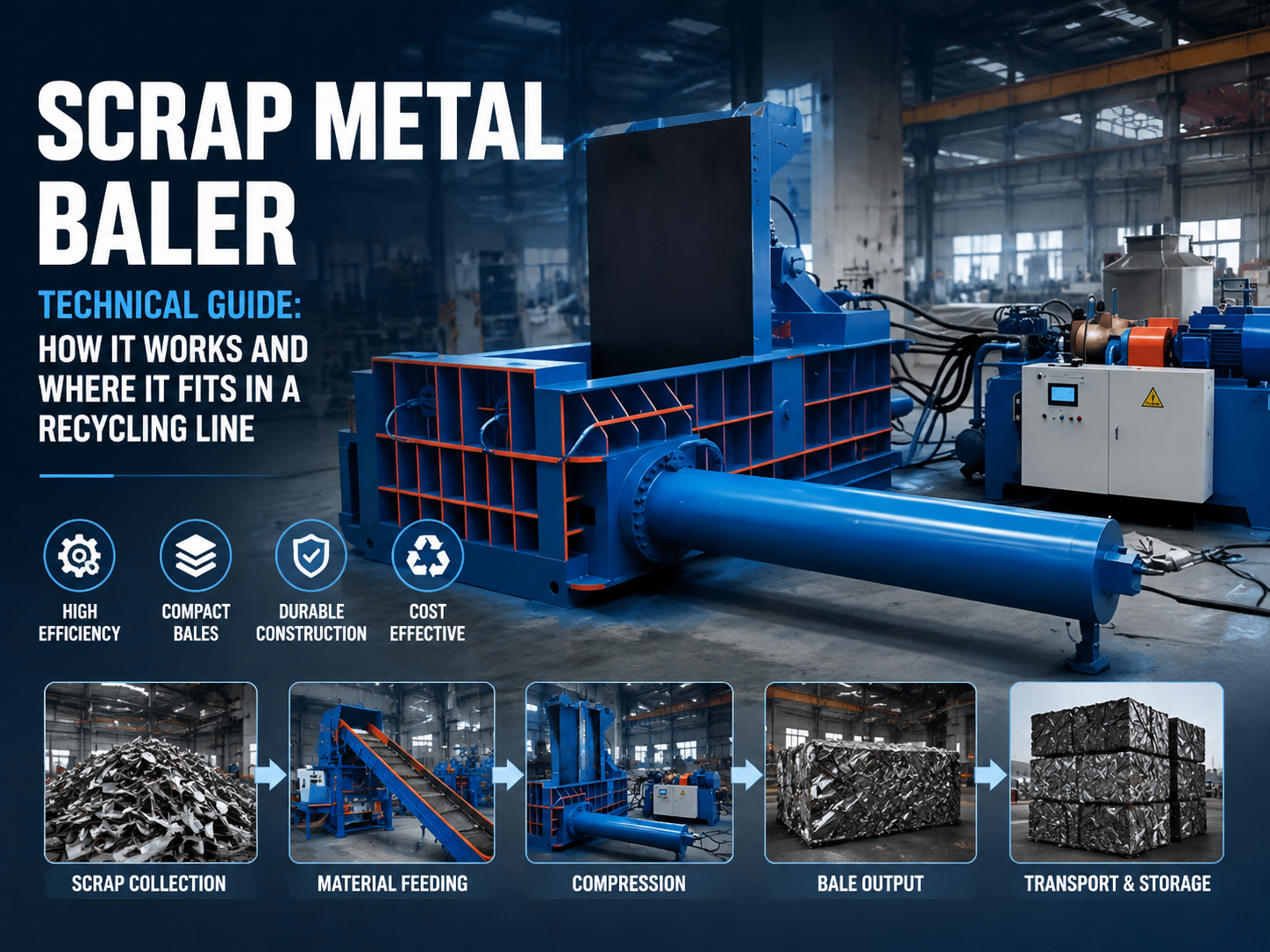
Technical Overview of Scrap Metal Balers
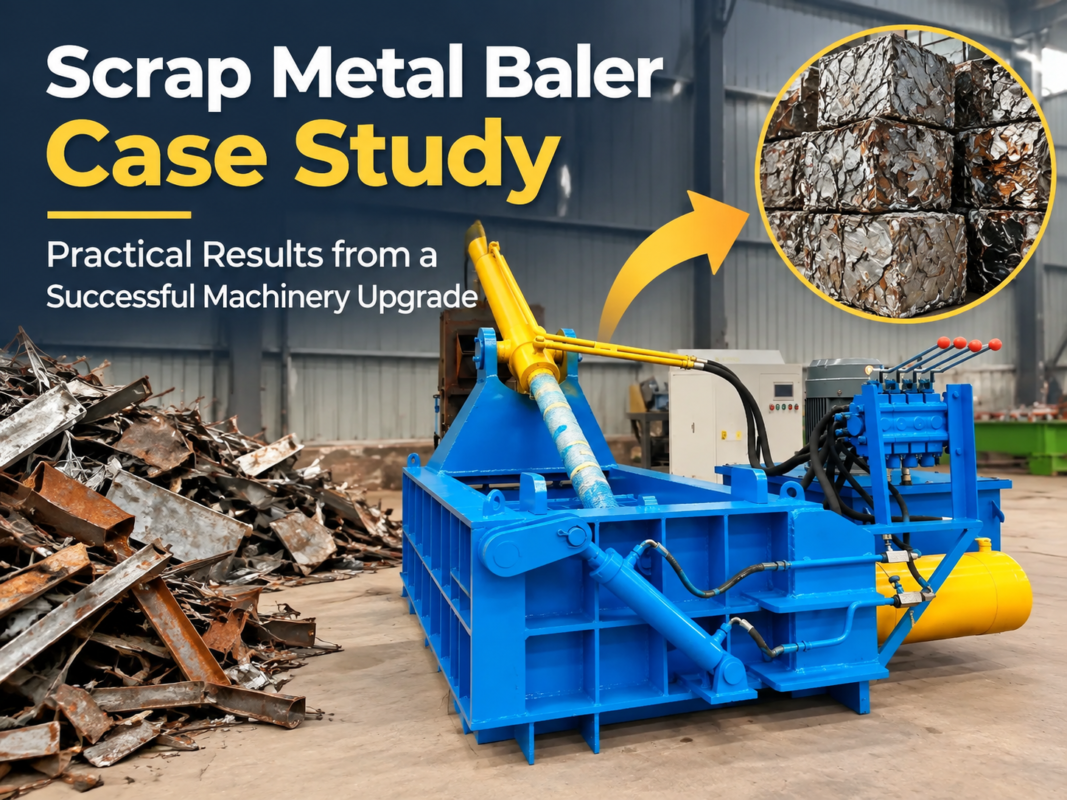
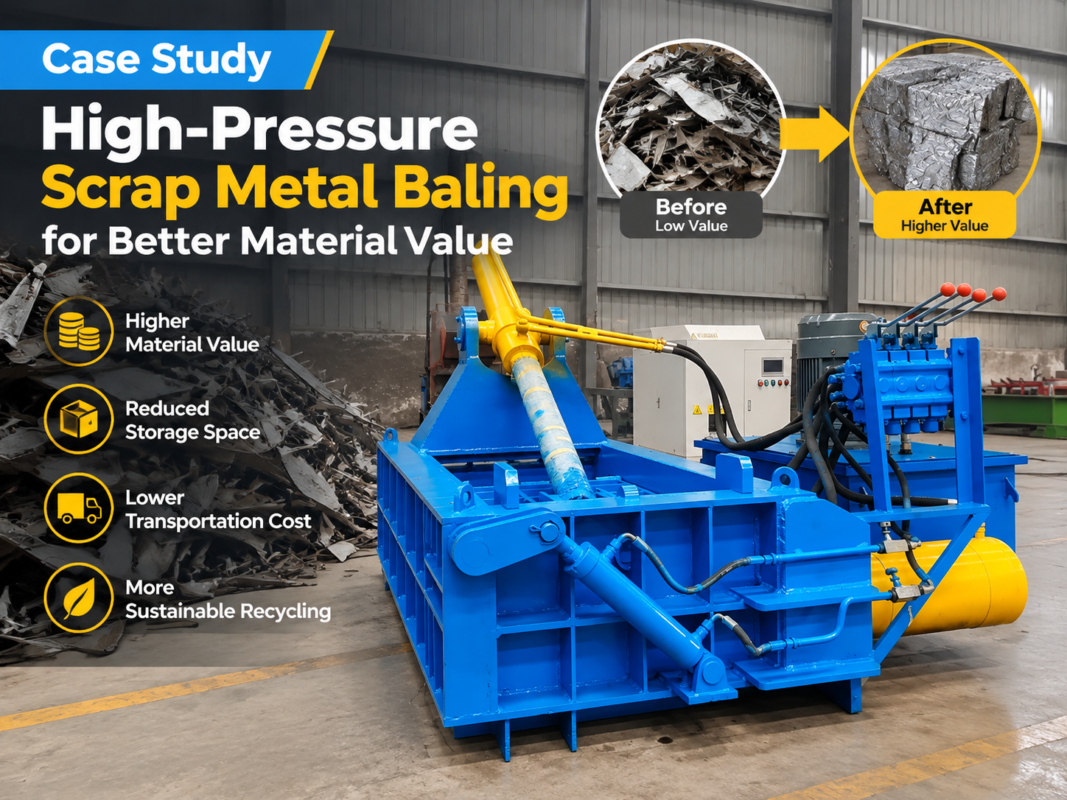
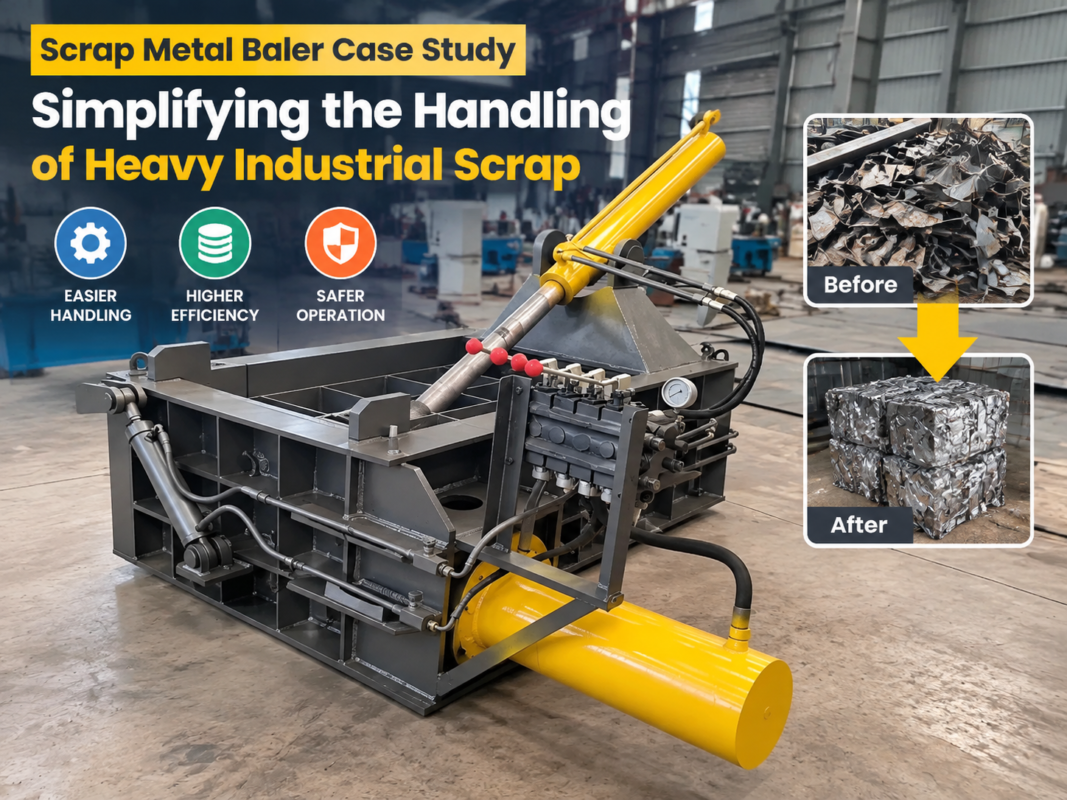
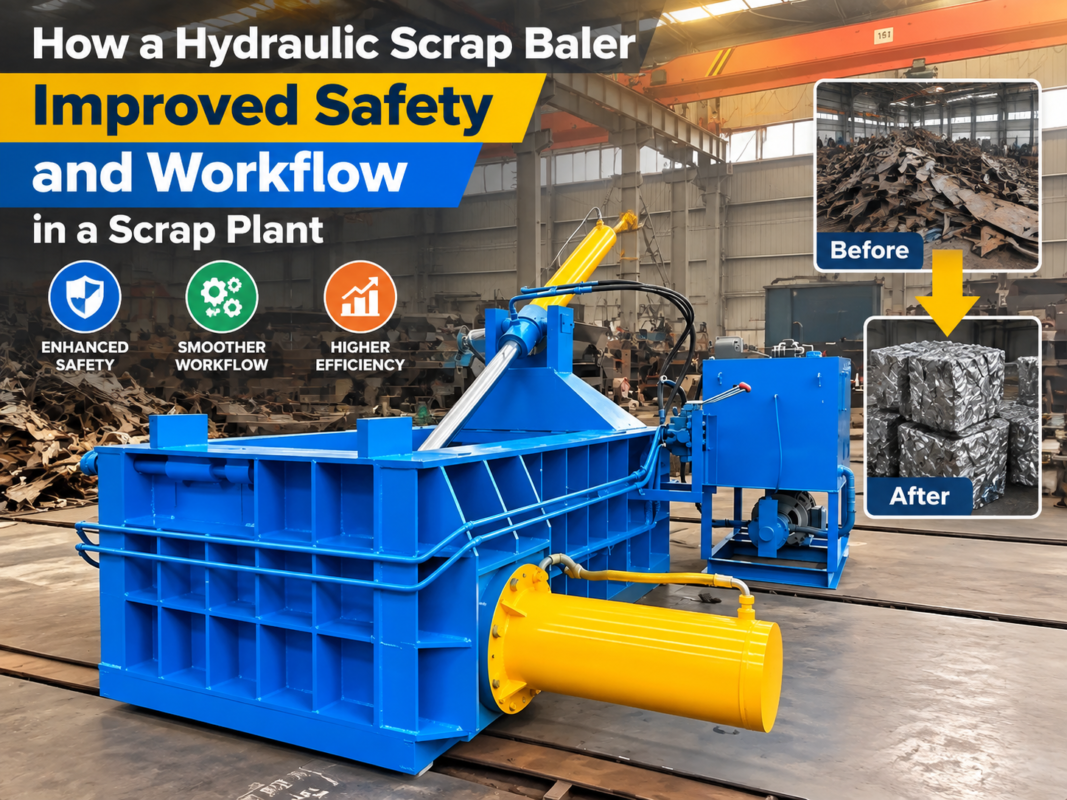
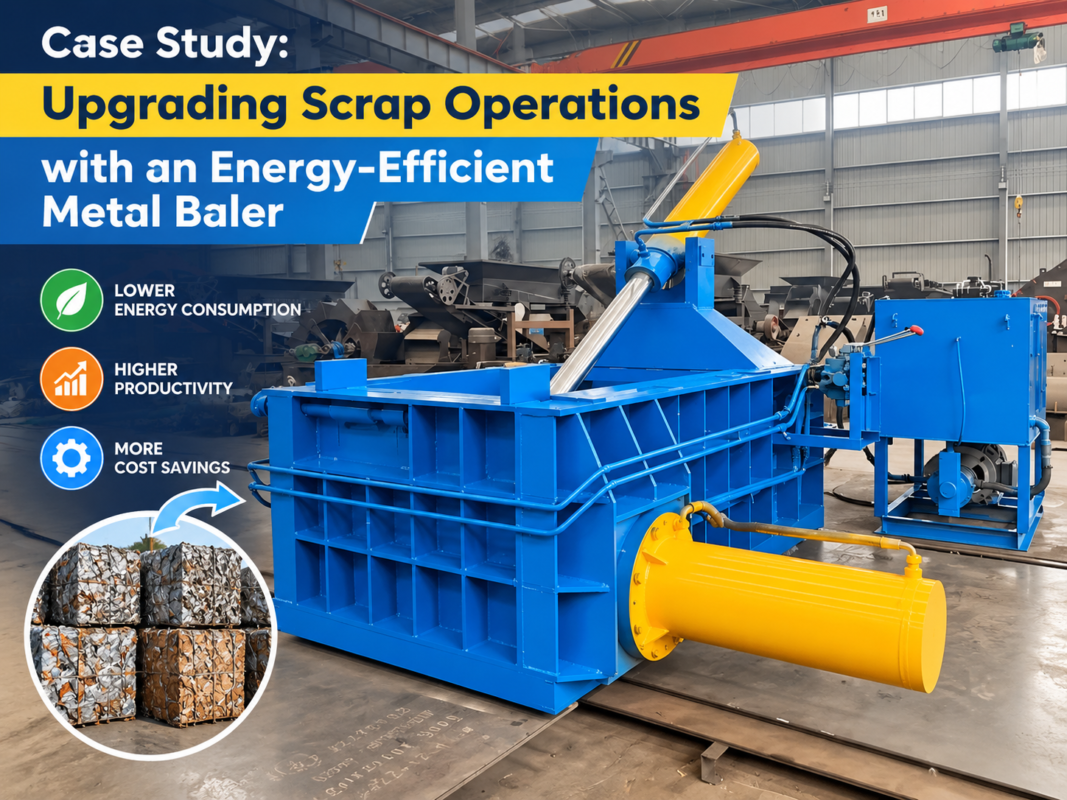
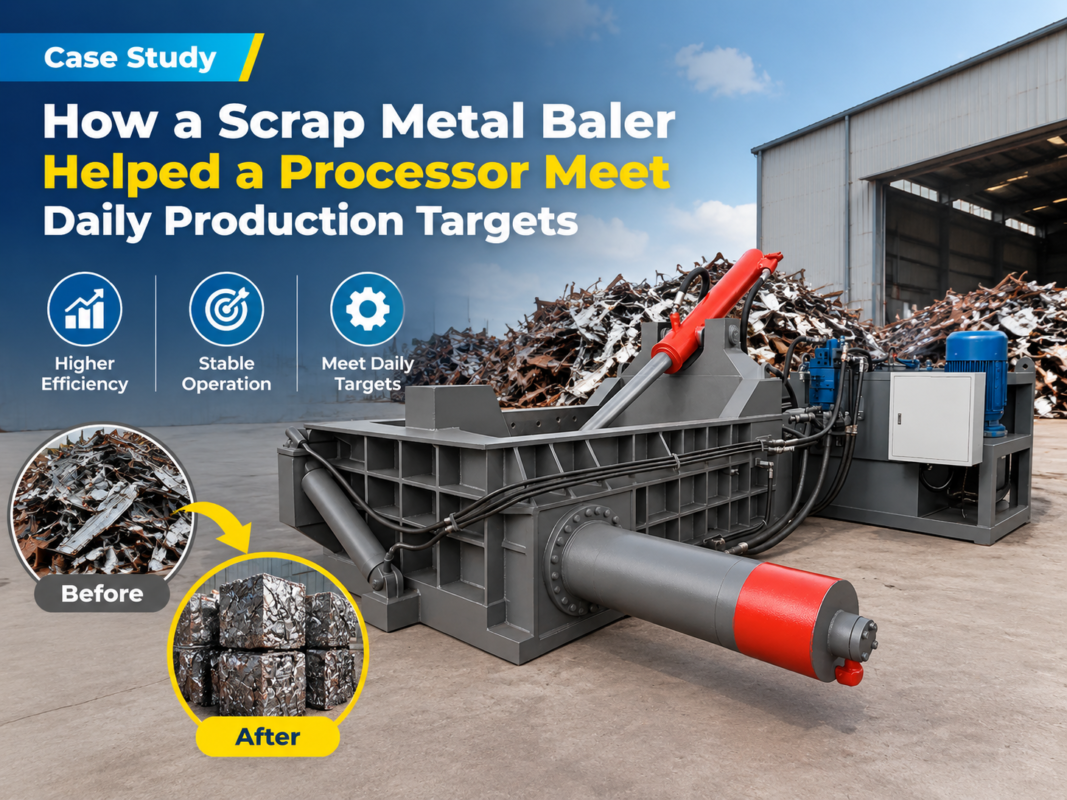
The scrap metal baler is a cornerstone of modern industrial recycling, designed to transform bulky, loose metal scrap into dense, manageable blocks known as bales. At its core, the Scrap Metal Baler Technical : It Works Where It Fits In A Recycling Line philosophy centers on volume reduction and logistical efficiency. These machines utilize massive hydraulic force to compress materials such as aluminum extrusions, steel offcuts, copper wire, and stainless steel sheets. By reducing the volume of scrap by up to 90%, balers significantly lower transportation costs and improve the efficiency of the smelting process in foundries.
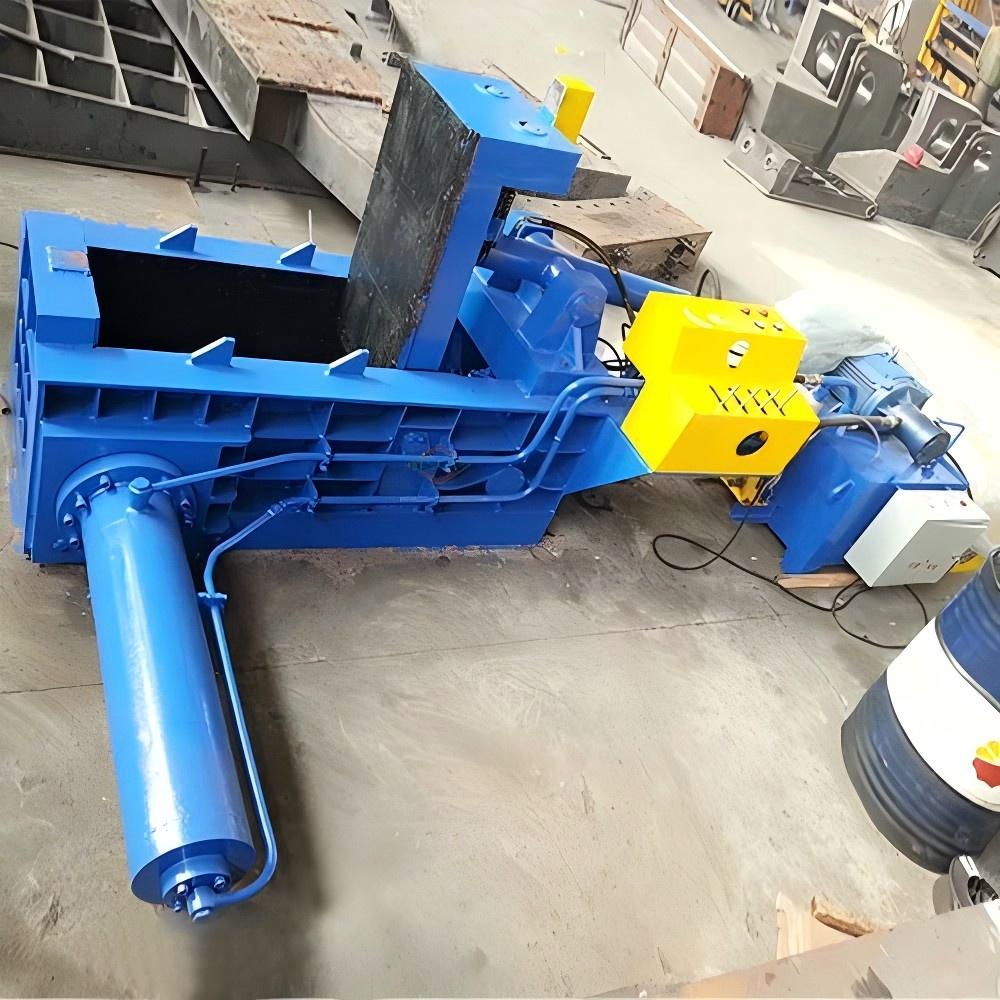
Technically, a scrap metal baler operates on the principles of fluid mechanics, specifically Pascal’s Law, which states that pressure applied to a confined fluid is transmitted undiminished in every direction. In a HARSLE hydraulic baler, high-pressure oil is pumped into heavy-duty cylinders, which drive the compression rams. The structural integrity of the machine is paramount; the compression chamber is typically lined with high-strength, wear-resistant plates (such as Hardox) to withstand the abrasive nature of jagged metal scrap. The frame is constructed from heavy-gauge welded steel, stress-relieved to ensure long-term durability under repetitive high-pressure cycles.
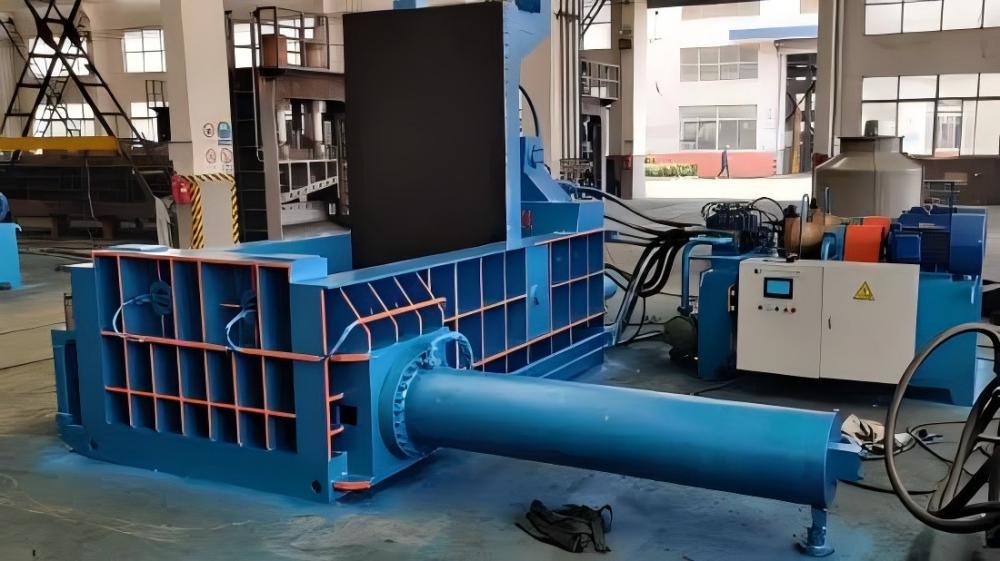
Modern balers are categorized by their compression directions. Single-ram balers provide vertical or horizontal pressure, while triple-compression balers (often called ‘three-way’ balers) apply force from three orthogonal directions to produce the highest density bales. The integration of PLC (Programmable Logic Controller) systems allows for automated cycles, where sensors detect the position of the ram and the pressure levels, ensuring consistent bale size and density while protecting the machine from over-pressurization. This technical sophistication is what allows modern recycling facilities to process hundreds of tons of material daily with minimal manual intervention.
Where the Baler Fits in a Recycling Line
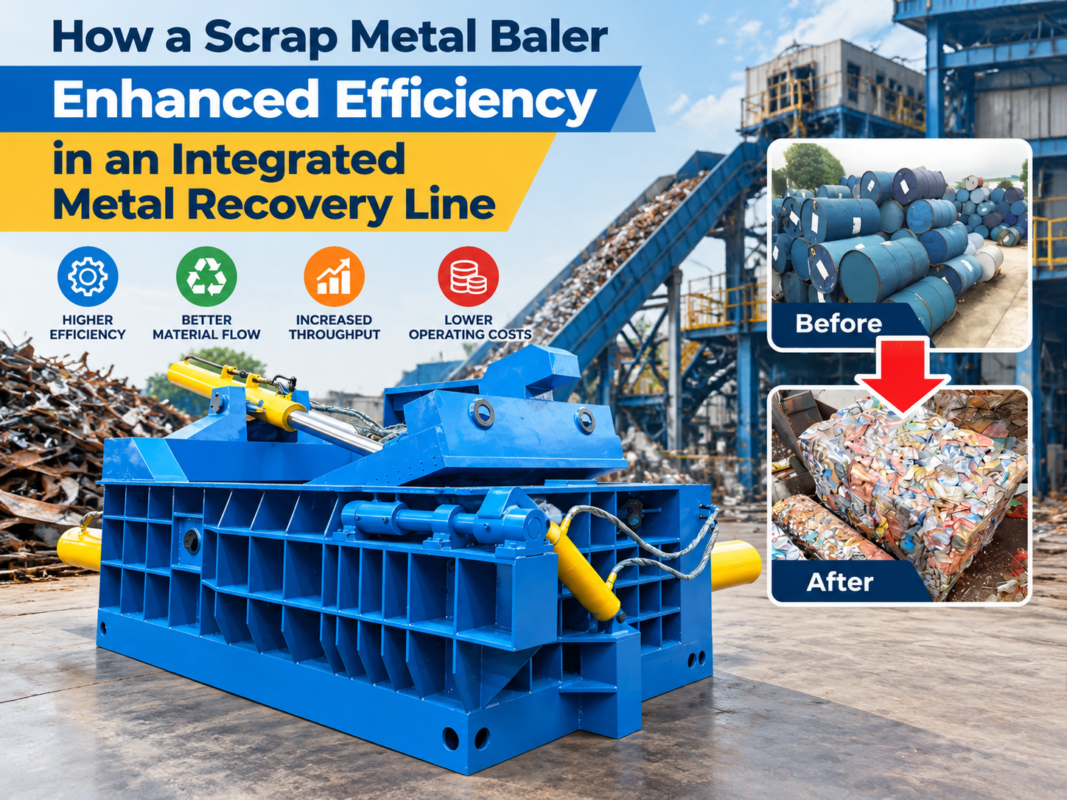
Understanding where a scrap metal baler fits in a recycling line is crucial for optimizing throughput. A typical metal recycling ecosystem follows a linear progression: Collection, Sorting, Processing (Baling), and Smelting. The baler acts as the bridge between raw waste and secondary raw materials. Before reaching the baler, scrap is often sorted by grade (e.g., 6061 aluminum vs. 304 stainless steel) using magnetic separators or eddy current systems. In some high-volume lines, a pre-shredder may be used to break down oversized pieces, making them easier for the baler to ingest and compress.
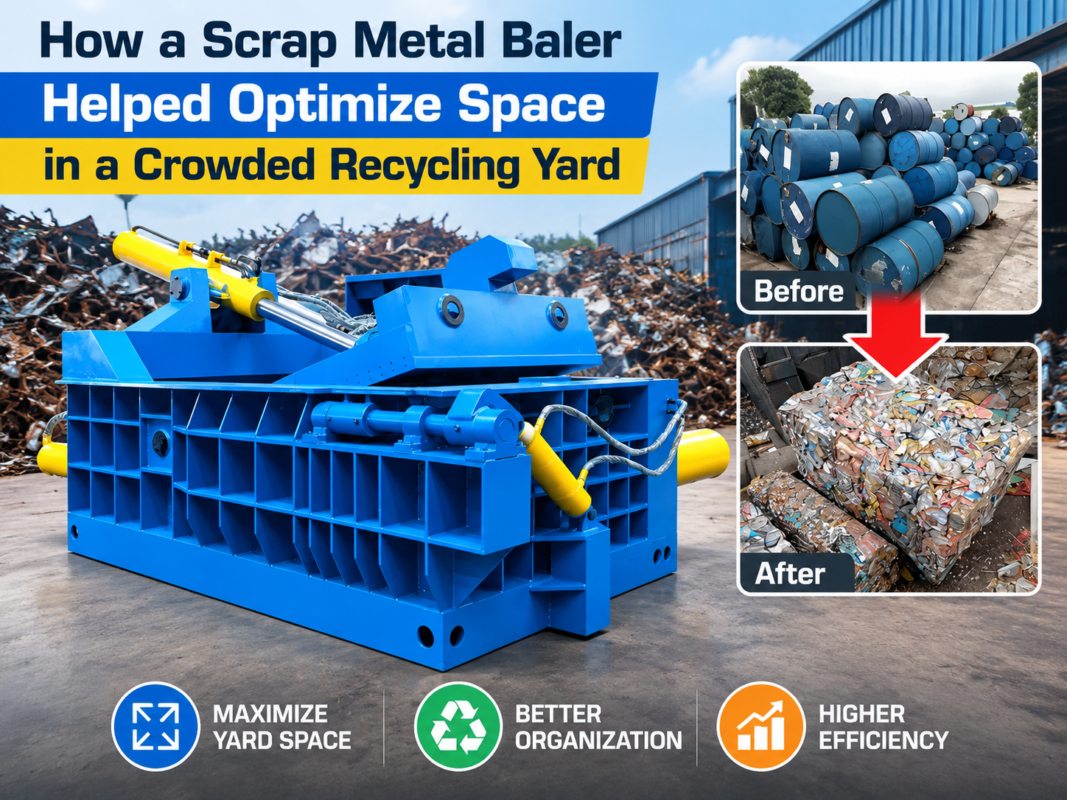
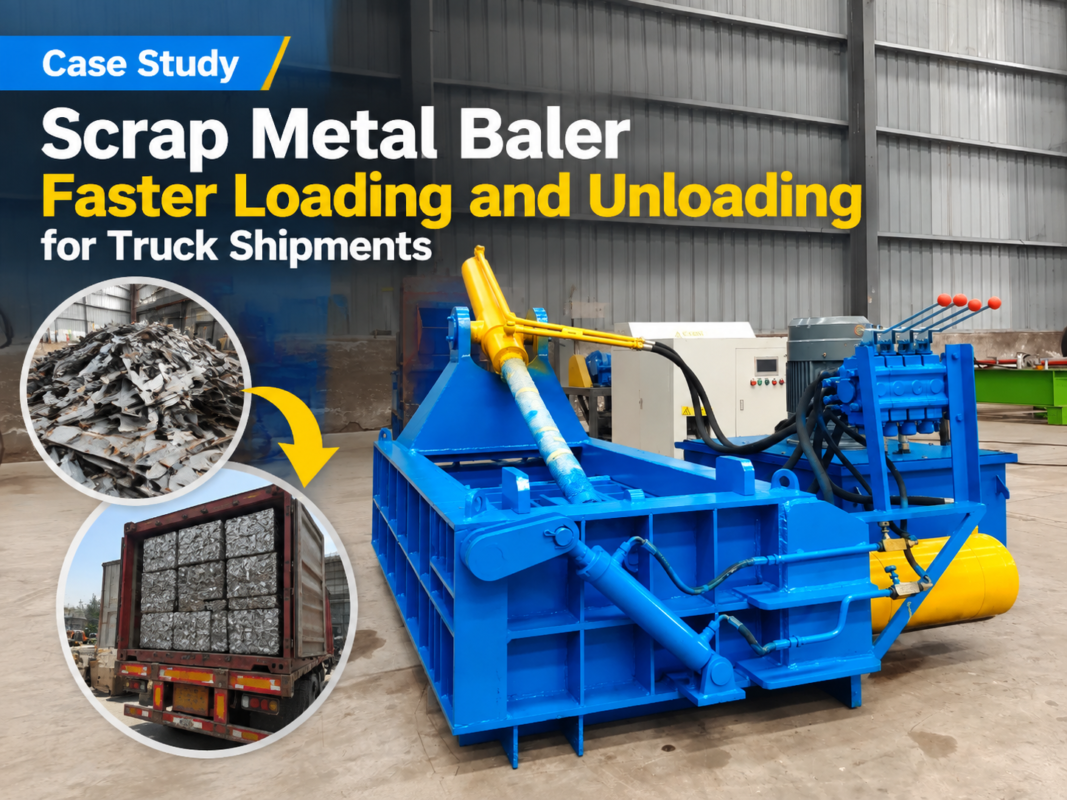
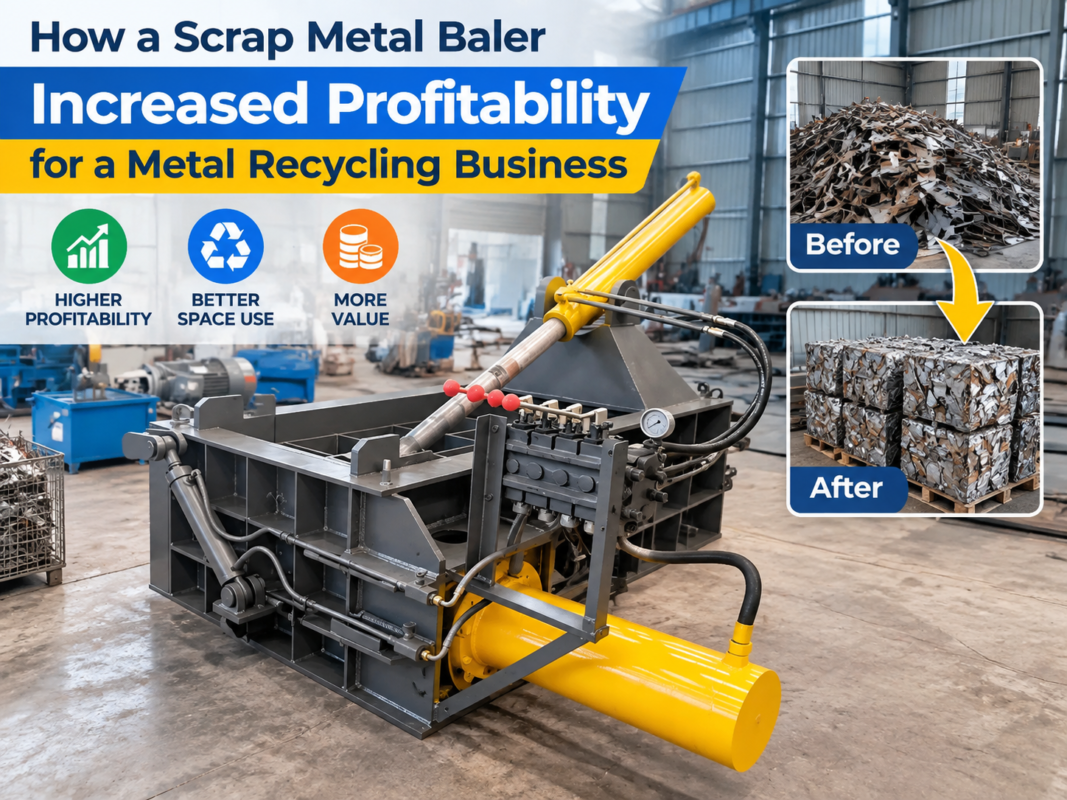
Once the material is prepared, it is fed into the baler’s hopper or charging box. The baling stage is the ‘value-add’ step; it transforms a chaotic pile of metal into a standardized industrial product. After the bale is ejected, it is typically moved via conveyor or forklift to a storage area or directly onto a flatbed truck. Because the bales are uniform in shape and high in density, they can be stacked efficiently, maximizing the weight capacity of shipping containers and trucks. This is vital for the economic viability of recycling, as shipping ‘air’ (loose scrap) is prohibitively expensive.
In a fully integrated recycling line, the baler is often synchronized with upstream and downstream equipment. For instance, the baler’s PLC can communicate with the feed conveyor to pause material delivery when the compression chamber is full. Furthermore, the baler’s output data—such as bale weight and count—can be fed into a facility’s ERP system for real-time inventory tracking. This level of integration ensures that the Scrap Metal Baler Technical : It Works Where It Fits In A Recycling Line concept is fully realized, turning a standalone machine into a vital node in a smart manufacturing or recycling environment.
Core Parameters of Industrial Balers
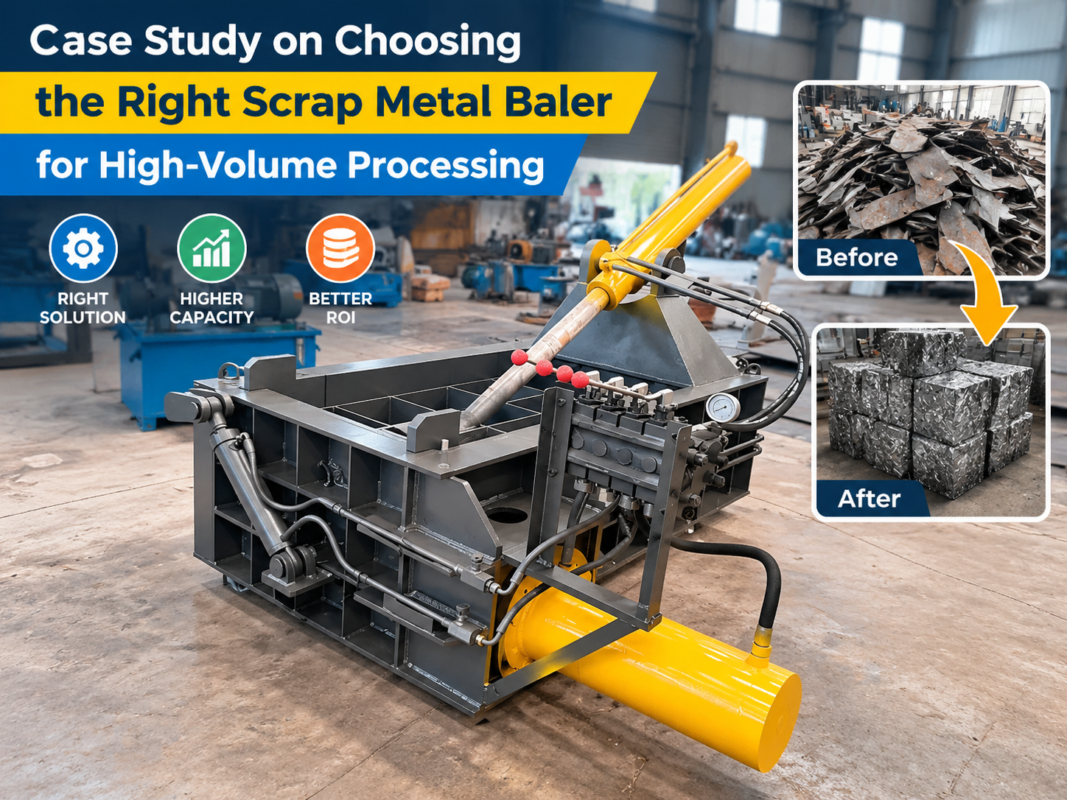
When evaluating a scrap metal baler, several core parameters define its performance and suitability for specific applications. The most critical parameter is the Nominal Pressure, usually measured in Kilonewtons (kN) or Tons. This dictates the machine’s ability to crush thicker or more resilient materials. For example, a 125-ton baler is excellent for aluminum cans and light tin, whereas a 500-ton machine is required for heavy structural steel or automotive scrap.
Another vital parameter is the Cycle Time. This is the duration required for the ram to complete a full extension and retraction. A faster cycle time directly correlates to higher hourly throughput. However, speed must be balanced with the Motor Power (measured in kW). High-speed systems often require larger hydraulic pumps and more powerful motors, which increases energy consumption. The Bale Size is also a key consideration; it must be compatible with the charging doors of the furnaces where the scrap will eventually be melted. Standard bale sizes often range from 300x300mm to 600x600mm or larger for heavy industrial units.
Calculation Method for Baling Efficiency
To optimize a recycling line, engineers must calculate the expected performance of the baler. The primary calculation involves determining the Hydraulic Force (F). This is calculated using the formula: F = P × A, where P is the hydraulic system pressure (typically in Bar or PSI) and A is the cross-sectional area of the hydraulic cylinder piston. Understanding this allows operators to know if the machine can handle specific material yield strengths.
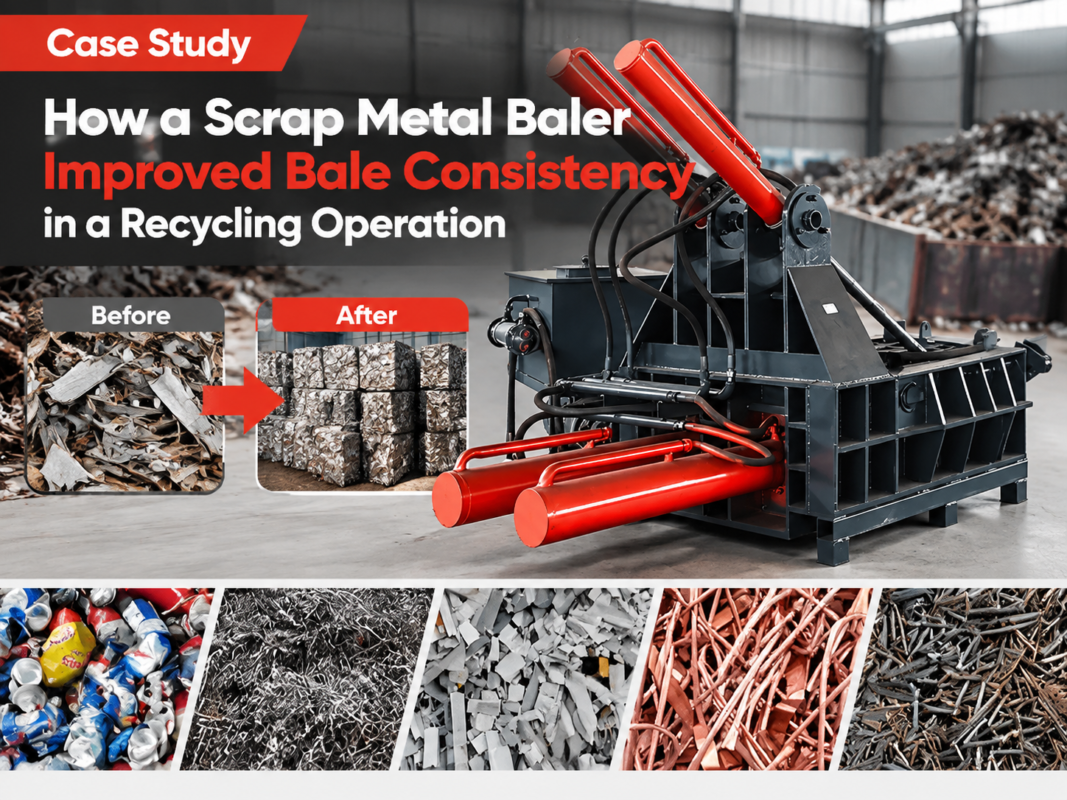
Another important metric is Bale Density. This is calculated by dividing the weight of the finished bale by its volume (Density = Mass / Volume). High-density bales are preferred by steel mills because they sink in the molten bath rather than floating on top, which reduces oxidation losses. To calculate the Hourly Throughput (T), use the formula: T = (Weight per Bale × 3600) / Cycle Time (seconds). This calculation helps facility managers determine how many shifts are needed to process a specific volume of incoming scrap.
Technical Parameter Table
The following table outlines the technical specifications for common HARSLE scrap metal baler models, providing a reference for selection based on industrial needs.
| Model Series | Nominal Force (kN) | Bale Size (mm) | Cycle Time (s) | Motor Power (kW) | Operation Mode |
|---|---|---|---|---|---|
| Y81-125 | 1250 | 300 x 300 | 80 – 90 | 15 | Manual / PLC |
| Y81-160 | 1600 | 350 x 350 | 90 – 100 | 18.5 | Manual / PLC |
| Y81-250 | 2500 | 450 x 450 | 100 – 120 | 30 | PLC Automatic |
| Y81-400 | 4000 | 500 x 500 | 120 – 150 | 45 | PLC Automatic |
| Y81-630 | 6300 | 600 x 600 | 150 – 180 | 75 | PLC Automatic |
Common Engineering Mistakes in Baler Implementation
One of the most frequent mistakes in scrap metal baling is incorrect material sizing. Attempting to force pieces of scrap that are significantly larger than the charging box can lead to ‘bridging,’ where the material jams the opening and prevents the lid from closing. This not only halts production but can also cause structural damage to the lid hinges and hydraulic cylinders. Operators should ensure that scrap is pre-cut or sheared to fit comfortably within the chamber dimensions.
Another common issue is neglecting hydraulic oil maintenance. Hydraulic systems are the lifeblood of the baler. Over time, oil can become contaminated with metal fines, dust, and moisture. Contaminated oil acts as an abrasive, wearing down pump vanes and cylinder seals, leading to internal leakage and loss of pressure. Furthermore, failing to monitor oil temperature can be disastrous. If the oil gets too hot, its viscosity drops, reducing lubrication and potentially causing the pump to seize. Implementing a strict filtration and cooling schedule is essential for machine longevity.
Finally, many facilities fail to account for foundation requirements. A scrap metal baler generates immense vibration and localized pressure during the compression cycle. Placing a high-tonnage baler on a standard thin concrete floor can lead to cracking and misalignment of the machine frame. A reinforced concrete pad, designed to the manufacturer’s specifications, is mandatory to ensure the machine remains level and structurally sound over years of heavy use.
Selection Checklist for Scrap Metal Balers
- Material Type: Identify the primary metal being processed (Aluminum, Steel, Copper). Harder materials require higher tonnage.
- Volume Requirements: Calculate the daily tonnage of scrap. Ensure the baler’s cycle time and chamber size can meet this demand.
- Bale Specification: Check with your end-buyer (foundry or smelter) for their preferred bale dimensions and density.
- Space Constraints: Measure the footprint of the baler, including the swing radius of the door and the space needed for the hydraulic power unit.
- Automation Level: Decide between manual valve operation (cost-effective) or full PLC automation (high efficiency, lower labor cost).
- Cooling System: For hot climates or 24/7 operation, ensure the machine is equipped with an industrial water or air cooling system for the hydraulic oil.
- Safety Features: Verify the presence of emergency stops, safety interlocks on doors, and protective guarding around moving parts.
Frequently Asked Questions (FAQ)
1. How often should the hydraulic oil be changed in a scrap metal baler?
Generally, hydraulic oil should be sampled every 1,000 hours of operation and replaced every 2,000 to 4,000 hours, depending on the environment and oil quality. However, the filters should be checked and cleaned or replaced much more frequently, typically every 500 hours, to prevent contaminant buildup.
2. Can a scrap metal baler process different types of metal simultaneously?
While a baler can physically compress a mix of metals, it is highly discouraged from a value perspective. Mixed-metal bales are considered ‘low grade’ and fetch a much lower price at the foundry. For maximum ROI, scrap should be sorted by type before it enters the baling chamber.
3. What is the difference between a ‘side-push’ and a ‘turn-out’ baler?
This refers to the bale ejection method. A ‘turn-out’ baler uses a hydraulic arm to flip the bale out of the chamber, which is generally faster. A ‘side-push’ baler uses a secondary ram to push the bale out through a side gate, which is often preferred for larger, heavier bales that might be difficult to ‘flip’ safely.
4. Why is my baler not reaching its full rated pressure?
This is usually caused by one of three things: a worn-out hydraulic pump that can no longer generate flow against high resistance, a bypass leak in the main relief valve, or internal leaking in the hydraulic cylinders where oil is slipping past the piston seals. A technical diagnostic using pressure gauges at various points in the circuit is required to isolate the fault.
5. Does the Scrap Metal Baler Technical : It Works Where It Fits In A Recycling Line require a special operator license?
While a specific ‘baler license’ isn’t usually required by law, operators must undergo comprehensive safety and operational training. This includes understanding the hydraulic controls, emergency procedures, and the specific risks associated with high-pressure machinery and jagged metal scrap.