How to Fix Low Briquette Density in a Hydraulic Briquetting Machine: A Comprehensive Industrial Guide

Introduction to Briquette Density Challenges
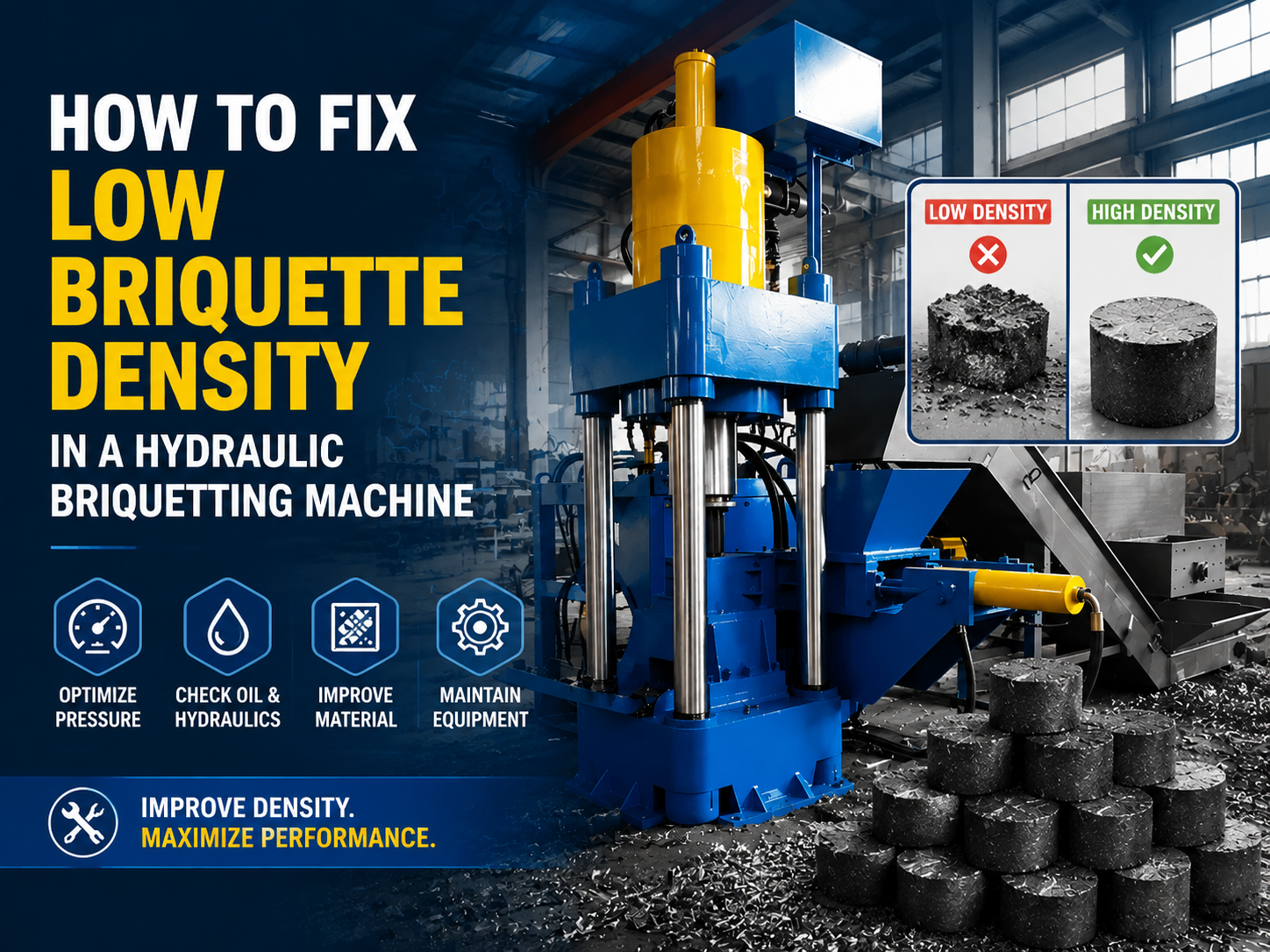
In the world of metal recycling and waste management, the hydraulic briquetting machine stands as a cornerstone of efficiency. By compressing loose metal chips, turnings, and swarf into compact, high-density blocks, these machines significantly reduce storage volume and increase the value of scrap material. However, one of the most common issues operators face is a sudden or gradual drop in briquette density. When briquettes are loose, crumbly, or fail to hold their shape, the economic benefits of the process are quickly eroded.
Low density in briquettes leads to several industrial headaches. First, loose briquettes are prone to breaking during transport, creating a mess and increasing material loss. Second, in the foundry or smelting furnace, low-density briquettes do not sink as effectively into the melt, leading to higher oxidation rates and lower metal recovery yields. Understanding how to fix low briquette density in a hydraulic briquetting machine is therefore not just a maintenance task, but a critical operational requirement for profitability.
HARSLE, a leader in metal fabrication machinery, recognizes that achieving the perfect briquette requires a delicate balance of mechanical force, material preparation, and system maintenance. This guide will delve deep into the technical reasons behind density loss and provide actionable solutions to restore your machine’s performance to its peak capacity. Whether you are processing aluminum, steel, cast iron, or copper, the principles of density management remain largely the same.
Key Considerations for Briquette Quality
Before diving into the mechanical adjustments, it is essential to evaluate the “raw ingredients” of your briquetting process. The physical properties of the material being compressed play a massive role in the final density. If the material is not prepared correctly, even the most powerful hydraulic press will struggle to produce a solid briquette.
Moisture Content and Lubricants
One of the primary culprits of low density is excessive moisture or residual cutting fluids. In metal machining, chips are often soaked in coolants. If these fluids are not properly drained or centrifuged before entering the briquetting chamber, they act as a lubricant between the particles, preventing them from interlocking under pressure. Conversely, in some non-metallic applications, a complete lack of moisture can prevent bonding. For metal swarf, the goal is usually to minimize fluid content to below 3-5% to ensure maximum compaction.
Particle Size and Distribution
The geometry of the scrap material is equally important. Long, stringy turnings are notoriously difficult to compress because they create large internal voids. Ideally, material should be shredded or crushed into smaller, uniform chips before briquetting. A mix of different particle sizes can actually be beneficial, as smaller fines fill the gaps between larger chips, leading to a higher overall density. If your briquettes are coming out soft, check if your shredder is producing oversized pieces that are resisting the compression stroke.
Material Hardness and Elasticity
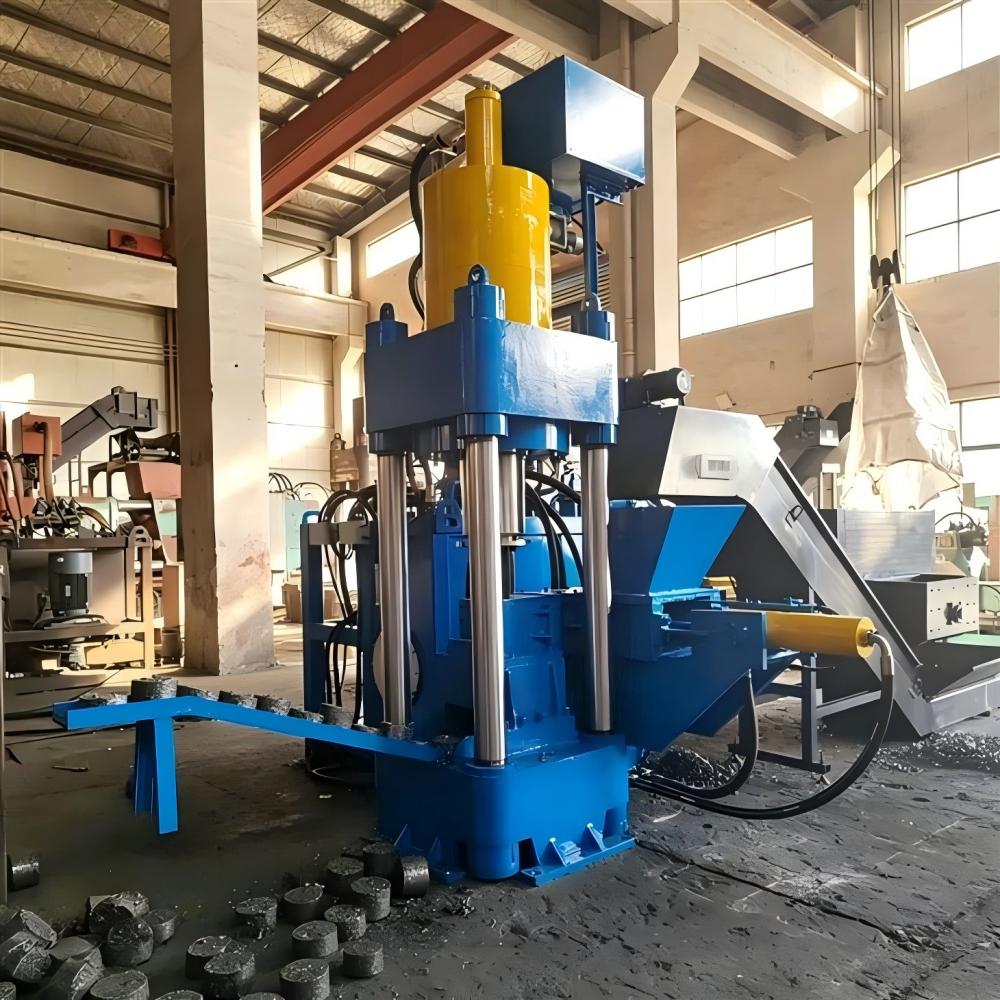
Different metals have different “spring-back” characteristics. Materials like spring steel or certain aluminum alloys have high elasticity; they compress under the hydraulic ram but expand slightly once the pressure is released. If the machine is not calibrated to account for this elasticity—either through higher pressure or longer dwell times—the resulting briquette will be less dense than desired. Understanding the metallurgical properties of your scrap is the first step in troubleshooting density issues.
Technical Details: Diagnosing the Hydraulic System
If the material preparation is optimal but the density remains low, the focus must shift to the mechanical and hydraulic integrity of the machine. To fix low briquette density in a hydraulic briquetting machine, you must ensure that the force generated by the system is actually being transmitted to the material.
Hydraulic Pressure Settings and Relief Valves
The most obvious place to start is the system pressure gauge. If the machine is rated for 250 bars but is only reaching 180 bars during the compression stroke, the briquettes will inevitably be soft. This drop in pressure can be caused by a misadjusted or failing relief valve. Over time, the internal springs in these valves can weaken, causing them to bypass fluid back to the tank before the target pressure is reached. Regularly checking and recalibrating the pressure settings is vital.
Cylinder and Seal Integrity
Internal leakage within the main hydraulic cylinder is a silent killer of density. If the piston seals are worn, high-pressure oil can leak from the cap side to the rod side during the stroke, reducing the effective force of the ram. This often manifests as a “spongy” movement or a failure to maintain pressure at the end of the stroke. Monitoring the temperature of the cylinder can provide a clue; an unusually hot cylinder often indicates internal bypass leakage.
The Role of Dwell Time
Dwell time refers to the duration the hydraulic ram holds the material at maximum pressure before retracting. Many operators shorten this time to increase production speed, but this is a mistake when seeking high density. A sufficient dwell time (usually 1-3 seconds) allows the air to escape from the material and gives the particles time to deform plastically and lock together. If your machine’s PLC allows for it, increasing the dwell time is often the simplest way to fix low briquette density.
Die and Mold Wear
The internal surface of the briquetting chamber and the face of the punch are subject to extreme abrasion. As the die wears out, the clearance between the punch and the chamber wall increases. This allows material to “squirt” back past the punch instead of being compressed forward. Furthermore, a worn, oversized die reduces the friction required to build up back-pressure in certain machine designs. Inspecting the die for scoring and measuring internal diameters should be part of your monthly maintenance routine.
Selection Advice: Choosing the Right Machine for Density
When purchasing a new unit, preventing density issues starts with selecting the right specifications. Not all hydraulic briquetting machines are created equal, and choosing a machine that is underpowered for your specific material is a recipe for long-term frustration.
Frame Rigidity and Construction
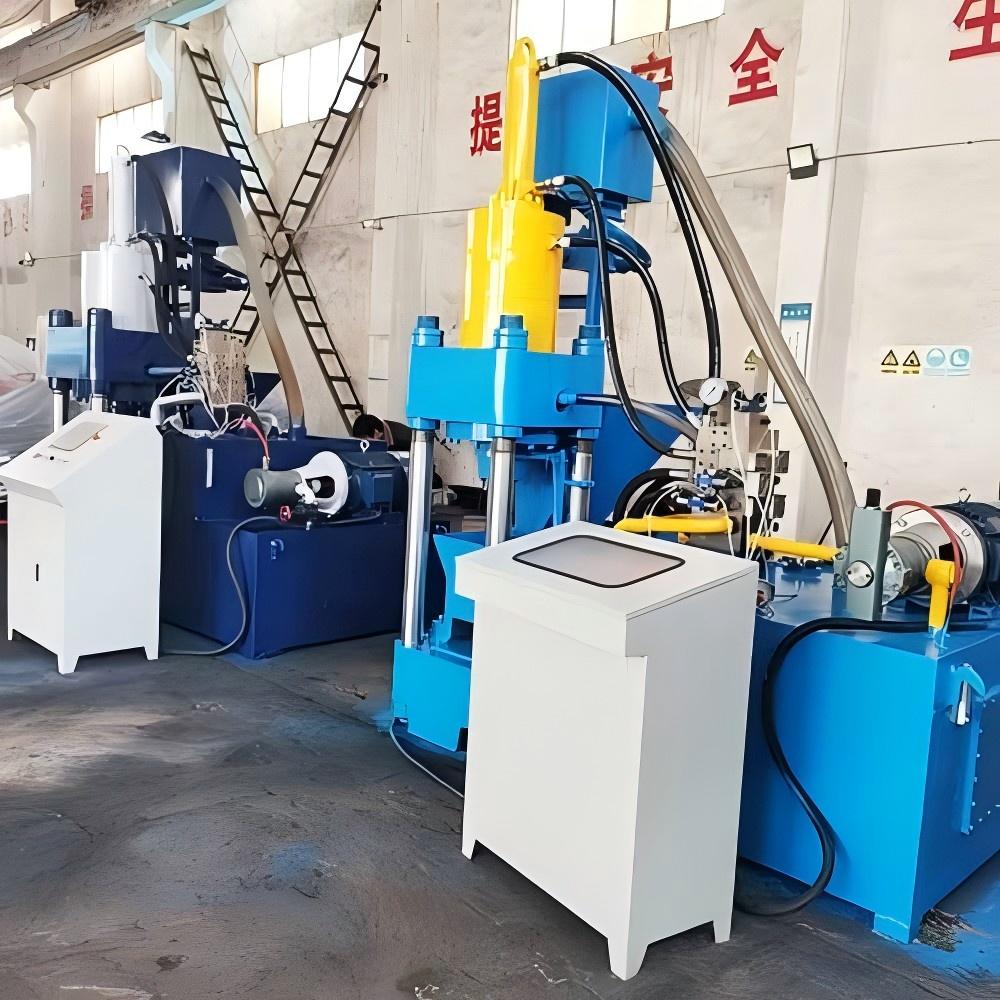
High-density briquetting requires immense force, often exceeding several hundred tons. A machine with a light-duty frame will flex under these loads. This flex absorbs energy that should be going into the material, leading to inconsistent density. Look for machines like those from HARSLE that utilize heavy-duty, four-column or monolithic cast frames designed to withstand continuous high-pressure cycles without deformation.
Cooling Systems and Oil Longevity
Hydraulic efficiency drops as oil temperature rises. Thin, overheated oil leads to increased internal leakage and reduced pump volumetric efficiency. When selecting a machine, ensure it has a robust oil cooling system (either air-cooled or water-cooled) capable of maintaining the hydraulic fluid within the optimal temperature range (usually 40-55°C). This ensures that the pressure remains consistent from the first briquette of the morning to the last one of the shift.
Advanced Control Systems
Modern machines equipped with PLC (Programmable Logic Controller) systems offer much better control over density. These systems can monitor the position of the ram and the pressure in real-time, automatically adjusting the feed rate or the compression time to compensate for variations in material bulk density. If you are processing a variety of scrap types, a machine with programmable recipes is a worthwhile investment.
| Feature | Impact on Density | Recommendation |
|---|---|---|
| Motor Power | Determines the speed and maximum pressure capability. | Higher kW ratings for heavy steel/copper. |
| Ram Diameter | Larger diameters distribute force but require more flow. | Match ram size to the desired briquette diameter. |
| Pre-compression Chamber | Reduces air pockets before the main stroke. | Essential for light, fluffy chips (e.g., aluminum). |
| Variable Displacement Pump | Optimizes pressure and flow throughout the cycle. | Reduces heat and improves pressure consistency. |
Frequently Asked Questions (FAQ)
1. Why are my briquettes falling apart as soon as they are ejected?
This is usually due to either excessive moisture/oil in the material or insufficient hydraulic pressure. If the material is too wet, the particles cannot bond. If the pressure is too low, the mechanical interlocking of the chips doesn’t occur. Check your material dryness and the machine’s pressure gauge first.
2. Can I increase density by adding a binder?
While binders (like starch or specialized chemicals) are common in biomass briquetting, they are rarely used in metal briquetting because they can contaminate the melt in the furnace. The best way to increase metal briquette density is through mechanical force and proper material sizing rather than chemical additives.
3. How often should I replace the hydraulic oil to maintain density?
Hydraulic oil should typically be replaced every 2,000 to 4,000 hours of operation, depending on the environment. Contaminated or degraded oil loses its viscosity and compressibility, which can lead to erratic pressure and lower briquette density. Always use the oil grade recommended by the manufacturer (usually ISO VG 46 or 68).
4. Does the temperature of the metal chips affect density?
Yes. Warmer metal chips are generally more ductile and easier to compress than cold ones. In very cold climates, if the scrap is stored outdoors, you might notice a drop in density during winter. Some high-end systems actually use a pre-heating stage to improve compaction efficiency.
5. Is a vertical or horizontal briquetting machine better for density?
Both can achieve high density, but they serve different purposes. Vertical machines are often more compact and better for heavy, dense scrap, while horizontal machines often feature long-stroke pre-compressors that are excellent for light, voluminous turnings. The “better” machine depends entirely on your specific material type.
6. How do I know if my die is too worn?
If you see a “skirt” or thin flash of metal forming around the edges of the briquette, or if the briquette diameter is significantly larger than the original factory specifications, your die is likely worn. Another sign is if the machine struggles to reach peak pressure because material is leaking past the punch.
Conclusion: Maintaining Peak Performance
Learning how to fix low briquette density in a hydraulic briquetting machine is a process of elimination that involves checking material preparation, hydraulic health, and mechanical wear. By maintaining a strict schedule of oil analysis, seal inspection, and die measurement, most density issues can be prevented before they affect your bottom line. Remember that the briquetting machine is the final stage of a value-added process; its output is only as good as the input material and the maintenance it receives.
At HARSLE, we emphasize the importance of robust engineering and user education. A high-quality hydraulic briquetting machine is a significant investment, and keeping it running at peak density ensures the fastest return on that investment. Regularly monitor your system parameters, keep your scrap clean and sized correctly, and don’t hesitate to replace wear parts when they reach the end of their service life. With these practices, you can ensure consistent, high-density briquettes that meet the highest industrial standards for recycling and smelting.