Aluminium Extrusion Press Extrusion Force Too High? Causes and Solutions

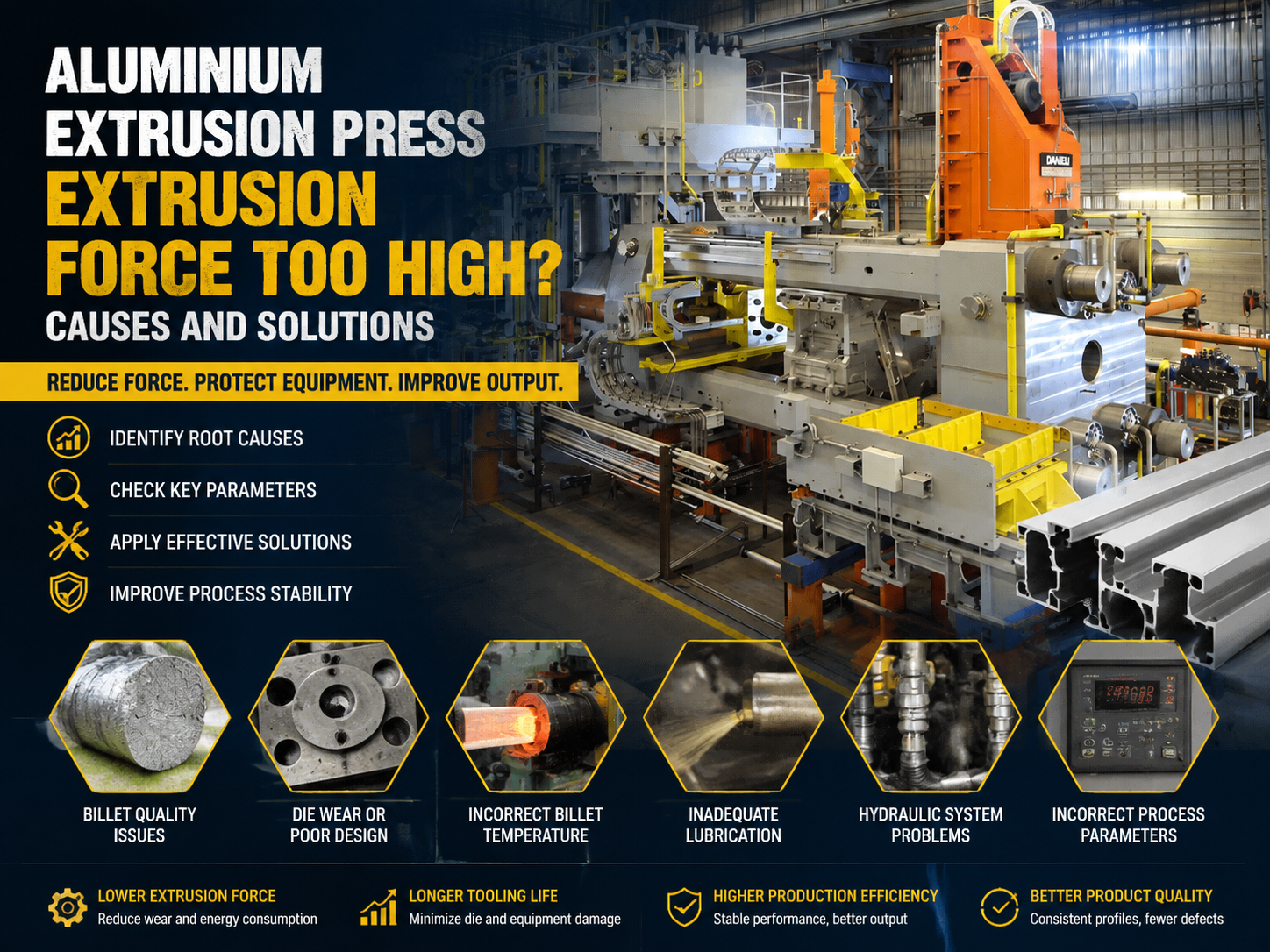
Introduction to Extrusion Force Challenges in Aluminium Fabrication
In the world of metal fabrication, the aluminium extrusion press is a cornerstone of production, transforming raw billets into complex profiles used in everything from aerospace components to window frames. However, operators often encounter a critical technical hurdle: the extrusion force becomes excessively high. When the force required to push the metal through the die exceeds the designed parameters or the machine’s optimal operating range, it triggers a cascade of industrial inefficiencies. Not only does this increase energy consumption, but it also accelerates the wear and tear on expensive components like the container liner, the ram, and the extrusion dies themselves.
Understanding why an aluminium extrusion press experiences high extrusion force is essential for maintaining a competitive edge. High force often leads to “breakthrough” issues, where the initial pressure required to start the flow of metal is so high that it causes mechanical shocks to the system. Furthermore, if the press is constantly running at its maximum tonnage capacity, the risk of hydraulic seal failure and structural fatigue increases significantly. For manufacturers using HARSLE machinery or similar high-performance equipment, maintaining the balance between speed, temperature, and force is the key to longevity and product quality.
This comprehensive guide delves into the multifaceted causes of high extrusion force and provides actionable, technical solutions. We will explore the relationship between metallurgy, thermodynamics, and mechanical engineering to help you optimize your extrusion process. Whether you are dealing with 6000-series architectural alloys or high-strength 7000-series aerospace alloys, the principles of force management remain a vital aspect of daily operations.
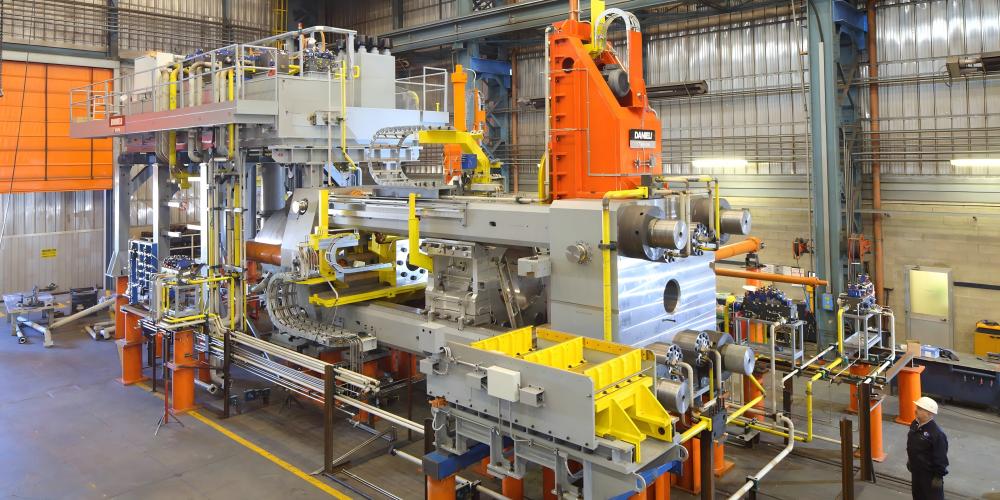
Key Considerations for Managing Extrusion Force
Before diving into specific troubleshooting steps, it is important to consider the fundamental variables that dictate the force required during the extrusion cycle. The extrusion force is not a static number; it is a dynamic variable influenced by the material’s flow stress, the geometry of the profile, and the friction within the system. One of the primary considerations is the “Extrusion Ratio,” which is the ratio of the cross-sectional area of the billet to the cross-sectional area of the extruded profile. A higher ratio naturally demands higher force, as the metal must undergo more significant deformation.
Another critical consideration is the alloy composition. Different aluminium alloys have varying levels of “deformation resistance.” For instance, pure aluminium (1000 series) flows relatively easily, whereas alloys containing magnesium and silicon (6000 series) or zinc (7000 series) require substantially more pressure to deform. Operators must ensure that the press tonnage is appropriately matched to the alloy’s specific flow stress at the intended operating temperature. If the alloy is harder than what the press was calibrated for, the extrusion force will inevitably spike.
Friction is the third major consideration. As the billet is pushed through the container, friction occurs between the billet surface and the container liner. This is known as “peripheral friction.” In direct extrusion, this friction must be overcome by the ram force, and it typically decreases as the billet length shortens during the stroke. If the container is not properly heated or if the lubrication (where applicable) is insufficient, this friction can account for up to 30% of the total extrusion force. Understanding these baseline factors allows for a more systematic approach to troubleshooting.
Technical Details: Why is the Extrusion Force Too High?
1. Billet Temperature and Thermal Gradients
The most common cause of high extrusion force is insufficient billet temperature. Aluminium’s flow stress is highly temperature-dependent; as the temperature decreases, the metal becomes harder and more resistant to deformation. If the induction furnace or gas-fired heater fails to bring the billet to the specified setpoint (typically between 400°C and 500°C for 6061 alloy), the press will struggle to initiate the flow. Furthermore, an uneven temperature distribution—where the core of the billet is colder than the surface—can lead to erratic force readings and poor metal flow.
2. Container and Die Temperature Mismatch
Even if the billet is heated correctly, a cold container or die can act as a heat sink, rapidly cooling the aluminium as it makes contact. This localized cooling increases the flow stress at the very point where the metal needs to be most plastic. The container should generally be maintained at a temperature slightly lower than the billet (about 30-50°C less) to prevent the billet from overheating due to friction while ensuring it doesn’t chill. If the die is not pre-heated in a die oven to the correct temperature, the “breakthrough force” will be exceptionally high, potentially damaging the die mandrels.
3. Die Design and Bearing Length
The geometry of the extrusion die plays a massive role in force requirements. The “bearing land” is the part of the die that contacts the metal to control the dimensions and surface finish. If the bearing length is too long, it creates excessive drag. In complex profiles with varying wall thicknesses, designers often use different bearing lengths to balance the flow. However, if the overall design is not optimized for the specific press capacity, the cumulative friction across the die face will drive the extrusion force upward. Additionally, sharp corners and narrow channels in the die design increase the resistance to flow.
4. Extrusion Speed and Strain Rate Sensitivity
Aluminium is a strain-rate sensitive material. This means that as the speed of deformation (extrusion speed) increases, the resistance to that deformation also increases. If an operator attempts to run the press at a ram speed that is too high for the given alloy and temperature, the hydraulic system will show a corresponding spike in pressure. This is often a balancing act: while higher speeds increase productivity, they also generate more heat through internal friction, which can lead to surface defects like “pick-up” or tearing if the force and temperature are not managed in tandem.
5. Hydraulic System Inefficiencies
Sometimes the problem isn’t the metal or the die, but the machine itself. In an aluminium extrusion press, the hydraulic system must deliver consistent pressure to the main cylinder. If there are internal leaks in the main piston seals, or if the high-pressure pumps are worn and unable to maintain the required flow rate, the system may appear to be struggling with “high force” when it is actually suffering from a loss of mechanical efficiency. Contaminated hydraulic oil or malfunctioning relief valves can also cause the system to behave unpredictably, leading to perceived force issues.
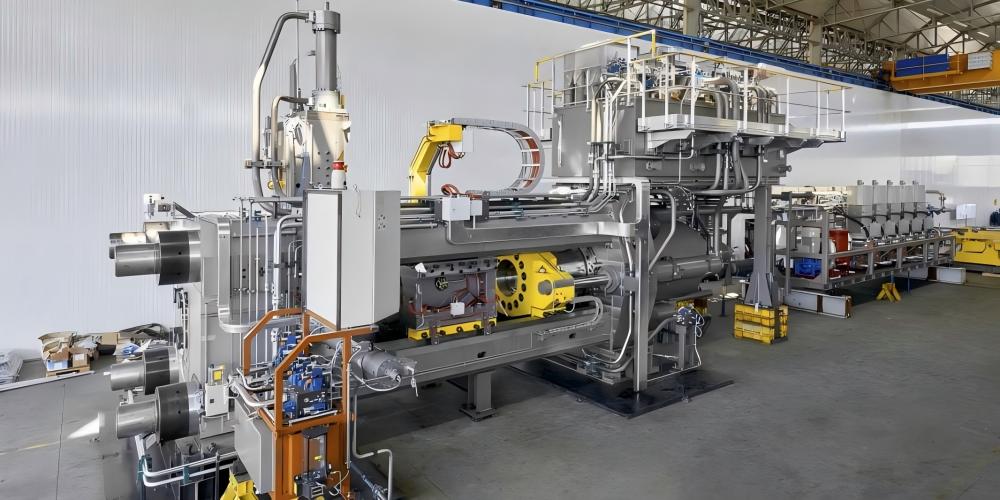
Solutions and Optimization Strategies
To resolve high extrusion force, a multi-pronged approach is required. First, verify the accuracy of your thermal equipment. Use contact pyrometers to ensure that the billet temperature exiting the furnace matches the PLC’s reading. Implementing a “taper heating” strategy—where the rear of the billet is slightly cooler than the front—can help compensate for the heat generated by friction during the stroke, keeping the extrusion force more stable throughout the cycle.
Optimizing die maintenance is another critical solution. Regular caustic cleaning to remove aluminium buildup and professional polishing of the bearing surfaces can significantly reduce friction. For high-volume runs, consider using nitrogen cooling for the dies. Injecting liquid nitrogen into the die area not only cools the die to prevent overheating but also creates an inert atmosphere that reduces oxidation and friction, effectively lowering the required extrusion force and allowing for higher speeds.
From a mechanical perspective, ensuring the alignment of the press is paramount. If the ram, dummy block, and container are not perfectly aligned, the billet will be pushed into the container at an angle, creating massive amounts of unnecessary friction and potential damage to the container liner. Regular checks with laser alignment tools can prevent this. Furthermore, upgrading to a modern control system, such as those found on HARSLE presses, allows for “isothermal extrusion,” where the press automatically adjusts the ram speed based on real-time temperature and force feedback to maintain optimal conditions.
| Problem Factor | Immediate Cause | Recommended Solution |
|---|---|---|
| Billet Temperature | Too low / Uneven heating | Calibrate furnace; implement taper heating. |
| Die Friction | Long bearings / Rough surface | Polish bearings; optimize die design. |
| Container Heat | Container too cold | Check container heater bands and thermocouples. |
| Hydraulic Pressure | Pump wear / Valve failure | Conduct hydraulic pressure test; replace worn seals. |
| Alloy Resistance | Hard alloy for press capacity | Increase billet temp; reduce extrusion speed. |
Selection Advice for New Aluminium Extrusion Machinery
When purchasing a new aluminium extrusion press, selecting the right tonnage is the most critical decision you will make. It is a common mistake to buy a press that is just barely sufficient for your current needs. To avoid future issues with high extrusion force, calculate your requirements based on your hardest alloy and your highest extrusion ratio. A “safety margin” of 15-20% in tonnage capacity is recommended to ensure the machine operates within its most efficient hydraulic range, reducing wear and energy costs.
Look for machinery that features advanced hydraulic logic. Modern HARSLE extrusion presses, for example, utilize high-efficiency servo-motor driven pumps. These systems provide much finer control over the extrusion force and speed, allowing for smoother transitions and reducing the peak loads that occur during the breakthrough phase. Additionally, ensure the press has a robust PLC system capable of storing multiple “recipes” for different alloys and die configurations, which automates the pressure and temperature settings to minimize human error.
Consider the auxiliary equipment as part of the selection process. A high-quality billet heater with precise zone control and a reliable die oven are just as important as the press itself. If the peripheral equipment cannot deliver consistent thermal inputs, even the best press will suffer from high force issues. Finally, evaluate the ease of maintenance. Features like easy-access hydraulic manifolds and quick-change container systems will save countless hours of downtime when troubleshooting force-related issues.
Frequently Asked Questions (FAQ)
1. What is the maximum extrusion force a press should handle?
The maximum force is typically defined by the press’s rated tonnage (e.g., 1000 tons, 2500 tons). However, for continuous operation, it is best to run the press at 70-85% of its maximum capacity. Running at 100% force constantly will lead to premature failure of hydraulic components and potential cracking of the container or die holder.
2. How does the extrusion ratio affect the force?
The extrusion ratio is a direct multiplier for the required pressure. As you try to squeeze a large billet through a very small die opening, the internal shear forces within the aluminium increase. If your ratio exceeds 100:1 for certain alloys, you will likely encounter force limits unless the billet is heated to its maximum safe temperature.
3. Can lubrication reduce extrusion force?
In direct extrusion of aluminium, lubrication of the container is generally avoided to prevent air entrapment and internal defects. However, lubricating the die face and the dummy block can help. In indirect extrusion, friction is significantly lower, which is why indirect presses often require about 20-30% less force than direct presses for the same profile.
4. Why does the force drop after the start of the cycle?
This is normal in direct extrusion. The initial “breakthrough force” is high because it must overcome static friction and the initial deformation of the billet. As the billet gets shorter, there is less surface area in contact with the container, reducing peripheral friction and thus lowering the required force as the stroke progresses.
5. Does the age of the hydraulic oil affect extrusion force?
Yes, indirectly. Old or degraded oil can lose its viscosity characteristics and may contain micro-bubbles (aeration). This makes the hydraulic system “spongy” and less efficient, meaning the pumps have to work harder and the system may show higher pressure readings to achieve the same mechanical output at the ram.
6. What are the signs of a die that is causing too much force?
If you notice that the force is high only for one specific die while others run fine at the same temperature and speed, the die is the culprit. Signs include heavy “die lines” on the profile, excessive heat generation at the die exit, and the press reaching pressure relief limits during the breakthrough phase.
Conclusion: Achieving Optimal Extrusion Performance
Managing the extrusion force in an aluminium press is a sophisticated balancing act that requires attention to metallurgical, thermal, and mechanical factors. High extrusion force is rarely the result of a single failure; rather, it is usually a combination of sub-optimal billet heating, die friction, and hydraulic limitations. By systematically addressing these areas—starting with precise temperature control and moving through to die optimization and machine maintenance—operators can significantly improve their production efficiency.
Investing in high-quality machinery from reputable manufacturers like HARSLE provides the technological foundation needed to monitor and control these variables effectively. With features like real-time data logging and precision hydraulic control, modern presses make it much easier to diagnose and solve force-related challenges before they lead to costly downtime or equipment failure. Remember, a well-optimized extrusion process not only protects your machinery but also ensures the highest quality finish for your aluminium profiles, keeping your customers satisfied and your operations profitable.
In summary, keep your billets hot, your dies polished, and your hydraulic systems well-maintained. By following the technical guidelines and solutions outlined in this guide, you can transform a struggling extrusion line into a model of industrial efficiency, capable of handling even the most demanding aluminium alloys with ease.