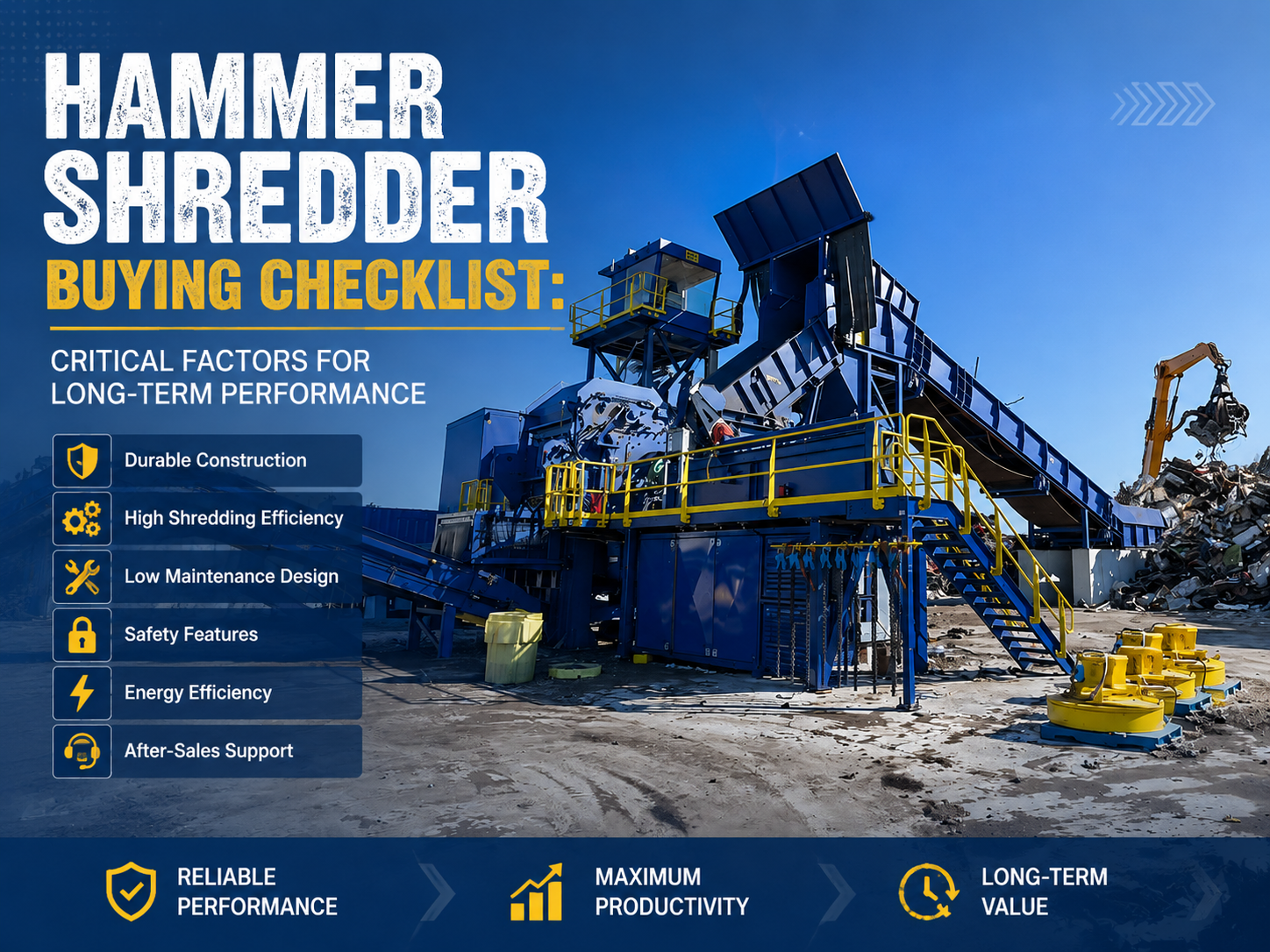
Hammer Shredder Buying Checklist: Critical Factors for Long-Term Performance

Introduction to Hammer Shredder Procurement
In the high-stakes world of metal recycling and industrial waste management, the hammer shredder stands as a cornerstone of efficiency. These robust machines are designed to pulverize, shear, and reduce various materials—ranging from aluminum scrap and electronic waste to car bodies—into manageable, high-density fragments. However, investing in a hammer shredder is a significant capital expenditure that requires more than just a glance at a spec sheet. To ensure a return on investment (ROI) that spans decades, buyers must navigate a complex landscape of metallurgical choices, hydraulic configurations, and operational costs.
The purpose of this guide is to provide a comprehensive Hammer Shredder Buying Checklist: Critical Factors for Long-Term Performance. We will delve into the technical nuances that separate a standard machine from a high-performance workhorse. By understanding the relationship between initial cost and long-term durability, facility managers and business owners can make informed decisions that minimize downtime and maximize throughput. Whether you are upgrading an existing line or starting a new recycling facility, the following sections will serve as your roadmap to a successful acquisition.
Price Range Overview: Understanding the Market Tiers
The market for hammer shredders is diverse, with prices varying significantly based on capacity, build quality, and automation levels. Generally, hammer shredders can be categorized into three primary tiers: entry-level/mobile units, mid-range industrial shredders, and heavy-duty large-scale systems. Understanding where your needs fall within these tiers is the first step in budgeting for your equipment.
Entry-level hammer shredders, often used for light electronic waste or small-scale aluminum recycling, typically range from $25,000 to $60,000. These machines are characterized by lower motor power (usually under 75kW) and smaller rotor diameters. While they offer a lower barrier to entry, they may lack the heavy-duty liners and advanced hydraulic systems required for 24/7 high-volume operations. They are ideal for specialized facilities or as auxiliary units in larger plants.
Mid-range industrial shredders represent the bulk of the market, with prices falling between $70,000 and $250,000. These machines are designed for consistent daily use, processing scrap metal, white goods, and industrial waste. They feature reinforced frames, high-manganese steel components, and sophisticated control systems. At this level, buyers begin to see features like hydraulic opening mechanisms for easy maintenance and advanced vibration damping systems that protect the machine’s structural integrity over time.
Heavy-duty, large-scale systems are the giants of the industry, often exceeding $300,000 and reaching into the millions for fully integrated recycling lines. These systems are capable of processing entire car hulks and massive quantities of heavy structural steel. They are characterized by massive rotors, motors exceeding 500kW, and comprehensive downstream sorting equipment. For these units, the price is a reflection of the sheer volume of material they can process and the extreme durability of their internal components.
Main Cost Drivers: What Are You Really Paying For?
When reviewing a quote for a hammer shredder, it is essential to identify the specific components that drive the cost. The most significant cost driver is the rotor assembly. As the heart of the machine, the rotor must withstand immense centrifugal forces and constant impact. High-quality rotors are forged from specialized alloys and precision-balanced to prevent vibration. A cheaper machine often cuts costs here, leading to bearing failures and frame cracking within the first few years of operation.
Metallurgy is another critical factor. The hammers, pins, and internal liners are subject to extreme wear. Premium machines utilize high-manganese steel (often 13% to 18% Mn) or chrome-moly alloys that work-harden during use. While these materials increase the initial purchase price, they significantly extend the interval between replacements. In the context of the Hammer Shredder Buying Checklist: Critical Factors for Long-Term Performance, the quality of wear parts is perhaps the single most important predictor of long-term operational costs.
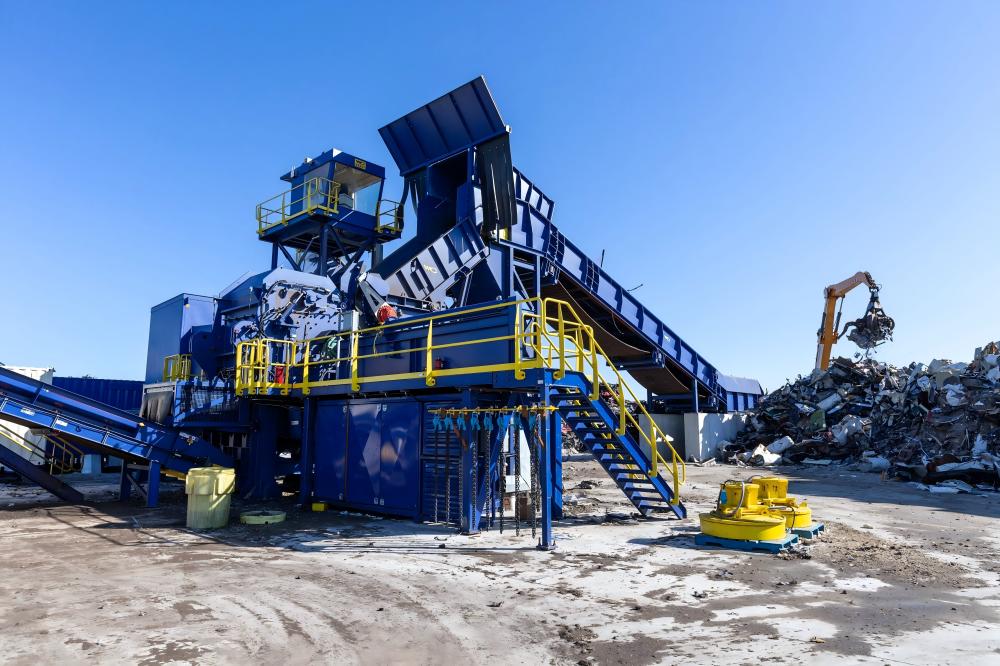
The drive system, including the motor and transmission, also plays a major role in pricing. High-efficiency motors (IE3 or IE4 rated) carry a premium but offer substantial energy savings. Furthermore, the inclusion of a fluid coupling or a sophisticated variable frequency drive (VFD) protects the motor from torque spikes when the shredder encounters un-shreddable objects. These protective features add to the upfront cost but are essential for preventing catastrophic motor failure.
Configuration Impact: Tailoring the Machine to Your Material
The configuration of a hammer shredder must be precisely matched to the material it will process. One of the most critical configuration choices is the hammer design. Fixed hammers are excellent for consistent, brittle materials, while swing hammers (pivoting on a pin) are preferred for scrap metal because they can retract when they hit an unbreakable object, preventing damage to the rotor. The weight and shape of the hammers—whether they are bell-shaped, T-shaped, or ring-style—will directly impact the density and size of the output product.
Screen size and configuration are equally important. The screen (or grate) at the bottom of the shredding chamber determines the final particle size. A smaller screen produces a finer, more uniform product but reduces throughput and increases wear. Conversely, a larger screen allows for faster processing but may result in a less consistent output. Advanced shredders offer modular screen designs that can be swapped out quickly, allowing the facility to pivot between different material streams with minimal downtime.
Hydraulic systems also vary significantly in configuration. Modern hammer shredders often feature hydraulic tilting or opening housings. This allows maintenance crews to access the rotor and hammers in minutes rather than hours. While a manual opening system is cheaper, the labor costs and downtime associated with hammer changes in a manual system can quickly eclipse the initial savings. For long-term performance, a robust hydraulic maintenance system is a non-negotiable item on the buying checklist.
Hidden Costs: Beyond the Initial Purchase Price
The “sticker price” of a hammer shredder is only the beginning of the financial commitment. One of the most frequently overlooked hidden costs is site preparation and installation. A heavy-duty shredder requires a reinforced concrete foundation to absorb vibrations. Without a properly engineered base, the machine will eventually shake itself apart, leading to structural failures in the frame and surrounding building. Additionally, the electrical infrastructure must be capable of handling high startup currents, which may require upgrading transformers or installing soft-start systems.
Wear parts represent a continuous operational expense. Hammers, liners, and pins are consumables. Depending on the abrasiveness of the material being processed, hammers may need to be flipped or replaced every few hundred tons. A buyer must calculate the “cost per ton” of wear parts. Choosing a machine with slightly more expensive but significantly longer-lasting wear parts often results in a lower total cost of ownership. It is also vital to consider the availability and lead times of these parts; a machine that sits idle for three weeks waiting for a custom-cast liner is a massive liability.
Energy consumption is another major ongoing cost. Hammer shredders are energy-intensive. A machine that is poorly matched to its task—for example, a massive shredder running at half capacity—will waste significant amounts of electricity. Furthermore, environmental compliance costs, such as dust suppression systems, noise barriers, and air filtration, must be factored into the budget. Many regions have strict regulations regarding the emissions from metal shredding operations, and retrofitting a machine to meet these standards is far more expensive than buying a compliant system from the start.
ROI Calculation: Measuring Success in Metal Shredding
Calculating the ROI for a hammer shredder involves balancing the total cost of ownership (TCO) against the value of the processed material. The primary driver of revenue is throughput—how many tons of material can the machine process per hour? However, throughput must be balanced against the quality of the output. Shredded and densified scrap (often called “proler”) commands a much higher price at steel mills than raw, loose scrap because it is easier to melt and contains fewer impurities.
To calculate ROI, use the following formula: ROI = (Annual Revenue from Processed Material – Annual Operating Costs) / Total Investment. Annual operating costs should include labor, energy, wear parts, routine maintenance, and the cost of disposing of “fluff” (non-metallic waste). A high-performance machine from a reputable manufacturer like HARSLE may have a higher “Total Investment” figure, but its lower “Annual Operating Costs” and higher “Annual Revenue” (due to better output quality and uptime) typically result in a much faster payback period.
Consider the resale value as well. High-quality industrial machinery retains a significant portion of its value on the secondary market. A well-maintained hammer shredder from a recognized brand can be sold years later for 40-60% of its original price. In contrast, generic or low-quality machines often have little to no resale value, essentially becoming scrap themselves at the end of their functional life.
Buying Advice: The Ultimate Checklist for Buyers
When you are ready to move forward with a purchase, use this checklist to evaluate potential suppliers and machines. This list is designed to ensure that the Hammer Shredder Buying Checklist: Critical Factors for Long-Term Performance is fully addressed before any contracts are signed.
- Material Testing: Does the manufacturer offer material testing? You should see how the machine performs with your specific scrap before buying.
- Rotor Construction: Is the rotor forged or welded? Forged rotors are significantly more durable for heavy-duty applications.
- Wear Part Accessibility: How long does it take to change a full set of hammers? Ask for a demonstration of the hydraulic opening system.
- Bearing Protection: Are the bearings isolated from the shredding chamber? Look for advanced sealing systems that prevent dust and grit from entering the bearing housing.
- Control Systems: Does the machine include an auto-reverse function to clear jams? Does it have integrated sensors for temperature and vibration monitoring?
- After-Sales Support: Does the manufacturer maintain a local inventory of wear parts? What is their guaranteed response time for technical support?
- Reference Sites: Can the manufacturer provide contacts for existing customers who have used the machine for more than two years?
Choosing a partner like HARSLE ensures that these technical requirements are met with precision engineering. It is always better to invest in a machine that exceeds your current requirements than to buy one that struggles to meet them, as the latter will inevitably lead to premature wear and mechanical failure.
Frequently Asked Questions (FAQ)
1. How often should I replace the hammers in my shredder?
The replacement interval depends entirely on the material being processed and the metallurgy of the hammers. For clean aluminum, hammers may last several hundred hours. For contaminated steel scrap, they may need attention every 40-80 hours. Most operators “flip” the hammers once to use the second leading edge before replacing them entirely.
2. What is the difference between a hammer mill and a hammer shredder?
While the terms are often used interchangeably, a hammer mill is typically used for finer grinding of softer materials (like grain or minerals), while a hammer shredder is a heavy-duty industrial machine designed to tear and smash metals and tough plastics. Shredders usually have much higher torque and heavier hammers.
3. Can a hammer shredder handle un-shreddable items like engine blocks?
Only if it is specifically rated for them. Small and mid-range shredders can be catastrophically damaged by heavy cast-iron engine blocks or thick structural steel. Most shredders feature a “reject door” or a hydraulic relief system that allows un-shreddable items to be ejected from the chamber before they cause damage.
4. Is a vertical or horizontal hammer shredder better?
Horizontal shredders are the industry standard for scrap metal because they allow for gravity-fed operation and easier integration with conveyor systems. Vertical shredders (often called vertical grinders) are excellent for achieving very high density and liberating multi-material components, but they generally have lower throughput for large-scale scrap.
5. How does moisture in the scrap affect performance?
Moisture can lead to “clumping” of fines and can cause the screens to clog, especially if the material contains a lot of dirt or organic matter. In some cases, water is intentionally injected into the shredding chamber to control dust and cool the hammers, but this requires a machine designed for wet operation with proper drainage and corrosion protection.
6. What safety features are essential for a hammer shredder?
Essential safety features include emergency stop circuits, interlocked access doors (preventing the machine from opening while the rotor is spinning), vibration sensors to detect imbalances, and explosion venting if the machine is processing materials that could create combustible dust.
7. Why is rotor balancing so important?
A rotor spinning at high speeds carries immense kinetic energy. Even a small imbalance can create massive centrifugal forces that will destroy bearings, crack welds, and eventually lead to a catastrophic failure of the machine frame. Regular balancing, especially after replacing hammers, is critical for long-term performance.