Industrial Shredder Blade Dullness: Signs, Causes, and Repair Solutions

Introduction to Industrial Shredder Blade Maintenance
In the world of heavy-duty recycling and material processing, the industrial shredder stands as a cornerstone of efficiency. Whether processing scrap metal, plastics, rubber tires, or electronic waste, the performance of these machines is almost entirely dependent on the condition of their cutting components. At HARSLE, we understand that the blades are the ‘teeth’ of the operation. When these teeth become dull, the entire system suffers, leading to increased energy consumption, reduced throughput, and potential mechanical failure.
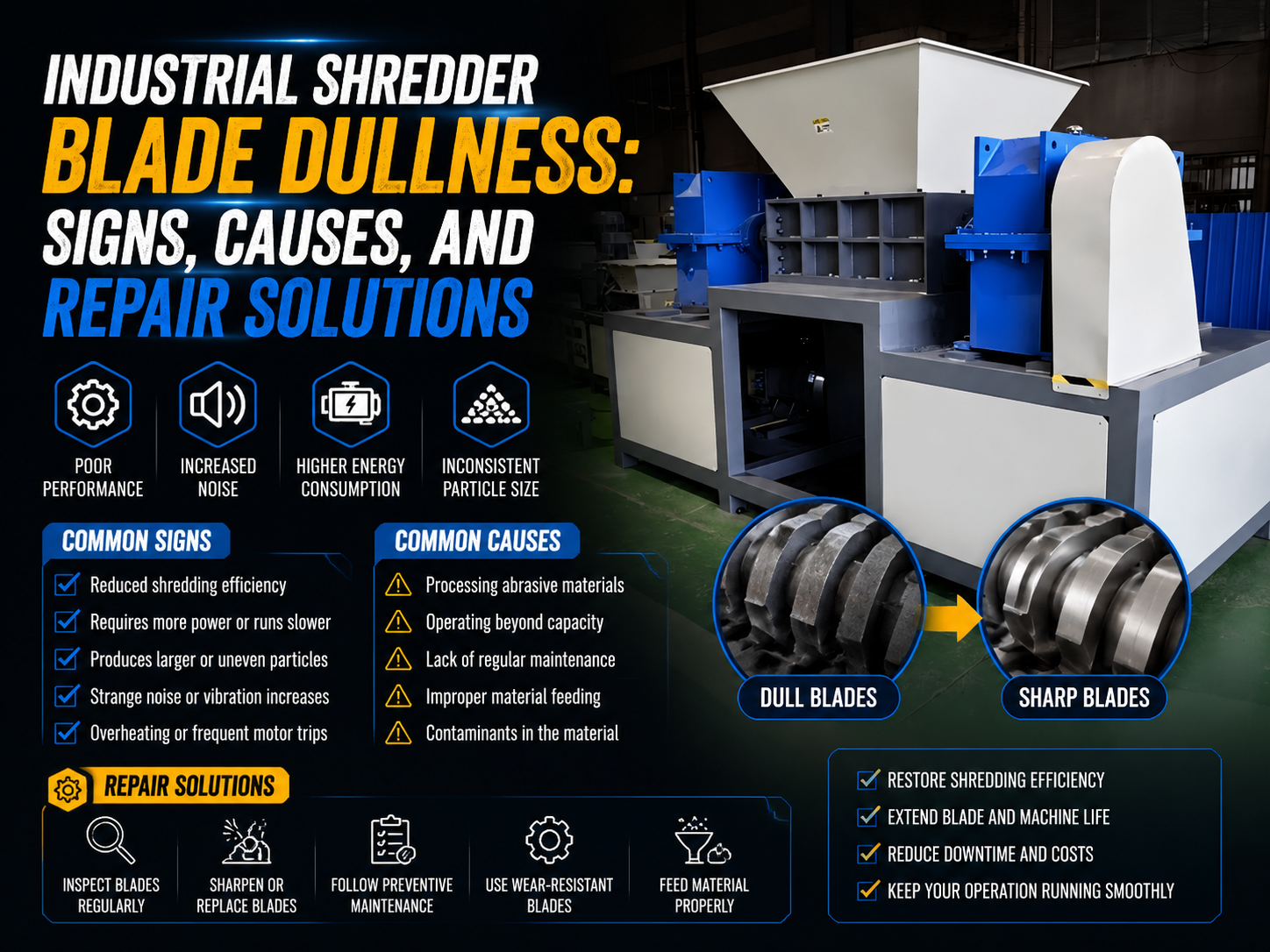
Industrial shredder blade dullness is an inevitable consequence of high-volume processing, but it is not a problem that should be ignored. Maintaining sharp edges is critical for ensuring that the machine shears material rather than tearing or crushing it. Tearing requires significantly more force than shearing, which puts undue stress on the shafts, bearings, and motors. This comprehensive guide explores the intricate details of blade wear, how to spot the early warning signs of dullness, the root causes behind edge degradation, and the professional repair solutions available to restore your equipment to peak performance.
Key Signs of Industrial Shredder Blade Dullness
Identifying dull blades before they cause a total system shutdown is a vital skill for any plant operator. The signs are often subtle at first but become increasingly obvious as the degradation progresses. One of the most immediate indicators is a noticeable drop in production capacity. If your shredder is processing fewer tons per hour than it did when the blades were new, despite the input material remaining the same, the blades are likely losing their edge.
Another critical sign is the quality of the output material. Sharp blades produce clean, uniform cuts. As blades dull, the material often appears ‘chewed’ or ragged. In plastic recycling, for instance, dull blades tend to produce a higher volume of ‘fines’ or dust, which can be a significant waste of raw material and a fire hazard. In metal shredding, you might notice that pieces are folded or mangled rather than cleanly severed, which can complicate downstream sorting processes.
Monitoring the machine’s electrical consumption is also a highly effective way to detect dullness. Modern HARSLE shredders are equipped with advanced monitoring systems that track motor amperage. When blades are dull, the motor must work harder to force the material through the cutting chamber, leading to higher-than-normal amperage spikes. If you notice your energy bills climbing or the machine frequently triggering its overload protection, it is time to inspect the cutting discs.
Finally, pay attention to the sounds and vibrations of the machine. A sharp shredder has a rhythmic, consistent sound. Dull blades often produce a more labored, grinding noise. Increased vibration is also common as the blades struggle to grab and bite into the material, causing the shafts to deflect slightly under the increased pressure. Regular physical inspections, looking for rounded edges or ‘chipping’ on the blade profile, should be part of every weekly maintenance checklist.
Common Causes of Blade Dullness and Wear
Understanding why blades dull is the first step in extending their lifespan. The most common cause is simple abrasive wear. As material passes over the surface of the blade, it acts like sandpaper, slowly eroding the metal. This is particularly prevalent when shredding materials with high mineral content, such as glass-filled plastics or contaminated construction waste. The friction generates heat, which can further soften the blade material if it exceeds the tempering temperature of the steel.
Contamination is another major culprit. In a perfect world, a plastic shredder would only see plastic. However, in real-world recycling, ‘tramp metal’—such as bolts, tools, or heavy steel plates—often finds its way into the hopper. When a blade designed for plastic hits a hardened steel bolt, it can cause immediate ‘catastrophic’ dullness, including large chips or even cracks in the blade body. This is why magnetic separators and pre-sorting are essential components of a shredding line.
Improper blade clearance is a technical cause that is often overlooked. In dual-shaft shredders, the gap between the interlocking blades must be precisely maintained. If the clearance is too wide, the material will simply slip through or get wedged between the blades, causing ‘smearing’ and rapid heat buildup. If the clearance is too tight, the blades may actually rub against each other, leading to friction-induced wear and potential galling of the metal surfaces.
Lastly, the choice of blade material itself can lead to premature dullness. If the blade’s Rockwell hardness (HRC) is too low for the application, it will dull quickly. Conversely, if it is too high, the blade may be too brittle and prone to chipping. HARSLE utilizes high-grade alloys like D2, SKD11, and H13, each heat-treated to specific specifications to balance toughness and hardness based on the intended application.
Technical Details: Metallurgy and Blade Geometry
The science behind industrial shredder blades involves a complex balance of metallurgy and geometry. Most high-quality blades are manufactured from cold-work tool steels or shock-resistant steels. D2 tool steel, for example, is favored for its high carbon and high chromium content, providing excellent wear resistance. However, for applications involving heavy impact, such as crushing large metal drums, a tougher steel like S7 or H13 might be preferred to prevent the blades from shattering.
Blade geometry plays an equally important role. The ‘hook’ or ‘tooth’ profile of the blade determines how it grabs the material. A more aggressive hook angle is better for bulky materials like tires, as it pulls the material into the cutting zone. However, a sharper angle also creates a thinner edge that is more susceptible to dulling. The thickness of the blade also matters; thinner blades provide more cuts per shaft length but are more fragile, while thicker blades are more robust but produce a coarser output.
| Material Type | Recommended Steel Grade | Typical Hardness (HRC) | Primary Wear Factor |
|---|---|---|---|
| Plastics & Paper | D2 / SKD11 | 58-60 | Abrasive Wear |
| Tires & Rubber | H13 / 4140 | 50-54 | Heat & Friction |
| Scrap Metal | S7 / Custom Alloy | 52-56 | Impact & Chipping |
| Electronic Waste | D2 / DC53 | 56-58 | Chemical & Abrasive |
Heat treatment is the ‘secret sauce’ of blade longevity. A blade that is not properly tempered will have internal stresses that lead to warping or premature failure. HARSLE employs vacuum heat treatment processes to ensure uniform hardness throughout the blade’s cross-section. This allows the blade to be sharpened multiple times without losing its structural integrity or cutting performance.
Repair Solutions and Sharpening Techniques
When blades become dull, you have three primary options: rotation, sharpening, or replacement. Many HARSLE blades are designed with multiple cutting edges. If one side is dull, the blade can often be flipped or rotated to expose a fresh, sharp edge. This is the most cost-effective way to double the life of your consumables. However, once all edges are worn, professional intervention is required.
Sharpening industrial shredder blades is a precision task that should ideally be performed on a surface grinder or a specialized CNC blade sharpening machine. The goal is to remove as little material as possible while restoring the original edge radius. It is crucial to use plenty of coolant during the grinding process. If the blade gets too hot during sharpening, it can ‘burn’ the steel, localizedly drawing the temper and leaving a soft spot that will dull almost instantly once the machine is back in service.
For blades that have suffered significant damage, such as large chips or gouges, ‘hard-facing’ or welding repair may be an option. This involves depositing a layer of high-hardness welding rod onto the damaged area and then grinding it back to the original profile. While this can save an expensive blade, it requires expert welding skills to ensure the new material bonds correctly with the base metal without creating stress cracks. In many cases, if a blade has lost more than 10-15% of its original mass, replacement is the safer and more efficient choice.
After sharpening or repair, the blades must be re-installed with careful attention to the spacers and shims. As material is removed from the blades during sharpening, the clearance between the shafts will change. Operators must use thinner spacers or adjust the shaft centers (if the machine design allows) to maintain the tight tolerances required for efficient shearing. Failure to adjust for the reduced blade width is a common mistake that leads to poor performance even with ‘sharp’ blades.
Selection Advice for New Shredder Blades
Choosing the right replacement blades is a critical decision for the long-term health of your HARSLE shredder. Do not be tempted by low-cost ‘generic’ blades that may not meet the metallurgical standards required for heavy industrial use. When selecting blades, consider the ‘Total Cost of Ownership’ rather than just the initial purchase price. A blade that costs 20% more but lasts 50% longer and requires fewer sharpenings is the better investment.
Always match the blade material to your specific waste stream. If you are moving from processing soft plastics to rigid electronic scrap, your existing blades may no longer be appropriate. Consult with HARSLE technical support to determine if a different alloy or heat treatment would improve your uptime. Additionally, consider the blade profile; sometimes a change in the number of ‘teeth’ on a disc can significantly improve the throughput of specific materials like film or textiles.
Keep a detailed log of blade performance. Track how many hours each set of blades lasts and what the primary failure mode was (e.g., rounding, chipping, or breakage). This data is invaluable for optimizing your maintenance schedule and making informed purchasing decisions in the future. Having a spare set of sharpened blades on hand is also essential to minimize downtime; the goal should be a ‘swap and sharpen’ strategy where the machine is only down for the duration of the blade change, not the duration of the sharpening process.
Frequently Asked Questions (FAQ)
How often should I sharpen my industrial shredder blades?
The frequency depends entirely on the material being processed. For clean plastics, blades may last 500-1,000 hours. For abrasive materials or scrap metal, they may need inspection every 100-200 hours. Monitoring motor amperage is the best way to determine your specific sharpening interval.
Can I sharpen shredder blades by hand with a portable grinder?
While possible in an emergency, it is highly discouraged. Hand grinding cannot maintain the precise angles and flatness required for industrial shredding. It often leads to uneven wear and poor clearance, which can damage the machine’s shafts and bearings over time.
What is the maximum number of times a blade can be sharpened?
Typically, a blade can be sharpened 3 to 5 times, depending on the amount of material removed each time. Once the blade’s diameter or thickness is reduced to the point where the clearance between blades exceeds the manufacturer’s specifications, the blade must be replaced.
Why are my blades chipping instead of just dulling?
Chipping is usually a sign of either ‘tramp metal’ contamination or a blade that is too brittle for the application. It can also occur if the blade clearance is too tight, causing the blades to strike each other during operation. Review your sorting process and check your HRC requirements.
Conclusion: Maximizing Efficiency with HARSLE
Industrial shredder blade dullness is a challenge that every recycling facility must manage. By recognizing the signs of wear early—such as increased energy use, ragged output, and unusual noise—operators can intervene before costly damage occurs. Understanding the causes, from abrasive wear to improper clearance, allows for better preventative maintenance and smarter material handling.
At HARSLE, we provide not only the high-performance machinery needed for modern waste management but also the technical expertise to keep that machinery running at peak efficiency. Investing in high-quality blade materials, following a rigorous sharpening schedule, and ensuring precise installation are the keys to a profitable shredding operation. Remember, a sharp shredder is a safe, efficient, and cost-effective shredder. Keep your edges keen, and your production will follow suit.