
How Aluminium Extrusion Presses Support Renewable Energy Component Production

Introduction to the Role of Aluminium Extrusion in Green Energy
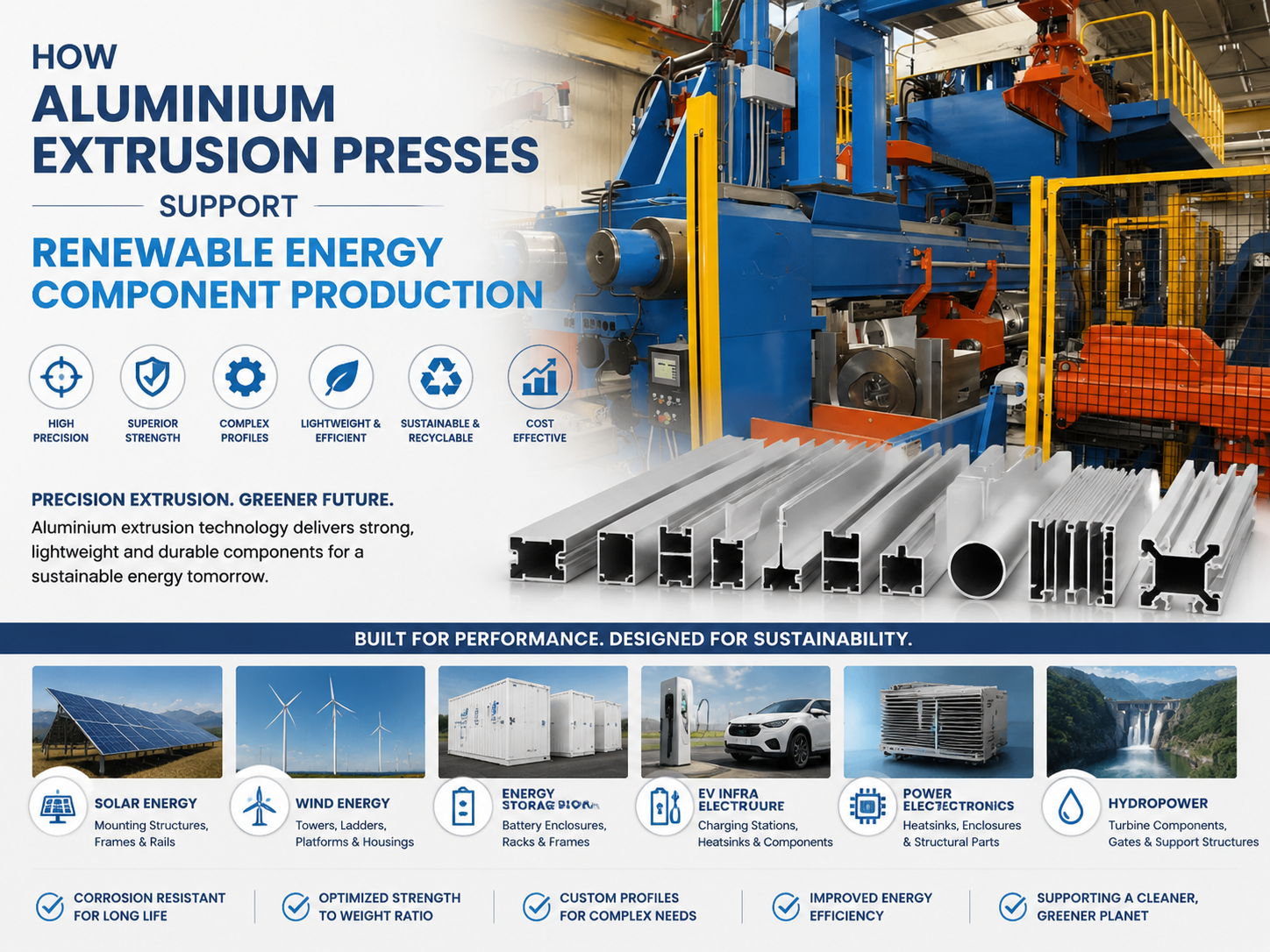
The global shift toward sustainable energy sources has created an unprecedented demand for lightweight, durable, and corrosion-resistant materials. Aluminium has emerged as the primary material of choice for this transition, and the technology behind its shaping—the aluminium extrusion press—has become a cornerstone of the renewable energy supply chain. When we discuss how aluminium extrusion presses support renewable energy component production, we are looking at a synergy between advanced hydraulic engineering and the specific structural needs of solar, wind, and electric vehicle (EV) technologies.
Aluminium’s unique properties, such as its high strength-to-weight ratio and excellent thermal conductivity, make it indispensable. However, these properties can only be fully leveraged through high-precision extrusion processes. Modern extrusion presses allow manufacturers to create complex cross-sections that would be impossible or prohibitively expensive to produce via machining or welding. This capability is vital for creating the intricate cooling fins, structural rails, and protective housings required by modern green energy systems.
As industries strive to meet carbon neutrality goals, the efficiency of the manufacturing equipment itself becomes a factor. HARSLE’s advanced extrusion solutions are designed not just to produce parts, but to do so with minimal waste and maximum energy efficiency. This article provides an in-depth look at the applications, technical requirements, and productivity benefits of using aluminium extrusion presses in the renewable energy sector.
Application Scenarios in the Renewable Energy Sector
Solar Energy Infrastructure
The solar industry is perhaps the largest consumer of extruded aluminium profiles. Solar panels require robust framing to protect the delicate photovoltaic cells from mechanical stress and environmental factors. Aluminium extrusion presses support renewable energy component production by creating standardized, high-strength frames that can be easily assembled on-site. Beyond the frames, the mounting systems—the rails and brackets that hold panels on roofs or in massive ground-mount arrays—are almost exclusively made from extruded aluminium due to its resistance to rust and ease of installation.
Wind Power Components
In wind energy, weight is a critical factor, especially for components housed in the nacelle at the top of the tower. Aluminium extrusions are used to create lightweight internal platforms, ladders, and cable management systems. More importantly, the power electronics within wind turbines generate significant heat. Extrusion presses are used to manufacture high-performance heat sinks with complex fin geometries that maximize surface area for cooling, ensuring the longevity of the turbine’s electrical systems.
Electric Vehicle (EV) Integration
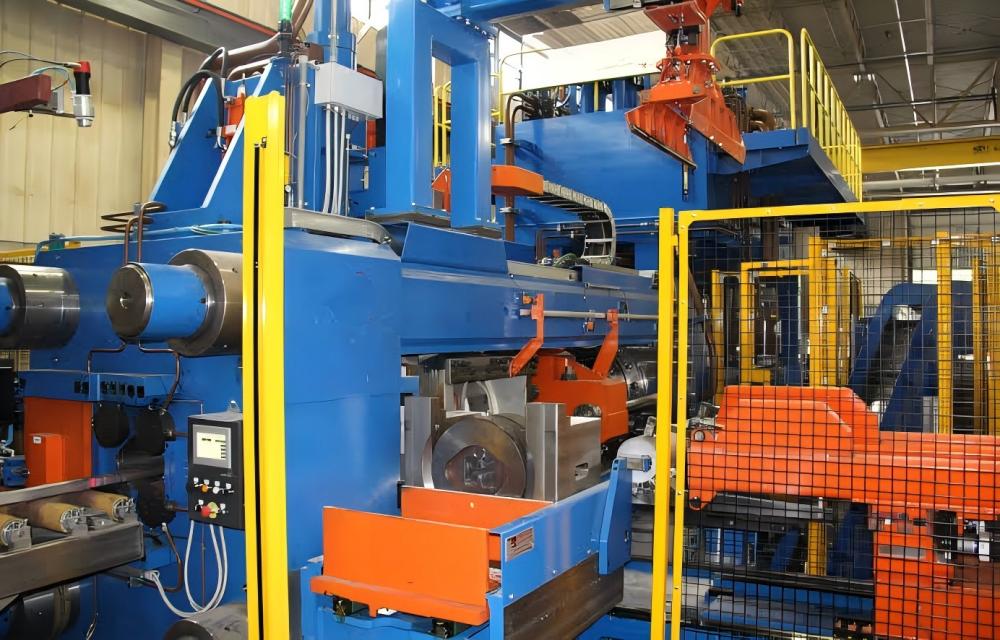
While often categorized under transport, EVs are a vital part of the renewable energy ecosystem. The production of EV battery trays and housings is a primary application for large-tonnage extrusion presses. These components must be incredibly strong to protect the battery in the event of a collision, yet light enough to maximize the vehicle’s range. Extruded profiles allow for the integration of internal cooling channels directly into the battery frame, a feat of engineering that simplifies assembly and improves thermal management.
Hydrogen Storage and Distribution
As hydrogen emerges as a clean fuel source, the need for specialized storage and transport infrastructure grows. Extruded aluminium pipes and connectors are being developed to handle high-pressure hydrogen. The ability of the extrusion press to maintain consistent wall thickness and structural integrity is paramount in these high-stakes applications, where any material failure could lead to significant safety risks.
Material and Process Requirements for High-Performance Components
Alloy Selection: The 6000 Series Dominance
For renewable energy applications, the 6000 series aluminium alloys (particularly 6061, 6063, and 6082) are the industry standard. These alloys offer an excellent balance of extrudability, strength, and corrosion resistance. In solar mounting, 6005A or 6061 is often preferred for its higher structural strength, while 6063 is used for frames where surface finish and intricate detail are more important. The extrusion press must be capable of handling the specific flow stresses of these alloys at various temperatures.
Precision and Tolerances
Renewable energy components often require tight tolerances to ensure seamless assembly in the field. For instance, solar mounting rails must align perfectly over hundreds of meters. This requires an extrusion press with a highly stable ram and precise control over the extrusion speed. Variations in speed can lead to dimensional inaccuracies or surface defects that compromise the component’s structural integrity. Modern CNC-controlled presses ensure that every millimeter of the profile meets the exact specifications required.
Thermal Management and Quenching
The mechanical properties of the extruded profile are determined not just by the press, but by the cooling process immediately following extrusion. For renewable energy components, achieving the correct “temper” (such as T5 or T6) is critical. This involves precise water or air quenching as the profile exits the die. The extrusion line must be equipped with sophisticated cooling tables that prevent warping and ensure the material reaches its maximum potential strength.
Surface Treatment Compatibility
Components used in outdoor renewable energy installations are subject to harsh weather, UV radiation, and sometimes salt spray in offshore wind farms. The extruded profiles must be suitable for subsequent anodizing or powder coating. The extrusion process must produce a clean, smooth surface free of die lines or pick-up, as any surface imperfection can lead to coating failure and subsequent corrosion.
Recommended Machine Configuration for Renewable Energy Production
Tonnage and Press Capacity
The size of the components dictates the required press tonnage. For standard solar frames, a 1000T to 1450T press is often sufficient. However, for EV battery trays or large-scale wind turbine components, manufacturers typically require 2500T, 3600T, or even 5000T presses. HARSLE offers a range of tonnages to suit these diverse needs, ensuring that the press has enough power to push the alloy through complex dies without straining the hydraulic system.
Advanced Hydraulic and Servo Systems
Energy efficiency is a core value in the renewable energy sector, and the machinery used to build it should reflect that. Modern extrusion presses utilize servo-driven hydraulic pumps. Unlike traditional pumps that run at full speed constantly, servo systems adjust the motor speed based on the actual demand of the extrusion cycle. This can reduce energy consumption by up to 30-50%, significantly lowering the carbon footprint of the manufacturing facility.
PLC and Control Systems
A high-quality extrusion press must be equipped with a robust control system, such as those from Siemens or Schneider. These systems allow operators to program and store “recipes” for different profiles. For renewable energy components, where consistency is key, the ability to replicate the exact pressure, speed, and temperature settings for every batch is invaluable. Real-time monitoring and data logging also assist in quality control and predictive maintenance.
Handling and Post-Extrusion Equipment
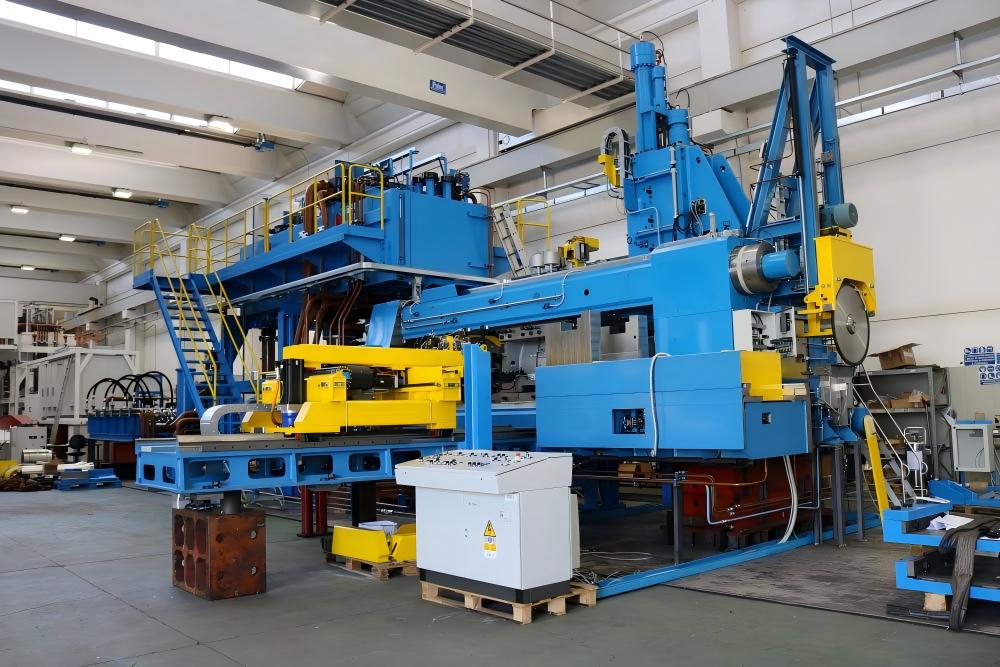
The press is only one part of the equation. A complete production line for renewable energy components should include:
- Billet Heating Furnace: Induction or gas-fired furnaces that ensure the aluminium billet is at the optimal temperature for extrusion.
- Automated Pullers: To maintain tension on the profile as it exits the press, preventing twisting.
- Cooling Tables: Equipped with high-velocity fans or water spray systems for precise quenching.
- Stretching Machines: To straighten the profiles and relieve internal stresses.
- Precision Saws: For cutting profiles to the exact lengths required for solar or EV assembly.
The Workflow: From Billet to Renewable Component
Step 1: Billet Preparation and Heating
The process begins with an aluminium log or billet. This billet is cut to size and heated in a furnace to a temperature between 400°C and 500°C. This makes the metal soft enough to be pushed through the die but keeps it below its melting point to maintain structural control.
Step 2: The Extrusion Stroke
The heated billet is placed into the press container. A hydraulic ram then pushes a dummy block against the billet, forcing the metal through the precision-engineered die. The shape of the die determines the final profile of the component. For renewable energy, these dies are often multi-hollow to create complex internal structures for cooling or strength.
Step 3: Quenching and Cooling
As the profile emerges from the die, it is rapidly cooled. This “quenching” process freezes the alloying elements in place, which is essential for achieving the required hardness. Depending on the alloy and the component’s end-use, this may involve air fans, water mists, or full water baths.
Step 4: Stretching and Straightening
Once cooled, the long profiles are moved to a stretching table. Mechanical grippers pull the profile from both ends, straightening any minor bends and increasing the yield strength of the material through work hardening. This step is vital for long solar rails that must remain perfectly straight over their entire length.
Step 5: Cutting and Aging
The profiles are cut to the customer’s specified lengths. Finally, they are placed in an aging oven. This process, known as precipitation hardening, involves heating the profiles to a lower temperature for several hours. It allows the alloying elements to form fine particles within the aluminium matrix, significantly increasing the final strength of the component.
Productivity Benefits of Modern Extrusion Presses
Material Efficiency and Waste Reduction
One of the primary ways aluminium extrusion presses support renewable energy component production is through material efficiency. Extrusion is a “near-net-shape” process, meaning the final part is produced with very little scrap. Any scrap that is produced (such as the butt end of the billet) is 100% recyclable and can be remelted into new billets, creating a circular manufacturing loop that aligns with green energy principles.
Design Flexibility for Complex Geometries
Extrusion allows engineers to place metal exactly where it is needed for strength while hollowing out areas that don’t require it. This leads to lighter components, which is essential for reducing the structural load on roofs (for solar) or increasing vehicle efficiency (for EVs). The ability to integrate features like screw ports, snap-fit joints, and cooling channels directly into the profile reduces the need for secondary operations like drilling or welding.
High-Volume Production Capability
Modern presses are designed for 24/7 operation. With automated billet loading and profile handling, a single press can produce thousands of meters of solar framing or hundreds of EV battery components per day. This scalability is necessary to meet the rapid growth of the renewable energy market and helps drive down the cost of green technology through economies of scale.
Long-Term Durability of End Products
The high pressure and controlled cooling of the extrusion process result in a uniform grain structure within the metal. This makes the finished components exceptionally durable and resistant to fatigue. For renewable energy installations designed to last 25-30 years in harsh environments, this inherent material quality is a significant advantage over other manufacturing methods.
Case Example: Solar Mounting System Production
A leading manufacturer of utility-scale solar mounting systems recently upgraded their production facility with a HARSLE 2000T aluminium extrusion press. Previously, they struggled with inconsistent tolerances on their 6-meter mounting rails, leading to delays during field installation. By implementing a press with advanced PLC controls and a high-precision servo-hydraulic system, they achieved several key improvements.
First, the dimensional variance was reduced by 60%, ensuring that every rail fit perfectly into the mounting brackets without manual adjustment. Second, the integrated water-quench system allowed them to use 6005A alloy more effectively, reaching T6 temper consistently and allowing for a thinner wall design that reduced total aluminium usage by 12% without sacrificing strength. Finally, the energy-saving servo motors reduced the factory’s electricity bill by 28%, directly contributing to their corporate sustainability goals. This case illustrates how the right machinery can transform both the quality of the product and the profitability of the manufacturer.
Frequently Asked Questions (FAQ)
What is the best aluminium alloy for solar panel frames?
The 6063 alloy is the most common choice for solar panel frames due to its excellent surface finish and good strength. For the mounting rails that support the panels, 6061 or 6005A is often used because they offer higher structural load-bearing capabilities.
How does an extrusion press contribute to EV battery safety?
Extrusion presses allow for the creation of multi-chambered profiles for battery trays. These chambers act as “crumple zones” in the event of a crash, absorbing energy and protecting the battery cells from puncture. Additionally, integrated cooling channels help prevent thermal runaway.
What maintenance is required for an extrusion press in a high-volume environment?
Regular maintenance is crucial. This includes monitoring hydraulic oil cleanliness, checking the alignment of the ram and container, inspecting the heating elements in the billet furnace, and ensuring the die is properly cleaned and polished between runs. Predictive maintenance software can help identify potential issues before they cause downtime.
Can an extrusion press handle recycled aluminium?
Yes, aluminium extrusion presses are excellent for working with recycled material. As long as the recycled billet meets the chemical composition requirements for the desired alloy, the extrusion process and the quality of the final component remain the same.
Conclusion: Partnering with HARSLE for a Greener Future
The transition to renewable energy is a massive undertaking that requires the best tools available. As we have explored, aluminium extrusion presses support renewable energy component production by providing the precision, efficiency, and versatility needed to build the infrastructure of tomorrow. From the frames that hold our solar panels to the trays that protect EV batteries, extruded aluminium is the backbone of the green revolution.
HARSLE is committed to providing high-performance extrusion solutions that help manufacturers meet the rigorous demands of the renewable energy sector. Our machines are engineered for durability, precision, and energy efficiency, ensuring that your production line is as sustainable as the products it creates. If you are looking to upgrade your manufacturing capabilities or enter the renewable energy market, HARSLE has the expertise and equipment to support your journey.
Ready to enhance your production capacity? Contact HARSLE today to learn more about our aluminium extrusion presses and how we can help you lead the way in renewable energy component manufacturing.


