
Twin-Shaft Industrial Primary Shredder
Double-Shaft Shredder Twin-Shaft Tearing Power
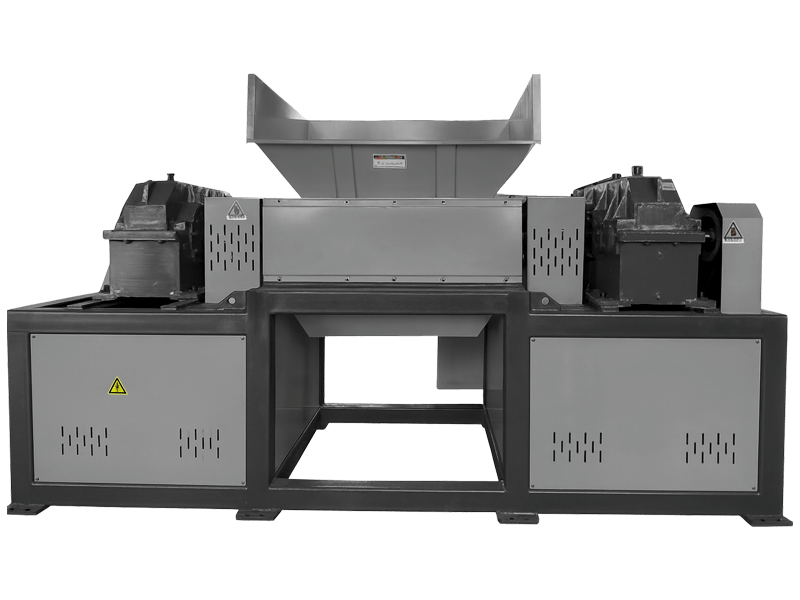
A heavy-duty industrial shredder built around two counter-rotating, low-speed high-torque shafts fitted with interlocking hook cutters — engineered for primary size reduction of tires, scrap metal, white goods, plastic drums, wood pallets, mattresses, e-waste, and bulky municipal solid waste, with self-feeding action and unmatched tolerance to contraries.
200–650 mm
Shaft Diameter Range
22–600 kW
Total Installed Drive Power
30–200 mm
Coarse Strip Output Size
10–30 RPM
Ultra Low-Speed High-Torque
Product Overview
Why Recyclers Specify a Double-Shaft Shredder
When the size-reduction goal is to break open, tear apart, and liberate composite materials from bulky, tough, or contaminated feedstock — tires, white goods, scrap metal, plastic drums, wood, mattresses, MSW — the double-shaft shredder is the industry standard. Its two counter-rotating, low-speed high-torque shafts with interlocking hook cutters deliver self-feeding tearing power that no single-rotor or hammer mill can match.
Twin Counter-Rotating Shafts
Two synchronized hex or splined shafts rotate inward at different speeds, creating a positive shear-and-tear action. Material is gripped by hook cutters and torn between the shafts — no ram, no screen, no operator skill required.
Interlocking Hook Cutters
Bolted hook-shaped cutters mounted on each shaft mesh into the gaps of the opposite shaft. The hook profile grabs the feedstock on contact and drags it down into the cutting zone — providing the self-feeding behavior that defines the twin-shaft architecture.
Ultra Low-Speed, Extreme Torque
Operating at just 10–30 rpm, the planetary gearbox multiplies motor torque dramatically. This shears tire steel cord, copper cable, sheet metal, and demolition timber with minimal dust, fines, heat, and noise compared with high-speed alternatives.
Heavy-Duty Welded Steel Frame
A reinforced, fully welded steel structure with thick wear plates absorbs the shock loads inevitable when shredding tires, white goods, drums, and mixed-metal scrap — supporting continuous-duty operation in 24/7 recycling plants and metal yards.
Replaceable Cutters & Spacers
Individual hook cutters and spacers are bolted onto the shafts and can be re-positioned, sharpened, or replaced one at a time without removing the shafts. Modular scrapers and cleaning fingers are also replaceable, dramatically lowering wear-part downtime.
PLC Auto-Reverse Logic
An integrated PLC monitors motor amperage and gearbox load on both drives. On overload, the shafts automatically reverse to clear the obstruction, then resume forward operation — dramatically reducing operator intervention on real-world contaminated feedstock.
Technical Data
Representative Specifications
The figures below represent typical configuration ranges for industrial double-shaft shredders deployed in tire, scrap metal, white-goods, plastic, wood, e-waste, and bulky MSW pre-shredding. Final specifications depend on feedstock density, hardness, contamination level, target output strip size, and downstream processing requirements.
| Model | Rotor Size | Cutter Count | Motor Power | Output Size | Capacity |
|---|---|---|---|---|---|
| ARZIR DS-1000 | 1000mm x 800mm | 80 pieces | 400 kW | 50–200 mm | 5–15 t/h |
| ARZIR DS-1500 | 1500mm x 1200mm | 120 pieces | 630 kW | 60–250 mm | 10–25 t/h |
| ARZIR DS-2000 | 2000mm x 1500mm | 160 pieces | 900 kW | 80–300 mm | 15–35 t/h |
| ARZIR DS-2500 | 2500mm x 2000mm | 200 pieces | 1200 kW | 100–400 mm | 20–50 t/h |
Operating Cycle
How a Double-Shaft Shredder Works
A double-shaft shredder coordinates four core sub-systems — large-volume feed hopper, two counter-rotating shafts with hook cutters, twin planetary gearbox drives, and discharge zone — to convert bulky, contaminated, oversized feedstock into a coarse, liberated material stream ready for downstream separation, granulation, or fuel preparation.
01
Bulk Feeding
Material is loaded directly into the wide-open hopper by grab, conveyor, or wheel loader — no metering or pre-sorting required. The hopper geometry funnels feedstock straight onto the two shafts beneath.
02
Self-Feeding Hook Engagement
The two counter-rotating shafts grip the feedstock via their hook-shaped cutters and pull it inward and downward. No hydraulic ram is required — the rotational geometry creates a positive, continuous self-feeding action.
03
Tearing & Shearing Action
As the cutters intermesh, the feedstock is simultaneously sheared between cutter edges and torn apart by the differential rotation of the two shafts. Composite materials such as tires, drums, and white goods are liberated into their constituent fractions.
04
Discharge & Reverse Logic
Coarse strips and chunks fall directly onto a discharge conveyor below the shafts. The PLC monitors motor amperage and gearbox load; on overload it auto-reverses both shafts to clear contraries, then resumes forward operation.
Feedstock
Materials Processed by a Double-Shaft Shredder
A double-shaft shredder is the universal primary machine for tough, bulky, and oversized feedstock that no other shredder geometry can handle in a single pass — from whole tires and white goods to scrap metal, plastic drums, demolition timber, mattresses, and bulky municipal waste.

Whole Tires & OTR

White Goods & Appliances
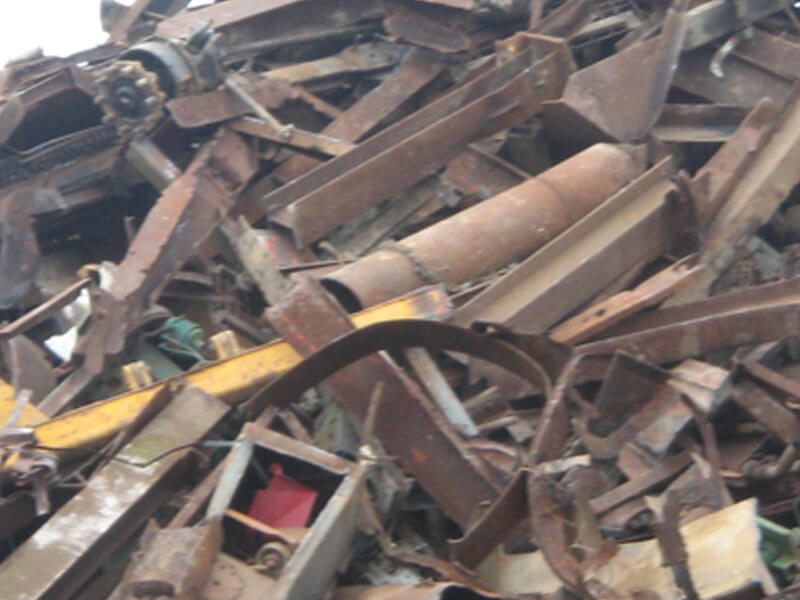
Scrap Metal & Light Iron

Plastic Drums & IBCs
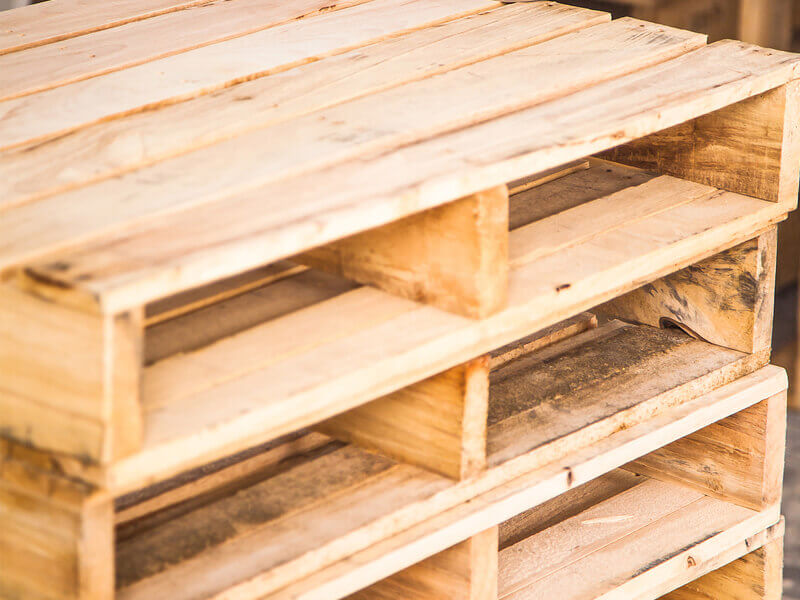
Wood Pallets & Demolition

Mattresses & Sofas

Large E-Waste & PCBs
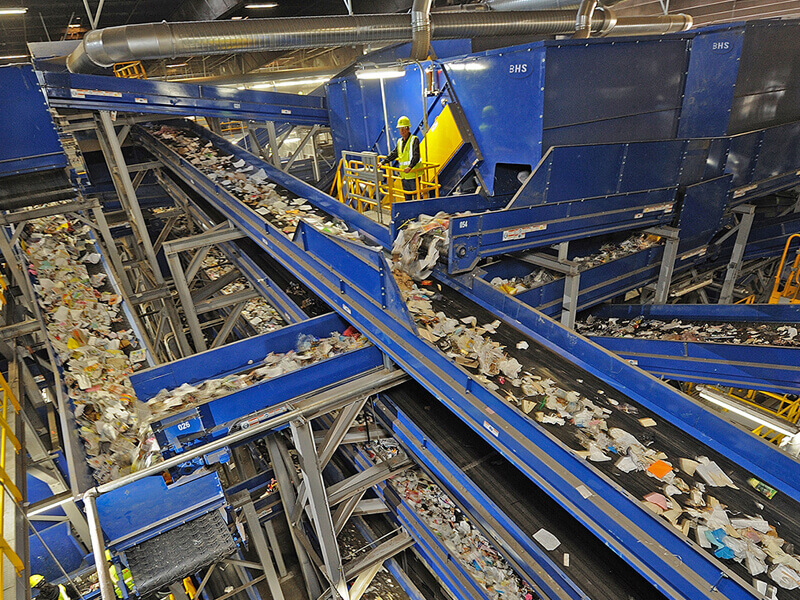
Bulky MSW & Commercial Waste
Deployment Context
Where Double-Shaft Shredders Add Value
Double-shaft shredders are deployed wherever the operational requirement is to break open, liberate, or radically reduce tough and bulky feedstock — typically as the primary stage ahead of magnetic separation, eddy-current separation, secondary granulation, baling, or fuel preparation. Their tearing power and tolerance to contraries make them the workhorse of metal yards, tire recyclers, and waste-management facilities.
Tire & Rubber Recycling
Primary shredding of whole passenger, truck, and OTR tires into 50–150 mm shreds suitable for civil-engineering aggregate, tire-derived fuel, or feed for downstream rubber granulators and cryogenic mills.
Scrap Metal & Light Iron Yards
Reducing light-gauge ferrous and non-ferrous scrap, sheet metal offcuts, cable bundles, and pressed packs into a furnace- or bale-friendly format with consistent bulk density for melt charge or downstream separation.
White Goods & WEEE
Pre-shredding washing machines, refrigerators, dryers, and large appliances ahead of magnetic, eddy-current, and density-based separation lines for steel, copper, aluminum, and plastic recovery.
End-of-Life Vehicles & ASR
Shredding stripped car bodies, vehicle parts, and automotive shredder residue (ASR) for downstream sorting and recovery — gentle on the gearboxes thanks to ultra low-speed operation and auto-reverse logic.
Plastic Drum & IBC Reduction
Tearing open contaminated HDPE drums, IBC totes, and big bags ahead of washing and granulation lines — releasing residual liquid, breaking tamper-evident enclosures, and reducing volume for transport.
Wood & Demolition Waste
Primary reduction of railway sleepers, timber beams, demolition wood, treated pallets, and forest residues ahead of de-nailing, screening, and downstream chipping or biomass boiler feed.
MSW & Bulky Waste Pre-Shredding
Opening waste bags, mattresses, sofas, carpets, and oversized commercial waste at the front of MRF, RDF, and waste-to-energy lines — improving downstream sorter performance and conveyor throughput.
Industrial Product & IP Destruction
Destroying expired stock, off-spec product, contraband, and confidential prototypes — including hard drives and full assemblies — protecting brand IP while delivering downstream-ready material for resource recovery.
Engineering Advantages
Why the Twin-Shaft Configuration Outperforms Alternatives
Compared with single-shaft shredders, hammer mills, and high-speed granulators, the double-shaft architecture delivers unmatched tearing torque on bulky and tough feedstock — at lower energy per tonne, with cleaner liberation of composites, and with significantly higher tolerance to tramp metal and unsorted contraries.
01
Self-Feeding Twin-Shaft Geometry
Counter-rotating hook cutters pull material in automatically — no hopper ram, no metering belt, no operator skill required. The machine handles whole tires, full drums, big bags, and oversized waste with a simple bulk drop-feed.
02
Ultra Low-Speed, Extreme Torque
Operating at just 10–30 rpm, the planetary gearboxes deliver immense cutting torque — capable of shearing tire steel cord, copper cable, sheet steel, and treated timber while keeping dust, fines, heat, and noise to a minimum.
03
Composite Material Liberation
The simultaneous tear-and-shear action separates composite waste — rubber from steel cord in tires, metal from plastic in white goods, wire from insulation in cable — preparing each fraction for efficient downstream separation.
04
Modular Hook Cutter System
Individually bolted hook cutters and spacers can be re-positioned, re-sharpened, or replaced one at a time — without removing the shafts. Cutter geometry can be tuned to feedstock, dramatically lowering wear-part downtime and life-cycle cost.
05
Auto-Reverse & Overload Protection
The PLC continuously monitors motor amperage and gearbox load; on overload, the shafts auto-reverse to clear the contrary, then resume forward operation — typically without operator intervention or unplanned line stops.
06
Exceptional Contraries Tolerance
The reinforced welded frame, oversized shaft bearings, planetary gearboxes, and torque-limiting couplings absorb the shock loads created by tramp metal, fasteners, springs, and concrete — keeping uptime high on real-world contaminated feedstock.
Use Cases
Application Scenarios
Double-shaft shredders sit at the front of the size-reduction stage in industrial recycling plants, where their job is to break open, liberate, and pre-reduce feedstock that no other shredder geometry can swallow in one pass.
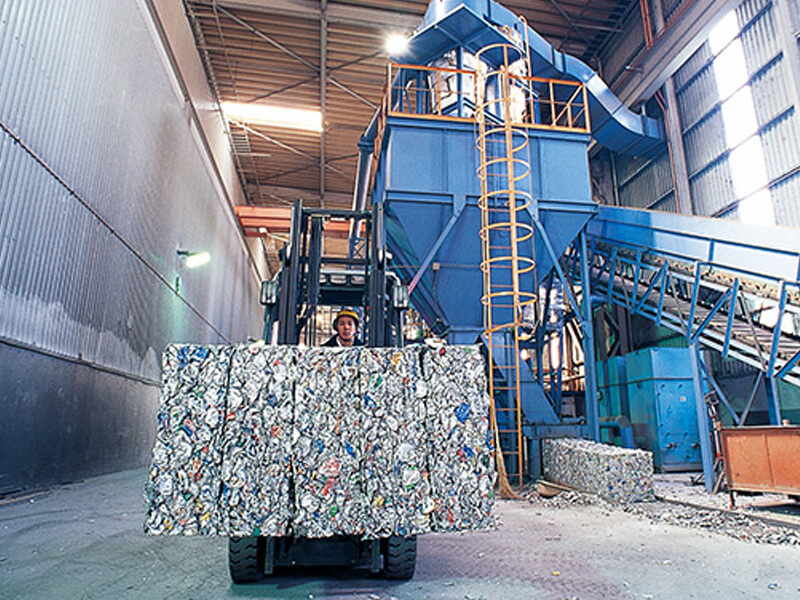
Metal Recycling Operations
Shredding light-gauge ferrous and non-ferrous scrap, cable, sheet metal, and white goods ahead of magnetic and eddy-current separation lines for steel, copper, and aluminum recovery.

Tire Recycling Plants
Primary shredding of whole passenger, truck, and OTR tires into shreds suitable for civil-engineering aggregate, TDF, or feed for downstream rubber granulation and cryogenic devulcanization lines.

Wood Processing Facilities
Primary reduction of railway sleepers, timber beams, demolition wood, treated pallets, and forest residues ahead of de-nailing, screening, and downstream chipping or biomass boiler feed.
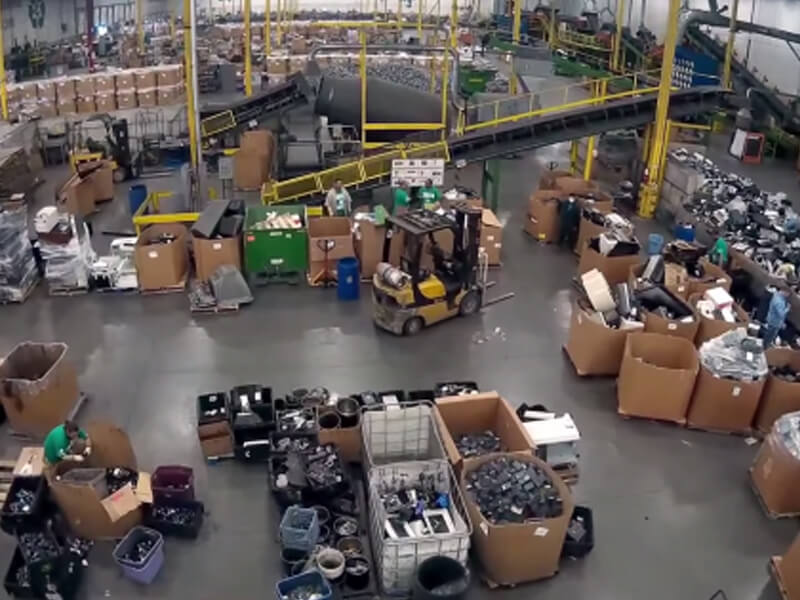
E-Waste Processing Centers
Pre-shredding refrigerators, washing machines, large electronics, and end-of-life appliances to liberate steel, copper, aluminum, and plastic fractions ahead of multi-stage downstream sorting.
Knowledge Base
Frequently Asked Questions
What is a double-shaft shredder?
A double-shaft shredder, also called a twin-shaft or dual-shaft shredder, is an industrial size-reduction machine that uses two parallel, counter-rotating shafts fitted with interlocking hook-shaped cutters. Material dropped into the cutting chamber is gripped, torn, and sheared between the two rotating shafts. The counter-rotating action self-feeds the machine without a ram, while the very low rotational speed (typically 10–30 rpm) and extreme torque make it ideal for primary shredding of tough, bulky, or oversized waste such as tires, scrap metal, white goods, plastic drums, wood pallets, and municipal solid waste.
What materials can a double-shaft shredder process?
Typical feedstock for a double-shaft shredder includes whole and bias-cut tires, OTR and truck tires, ferrous and non-ferrous scrap, white goods such as washing machines and refrigerators, end-of-life electronics and large e-waste, aluminum and steel sheet, copper cable, plastic drums, IBC totes, big bags, plastic lumps and purgings, wood pallets and demolition timber, mattresses, paper bales, cable bundles, oversized municipal solid waste, and commercial and industrial bulky waste destined for RDF/SRF preparation.
How does a double-shaft shredder differ from a single-shaft or four-shaft shredder?
A single-shaft shredder uses one rotor working against a fixed counter-knife and a screen, producing a uniform, screen-controlled particle size — ideal for finishing or secondary reduction. A four-shaft shredder adds a second pair of shafts and a screen for fine, uniform secondary output. A double-shaft shredder uses two counter-rotating shafts with interlocking hook cutters and no screen, delivering coarse, irregular strips at very high torque — making it the preferred primary or pre-shredder for tough, bulky, contaminated, or unsorted feedstock.
What output particle size does a double-shaft shredder produce?
Without a screen, a double-shaft shredder produces coarse, irregular strips and chunks typically in the 30–200 mm range, governed by the cutter width, hook geometry, and shaft spacing. The output is intentionally coarse — designed to liberate composite materials, break open sealed containers, and prepare bulky waste for downstream finer reduction by single-shaft shredders, granulators, or hammer mills. Optional screens can be fitted under the rotors when more uniform output is required.
What shaft size and motor power range is typical?
Industrial double-shaft shredders typically use shaft diameters between 200 mm and 650 mm and cutting chamber lengths between 600 mm and 3000 mm. Total installed drive power ranges from 22 kW on small electronics shredders up to 600 kW on heavy tire and metal shredders, usually delivered by two synchronized motor-gearbox sets — one per shaft. Rotational speed is intentionally very low, in the 10–30 rpm range, to maximize tearing torque and minimize fines, dust, heat, and noise.
Why does a double-shaft shredder not need a hopper ram?
The two counter-rotating shafts pull feedstock down into the cutting chamber automatically. The hook profile of the cutters grips the material on contact, and the inward rotation of both shafts creates a positive self-feeding action — eliminating the need for a hydraulic ram, simplifying the hopper, and reducing maintenance. This also makes the double-shaft shredder ideal for irregular, bulky, or tangling materials that are difficult to push with a ram.
Are the cutters on a double-shaft shredder replaceable?
Yes. Modern double-shaft shredders use individual hook-shaped cutters bolted onto two hex or splined shafts, with replaceable spacers between them. Each cutter can be removed, sharpened, or re-positioned individually without removing the shafts. Side-mounted scrapers and cleaning fingers prevent material wrapping and are also replaceable as wear parts. This modular cutter design extends shaft life and dramatically reduces blade-related downtime.
Can a double-shaft shredder process whole tires and scrap metal?
Yes. Double-shaft shredders are the industry-standard primary machine for whole-tire shredding — including passenger, truck, and OTR tires — producing tire shreds suitable for civil-engineering use or as feed for finer rubber granulation. They are equally suited to ferrous and non-ferrous scrap, including light pressings, cable bundles, white goods, sheet metal, and aluminum profiles, where the high-torque tearing action liberates composite materials ahead of magnetic and eddy-current separation.
How does the double-shaft shredder protect itself from tramp metal and overload?
An integrated PLC continuously monitors motor amperage, gearbox temperature, and shaft load on both drives. When a non-shreddable contrary or tramp metal is detected, the controller automatically reverses both shafts to clear the obstruction, then resumes forward operation — typically without operator intervention. Shear-pin or hydraulic torque-limiting couplings provide a final mechanical safeguard for the gearbox and motor on extreme overloads.
What maintenance does a double-shaft shredder require?
Routine maintenance includes daily visual inspection of the cutting chamber and scrapers, weekly inspection of cutter and spacer wear, periodic re-sharpening or rotation of hook cutters, gearbox oil sampling, lubrication of shaft bearings, hydraulic oil filtration on the cooling/power unit, motor amperage trend analysis, coupling and shear-pin checks, and electrical control system tests. Following hours-based service intervals maximizes cutter life and protects the gearboxes, motors, and shaft bearings.
Get the Right Machine for Your Operation
Tell us about your material type, throughput requirements, and site conditions — our engineers will recommend the ideal equipment and provide a competitive quote within 24 hours.
- Response within 24 hours
- Free technical consultation & quotation
- ISO-certified factory & strict quality control
- Shipped to 100+ countries worldwide