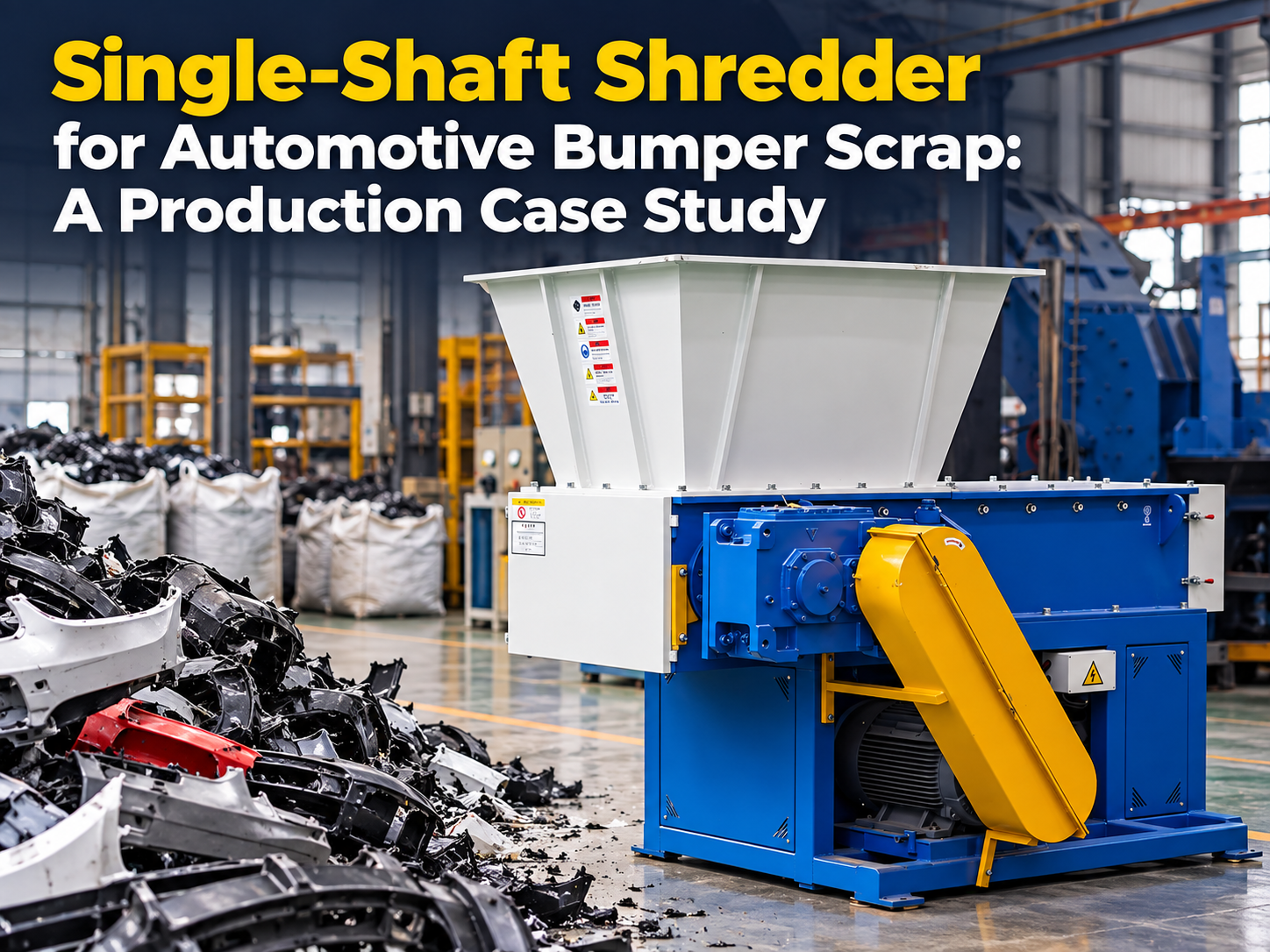
Single-Shaft Shredder for Automotive Bumper Scrap: A Production Case Study

Introduction: The Challenge of Automotive Bumper Recycling
In the modern automotive industry, the volume of plastic waste generated from bumper production and end-of-life vehicle dismantling is staggering. Automotive bumpers, typically composed of complex thermoplastic polyolefins (TPO) or polypropylene (PP) blends, present a unique challenge for recycling facilities. They are bulky, durable, and often contaminated with paint or metal inserts, making them difficult to process using standard grinding equipment. This is where the HARSLE Single-Shaft Shredder for Automotive Bumper Scrap: A Production Case Study becomes essential for manufacturers and recyclers looking to optimize their circular economy efforts.
The primary goal of any automotive recycling operation is to reduce the volume of scrap material while maintaining the integrity of the plastic polymers for future use. Traditional shredders often struggle with the high-impact resistance of bumper materials, leading to frequent downtime and excessive wear on cutting tools. By implementing a specialized single-shaft shredder, facilities can achieve a uniform particle size, which is critical for downstream processes such as granulation, washing, and extrusion.
This article explores a real-world production case study involving a mid-sized automotive parts manufacturer that integrated HARSLE shredding technology into their scrap management line. We will examine the technical hurdles they faced, the specific machinery configuration chosen, and the measurable improvements in production efficiency and material recovery rates. Understanding these dynamics is crucial for any industrial operation aiming to turn waste into a valuable secondary raw material.
As we delve into this case study, we will also address the broader implications of using high-torque shredding technology in metal fabrication and plastic recycling environments. The transition from manual handling of bulky scrap to automated, high-capacity shredding represents a significant leap in operational safety and cost-effectiveness. Let us examine the key considerations that drive successful implementation.

Key Considerations for Shredding Automotive Scrap
When selecting a shredder for automotive bumper scrap, the first consideration is the material’s physical properties. Bumpers are designed to absorb impact, meaning they are inherently tough and flexible. A standard shredder might simply deform the material rather than cutting it. The HARSLE single-shaft design utilizes a high-torque, low-speed rotor that provides the necessary force to shear through these resilient polymers without overheating the material, which is vital for preserving the chemical properties of the plastic.
Another critical factor is the presence of contaminants. Automotive bumpers often feature metal clips, brackets, and sensors. A robust shredder must be equipped with a sophisticated control system that can detect non-shreddable items and automatically reverse the rotor to prevent damage. This ‘intelligent’ shredding capability is a hallmark of modern industrial machinery and significantly reduces the risk of catastrophic equipment failure during peak production hours.
Throughput requirements also dictate the machine’s design. In a high-volume production environment, the shredder must be integrated into a continuous workflow. This involves considering the infeed method—whether it is a conveyor belt, a hydraulic ram, or manual loading—and the discharge method. The case study facility opted for a hydraulic ram-fed system, which ensures consistent pressure against the rotor, maximizing throughput and ensuring that even the most awkward bumper shapes are processed efficiently.
Finally, maintenance and tool longevity must be prioritized. Because automotive plastic is abrasive, the cutting blades must be made from high-grade, wear-resistant alloy steel. The ability to easily rotate or replace these blades without extensive downtime is a major operational advantage. HARSLE’s design philosophy focuses on modularity, allowing maintenance teams to perform routine checks and blade adjustments quickly, keeping the production line moving at maximum capacity.
Technical Details of the HARSLE Shredding Solution
The core of the HARSLE shredding solution in this case study is the heavy-duty rotor assembly. Unlike dual-shaft shredders that rely on tearing, the single-shaft system uses a counter-knife arrangement that creates a clean, scissor-like cut. This results in a more uniform output size, which is essential for the subsequent granulation stage. The rotor is driven by a high-efficiency motor coupled with a planetary gearbox, providing the massive torque required to process thick-walled automotive components.
The screen size is another technical detail that defines the output quality. In this production case, the facility utilized a 40mm screen, which produced a consistent flake size suitable for direct feeding into a secondary granulator. The screen is easily interchangeable, allowing the operator to adjust the output size based on the specific requirements of the downstream recycling process. This flexibility is a key advantage for facilities that handle a variety of plastic scrap beyond just automotive bumpers.
Control systems play a pivotal role in the machine’s performance. The HARSLE shredder is equipped with a PLC-based control panel that monitors motor load, rotor speed, and hydraulic pressure in real-time. If the system detects an overload, it automatically adjusts the ram feed speed to prevent the motor from stalling. This automated feedback loop ensures that the machine operates at its optimal efficiency point, reducing energy consumption and extending the lifespan of the mechanical components.
Safety features are integrated into every aspect of the machine. Emergency stop buttons are positioned at all critical access points, and the shredding chamber is fully enclosed to prevent debris ejection. Furthermore, the machine is designed with a low-noise profile, which is a significant benefit for indoor factory environments. By minimizing noise pollution, the facility was able to maintain a safer and more comfortable working environment for its employees while meeting local noise regulation standards.
Selection Advice: Choosing the Right Equipment
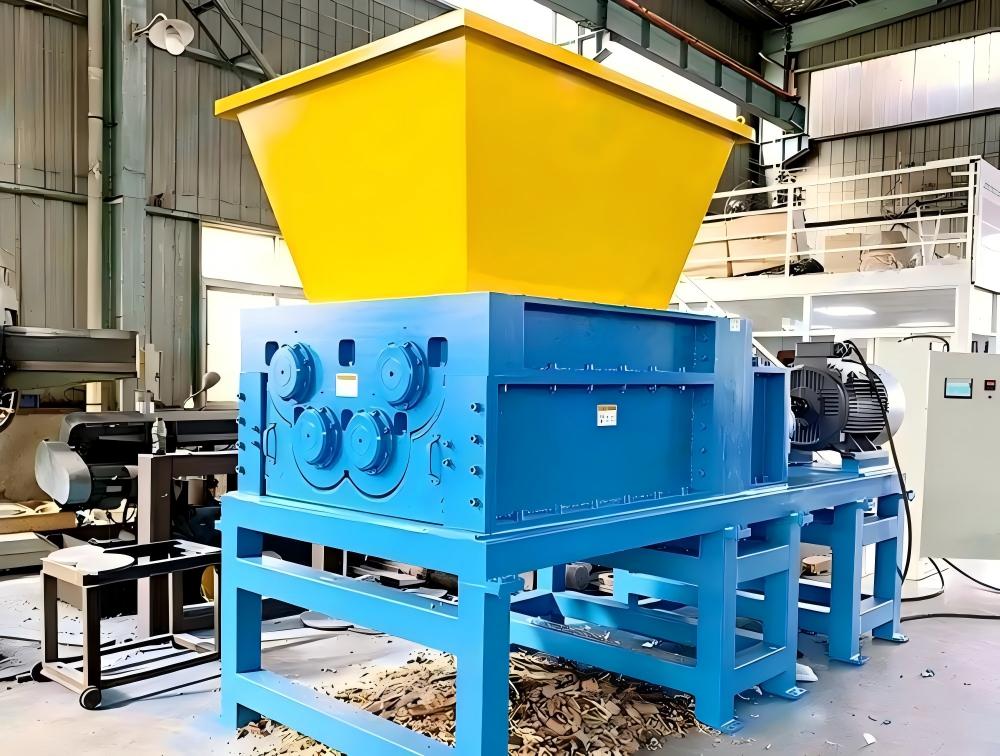
Selecting the right single-shaft shredder for automotive bumper scrap requires a thorough assessment of your current and future production needs. Start by analyzing the volume of scrap generated per shift. If your facility produces several tons of bumper waste daily, a high-capacity model with a wide infeed hopper is non-negotiable. Conversely, for smaller operations, a compact model might offer a better return on investment by reducing energy overheads.
Consider the material composition. Are you processing only bumpers, or are you also dealing with dashboards, interior trim, and other plastic components? If the material mix is diverse, look for a shredder with adjustable rotor speeds and customizable blade configurations. This versatility ensures that your investment remains relevant as your recycling operations evolve and expand to include different types of industrial plastic waste.
The total cost of ownership (TCO) should be your primary metric, rather than just the initial purchase price. Factor in energy efficiency, the cost of replacement blades, and the availability of spare parts. HARSLE provides comprehensive support, including local service technicians and readily available components, which minimizes downtime and ensures that your shredder remains a productive asset for years to come. Always ask for a trial run or a demonstration using your specific scrap material to verify performance before finalizing the purchase.
Finally, evaluate the integration capabilities. A shredder is rarely a standalone solution; it is usually part of a larger system that includes conveyors, magnetic separators, and granulators. Ensure that the shredder you choose has the necessary communication protocols to integrate with your existing PLC or SCADA system. Seamless integration allows for centralized monitoring and control, which is essential for modern Industry 4.0 manufacturing environments.
FAQ: Common Questions About Automotive Shredding
- Q: How often do the blades need to be sharpened?
A: The frequency depends on the volume and type of material. Generally, with automotive bumpers, blades should be inspected every 500-800 operating hours. - Q: Can this shredder handle metal inserts in the bumpers?
A: Yes, the HARSLE single-shaft shredder is designed to handle occasional metal contaminants, but it is recommended to use a magnetic separator for high-volume metal removal. - Q: What is the power consumption of the unit?
A: Power consumption varies by model size and load, but our high-efficiency motors are designed to minimize energy usage during idle and low-load periods. - Q: Is the machine suitable for outdoor installation?
A: While the machine is robust, we recommend an indoor or covered environment to protect the electrical components and control systems from extreme weather. - Q: How does the shredder handle different plastic types?
A: The PLC control system allows for pre-programmed settings that adjust the ram pressure and rotor speed to suit different plastic densities and hardness levels.
Conclusion: The Future of Automotive Recycling
The implementation of a HARSLE single-shaft shredder for automotive bumper scrap is more than just an equipment upgrade; it is a strategic move toward sustainable manufacturing. As the automotive industry faces increasing pressure to reduce its environmental footprint, the ability to efficiently recycle complex plastic components will become a competitive advantage. This case study demonstrates that with the right technology, waste can be successfully converted into high-quality feedstock, closing the loop in the production cycle.
By focusing on high-torque performance, intelligent control systems, and modular design, HARSLE provides a reliable solution for the most demanding recycling applications. The transition to automated shredding not only improves production efficiency but also enhances workplace safety and reduces the long-term costs associated with waste disposal. For manufacturers and recyclers alike, the path forward is clear: invest in robust, scalable machinery that can handle the challenges of modern material science.
As we look to the future, the integration of AI and real-time data analytics into shredding technology will further optimize the recycling process. HARSLE remains committed to innovation, ensuring that our clients have access to the most advanced metal fabrication and recycling equipment on the market. Whether you are managing a small-scale recycling center or a large automotive manufacturing plant, our shredding solutions are designed to deliver consistent, high-performance results that meet the needs of a changing world.
We encourage you to reach out to our technical team to discuss your specific scrap processing requirements. With our extensive experience in industrial machinery, we can help you design a system that maximizes your material recovery rates and supports your sustainability goals. The journey toward a more efficient, circular automotive industry starts with the right equipment—and HARSLE is here to lead the way.