Car Body Baler Not Starting? Key Electrical and Hydraulic Checks to Perform


Introduction: Understanding the Critical Nature of Car Body Baler Downtime
In the high-stakes environment of scrap metal recycling and automotive dismantling, the car body baler serves as the backbone of operational efficiency. When your equipment fails to initiate, it doesn’t just halt production; it creates a bottleneck that ripples through your entire supply chain. A car body baler not starting? Key electrical and hydraulic checks to perform are essential knowledge for any facility manager or maintenance technician looking to minimize downtime and restore productivity quickly.
HARSLE understands that industrial machinery is subject to extreme stress, constant vibration, and harsh environmental conditions. Whether you are dealing with a fully automatic baler or a semi-automatic unit, the failure to start is almost always rooted in a safety interlock, a power supply disruption, or a hydraulic pressure anomaly. This guide is designed to walk you through the systematic process of identifying and resolving these common issues.
Before diving into technical diagnostics, it is imperative to emphasize safety. Working on high-pressure hydraulic systems and high-voltage electrical panels requires strict adherence to Lockout/Tagout (LOTO) procedures. Never attempt to bypass safety sensors or manipulate live electrical components without proper training and protective equipment. By following this structured approach, you can often diagnose the root cause of a non-starting baler without needing an emergency service call.
Key Considerations: Safety and Initial Diagnostics
The first step when your car body baler not starting key electrical hydraulic checks perform is to assess the environment. Often, the machine is not actually broken; rather, it is in a ‘safe’ state that prevents operation. Check the emergency stop (E-stop) buttons located around the perimeter of the machine. It is common for a worker to bump an E-stop, which cuts power to the control circuit, preventing the motor from engaging.
Next, inspect the safety gate interlocks. Modern car body balers are equipped with proximity switches or mechanical limit switches on all access doors and loading chambers. If a door is not perfectly aligned or if a switch has been damaged by falling debris, the PLC (Programmable Logic Controller) will detect an ‘open’ status and inhibit the start command. Ensure all doors are latched securely and that the sensors are free of metal dust and grime.
Environmental factors also play a significant role. If your facility is located in a region with extreme temperature fluctuations, the hydraulic oil viscosity may be too high during cold starts, or the electrical components may be suffering from condensation. Check the control cabinet for signs of moisture or dust buildup, which can cause intermittent shorts or signal interference. A clean, dry, and well-ventilated control panel is vital for the longevity of your baler’s electronics.
Finally, review the HMI (Human Machine Interface) or the indicator lights on the control panel. Most modern balers provide specific error codes that act as a roadmap for troubleshooting. If the screen is blank, the issue is likely upstream in the main power supply. If the screen is active but shows a ‘System Fault’ or ‘Hydraulic Pressure Low’ warning, you have a clear starting point for your investigation.
Technical Details: Electrical Troubleshooting
When the car body baler not starting, the electrical system is the most common culprit. Start by verifying the main power supply. Use a multimeter to check the voltage at the main disconnect switch. Ensure that all three phases are present and balanced. A single-phased motor will often hum or trip the thermal overload relay immediately upon startup, preventing the pump from reaching the necessary RPM.
Examine the thermal overload relays in the motor starter cabinet. If these have tripped, it indicates that the motor is drawing excessive current. This could be caused by a mechanical jam in the baler chamber, a seized hydraulic pump, or a failing motor bearing. Do not simply reset the relay and try again; investigate why the motor was overloaded in the first place. Check the motor windings for insulation resistance if you suspect a motor failure.
The PLC is the brain of the operation. If the PLC is not receiving input signals from the start button or the pressure transducers, the output to the hydraulic solenoid valves will never trigger. Check the input/output (I/O) module lights on the PLC. If you press the start button and the corresponding input light does not illuminate, the issue lies in the wiring between the button and the PLC or the button itself is faulty.
Relays and contactors are mechanical components that wear out over time. The constant vibration of a car body baler can cause wire connections to loosen. Perform a ‘tug test’ on all terminal block connections within the control cabinet. Tighten any loose screws, as high-resistance connections can cause voltage drops that prevent contactors from pulling in fully, leading to chatter and eventual failure.
Technical Details: Hydraulic Troubleshooting
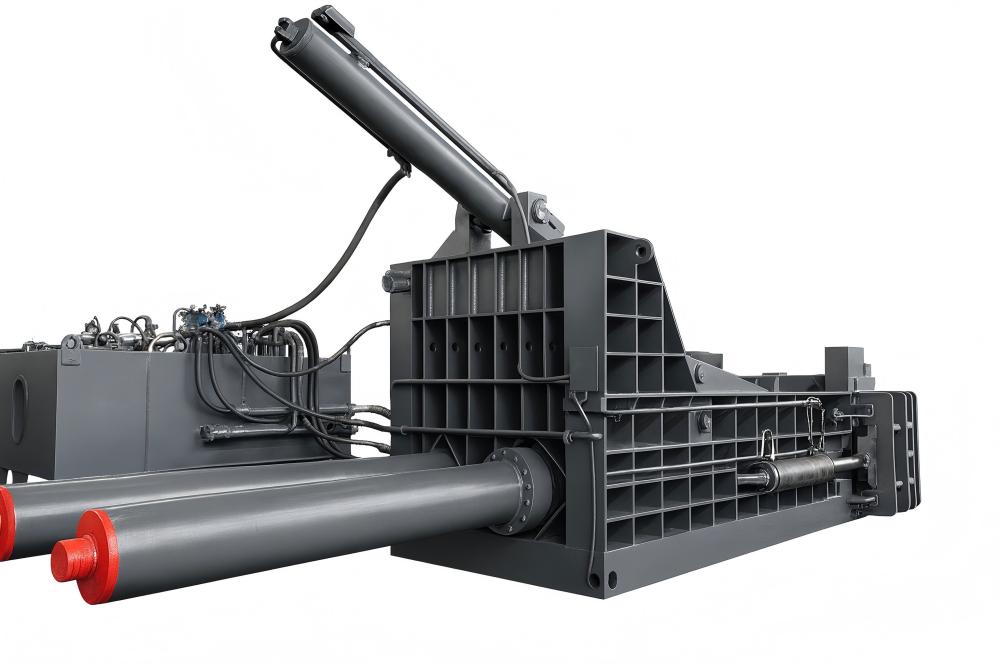
If the electrical system is functioning but the baler still won’t cycle, the hydraulic system is the next area of focus. The most common hydraulic issue is a lack of pressure or a failure to build pressure. Check the hydraulic oil level in the reservoir. If the level is too low, the pump may be cavitating, which can cause severe damage to the pump internals and prevent the system from generating the force required to move the ram.
Inspect the hydraulic pump for unusual noises. A whining or grinding sound is a classic indicator of air in the system or a failing pump. If the pump is running but the ram is not moving, check the solenoid-operated directional control valves. These valves direct the flow of oil to the cylinders. If a solenoid coil has burned out, the valve will not shift, and the oil will simply circulate back to the tank without doing any work.
Pressure relief valves are critical for system safety. If a relief valve is stuck in the open position, the hydraulic fluid will bypass the cylinders and return to the tank, resulting in zero pressure. Conversely, if the system pressure is set too low, the baler may not have enough force to compress the car body. Use a calibrated pressure gauge to verify the system pressure against the manufacturer’s specifications provided in your HARSLE manual.
Finally, consider the condition of the hydraulic hoses and fittings. A ruptured hose or a leaking seal can cause a significant pressure drop. While large leaks are obvious, internal leaks within the cylinder seals can be more insidious. If the ram drifts or fails to hold pressure, the piston seals may be bypassed, requiring a cylinder rebuild. Always ensure that the hydraulic oil is clean and free of contaminants, as metal shavings from the scrap process can easily damage sensitive valve seats.
Selection Advice: Choosing the Right Baler for Your Needs
When you are in the market for a new car body baler, the selection process is just as important as the maintenance. A machine that is undersized for your volume will be pushed to its limits, leading to premature failure of electrical and hydraulic components. Consider the throughput requirements of your facility. A high-capacity scrap yard needs a baler with faster cycle times and more robust structural steel to handle the constant impact of heavy automotive frames.
Look for equipment that features modular design. HARSLE balers are engineered with accessibility in mind, making it easier for your maintenance team to reach hydraulic manifolds and electrical panels. A machine that is difficult to service will inevitably be neglected, leading to more frequent breakdowns. Prioritize models that use standard, globally available components for sensors, relays, and valves, as this significantly reduces lead times for replacement parts.
Consider the automation level. While fully automatic balers offer higher throughput, they also have more complex electrical systems that require a higher level of technical expertise to troubleshoot. If your facility lacks dedicated electrical engineering support, a semi-automatic model might provide a better balance of productivity and ease of maintenance. Always evaluate the availability of technical support and training from the manufacturer.
Lastly, don’t overlook the importance of the hydraulic cooling system. In high-volume operations, hydraulic oil can reach temperatures that degrade its lubricating properties, leading to pump failure. Ensure your baler is equipped with an appropriately sized oil cooler or heat exchanger. Investing in a high-quality cooling system is one of the most effective ways to extend the life of your hydraulic components and prevent the ‘not starting’ issues associated with thermal shutdowns.
FAQ: Common Questions About Car Body Balers
- Q: Why does my baler motor trip the breaker immediately?
A: This is usually due to a mechanical jam, a seized pump, or a short circuit in the motor windings. Check for physical obstructions in the chamber first. - Q: How often should I change the hydraulic oil?
A: Depending on usage, hydraulic oil should be tested every 1,000 to 2,000 hours. If the oil is dark or smells burnt, it must be replaced along with the filters. - Q: Can I bypass a safety interlock to get the machine running?
A: Absolutely not. Bypassing safety interlocks is a major safety violation and can lead to catastrophic injury or death. Always repair the sensor or wiring. - Q: What is the most common cause of hydraulic pressure loss?
A: A stuck pressure relief valve or a failed pump seal are the most frequent culprits. Always verify with a pressure gauge before replacing expensive components. - Q: How do I know if my PLC is faulty?
A: If the PLC has power but no output lights are blinking when they should be, or if it shows a ‘CPU Error’ light, it may need to be reset or replaced.
Conclusion: Proactive Maintenance is the Best Strategy
The frustration of a car body baler not starting is a challenge every scrap yard operator will face eventually. However, by understanding the interplay between the electrical control system and the hydraulic power unit, you can transform a stressful breakdown into a manageable maintenance task. The key is to approach the problem systematically: check the safety interlocks, verify the power supply, inspect the PLC inputs, and finally, test the hydraulic pressures.
HARSLE is committed to providing not just high-performance metal fabrication equipment, but also the knowledge required to keep that equipment running at peak efficiency. Regular inspections, clean working environments, and a proactive approach to replacing worn components will ensure that your baler remains a reliable asset for years to come. Remember, the best way to fix a machine is to prevent it from breaking in the first place.
If you have exhausted these checks and your baler still refuses to start, do not hesitate to contact the HARSLE technical support team. Our experts are ready to assist you with advanced diagnostics and genuine replacement parts to get your operations back on track. Investing time in your maintenance routine today will save you countless hours of downtime tomorrow.