Die Design Basics for Aluminium Extrusion Press Applications: A Comprehensive Engineering Guide

Technical Overview
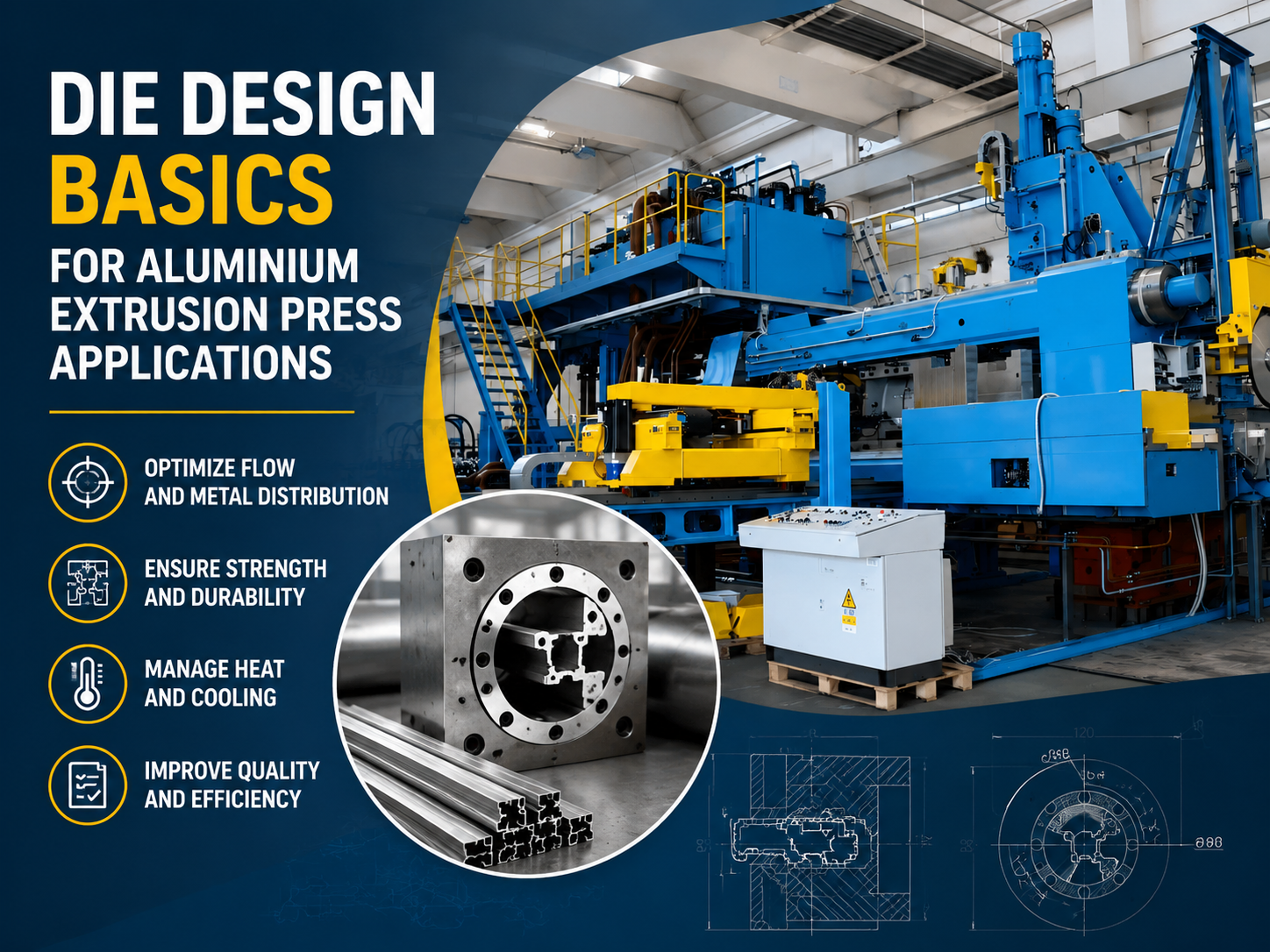
The efficiency of an aluminium extrusion press is fundamentally tied to the precision of its tooling. Die design basics for aluminium extrusion press applications represent the intersection of material science, fluid dynamics, and mechanical engineering. When a billet is forced through a die orifice under extreme pressure, the metal behaves like a highly viscous fluid. Understanding how this metal flows through the die geometry is critical for achieving the desired profile shape, surface finish, and dimensional accuracy required in modern manufacturing.
At HARSLE, we emphasize that the die is not merely a static mold but a dynamic component that must withstand immense thermal and mechanical stress. The design process begins with a thorough analysis of the alloy properties, as different aluminium series exhibit varying flow characteristics. A well-engineered die must account for the friction between the metal and the steel surface, the temperature gradients within the press, and the structural integrity of the die bridge or mandrel.
In the context of modern aluminium extrusion press operations, the die design must also facilitate rapid heat dissipation and uniform metal distribution. If the flow is not balanced, the resulting profile may suffer from twisting, bowing, or uneven wall thickness. Engineers must utilize advanced CAD/CAM software to simulate the extrusion process before the physical steel is ever cut, ensuring that the die geometry compensates for the natural tendency of the metal to flow toward the path of least resistance.
Furthermore, the evolution of extrusion technology has pushed die design toward more complex, multi-hollow profiles. These designs require sophisticated port and bridge configurations that allow the metal to split and re-weld seamlessly within the die chamber. Achieving this weld integrity is a hallmark of high-quality die design, requiring precise control over the pressure chambers and the bearing surface lengths to ensure the metal streams fuse perfectly before exiting the die.
Core Parameters
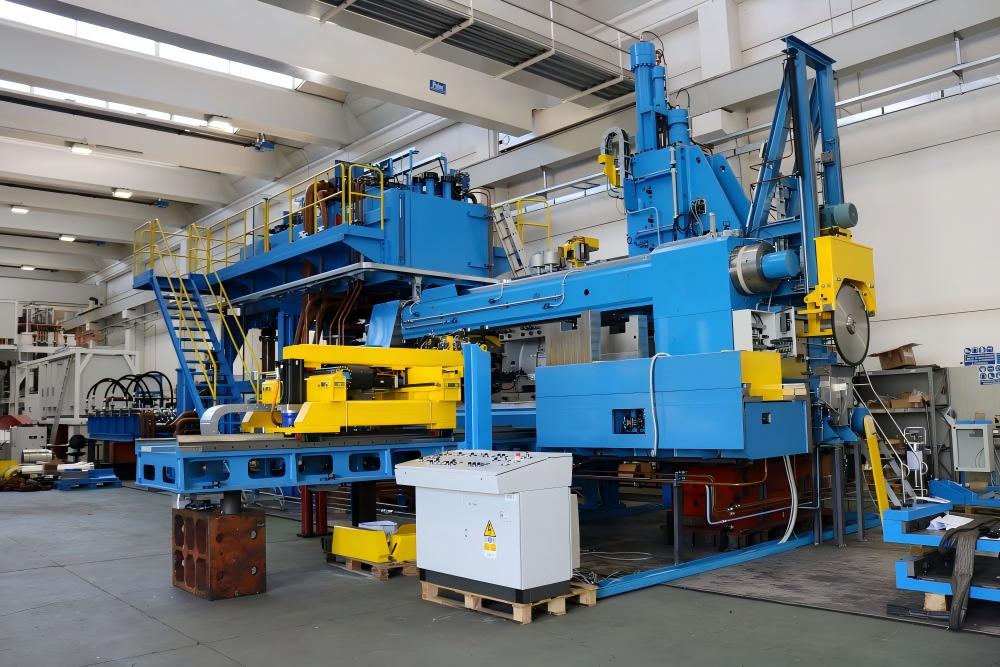
The success of any extrusion project relies on several core parameters that dictate how the aluminium interacts with the die. The first of these is the bearing length. The bearing is the portion of the die that shapes the final profile. By adjusting the length of the bearing surface, engineers can control the speed of the metal flow. Longer bearings increase friction, slowing down the metal, while shorter bearings allow it to flow faster. Balancing these lengths across a complex profile is the primary method for ensuring uniform exit speeds.
Another critical parameter is the die entry angle. The transition from the container diameter to the die orifice must be smooth to prevent dead zones where metal can stagnate and cause surface defects. A well-designed entry angle promotes laminar flow, reducing the pressure required to push the billet through the press. This not only saves energy but also extends the lifespan of the die by reducing the mechanical load on the steel.
The pocket or chamber design is equally vital. The pocket acts as a reservoir that distributes the metal evenly across the die face. In hollow profiles, the pocket must be designed to feed the ports effectively. If the pocket is too shallow, the metal may not distribute correctly, leading to uneven wall thicknesses. If it is too deep, it may increase the force required for extrusion, potentially exceeding the capacity of the aluminium extrusion press.
Finally, the die material and heat treatment are foundational parameters. H13 tool steel is the industry standard due to its excellent hot-work properties and resistance to thermal fatigue. The nitriding process applied to the finished die surface is essential for reducing friction and increasing wear resistance. A properly nitrided die will maintain its dimensional accuracy for significantly longer production runs, directly impacting the profitability of the extrusion operation.
Calculation Method
Calculating the required extrusion pressure is a fundamental step in die design basics for aluminium extrusion press applications. The calculation typically begins with the extrusion ratio, which is the cross-sectional area of the container divided by the cross-sectional area of the profile. A higher extrusion ratio requires significantly more pressure and generates more heat, which must be accounted for in the die design to prevent profile tearing or surface burning.
Engineers must also calculate the flow balance. This involves determining the velocity of the metal at various points across the profile. The formula often involves calculating the perimeter-to-area ratio for different sections of the profile. Sections with a high perimeter-to-area ratio tend to flow slower due to increased friction. By adjusting the bearing lengths based on these calculations, designers can “choke” or “relieve” the flow to ensure the entire profile exits the press at a uniform velocity.
Thermal expansion calculations are also necessary. Because the die operates at elevated temperatures, the steel will expand. The design must account for this expansion to ensure that the final profile dimensions remain within tolerance when the aluminium cools to room temperature. This requires precise knowledge of the thermal expansion coefficients of both the H13 steel and the specific aluminium alloy being extruded.
Lastly, the structural analysis of the die bridge is performed using Finite Element Analysis (FEA). This calculation ensures that the bridge can withstand the massive force of the billet without deflecting or breaking. The stress distribution across the bridge must be analyzed to identify potential failure points, allowing designers to reinforce critical areas before the die is manufactured.
Parameter Table
| Parameter | Description | Impact on Extrusion |
|---|---|---|
| Bearing Length | The length of the parallel surface shaping the profile | Controls metal flow speed and profile straightness |
| Die Entry Angle | The angle at which metal enters the die orifice | Affects pressure requirements and surface finish |
| Extrusion Ratio | Container area / Profile area | Determines force requirements and thermal load |
| Nitriding Depth | Thickness of the hardened surface layer | Influences die wear resistance and friction |
| Bridge Width | Structural support for hollow profiles | Determines weld integrity and structural strength |
Common Engineering Mistakes
One of the most frequent mistakes in die design is the failure to account for metal flow imbalance. When a designer ignores the difference in flow rates between thick and thin sections of a profile, the result is almost always a twisted or bowed product. This necessitates expensive post-extrusion straightening processes, which reduce overall production efficiency and increase scrap rates.
Another common error is the improper design of the die ports. In hollow profiles, the ports must be sized to allow sufficient metal flow while maintaining the structural integrity of the die bridge. If the ports are too small, the pressure required to force the metal through will be excessive, potentially damaging the press. If they are too large, the bridge may deflect, leading to inconsistent wall thicknesses or even catastrophic die failure.
Neglecting the thermal management of the die is also a significant oversight. Aluminium extrusion is a high-temperature process, and the die must be able to dissipate heat effectively. If the die design does not allow for proper cooling, the temperature at the die face can rise to the point where the aluminium begins to stick to the steel, causing surface defects known as “pick-up.”
Finally, many designers fail to consider the maintenance requirements of the die. A die that is difficult to clean or repair will lead to increased downtime. Features such as easy-access ports and modular components can significantly improve the maintainability of the die, ensuring that the aluminium extrusion press remains operational for longer periods between maintenance cycles.
Selection Checklist
When selecting or designing a die for your aluminium extrusion press, use this checklist to ensure all critical factors are addressed:
- Alloy Compatibility: Have you verified that the die design is optimized for the specific aluminium alloy series?
- Extrusion Ratio Check: Does the press have sufficient tonnage to handle the calculated extrusion ratio of the profile?
- Flow Balance Analysis: Have you performed a flow balance simulation to ensure uniform exit velocity?
- Material Selection: Is the H13 steel of the correct grade and heat-treated to the appropriate hardness?
- Nitriding Specification: Has the nitriding process been specified to provide the required wear resistance?
- Bridge Integrity: Has an FEA been conducted to ensure the die bridge can withstand the extrusion pressure?
- Cooling Requirements: Does the die design allow for adequate heat dissipation during high-speed production?
- Maintenance Accessibility: Is the die designed for efficient cleaning and potential repair?
FAQ
What is the most important factor in die design for aluminium extrusion?
The most important factor is flow balance. Ensuring that all parts of the profile exit the die at the same speed is critical for preventing defects like twisting and bowing.
Why is H13 steel preferred for extrusion dies?
H13 steel is a chromium-molybdenum hot-work tool steel that offers excellent toughness, resistance to thermal fatigue, and the ability to maintain its hardness at high operating temperatures.
How does bearing length affect the extrusion process?
Bearing length acts as a brake. Longer bearings increase friction and slow down the metal flow, while shorter bearings allow for faster flow. Adjusting these lengths is the primary way to balance the flow of complex profiles.
What is the purpose of nitriding an extrusion die?
Nitriding creates a hard, wear-resistant surface layer on the die. This reduces friction between the aluminium and the steel, improves surface finish, and significantly extends the life of the die.
How often should extrusion dies be inspected?
Dies should be inspected after every production run for signs of wear, cracking, or metal build-up. Regular maintenance and cleaning are essential for consistent quality and long die life.
Can I use the same die for different aluminium alloys?
While some dies may work for multiple alloys, it is generally recommended to optimize the die design for the specific alloy being used, as different alloys have different flow characteristics and thermal properties.