
Hammer Shredder Cost Guide: What Affects Price and Total Operating Expense

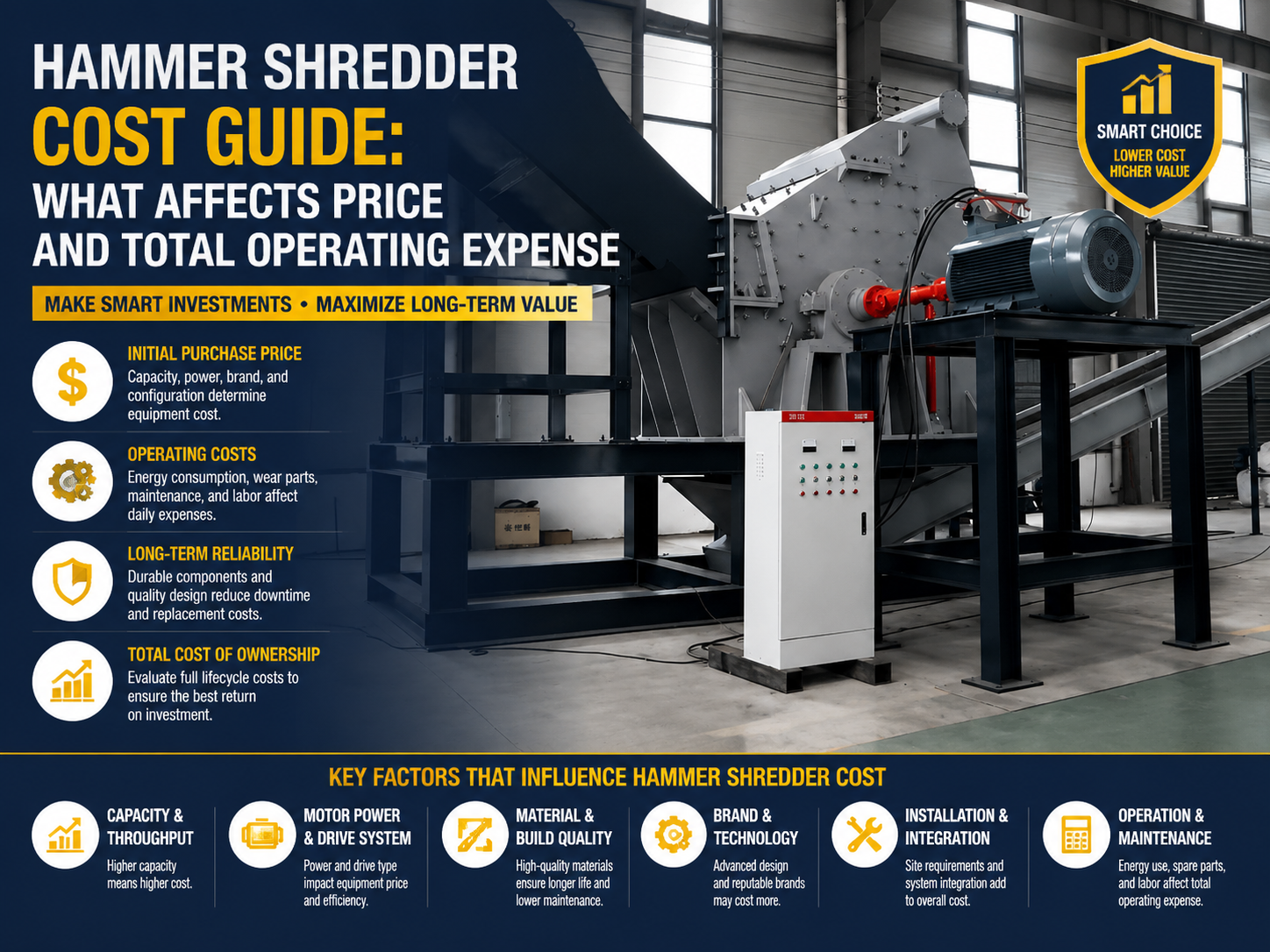
Technical Overview of Hammer Shredder Systems
In the realm of metal fabrication and scrap recycling, the hammer shredder stands as a cornerstone of high-efficiency processing. Understanding the Hammer Shredder Cost : Affects Price Total Operating Expense requires a deep dive into the mechanical architecture of these machines. A hammer shredder operates on the principle of kinetic energy transfer. High-speed rotating hammers strike the input material, shattering it against anvil plates and internal liners until the particles are small enough to pass through a discharge grate. This process is not merely about brute force; it is about the precision of the rotor’s balance, the metallurgy of the hammers, and the structural integrity of the housing.
The initial price of a hammer shredder is heavily influenced by its structural design. Heavy-duty shredders utilize reinforced steel plates, often exceeding 50mm in thickness, to withstand the immense internal vibrations and impacts. Furthermore, the integration of advanced hydraulic systems for opening the housing and replacing wear parts adds to the upfront capital expenditure (CAPEX). However, these features are critical for reducing long-term maintenance labor. When evaluating the technical overview, one must consider the drive system—whether it is a direct drive, belt drive, or hydraulic drive—as each has a distinct impact on both the purchase price and the energy efficiency profile.
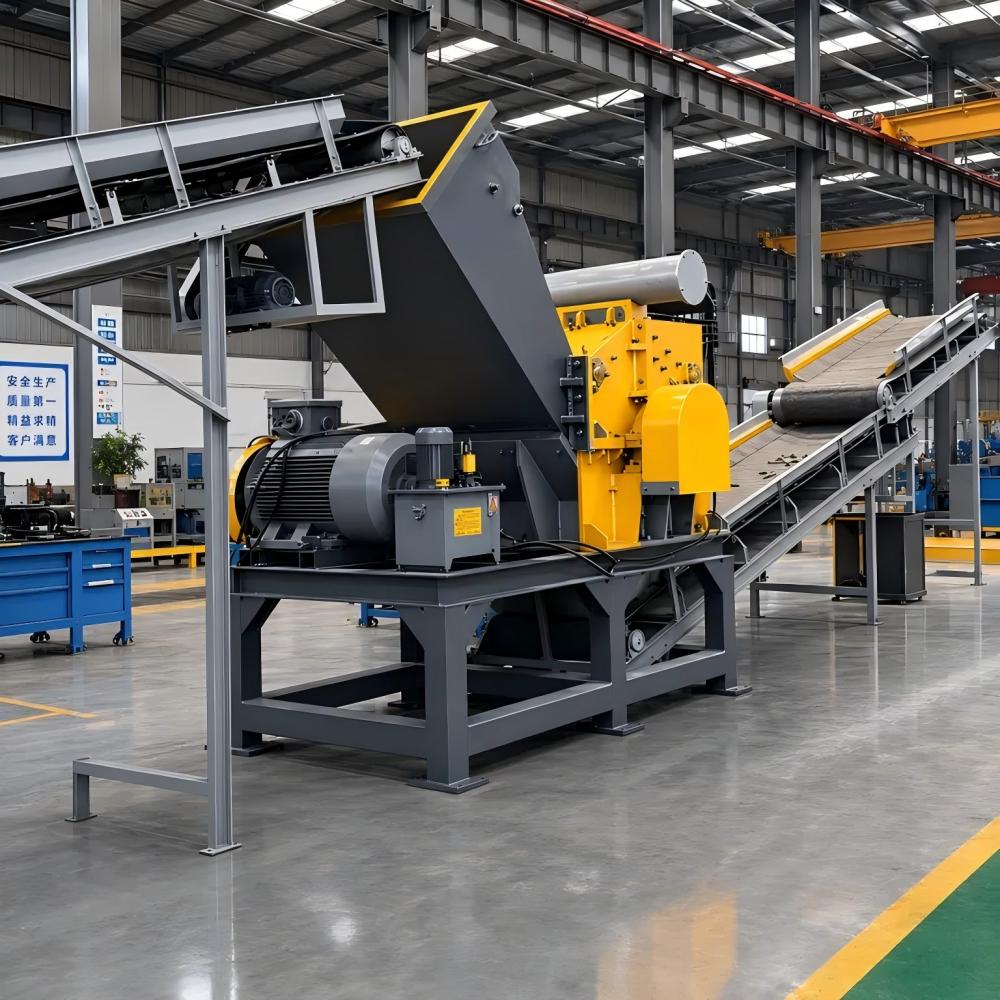
Modern hammer shredders, such as those engineered by HARSLE, incorporate sophisticated vibration monitoring and automated lubrication systems. These technical enhancements ensure that the machine operates within its optimal parameters, preventing catastrophic failures that could lead to expensive downtime. The complexity of the control system, often involving PLC (Programmable Logic Controller) integration and HMI (Human Machine Interface) touchscreens, also plays a significant role in the pricing structure. A machine equipped with smart sensors can adjust its feed rate based on motor load, which directly influences the total operating expense by optimizing power consumption and reducing unnecessary wear.
Core Parameters Influencing Performance and Cost
When analyzing the Hammer Shredder Cost : Affects Price Total Operating Expense, several core parameters serve as the primary drivers of both the sticker price and the daily running costs. The most prominent of these is the motor power, typically measured in kilowatts (kW) or horsepower (HP). A higher-wattage motor allows for the processing of denser materials and higher throughput volumes, but it also necessitates a more robust electrical infrastructure and results in higher utility bills. The relationship between motor size and price is non-linear; as you move into the mega-shredder category (1000HP+), the cost of the electrical components and cooling systems increases exponentially.
Rotor diameter and width are equally critical. The rotor is the heart of the shredder, and its mass determines the inertia available for crushing. A larger rotor can accommodate heavier hammers, which are essential for processing thick-walled scrap or automotive bodies. However, a larger rotor requires more expensive bearings and a more substantial frame to support the dynamic loads. The choice of hammer material—ranging from high-manganese steel to specialized alloy compositions—also shifts the cost balance. While premium alloys have a higher initial cost, their extended lifespan can significantly lower the cost-per-ton of processed material.
Another vital parameter is the grate size. The grate determines the final product size, which in turn dictates the residence time of the material inside the shredding chamber. Smaller grate openings produce a finer, more valuable output but require more energy and cause faster wear on the hammers and liners. Conversely, larger openings increase throughput and reduce wear but may result in a lower-quality end product. Balancing these parameters is essential for any facility looking to optimize its return on investment (ROI). The configuration of the feed roller system—whether it is a single or double roller—also impacts the machine’s ability to handle bulky items, influencing both the initial cost and the operational efficiency.
Calculation Method for Total Cost of Ownership (TCO)
To accurately assess the Hammer Shredder Cost : Affects Price Total Operating Expense, a comprehensive Total Cost of Ownership (TCO) calculation must be performed. This calculation is divided into two main categories: Capital Expenditure (CAPEX) and Operating Expenditure (OPEX). CAPEX includes the purchase price of the machine, shipping, foundation construction, electrical installation, and initial spare parts inventory. For many industrial operators, the foundation and installation can account for an additional 15-25% of the machine’s purchase price, especially if specialized vibration-dampening mounts are required.
OPEX is where the long-term financial health of the operation is determined. The primary components of OPEX are energy consumption, wear parts replacement, labor, and routine maintenance. To calculate the energy cost, use the formula: (Motor Power in kW) x (Load Factor) x (Operating Hours) x (Electricity Rate). The load factor typically ranges from 0.6 to 0.8 depending on the consistency of the feed material. Wear parts, specifically hammers, liners, and grates, are the most significant recurring expense. A common industry metric is the “cost per ton,” calculated by dividing the total cost of a set of hammers by the total tonnage processed before they require replacement or hard-facing.
Labor costs must also be factored in, including both the machine operators and the maintenance crew. A shredder that is difficult to service will naturally have higher labor expenses. Finally, one must account for the “opportunity cost” of downtime. If a machine requires 48 hours of maintenance for every 100 hours of operation, the lost production time can be more expensive than the parts themselves. By aggregating these factors over a 5-year or 10-year horizon, a business can determine the true cost of the equipment. Often, a more expensive machine with higher efficiency and lower maintenance requirements will yield a lower TCO than a budget-friendly alternative.
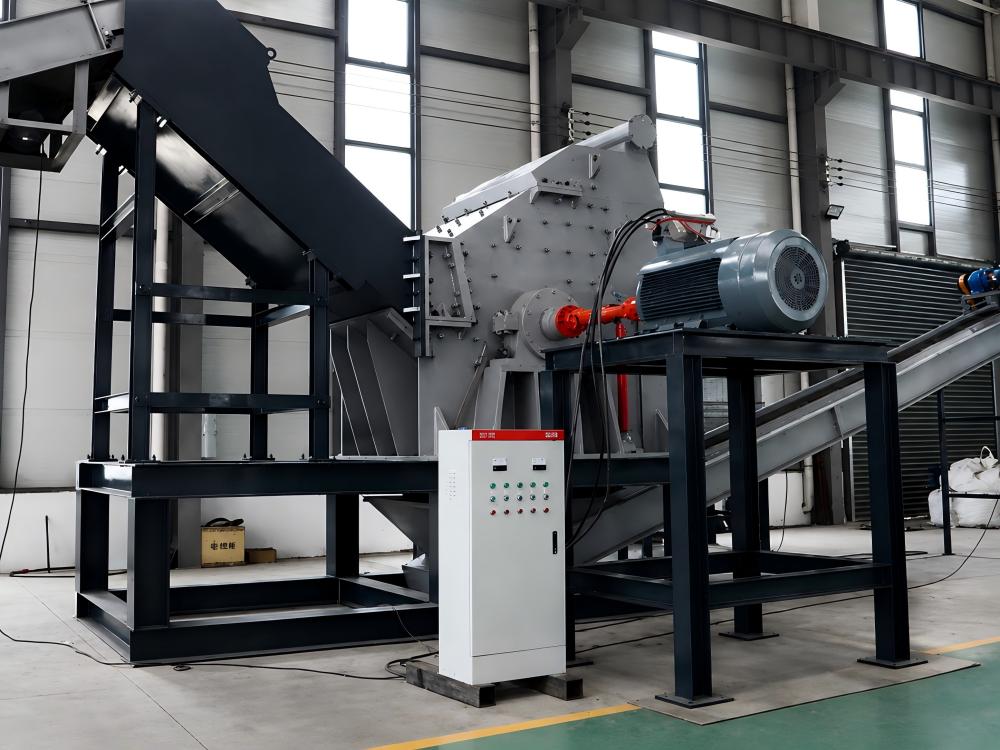
Parameter Table: Comparative Analysis
The following table provides a comparative look at different scales of hammer shredders and how their technical specifications correlate with cost factors.
| Model Category | Motor Power (kW) | Rotor Diameter (mm) | Throughput (Tons/Hr) | Primary Cost Driver | Typical Application |
|---|---|---|---|---|---|
| Light-Duty | 45 – 90 | 600 – 800 | 1 – 3 | Component Compactness | Electronic Scrap, Aluminum Cans |
| Medium-Duty | 110 – 250 | 1000 – 1200 | 5 – 12 | Structural Reinforcement | Light Steel, Appliances (White Goods) |
| Heavy-Duty | 315 – 630 | 1400 – 1800 | 15 – 35 | Hydraulic Systems & PLC | Car Hulks, Heavy Structural Scrap |
| Industrial Scale | 800+ | 2000+ | 50+ | Electrical Infrastructure | Large-Scale Recycling Centers |
Common Engineering Mistakes in Shredder Selection
One of the most frequent mistakes in the industry is undersizing the motor to save on initial CAPEX. While a smaller motor may seem cost-effective, it often leads to frequent stalling when processing dense materials. This not only slows down production but also puts immense thermal stress on the motor windings and mechanical stress on the drive train, leading to premature failure. In the context of Hammer Shredder Cost : Affects Price Total Operating Expense, an undersized motor actually increases the cost per ton due to inefficiency and repair costs.
Another common error is ignoring the metallurgy of wear parts. Some buyers opt for the cheapest hammers available, not realizing that low-quality castings can shatter under high impact or wear down in half the time of premium manganese steel. This results in more frequent shutdowns for hammer rotations or replacements, significantly driving up labor costs and reducing the machine’s availability. Furthermore, failing to account for the “tramp metal” protection system can be a fatal mistake. If a shredder cannot eject un-shreddable items (like a solid steel shaft), the resulting internal damage can cost tens of thousands of dollars to repair.
Lastly, many engineers overlook the importance of the discharge system. A high-capacity shredder is useless if the conveyor system beneath it cannot move the material away fast enough. This creates a bottleneck that forces the shredder to run at partial capacity, wasting energy. Similarly, inadequate dust collection and air separation systems can lead to environmental compliance issues and increased wear on external bearings due to grit accumulation. Proper engineering requires a holistic view of the entire processing line, not just the shredder itself.
Selection Checklist for Industrial Buyers
Before finalizing a purchase, use this checklist to ensure all factors affecting the Hammer Shredder Cost : Affects Price Total Operating Expense are addressed:
- Material Analysis: Have you clearly defined the maximum thickness and density of the input material?
- Throughput Requirements: Does the machine’s rated capacity include a 20% buffer for peak loads?
- Motor Efficiency: Is the motor rated for IE3 or IE4 efficiency to minimize long-term power costs?
- Wear Part Accessibility: Does the housing feature hydraulic opening for easy access to the rotor and grates?
- Metallurgy Certification: Are the hammers and liners made from certified high-manganese or alloy steel?
- Control Systems: Does the PLC include remote diagnostics and overload protection?
- Foundation Requirements: Have you factored in the cost of reinforced concrete and vibration isolators?
- Spare Parts Availability: Is there a local or reliable supply chain for critical wear items?
- Safety Features: Does the machine meet CE or OSHA standards for emergency stops and shielding?
- Tramp Metal Release: Is there a dedicated door or mechanism for ejecting non-shreddable objects?
- Warranty and Support: What is the manufacturer’s response time for technical onsite support?
Frequently Asked Questions (FAQ)
1. How often do the hammers need to be replaced?
The lifespan of hammers depends entirely on the abrasiveness of the material being processed. For clean aluminum scrap, hammers might last several hundred hours. For contaminated steel scrap, they may need to be rotated every 40-60 hours and replaced every 120-150 hours. Using hard-facing welding techniques can extend this life but adds to labor costs.
2. Does a higher RPM always mean better shredding?
Not necessarily. While higher RPM increases kinetic energy, it also increases heat generation and wear rates. The goal is to find the “sweet spot” where the tip speed of the hammer is sufficient to shatter the material without causing excessive friction. Most industrial metal shredders operate between 400 and 1000 RPM depending on rotor diameter.
3. What is the biggest hidden cost in hammer shredder operation?
Electricity is often the largest ongoing expense, but the “hidden” cost is often the maintenance of the rotor bearings. If the rotor becomes slightly unbalanced due to uneven hammer wear, it puts massive stress on the bearings. Replacing large-scale spherical roller bearings is expensive and requires significant downtime.
4. Can I process different materials with the same shredder?
Yes, but you may need to change the grate baskets. For example, if you switch from shredding car bodies to shredding aluminum siding, a smaller grate will help achieve the desired density for the aluminum. Some modern shredders feature quick-change grate systems to facilitate this flexibility.
5. How does the feed system affect the total operating expense?
An automated feed system (like a vibrating feeder or a heavy-duty slat conveyor) ensures the shredder is always fed at its optimal rate. This prevents “slugging” the motor (overloading) or running the machine empty, both of which are inefficient and increase the cost per ton of the finished product.
6. Is it worth investing in a dust suppression system?
Absolutely. Beyond environmental regulations, dust suppression protects your machinery. Fine metallic dust is abrasive and conductive; if it enters the motor windings or the bearing housings, it will cause premature failure. A good dust system is an investment in the machine’s longevity.
7. What is the typical ROI for a HARSLE hammer shredder?
Most industrial users see a return on investment within 18 to 36 months. This is driven by the value add of the processed scrap (shredded scrap fetches a higher price than un-processed scrap) and the reduction in transportation costs due to the increased density of the material.


