
Comprehensive Four-Shaft Shredder Noise and Dust Control Guide for Industrial Workshops

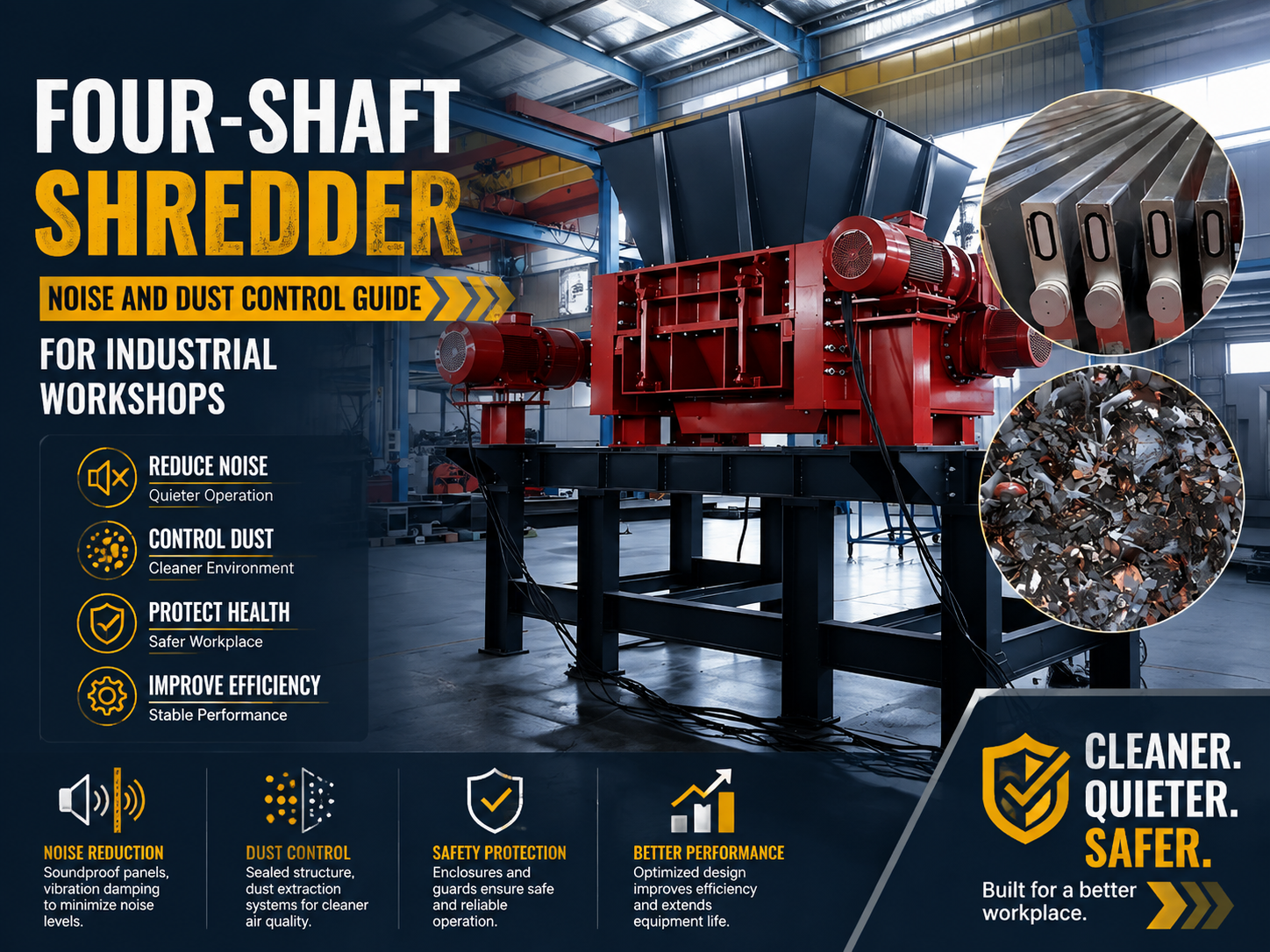
Technical Overview of Four-Shaft Shredder Noise and Dust Control
In the modern industrial landscape, the four-shaft shredder stands as a cornerstone of high-efficiency waste reduction and material processing. Unlike its two-shaft counterparts, the four-shaft design utilizes two main cutting shafts and two auxiliary cleaning/feeding shafts. This configuration allows for superior material sizing and throughput, particularly in demanding applications like e-waste recycling, plastic processing, and metal scrap reduction. However, the mechanical complexity and high-torque operations inherent in these machines necessitate a rigorous approach to Four-Shaft Shredder Noise Dust Control Industrial Workshops environments.
Noise in a four-shaft shredder originates from several sources: the mechanical vibration of the gearbox, the friction between the cutters and the material, and the structural resonance of the machine frame. When processing rigid materials like aluminum castings or thick polymers, the impact noise can exceed 100 dB(A) at the source. Without proper mitigation, this creates a hazardous work environment that violates OSHA and CE safety standards. Furthermore, the shredding process inherently generates particulate matter. The size and concentration of this dust depend on the material brittleness and the rotational speed of the shafts. Fine dust not only poses respiratory risks to operators but also creates explosive atmospheres (ATEX zones) and leads to premature wear on the machine’s bearings and electrical components.
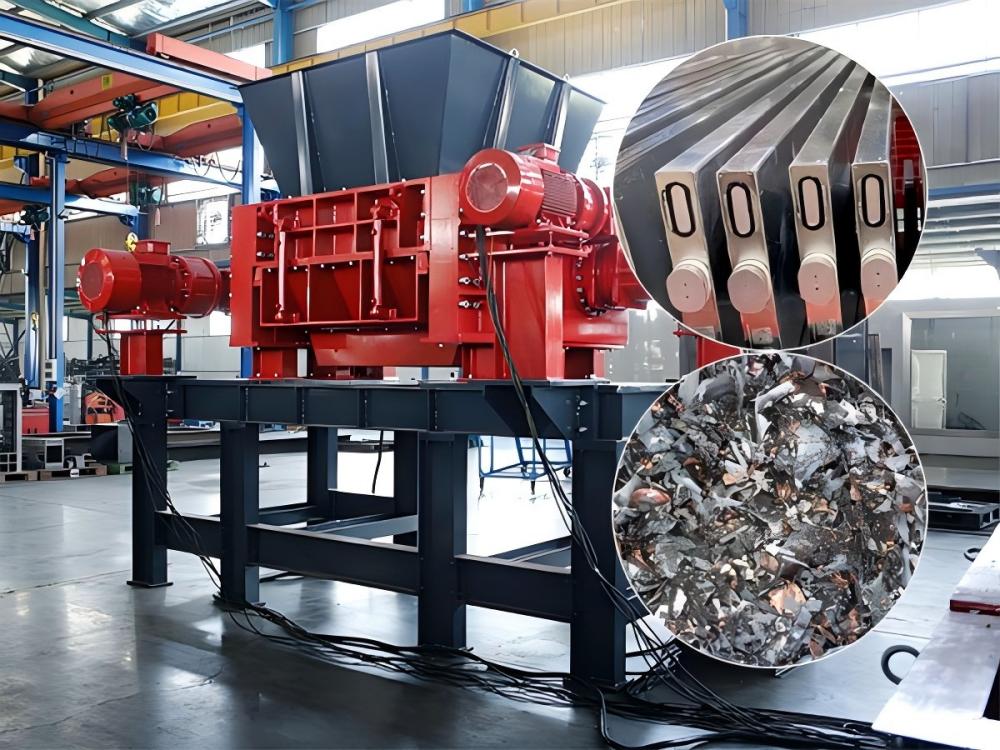
Effective control strategies involve a multi-layered approach. For noise, this includes source reduction (precision-ground gears and balanced shafts), path interruption (acoustic enclosures), and receiver protection. For dust, the focus is on localized exhaust ventilation (LEV) and integrated misting systems. HARSLE engineering emphasizes the integration of these controls during the design phase rather than as afterthoughts, ensuring that the machine maintains high performance while adhering to strict environmental and safety regulations. Understanding the synergy between mechanical throughput and environmental control is essential for any facility manager looking to optimize their production line.
Core Parameters for Noise and Dust Management
To effectively implement Four-Shaft Shredder Noise Dust Control Industrial Workshops, engineers must monitor specific technical parameters. These metrics provide the baseline for designing extraction systems and acoustic barriers. The primary noise metric is the Sound Pressure Level (SPL), measured in decibels (dB). For industrial shredders, we typically look at the A-weighted scale, dB(A), which mimics the human ear’s sensitivity. Another critical parameter is the Sound Power Level (LwA), which represents the total acoustic energy emitted by the machine regardless of the environment.
On the dust control side, the most critical parameters are the Airflow Velocity (measured in m/s or fpm) at the intake hoods and the Total Air Volume (measured in m³/h or CFM). For hazardous dust, such as fine plastic particles or metallic fines, the capture velocity must be high enough to overcome the centrifugal force generated by the rotating shafts. Typically, a capture velocity of 20-25 m/s is required at the shredding chamber’s exit points. Additionally, the particulate concentration (mg/m³) must be monitored to ensure the filtration system (usually a baghouse or cyclone separator) is sized correctly to prevent clogging and maintain suction efficiency.
Secondary parameters include the vibration frequency (Hz) and amplitude (mm/s). High-frequency vibrations contribute to airborne noise, while low-frequency vibrations can travel through the workshop floor, affecting sensitive nearby equipment like CNC machines or laser cutters. HARSLE machines utilize heavy-duty damping pads and reinforced frames to shift these resonant frequencies away from the operating range, significantly reducing the overall noise footprint of the installation.
Calculation Method for Environmental Control Systems
Calculating the requirements for noise and dust control involves both acoustic physics and fluid dynamics. To determine the necessary noise attenuation, one must first calculate the sound pressure at a specific distance from the shredder using the formula: Lp = Lw – 20 log(r) – 11, where Lp is the sound pressure level at distance r, and Lw is the sound power level. If the resulting Lp exceeds 85 dB(A) at the operator station, an acoustic enclosure is required. The Transmission Loss (TL) of the enclosure material must then be calculated to ensure the external noise falls within safe limits.
For dust extraction, the required air volume (Q) is calculated based on the area of the openings in the shredder housing. The formula Q = V × A × 3600 is used, where Q is the air volume in m³/h, V is the required capture velocity (e.g., 2.5 m/s for general dust), and A is the open area in square meters. It is vital to account for the “induced air” created by the falling material, which can increase the required volume by 15-20%. Engineers must also calculate the pressure drop (static pressure) across the ductwork and filters to select an appropriately powered centrifugal fan.
Furthermore, when dealing with combustible dust, the Kst value (deflagration index) of the material must be considered. This determines the size and type of explosion venting required for the dust collector. By performing these calculations accurately, workshop managers can avoid the common pitfall of under-sizing their environmental systems, which leads to poor air quality and excessive noise despite the investment in control hardware.
Parameter Table: Noise and Dust Specifications by Machine Capacity
| Model Capacity (kW) | Unmitigated Noise Level (dB(A)) | Mitigated Noise Level (with Enclosure) | Required Dust Extraction Volume (m³/h) | Recommended Filter Type |
|---|---|---|---|---|
| 30 kW – Light Duty | 92 – 95 | 72 – 75 | 2,500 – 3,500 | Cartridge Filter |
| 55 kW – Medium Duty | 96 – 100 | 75 – 78 | 4,500 – 6,000 | Pulse-Jet Baghouse |
| 75 kW – Heavy Duty | 102 – 108 | 78 – 82 | 7,500 – 9,000 | HEPA Secondary Filter |
| 110 kW+ – Ultra Heavy | 110 – 115 | 82 – 85 | 12,000+ | Cyclone + Baghouse |
Common Engineering Mistakes in Noise and Dust Control
One of the most frequent mistakes in Four-Shaft Shredder Noise Dust Control Industrial Workshops is the use of rigid ducting connections directly to the shredder body. As the four-shaft shredder operates, it generates significant structural vibrations. Rigid connections act as a bridge, transmitting these vibrations to the ductwork, which then acts as a giant speaker, amplifying the noise throughout the facility. The solution is to use flexible, fire-resistant couplings between the shredder’s exhaust ports and the main ducting line.
Another common error is the improper placement of dust capture hoods. Many installers place hoods too far from the actual cutting zone, assuming that general room ventilation will handle the fines. In reality, dust must be captured at the point of generation. For a four-shaft shredder, this means integrating suction points both above the hopper (to catch dust displaced by material entry) and below the screen (where the shredded material exits). Failure to capture dust at the source allows it to disperse, where it becomes much harder and more expensive to collect.
In terms of noise control, neglecting the “flanking paths” is a major oversight. Even the most expensive acoustic enclosure will fail if there are gaps around power cables, hydraulic lines, or material conveyors. Sound behaves like water; it will leak through the smallest opening. Engineers must use acoustic seals and “sound traps” (baffled air intakes) to ensure that the enclosure maintains its rated decibel reduction. Finally, ignoring the maintenance of the shredder blades themselves is a mistake. Dull blades increase friction and impact force, which significantly raises noise levels and produces more fine dust compared to sharp, well-maintained cutters.
Selection Checklist for Four-Shaft Shredders with Integrated Controls
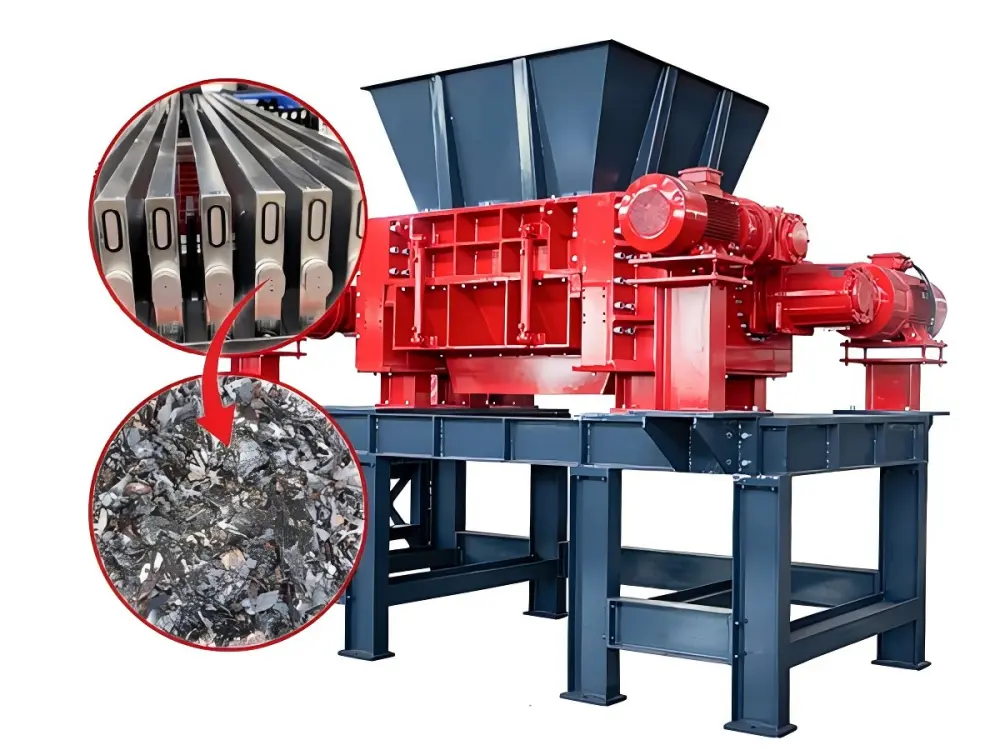
- Acoustic Enclosure Rating: Does the machine offer an optional or integrated enclosure with a minimum of 20-25 dB(A) reduction?
- Vibration Isolation: Are the motor and gearbox mounted on independent damping frames? Does the machine include heavy-duty rubber or spring isolators for floor mounting?
- Integrated Dust Ports: Are there pre-engineered flanges for dust extraction at both the hopper and the discharge chute? What is the recommended flange diameter?
- Blade Material and Geometry: Are the blades designed for the specific material to minimize “shattering” (which creates dust) and maximize “shearing”?
- PLC Integration: Can the shredder’s control system communicate with the dust collector to ensure the fan starts before the shafts begin rotating?
- Material Feed Control: Does the machine have an automated load-sensing feed system? Consistent feeding prevents “surges” in noise and dust production.
- Maintenance Access: Does the noise enclosure have quick-access doors that don’t compromise the acoustic seal when closed?
- ATEX Compliance: If shredding explosive materials (like certain plastics or light metals), is the internal chamber and extraction system rated for hazardous zones?
Frequently Asked Questions (FAQ)
How often should I clean the dust extraction filters for my four-shaft shredder?
The frequency depends on the material being processed. For high-dust materials like brittle plastics or e-waste, pulse-jet cleaning systems should operate continuously. Manual inspection of the filters should occur weekly, and differential pressure gauges should be monitored daily. A sudden rise in pressure indicates a need for filter replacement or a malfunction in the cleaning mechanism.
Can I reduce noise by simply slowing down the shaft speed?
Reducing the RPM can lower the frequency of impacts and mechanical noise, but it also significantly reduces throughput. A better approach is to maintain optimal speed for production while using a VFD (Variable Frequency Drive) to avoid unnecessary high-speed idling. HARSLE’s advanced PLC systems automatically adjust shaft speed based on load, which naturally optimizes the noise profile without sacrificing efficiency.
What is the best material for a shredder acoustic enclosure?
A high-performance enclosure typically uses a multi-layered approach: a heavy outer shell of 2mm steel, a thick layer of high-density rock wool (50-100mm), and an inner lining of perforated metal. The perforated metal allows sound waves to enter the insulation rather than bouncing back toward the machine, while the mass of the steel prevents sound transmission to the workshop.
Does wet shredding eliminate the need for dust control?
Wet shredding or water misting is highly effective at suppressing dust, but it introduces other challenges, such as sludge management and potential corrosion. Even with misting, a localized extraction system is often recommended to remove moisture-laden air, which can otherwise lead to humidity issues and mold growth within the workshop environment. For most dry industrial applications, a high-quality vacuum extraction system is preferred over water-based suppression.
Why is my four-shaft shredder louder than it was when new?
Increased noise is usually a symptom of one of three things: dull or chipped blades increasing impact force, worn bearings in the shafts or motor, or loose components in the frame or enclosure. Regular maintenance, including blade sharpening and bolt tensioning, is critical for maintaining the original noise specifications of the equipment. If the noise is a high-pitched whine, check the gearbox lubrication and gear alignment immediately.


