How to Choose the Right Four-Shaft Shredder for Industrial Recycling Operations

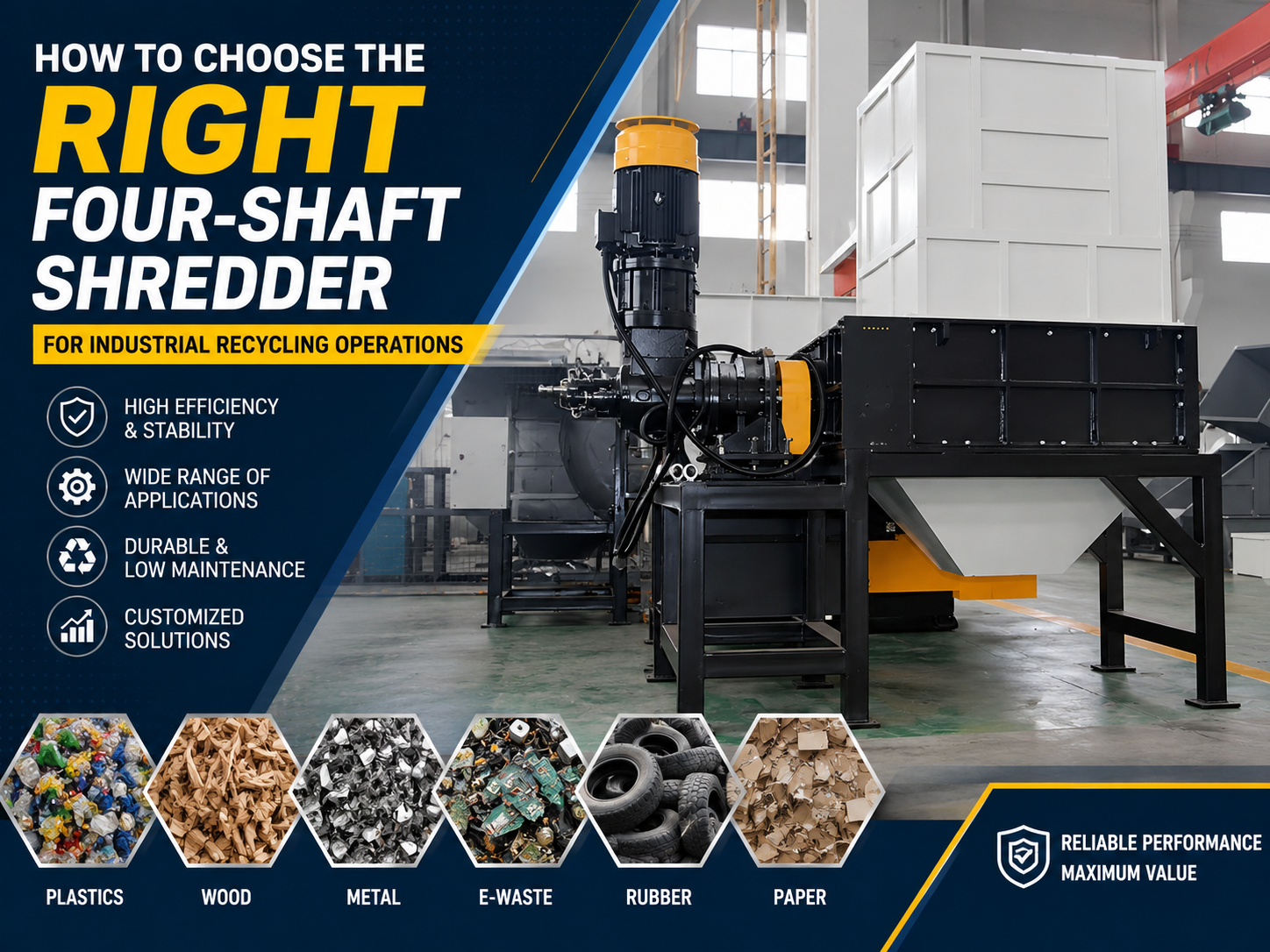
Technical Overview of Four-Shaft Shredding Technology
In the modern landscape of waste management and material recovery, the ability to process diverse waste streams into uniform, manageable sizes is paramount. When you decide to choose Four-Shaft Shredder Industrial Recycling Operations, you are investing in a machine designed for high-torque, low-speed shearing that excels where single or double-shaft shredders might struggle. Unlike its counterparts, the four-shaft shredder utilizes two main cutting shafts and two auxiliary shafts. This configuration allows for an integrated screening process, ensuring that material only exits the cutting chamber once it has reached the desired dimensions.
The mechanical advantage of a four-shaft system lies in its ‘active’ feeding mechanism. In a standard two-shaft shredder, bulky materials often bounce on top of the cutters, requiring a hydraulic pusher to force them down. In a HARSLE four-shaft shredder, the upper auxiliary shafts grab the material and pull it into the primary cutting zone. This results in a more consistent throughput and reduces the ‘idling’ time often seen with difficult-to-grip materials like plastic drums or large rubber components. Furthermore, the inclusion of a screen beneath the shafts allows for precise control over the final particle size, which is critical for downstream processes like sorting, pelletizing, or pyrolysis.
From an engineering perspective, these machines are built to withstand extreme shock loads. The gearboxes are typically oversized, and the shafts are forged from high-strength alloys to prevent snapping under the pressure of non-shreddable contaminants. For industrial recycling operations, this durability translates to lower downtime and a more predictable return on investment. Whether you are processing electronic waste (e-waste), medical waste, or industrial plastics, understanding the internal dynamics of the four-shaft system is the first step in making an informed purchase.
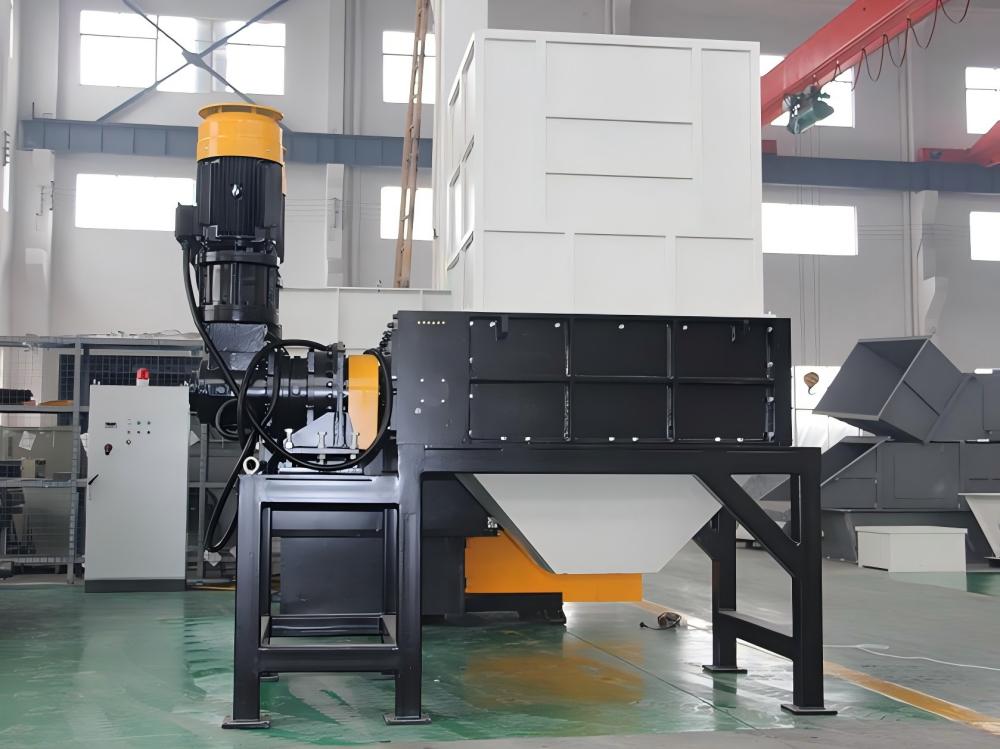
Core Parameters to Consider
When evaluating which machine to integrate into your facility, several core parameters must be scrutinized. The most critical of these is Torque. In the world of shredding, horsepower is secondary to torque. Torque is the rotational force that allows the blades to shear through tough materials like steel reinforcement or thick-walled HDPE. A machine with high horsepower but low torque will stall frequently, leading to motor burnout and inefficient processing. When you choose Four-Shaft Shredder Industrial Recycling Operations, ensure the torque rating matches the shear strength of your toughest material.
The second parameter is Blade Geometry and Material. Blades are the primary wear part of any shredder. HARSLE utilizes high-alloy steels such as D2 or DC53, which undergo specialized heat treatment to achieve a balance between hardness (to maintain a sharp edge) and toughness (to prevent chipping). The shape of the blade—whether it has one, three, or five ‘hooks’—determines how the material is grabbed and torn. For example, a single-hook blade is excellent for heavy metal scrap, while multi-hook blades are better for shredding films or textiles into smaller pieces.
Thirdly, consider the Shaft Speed (RPM). Four-shaft shredders typically operate at low speeds, usually between 10 and 35 RPM. This low speed is intentional; it minimizes dust generation, reduces noise pollution, and prevents the material from melting due to frictional heat. However, the speed must be synchronized between the main and auxiliary shafts to ensure optimal feeding. A variable frequency drive (VFD) is often recommended to allow operators to adjust speeds based on the specific material being processed during a shift.
Finally, the Screen Size is the gatekeeper of your output. The screen determines the maximum size of the shredded flakes. While a smaller screen produces a finer product, it also reduces the overall throughput because the material stays in the chamber longer. It is essential to find the ‘sweet spot’ where the output size meets your customer’s requirements without unnecessarily throttling the machine’s capacity. HARSLE machines often feature easy-change screen systems to allow for rapid transitions between different product specifications.
Calculation Method for Shredder Capacity
To accurately choose Four-Shaft Shredder Industrial Recycling Operations, you must perform a theoretical throughput calculation. This prevents the common mistake of over-specifying (wasting capital) or under-specifying (creating a bottleneck). The basic formula for estimating the capacity (Q) of a four-shaft shredder is as follows:
Q = n × Z × V × ρ × η
- n: Rotational speed of the main shafts (RPM).
- Z: Number of cutting hooks passing through the comb or opposing blades per revolution.
- V: The average volume of material removed by a single hook per ‘bite’.
- ρ: The bulk density of the material being shredded (kg/m³).
- η: The efficiency coefficient (usually between 0.5 and 0.8), which accounts for air gaps in the feeding and material slippage.
For example, if you are shredding plastic IBC tanks with a bulk density of 150 kg/m³, and your machine has a high-efficiency hook design, your calculation will help determine if a 45kW motor is sufficient or if you need to step up to a 75kW unit. It is also vital to calculate the Specific Energy Consumption (SEC), which is the amount of energy (kWh) required to process one ton of material. Lower SEC values indicate a more efficient shredding process, which is a hallmark of HARSLE’s optimized blade-to-shaft ratios.
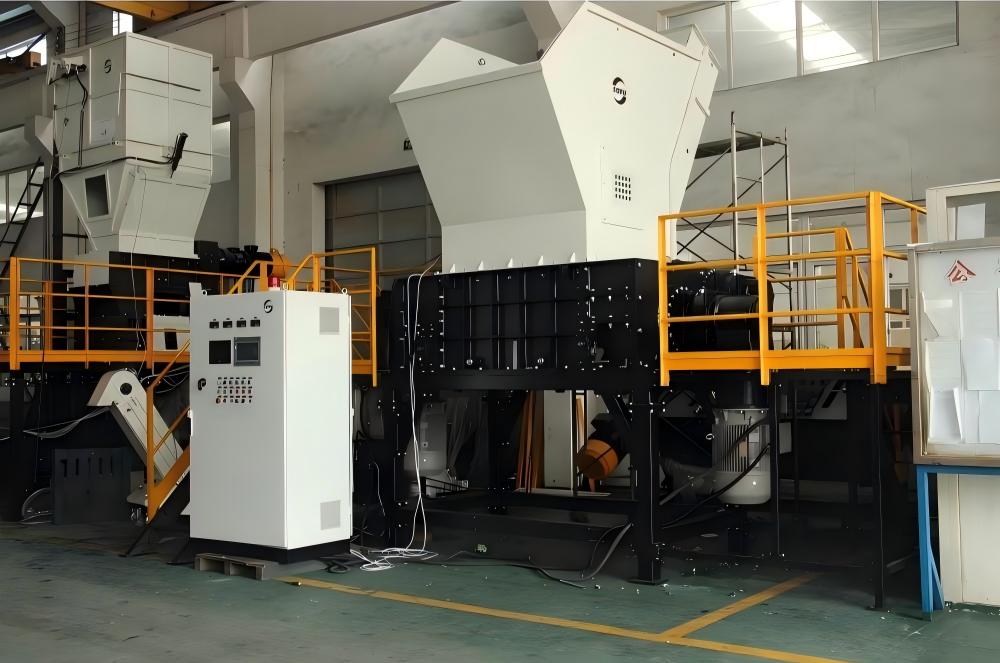
Technical Parameter Table
The following table provides a generalized comparison of HARSLE four-shaft shredder models to assist in your selection process. Note that actual throughput varies significantly based on material type and screen size.
| Model Series | Motor Power (kW) | Shaft Speed (RPM) | Cutting Chamber (mm) | Standard Screen (mm) | Est. Throughput (kg/h) |
|---|---|---|---|---|---|
| HFS-800 | 30 – 45 | 15 – 25 | 800 x 700 | 30 – 50 | 800 – 1,500 |
| HFS-1000 | 55 – 75 | 12 – 22 | 1000 x 850 | 40 – 60 | 1,500 – 3,000 |
| HFS-1200 | 90 – 110 | 10 – 20 | 1200 x 1000 | 50 – 80 | 3,000 – 5,500 |
| HFS-1500 | 132 – 160 | 10 – 18 | 1500 x 1200 | 60 – 100 | 5,500 – 10,000 |
Common Engineering Mistakes in Selection
One of the most frequent errors when companies choose Four-Shaft Shredder Industrial Recycling Operations is ignoring the ‘Fines’ and ‘Dust’ factor. While four-shaft shredders are low-speed, processing brittle materials like glass-filled plastics or certain e-waste components can still generate significant fines. If your downstream equipment (like an optical sorter) cannot handle fines, you may need to add a de-dusting system or adjust the blade profile to produce a ‘cleaner’ cut rather than a ‘shattered’ one.
Another mistake is underestimating the importance of the Cooling System. In high-capacity operations running 24/7, the hydraulic oil (if using hydraulic drives) or the gearbox lubricant can overheat. Overheated oil loses its viscosity, leading to premature gear wear and seal failure. Always check if the shredder comes with an integrated oil cooler or if the electrical cabinet is climate-controlled, especially if your facility is located in a hot climate.
Furthermore, many buyers fail to account for Maintenance Clearance. A four-shaft shredder is a compact machine, but the shafts are heavy. When it comes time to change the blades or the screen, you need enough overhead and lateral space for a crane or forklift to access the chamber. Buying a machine that fits perfectly into a corner but cannot be serviced without dismantling half the factory is a recipe for long-term operational headaches. HARSLE designs its machines with ‘swing-out’ screen cradles and split-bearing housings to mitigate these issues.
Lastly, ignoring the PLC Logic is a critical oversight. A sophisticated shredder should have an ‘Auto-Reverse’ function. When the PLC detects a spike in current (indicating a jam), it should automatically stop the shafts, reverse them to clear the obstruction, and then attempt to shred again. Without robust PLC logic, your operators will spend half their day manually clearing jams, which is both dangerous and inefficient.
Selection Checklist for Industrial Buyers
To ensure you choose Four-Shaft Shredder Industrial Recycling Operations that perfectly match your needs, use the following checklist during your procurement phase:
- Material Analysis: Have you tested your specific waste material on a similar machine? (HARSLE offers material testing services).
- Output Requirements: What is the exact millimeter size required for the next stage of your process?
- Capacity Goals: Are you calculating capacity based on peak hours or daily averages? Always allow for a 20% buffer.
- Power Supply: Does your facility have the amperage to support the start-up current of large motors, or do you need a Soft Starter/VFD?
- Blade Maintenance: Are the blades individual (replaceable one by one) or stacked? Individual blades are often more cost-effective for heavy-duty recycling.
- Safety Standards: Does the machine meet CE or local safety requirements, including emergency stops and hopper interlocks?
- Wear Protection: For abrasive materials (like glass or sand-contaminated plastics), are the chamber walls lined with replaceable wear plates?
Frequently Asked Questions
1. Why choose a four-shaft shredder over a two-shaft shredder?
The primary reason to choose Four-Shaft Shredder Industrial Recycling Operations over a two-shaft model is the integrated screen. A two-shaft shredder produces long, irregular strips. A four-shaft shredder recirculates material until it passes through the screen, ensuring a uniform particle size in a single pass. Additionally, the four-shaft design handles bulky, hollow objects much better due to the auxiliary shafts’ grabbing action.
2. How often do the blades need sharpening or replacement?
Blade life depends entirely on the material. If shredding clean plastics, blades can last 2,000+ hours. If shredding contaminated e-waste or reinforced rubber, they may need attention every 500-800 hours. HARSLE blades are designed to be reground multiple times before needing a full replacement, significantly lowering operating costs.
3. Can a four-shaft shredder handle metal?
Yes, but with caveats. It is excellent for light metals like aluminum profiles, copper cables, and thin-walled steel drums. However, it is not intended for heavy structural steel or thick engine blocks. For those applications, a dedicated metal crusher or a much larger, high-torque HARSLE shredder would be required.
4. What is the typical lead time for a HARSLE four-shaft shredder?
Standard models typically have a lead time of 8 to 12 weeks, depending on the level of customization required for the hopper, stand, and PLC integration. Custom-engineered solutions for specific recycling lines may take longer.
5. Is a hydraulic drive better than an electric drive?
Electric drives are more energy-efficient and easier to maintain for most standard recycling tasks. Hydraulic drives are preferred for extremely heavy-duty applications where frequent stalling and ‘shock’ reversals are expected, as hydraulics can handle these stresses with less mechanical fatigue on the motor.
Conclusion
To choose Four-Shaft Shredder Industrial Recycling Operations is to commit to a higher standard of material processing. By focusing on torque, blade quality, and proper capacity calculations, you can ensure that your recycling line remains productive and profitable for years to come. HARSLE continues to lead the industry by providing robust, technologically advanced shredding solutions tailored to the rigorous demands of global waste management. Investing in the right equipment today means fewer maintenance headaches and a cleaner, more efficient recycling future.