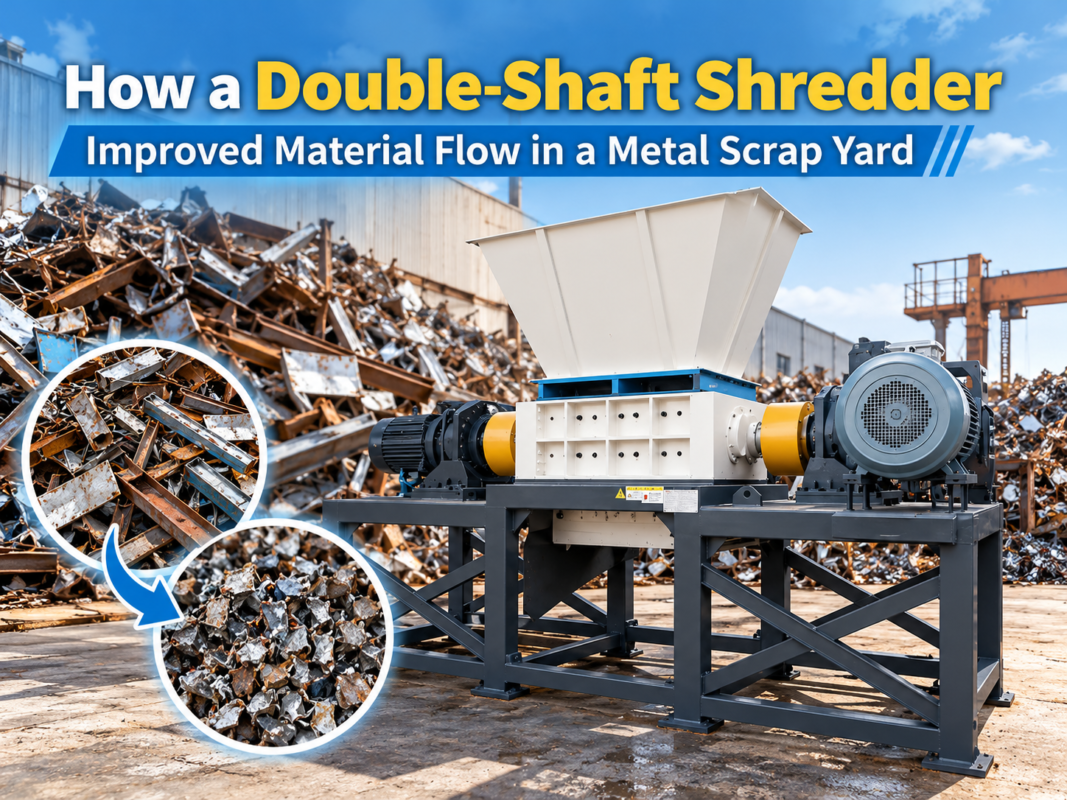
Common Double-Shaft Shredder Material Feeding Mistakes and How to Avoid Them

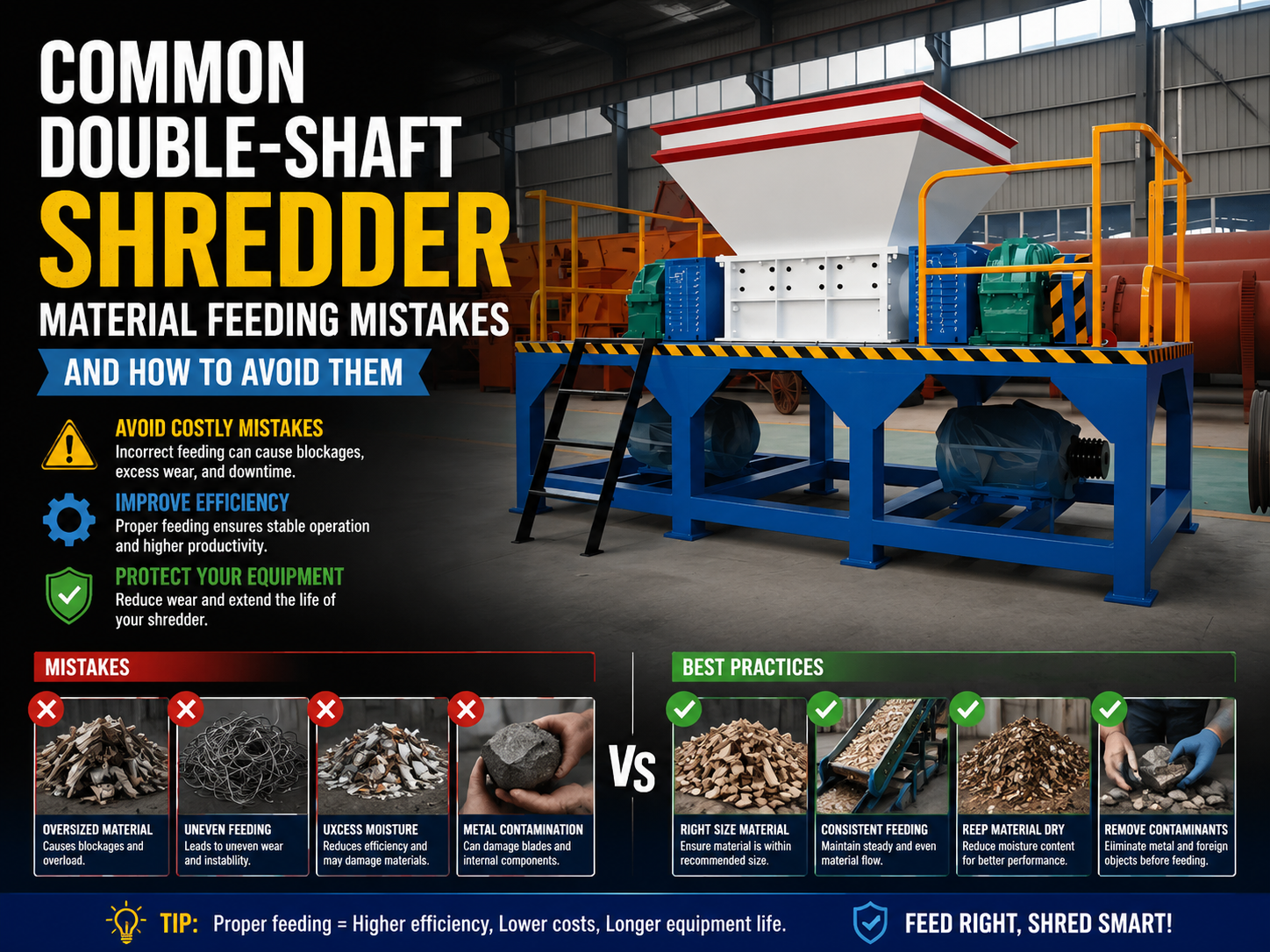
Technical Overview of Double-Shaft Shredders
Double-shaft shredders, often referred to as dual-shaft or twin-shaft shredders, are the workhorses of the industrial recycling and waste management sectors. These machines operate on a low-speed, high-torque principle, utilizing two counter-rotating shafts equipped with interlocking blades to shear, tear, and crush a wide variety of materials. Unlike high-speed granulators that rely on centrifugal force and impact, double-shaft shredders excel at processing bulky, tough, and heterogeneous waste streams, including scrap metal, tires, electronic waste (e-waste), and industrial plastics.
The fundamental mechanics involve the ‘grab’ and ‘shear’ action. As material enters the hopper, the hooks on the rotating blades grab the material and pull it into the cutting chamber. The clearance between the interlocking blades determines the final output size, while the torque provided by the motor and gearbox determines the machine’s ability to overcome the material’s resistance. HARSLE double-shaft shredders are engineered with precision-machined alloy steel blades and robust planetary gearboxes to ensure maximum uptime and consistent particle size reduction.
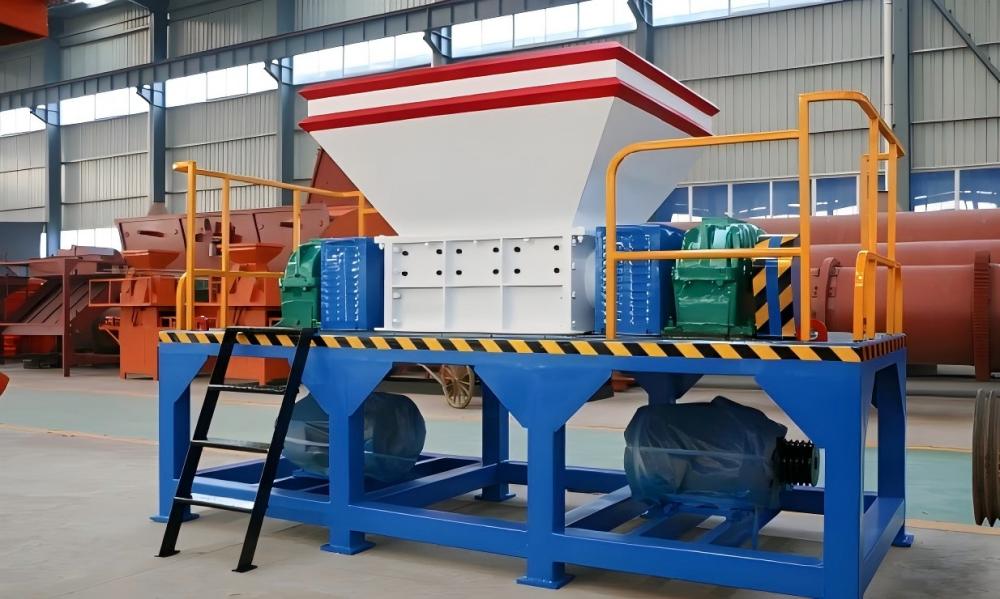
Understanding the technical nuances of these machines is critical for operational efficiency. The interaction between the shafts is synchronized via a timing gear or independent hydraulic/electric drives. This synchronization ensures that the blades pass each other with minimal clearance, maximizing the shearing force. However, the efficiency of this process is heavily dependent on how material is introduced into the system. Improper feeding is the leading cause of mechanical failure, premature blade wear, and energy inefficiency in industrial shredding operations.
Core Parameters of Double-Shaft Shredders
To avoid common feeding mistakes, operators must first understand the core parameters that define a shredder’s capability. These parameters dictate the volume and type of material the machine can safely process. Ignoring these specifications often leads to the very mistakes we aim to avoid.
- Torque (Nm): This is the rotational force required to shear the material. High torque is essential for processing metals and thick plastics. If the feeding rate exceeds the torque capacity, the machine will frequently trigger its auto-reverse safety mechanism.
- Shaft Speed (RPM): Typically ranging from 10 to 40 RPM. Lower speeds provide higher torque and reduce dust and noise, while higher speeds increase throughput for lighter materials.
- Blade Thickness and Hook Count: The thickness of the blades determines the width of the shredded strips. The number of hooks on each blade influences the ‘grab’ efficiency. For bulky items like barrels, fewer but larger hooks are often preferred.
- Motor Power (kW): The total power available to the shafts. This must be balanced with the gearbox ratio to provide the necessary torque for the specific application.
- Chamber Dimensions: The physical size of the opening where material is fed. Feeding items larger than the chamber width can cause bridging, where material gets stuck above the blades.
Calculation Method for Shredder Throughput
Calculating the theoretical throughput of a double-shaft shredder is essential for designing an efficient feeding system. The throughput (Q) is generally influenced by the volume of material the blades can displace per revolution and the density of the material.
The basic formula for theoretical volumetric throughput is:
Q = V × n × η
Where:
Q = Throughput (m³/h)
V = Volume of material displaced per shaft revolution (m³)
n = Rotational speed (RPM) × 60
η = Filling efficiency factor (typically 0.3 to 0.6 depending on material type and feeding consistency)
To convert this to mass throughput (kg/h), multiply the result by the bulk density (ρ) of the material. For example, if you are shredding loose plastic with a density of 150 kg/m³, and your volumetric throughput is 10 m³/h, your mass throughput is 1,500 kg/h. Understanding this calculation helps operators realize that ‘over-stuffing’ the hopper does not necessarily increase throughput; it often decreases the efficiency factor (η) by causing jams and frequent reversals.
Standard Parameter Table for Different Materials
The following table provides a general guideline for the parameters required when feeding different types of materials into a standard HARSLE double-shaft shredder.
| Material Type | Recommended Blade Thickness (mm) | Typical RPM | Torque Requirement | Feeding Method |
|---|---|---|---|---|
| Plastic Film/Bags | 20 – 40 | 25 – 35 | Medium | Conveyor / Continuous |
| Hard Plastics (HDPE/PP) | 40 – 60 | 15 – 25 | High | Batch or Conveyor |
| Electronic Waste (E-waste) | 20 – 30 | 15 – 20 | Very High | Vibratory Feeder |
| Aluminum Scrap | 30 – 50 | 10 – 15 | Extreme | Grapple / Controlled |
| Wood Pallets | 50 – 80 | 20 – 30 | Medium-High | Manual / Forklift |
| Tires (Passenger) | 40 – 60 | 10 – 20 | Extreme | Conveyor / Individual |
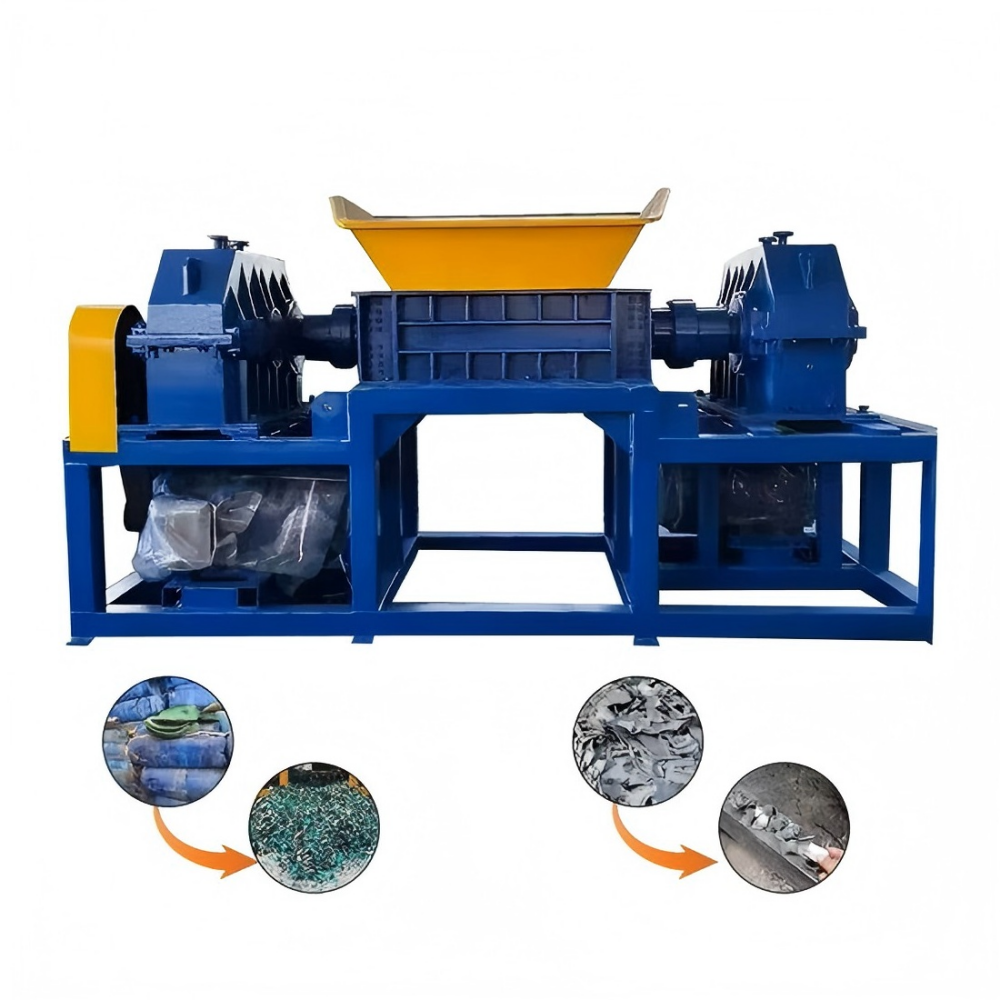
Common Double-Shaft Shredder Material Feeding Mistakes Avoid Them
Avoiding feeding mistakes is the most cost-effective way to maintain your machinery. Below are the most frequent errors encountered in industrial environments and detailed strategies to mitigate them.
1. Batch Overfeeding (The “Slug” Feed)
One of the most common mistakes is dumping a massive ‘slug’ of material into the hopper all at once, often using a large loader or forklift. This creates a sudden spike in torque demand that exceeds the motor’s capacity. The PLC (Programmable Logic Controller) detects the over-current and triggers an auto-reverse to clear the jam. While this protects the motor, frequent reversals cause significant wear on the gearbox and reduce overall throughput.
How to Avoid: Implement a metered feeding system. Using a variable-speed conveyor belt or a vibratory feeder ensures a steady, continuous flow of material. If manual feeding is necessary, operators should be trained to feed smaller, consistent increments rather than large batches.
2. Improper Material Orientation
For long, slender materials like pipes, timber, or metal extrusions, the orientation in which they enter the chamber matters. If a long pipe enters perfectly parallel to the shafts, it may ‘bridge’ across the top of the blades, spinning without being grabbed. Conversely, if it enters vertically, it may drop too quickly, causing a sudden shock load.
How to Avoid: Design the hopper with baffles or use a ‘ram’ feeder (hydraulic pusher) to force material into the blades at the correct angle. For long items, feeding them at a slight diagonal angle usually yields the best ‘grab’ results.
3. Feeding Non-Shreddable Contaminants
Double-shaft shredders are tough, but they are not invincible. Feeding a ‘tramp’ metal object (like a thick steel shaft or a heavy die block) into a shredder designed for plastics or light metals can cause catastrophic blade breakage or shaft deformation. Even if the machine reverses, the initial impact can cause micro-fractures in the tool steel blades.
How to Avoid: Use pre-sorting equipment. Magnetic separators can remove ferrous metals, and eddy current separators can remove non-ferrous metals before they reach the shredder. For mixed waste, installing an overhead camera with AI-based object detection can alert operators to hazardous items before they enter the hopper.
4. Ignoring Material Density and Moisture Content
Wet material is significantly heavier and more ‘sticky’ than dry material. Feeding wet paper or wood at the same rate as dry material will lead to clogging. Furthermore, high-density materials require more torque. Operators often make the mistake of assuming that if the volume looks the same, the machine can handle it.
How to Avoid: Adjust the feeding rate based on the material’s physical properties. If processing wet or high-density waste, reduce the conveyor speed. HARSLE shredders can be equipped with load-sensing software that automatically adjusts the feeder speed based on the motor’s current draw.
5. Neglecting the ‘Sweet Spot’ of the Hopper
Every shredder has a ‘sweet spot’—the area in the chamber where the blades have the most aggressive grip. Feeding material only to one side of the hopper causes uneven wear on the blades and bearings. Over time, this leads to shaft misalignment and increased maintenance costs.
How to Avoid: Ensure the feeding mechanism (conveyor or chute) is centered over the cutting chamber. Use a diverter plate if necessary to spread the material across the full length of the shafts.
Selection Checklist for Optimized Feeding
When purchasing a double-shaft shredder or auditing your current setup, use this checklist to ensure your feeding strategy is optimized:
- Hopper Volume: Is the hopper large enough to prevent spill-over but shaped to prevent bridging?
- Drive System: Does the machine have an auto-reverse function with adjustable sensitivity?
- Feeder Integration: Is the conveyor speed synced with the shredder’s load?
- Blade Profile: Are the hooks appropriate for the material’s shape and size?
- Access for Cleaning: Can operators easily remove ‘tramp’ material if a jam occurs?
- Safety Interlocks: Are there emergency stops and sensors to prevent feeding during maintenance?
- Material Pre-treatment: Is there a need for a pre-shredder or a bale breaker before the main unit?
- Environmental Controls: If feeding dusty material, is there a dust suppression or extraction system at the feed point?
Frequently Asked Questions (FAQ)
Why does my shredder keep reversing even when it’s not full?
This is usually caused by ‘tough’ material rather than ‘too much’ material. A single piece of high-strength alloy or a dense knot of material can trigger the torque limit. It could also indicate that your blades are dull, requiring more force to cut through the same material, or that the PLC’s over-current threshold is set too low.
Can I feed liquid-filled containers into a double-shaft shredder?
Yes, but with caution. Double-shaft shredders are excellent for ‘product destruction’ (e.g., expired beverages or detergents). However, the machine must be equipped with liquid-tight seals for the bearings and a collection sump. Feeding liquids into a standard ‘dry’ shredder will wash away bearing grease and cause premature failure.
How often should I check the blades for wear?
For abrasive materials like glass-filled plastics or sandy tires, check the blades daily. For cleaner materials like wood or film, a weekly inspection is sufficient. Look for rounded edges on the hooks and increased clearance between the blades. Once the clearance exceeds the manufacturer’s specification, shearing efficiency drops, and the risk of jams increases.
What is the best way to feed thin plastic film?
Thin film is notorious for ‘wrapping’ around the shafts rather than being shredded. The best way to avoid this is to feed the film in ‘clumps’ or ‘bales’ rather than loose sheets, and to ensure the shredder has ‘cleaner fingers’ (stripper plates) that are in good condition to prevent material from rotating with the shaft.
Does the temperature of the material affect feeding?
Absolutely. Extremely cold plastics can become brittle and shatter, which is easy to shred but can create flying debris. Conversely, some plastics can soften and become ‘gummy’ if they get too hot during the shredding process, leading to clogs. In high-volume operations, monitoring the temperature of the cutting chamber is a best practice.
How do I prevent ‘bridging’ in the hopper?
Bridging occurs when material wedges itself against the hopper walls above the blades. This can be prevented by using a hopper with vertical or outward-sloping walls (negative rake) rather than inward-sloping walls. Additionally, a hydraulic pusher or ‘ram’ can be used to break the bridge and force material into the cutting zone.