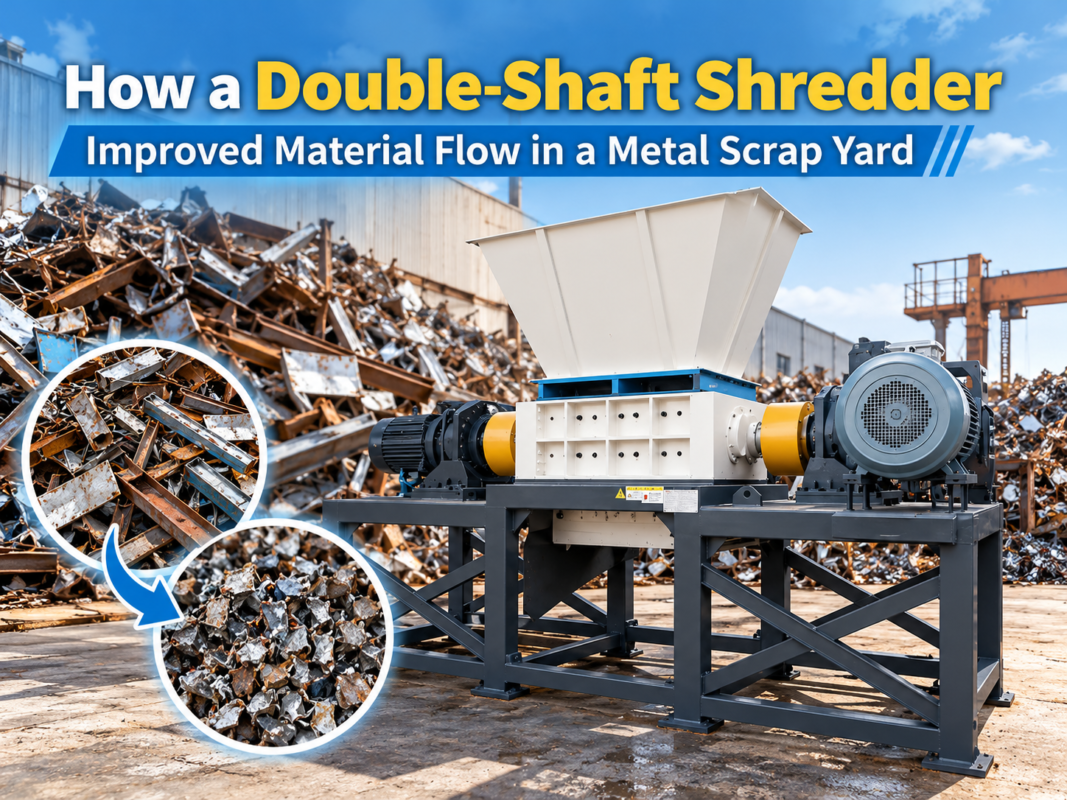
Double-Shaft Shredder Energy Consumption Guide: How to Improve Efficiency

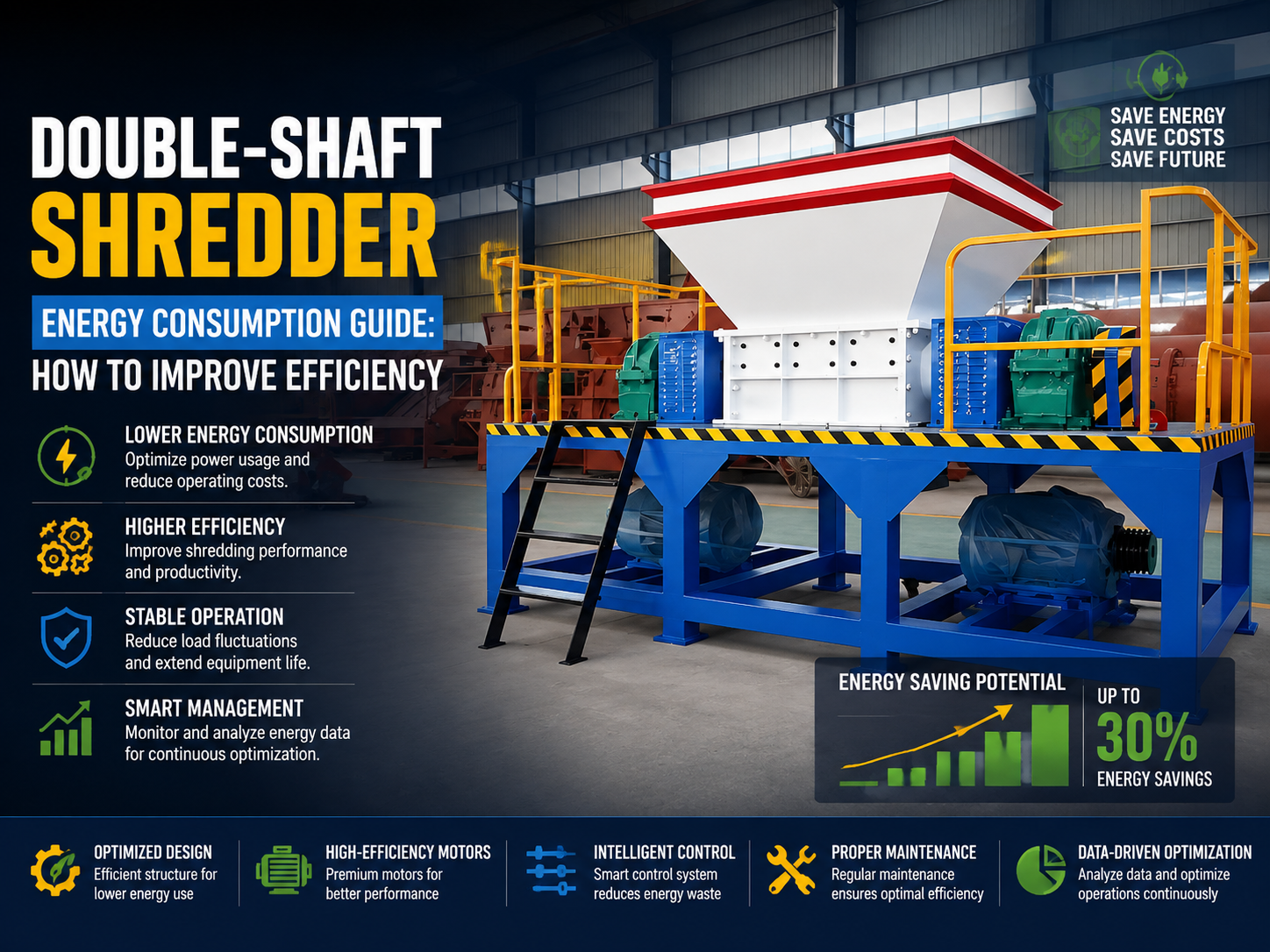
Technical Overview of Double-Shaft Shredder Energy Dynamics
In the modern industrial landscape, the double-shaft shredder stands as a cornerstone of waste management and material recycling. Understanding Double-Shaft Shredder Energy Consumption : Improve Efficiency is not merely a matter of reducing utility bills; it is about maximizing the lifecycle of the machinery and ensuring a sustainable production cycle. A double-shaft shredder operates on the principle of low-speed, high-torque shearing. Unlike high-speed granulators that rely on centrifugal force and impact, the double-shaft shredder uses two counter-rotating shafts equipped with interlocking blades to tear, shear, and compress materials.
The energy dynamics of these machines are complex. Power consumption is primarily dictated by the resistance of the material being processed. When the blades engage with tough materials like scrap metal, tires, or thick plastics, the torque requirement spikes, leading to increased electrical draw. HARSLE engineering focuses on optimizing the relationship between motor output and shaft torque to ensure that energy is not wasted as heat or vibration. By analyzing the mechanical load, operators can identify where energy is being lost—whether through friction, inefficient motor performance, or improper material feeding.
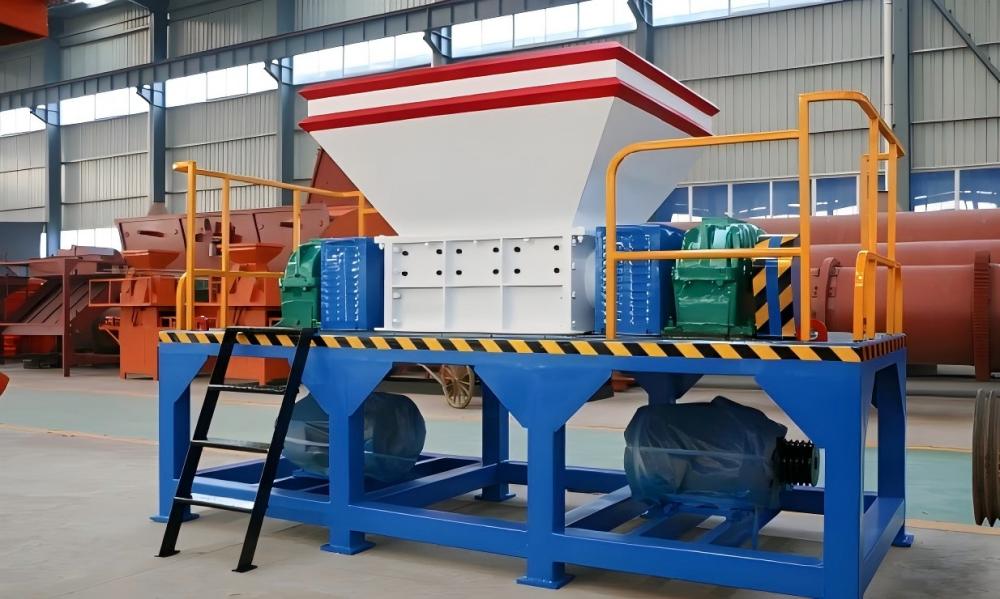
Efficiency in these systems is often measured by Specific Energy Consumption (SEC), which is the amount of energy (kWh) required to process one ton of material. A lower SEC indicates a more efficient operation. Factors such as the gearbox ratio, the type of motor (AC vs. Hydraulic), and the control logic of the Programmable Logic Controller (PLC) all play pivotal roles in determining the overall energy footprint of the machine. In the following sections, we will delve deeper into the parameters that govern these machines and how to fine-tune them for peak performance.
Core Parameters Influencing Energy Consumption
To master Double-Shaft Shredder Energy Consumption : Improve Efficiency, one must first understand the core technical parameters that define the machine’s operation. The most significant parameter is the motor power, usually rated in kilowatts (kW). However, the rated power is not always the consumed power. The actual consumption fluctuates based on the load. High-efficiency motors, such as those meeting IE3 or IE4 standards, can significantly reduce energy loss during these fluctuations.
Torque is the second critical parameter. In double-shaft shredding, torque is the force that allows the blades to penetrate the material. If the torque is insufficient, the machine will frequently trigger its auto-reverse function to clear jams, which is a major energy drain. Conversely, excessive torque on soft materials is a waste of potential energy. The shaft speed (RPM) also plays a role; while higher speeds might seem to promise higher throughput, they often lead to increased friction and heat, which are forms of energy waste. Finding the ‘sweet spot’ where RPM and torque are balanced for a specific material is key to efficiency.
Blade geometry and material composition are often overlooked as energy parameters. A dull blade requires significantly more force to shear material than a sharp one. Furthermore, the number of hooks on a blade and the thickness of the blade determine the ‘bite’ size. A larger bite size increases the instantaneous load on the motor, while a smaller bite size might lead to longer processing times. Both extremes can negatively impact the energy-to-throughput ratio. HARSLE recommends periodic blade inspections to ensure that the cutting edges remain within optimal tolerances to minimize resistance.
Calculation Method for Shredder Efficiency
Calculating the energy efficiency of a double-shaft shredder involves more than just looking at the monthly electricity bill. To truly understand Double-Shaft Shredder Energy Consumption : Improve Efficiency, operators should use the Specific Energy Consumption (SEC) formula. The formula is expressed as:
SEC (kWh/t) = Total Energy Consumed (kWh) / Total Throughput (Tons)
To get an accurate reading, it is best to measure energy consumption over a full shift rather than a single hour. This accounts for startup energy spikes, idling time, and varying material densities. For example, if a shredder consumes 400 kWh over an 8-hour shift and processes 20 tons of plastic waste, the SEC is 20 kWh/t. Comparing this figure against industry benchmarks for specific materials allows facilities to gauge their relative efficiency.
Another important calculation is the Power Factor (PF). In many industrial setups, a low power factor leads to reactive power charges from utility companies. By installing capacitor banks or using Variable Frequency Drives (VFDs), the power factor can be brought closer to 1.0, ensuring that the energy drawn from the grid is being used effectively for mechanical work. Monitoring the ‘Idle Power’ is also crucial. If a shredder is running without material for extended periods, it is consuming energy (often 20-30% of rated power) without producing output, which drastically inflates the SEC.
Double-Shaft Shredder Performance Parameter Table
The following table provides a generalized comparison of energy consumption across different scales of double-shaft shredders. These values are based on standard processing of mixed industrial waste.
| Model Scale | Motor Power (kW) | Shaft Speed (RPM) | Avg. Throughput (t/h) | Est. SEC (kWh/t) | Efficiency Rating |
|---|---|---|---|---|---|
| Light Duty | 15 – 30 | 15 – 25 | 0.5 – 1.5 | 15 – 25 | Standard |
| Medium Duty | 45 – 90 | 12 – 20 | 2.0 – 5.0 | 12 – 20 | High |
| Heavy Duty | 110 – 250 | 8 – 15 | 6.0 – 15.0 | 10 – 18 | Ultra-High |
| Extra Heavy Duty | 300+ | 5 – 12 | 20.0+ | 8 – 15 | Industrial Peak |
Note: The SEC values are estimates. Actual values will vary significantly based on material hardness, moisture content, and blade condition. Heavy-duty machines often show better SEC because they utilize the momentum of larger shafts and more efficient high-torque gearboxes.
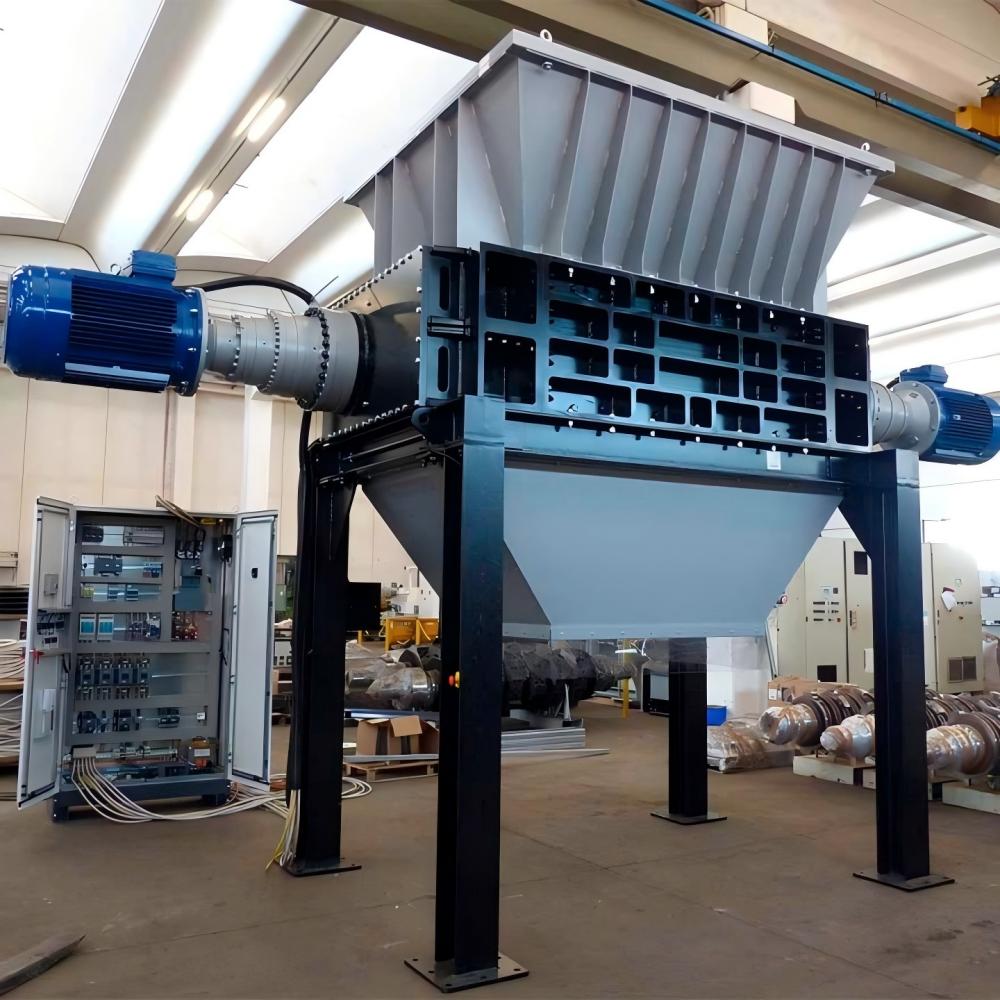
Common Engineering Mistakes in Shredder Operation
One of the most frequent mistakes in the industry is the “Oversizing Trap.” Many facility managers believe that a larger motor will always perform better. However, if a 110kW motor is used to process material that only requires 45kW, the motor operates far outside its peak efficiency curve. This results in poor power factors and unnecessary energy expenditure. Proper sizing based on the most common material processed is essential for Double-Shaft Shredder Energy Consumption : Improve Efficiency.
Another common error is neglecting the feeding system. Inconsistent feeding—where the shredder is either overloaded or running empty—causes massive fluctuations in energy demand. Overloading leads to frequent auto-reverses, where the motor must stop, reverse, and restart, consuming up to three times the normal running current during each cycle. On the other hand, under-feeding keeps the machine in an idle or semi-idle state, where the energy cost per ton processed skyrockets. Implementing an automated conveyor system synchronized with the shredder’s PLC can ensure a steady, optimal load.
Finally, ignoring the cooling system can lead to hidden energy losses. As gearboxes and hydraulic systems overheat due to friction or heavy load, the viscosity of lubricants changes, leading to even higher friction and potential mechanical failure. Energy is wasted as heat rather than being used for shearing. Using high-quality synthetic lubricants and ensuring that cooling fans or heat exchangers are clean and functional can improve mechanical efficiency by 3-5%, which adds up significantly over a year of operation.
Selection Checklist for Energy-Efficient Shredders
When procuring a new machine or auditing an existing one, use this checklist to ensure you are optimizing for Double-Shaft Shredder Energy Consumption : Improve Efficiency:
- Motor Efficiency Class: Does the machine use IE3 or IE4 rated motors?
- Variable Frequency Drive (VFD): Is the machine equipped with a VFD to manage startup currents and adjust speed based on load?
- PLC Logic: Does the control system include an ‘Eco-Mode’ that shuts down or slows the machine during periods of no feed?
- Blade Material: Are the blades made of high-wear D2 or DC53 steel to maintain sharpness longer?
- Gearbox Efficiency: Is the gearbox a high-efficiency planetary type or a standard spur gear? Planetary gearboxes generally offer better torque transmission with less loss.
- Auto-Reverse Settings: Is the auto-reverse trigger set correctly to prevent unnecessary cycling while protecting the motor?
- Maintenance Access: Is the machine designed for easy blade tightening and lubrication, ensuring friction is kept to a minimum?
Frequently Asked Questions (FAQ)
1. How does material moisture affect energy consumption?
Moisture increases the weight of the material without increasing its volume, and in some cases, it can make materials like paper or wood more ‘rubbery’ and harder to shear. This typically increases the energy required per ton. For organic waste, high moisture can also lead to ‘clumping,’ which increases friction between the blades and the side walls.
2. Can I retrofit an old shredder with a VFD to save energy?
Yes, retrofitting a Variable Frequency Drive is one of the most effective ways to improve efficiency. It allows for a soft start, reducing peak demand charges, and enables the machine to adjust its speed to match the material flow, which can reduce overall consumption by 10-25% depending on the application.
3. Why is my shredder consuming more energy than the manufacturer’s spec?
Manufacturer specs are often based on ‘ideal’ materials. If you are processing contaminated scrap, materials with high elasticity, or if your blades are dull, your consumption will be higher. Additionally, check for mechanical misalignments or worn bearings which increase internal friction.
4. Is a hydraulic drive more efficient than an electric drive?
It depends on the application. Hydraulic drives are excellent for extremely high-torque, shock-loading applications because they provide inherent protection against jams. However, modern electric drives with VFDs and planetary gearboxes are generally more energy-efficient for steady-state shredding due to fewer energy conversion losses (electricity to hydraulic pressure to mechanical motion).
5. How often should blades be sharpened to maintain efficiency?
This varies by material. For abrasive materials like glass-filled plastics or sandy tires, blades may need attention every few hundred hours. For cleaner materials, they may last thousands of hours. A good rule of thumb is to monitor your SEC; if you see a steady 10-15% increase in kWh/t while processing the same material, it is time to inspect the blades.
6. Does the shredder’s footprint affect its energy use?
Indirectly, yes. A compact design might have more restricted airflow, leading to higher operating temperatures and reduced motor efficiency. However, the primary energy drivers are the drivetrain and the cutting chamber geometry rather than the external dimensions of the frame.