Horizontal Baler Bale Chamber Design: How It Affects Compression and Output

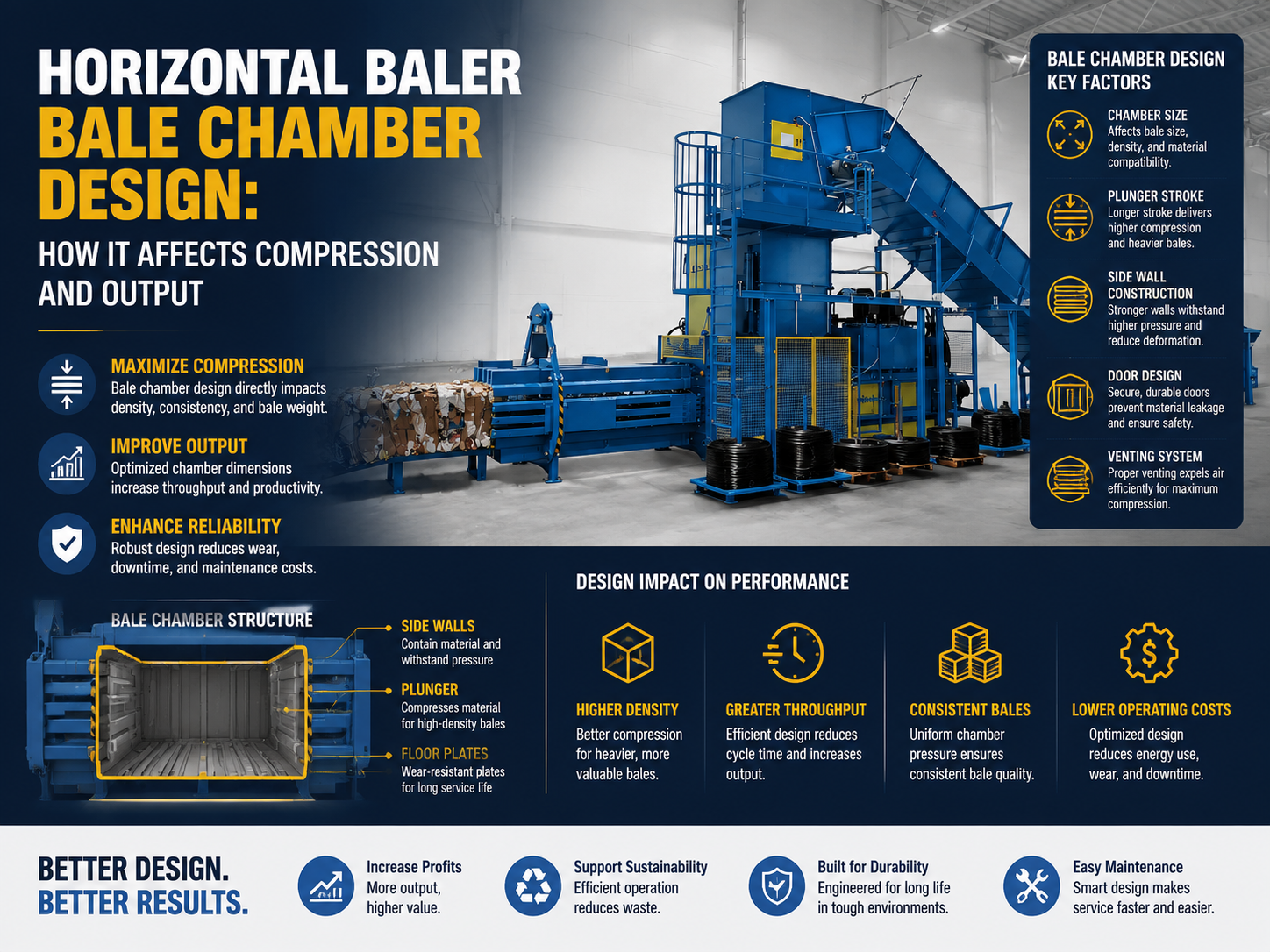
Technical Overview of Horizontal Baler Bale Chamber Design
In the world of industrial waste management and metal recycling, the horizontal baler stands as a cornerstone of efficiency. At the heart of this machine lies the bale chamber—a precision-engineered space where loose material is transformed into dense, manageable blocks. The Horizontal Baler Bale Chamber Design: It Affects Compression Output significantly because the geometry, structural integrity, and friction characteristics of the chamber dictate how much force is actually transferred to the material versus how much is lost to mechanical resistance.
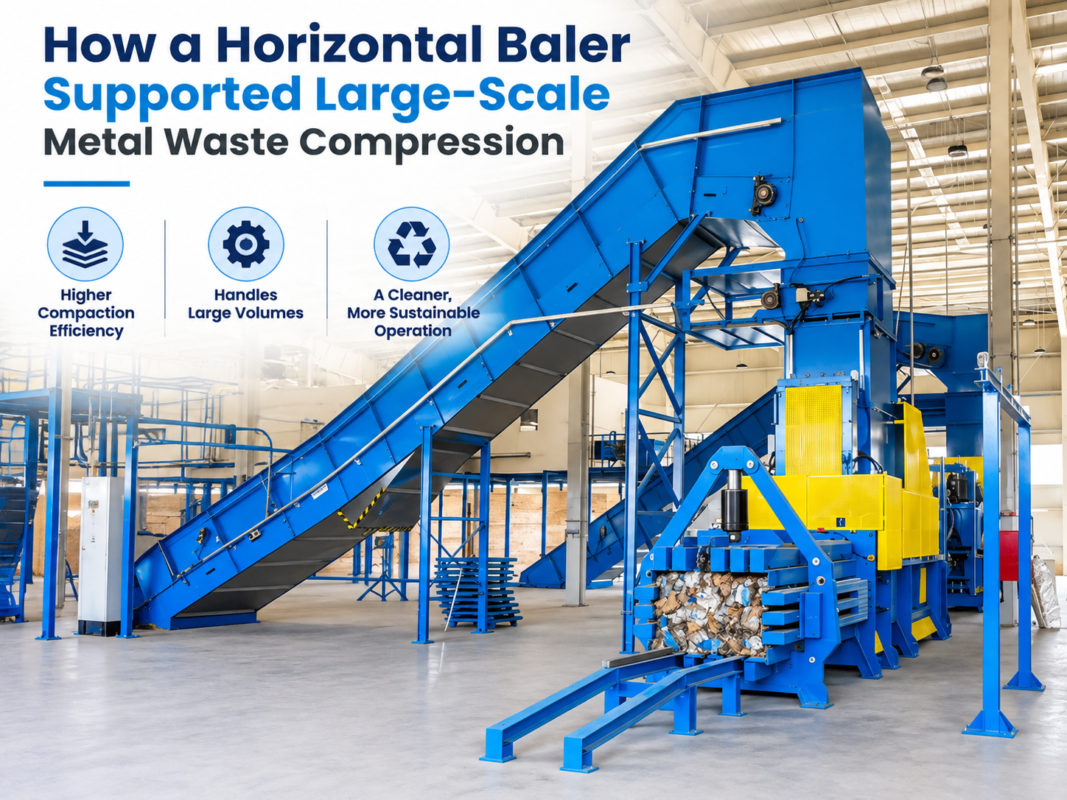
A horizontal baler typically consists of a long, rectangular chamber where a hydraulic ram moves horizontally to compress material against a fixed or adjustable end. Unlike vertical balers, horizontal systems are designed for continuous or semi-continuous operation, often integrated with conveyors or air-sort systems. The design of the chamber must account for the “spring-back” effect of materials like plastics and high-tensile metals, ensuring that once the bale is tied, it maintains its structural integrity for transport.
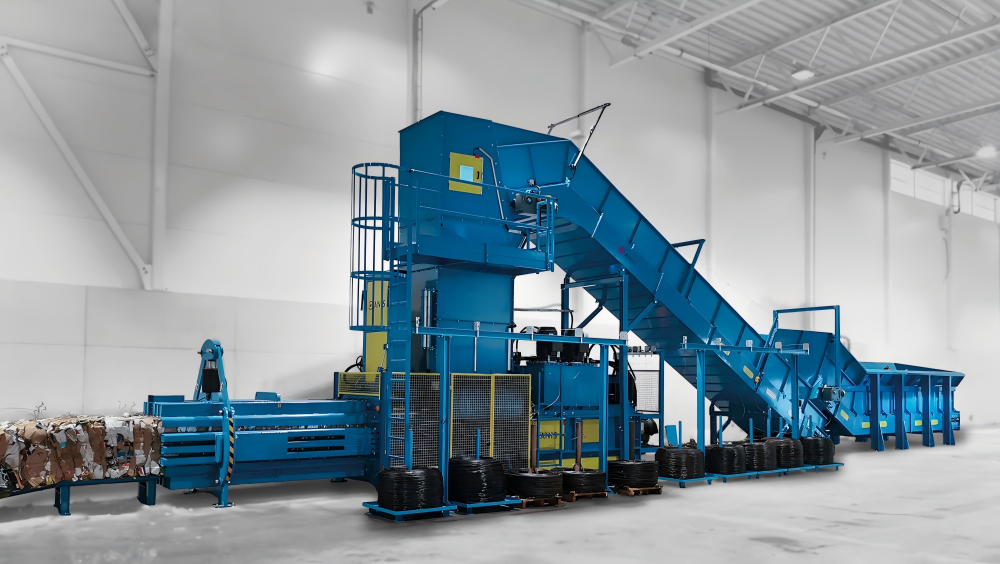
The technical sophistication of a HARSLE horizontal baler chamber involves more than just four steel walls. It incorporates high-wear liners, strategically placed shear blades, and sophisticated tensioning systems. The interaction between the ram face and the chamber walls must be tight enough to prevent material bypass but loose enough to allow for thermal expansion and smooth movement. This balance is critical for maximizing the lifespan of the hydraulic seals and the structural frame of the machine.
Furthermore, the chamber design influences the “dwell time”—the period during which the ram holds the material under peak pressure. Proper chamber design allows for efficient air evacuation from the material, which is essential for achieving high-density bales. Without adequate air escape routes, trapped air can create internal pressure that leads to bale expansion or even “explosive” decompression when the bale exits the chamber.
Core Parameters Influencing Compression and Output
When evaluating Horizontal Baler Bale Chamber Design: It Affects Compression Output, several core parameters must be analyzed. The first is the aspect ratio of the chamber. A chamber that is too wide relative to its height may struggle to distribute pressure evenly across the face of the bale, leading to soft spots. Conversely, a narrow, tall chamber might increase friction to a point where the hydraulic system requires excessive energy to move the ram, reducing overall throughput.
The second parameter is the “Tensioning System.” Modern horizontal balers often feature a three-way or four-way automatic tensioning system. This design allows the exit end of the chamber to constrict or expand based on the resistance sensed by the hydraulic system. For materials with high friction, like cardboard, the chamber might open slightly. For slick materials like plastic film, the chamber tightens to ensure the bale reaches the required density before the tying cycle begins.
Thirdly, the inclusion of shear blades at the top of the chamber is a vital design element. As the ram moves forward, these blades cut off any material overhanging the chamber, ensuring a clean stroke and preventing jams. The clearance between the ram-mounted blade and the stationary chamber blade must be maintained within microns. If the chamber design allows for even slight flexing under load, this clearance is compromised, leading to dull blades and increased mechanical stress.
Finally, the surface texture and material of the chamber liners play a pivotal role. HARSLE utilizes high-carbon, abrasion-resistant steel (such as Hardox) for chamber liners. These liners are often replaceable and may feature longitudinal grooves. These grooves help guide the material and provide a path for the baling wire or plastic strapping to be inserted without snagging, which directly impacts the cycle time and total output per hour.
Calculation Method for Bale Density and Throughput
To understand how design affects performance, engineers use specific calculations to predict output. The primary metric is the Compression Ratio, which is the ratio of the volume of loose material to the volume of the finished bale. For example, if you are processing loose OCC (Old Corrugated Containers) with a density of 30 kg/m³, and the baler produces a bale with a density of 450 kg/m³, the compression ratio is 15:1.
The formula for calculating the theoretical hourly output (T) is:
T = (V × D × C) / 1000
- V: Volume of the bale chamber per stroke (m³)
- D: Target density of the material (kg/m³)
- C: Number of cycles per hour
However, the “Efficiency Factor” (E) must be applied to account for the chamber design. A well-designed chamber with smooth material flow might have an E-factor of 0.9, while a poorly designed one might drop to 0.7 due to friction and jamming. The actual output becomes T_actual = T × E.
Another critical calculation is the Specific Pressure (P_s), which is the total force of the hydraulic cylinder (F) divided by the surface area of the ram face (A). P_s = F / A. If the chamber design is too large for the cylinder’s capacity, the specific pressure will be too low to achieve the required density for export-grade bales. This is why HARSLE carefully matches cylinder bore sizes with chamber dimensions to ensure optimal P_s for different material types.
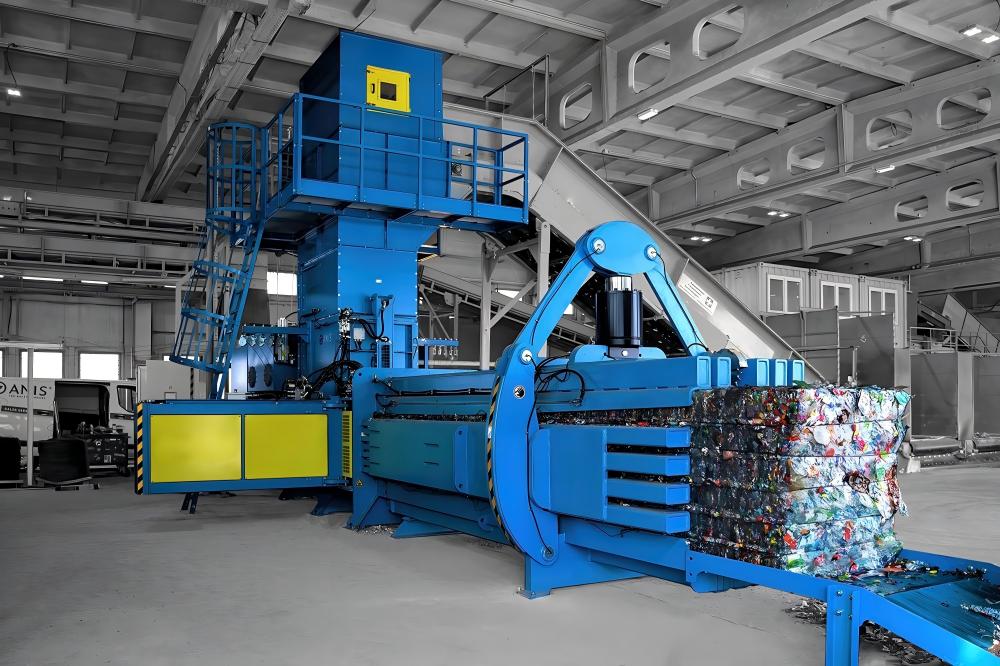
Parameter Table: Chamber Dimensions vs. Output Performance
The following table illustrates how variations in chamber design and hydraulic force affect the output of typical horizontal balers used in industrial settings.
| Model Type | Chamber Size (W x H x L) mm | Press Force (Tons) | Specific Pressure (kg/cm²) | Typical Output (Tons/Hr) | Best For |
|---|---|---|---|---|---|
| HARSLE HB-60 | 750 x 750 x 1500 | 60 | 10.6 | 4 – 6 | Cardboard, Paper |
| HARSLE HB-100 | 1100 x 800 x 2000 | 100 | 11.3 | 8 – 12 | Plastics, PET Bottles |
| HARSLE HB-150 | 1100 x 1100 x 2500 | 150 | 12.4 | 15 – 20 | MSW, Light Metals |
| HARSLE HB-200 | 1300 x 1100 x 3000 | 200 | 13.9 | 25+ | Heavy Scrap, High Volume |
Common Engineering Mistakes in Chamber Design
One of the most frequent mistakes in horizontal baler engineering is the failure to account for Chamber Taper. In a straight-walled chamber, the friction between the material and the side walls increases exponentially as the bale moves toward the exit. This can lead to “bridging,” where the material becomes wedged so tightly that the ram cannot move it. A professional design incorporates a slight outward taper (often adjustable) to allow the bale to move more freely once the initial compression is complete.
Another common error is the use of inadequate Wear Plate Materials. Some manufacturers use standard mild steel for the chamber floor and sides to save costs. However, materials like scrap metal or sand-contaminated plastics are highly abrasive. Within a few months of operation, mild steel walls will thin out, leading to structural warping. HARSLE avoids this by using replaceable Hardox 450 or 500 liners, which maintain a flat, low-friction surface for years of operation.
Inadequate Structural Ribbing is a third mistake. The walls of a bale chamber are subjected to immense lateral forces. If the external reinforcement (the “skeleton” of the baler) is not designed using Finite Element Analysis (FEA), the chamber walls can bow outward. This bowing creates a gap between the ram and the wall, allowing material to get trapped behind the ram head, which eventually causes catastrophic hydraulic failure or frame cracking.
Finally, neglecting the Cooling and Filtration of the hydraulic system in relation to chamber friction is a major oversight. A chamber that generates too much friction will cause the hydraulic oil to overheat rapidly. If the design doesn’t include a high-efficiency heat exchanger or if the chamber friction isn’t minimized through proper geometry, the machine will suffer from frequent downtime as the oil loses its viscosity and the seals begin to leak.
Selection Checklist for Horizontal Baler Buyers
Choosing the right horizontal baler requires a deep dive into the chamber specifications. Use this checklist to ensure the Horizontal Baler Bale Chamber Design: It Affects Compression Output works in your favor:
- Material Compatibility: Does the chamber design include aggressive shear blades for bulky materials or specialized liners for abrasive scrap?
- Tensioning System: Is the tensioning system automatic and multi-directional? This is crucial for maintaining consistent bale density across different material batches.
- Liner Quality: Are the wear liners made of branded abrasion-resistant steel (e.g., Hardox)? Are they easily replaceable without specialized welding?
- Ram Guidance: Look for a ram guided by heavy-duty rollers or oversized wear slides. This prevents the ram from tilting under uneven loads, protecting the chamber walls.
- Bale Size and Weight: Ensure the chamber dimensions produce a bale size that fits perfectly into standard shipping containers or curtain-side trucks to maximize transport efficiency.
- Access Doors: Does the design include safety-interlocked access doors for easy cleaning and maintenance of the chamber interior?
- Cycle Time: Verify the dry cycle time. A fast ram movement is useless if the chamber design causes material jams that require manual intervention.
Frequently Asked Questions (FAQ)
How does chamber length affect the final bale?
Chamber length determines the maximum length of the bale and the number of strokes required to complete it. A longer chamber allows for more material per stroke but requires a longer hydraulic cylinder, which can increase the machine’s footprint and cycle time. Most industrial balers produce a standard bale length of 1.2 to 1.8 meters for optimal shipping.
Why is my horizontal baler producing “banana-shaped” bales?
This is usually caused by uneven material distribution in the chamber or a misalignment of the ram. If the chamber walls are warped or if the tensioning system is applying more pressure to one side than the other, the bale will compress unevenly, resulting in a curved shape that is difficult to stack and transport.
Can I process different materials in the same chamber?
Yes, but the chamber settings must be adjusted. For example, switching from cardboard to plastic requires changing the tensioning pressure and potentially the shear blade clearance. HARSLE balers often feature PLC presets that allow operators to switch between material profiles at the touch of a button.
How often should I replace the chamber liners?
Liner lifespan depends entirely on the material being processed. For clean paper, liners can last 5-10 years. For abrasive scrap metal or glass-contaminated waste, they may need replacement every 12-24 months. Regular inspection for thinning or deep gouges is essential to prevent damage to the main structural frame.
What is the role of the “Pre-Compression” flap?
Some horizontal balers feature a pre-compression flap at the top of the chamber. This flap pushes bulky material down into the chamber before the ram moves forward. This design significantly increases the amount of material processed per stroke, improving the overall output for low-density materials like plastic bottles or large boxes.