How to Maximize Throughput with a Horizontal Baler in Recycling Lines

Technical Overview of Horizontal Balers in Modern Recycling
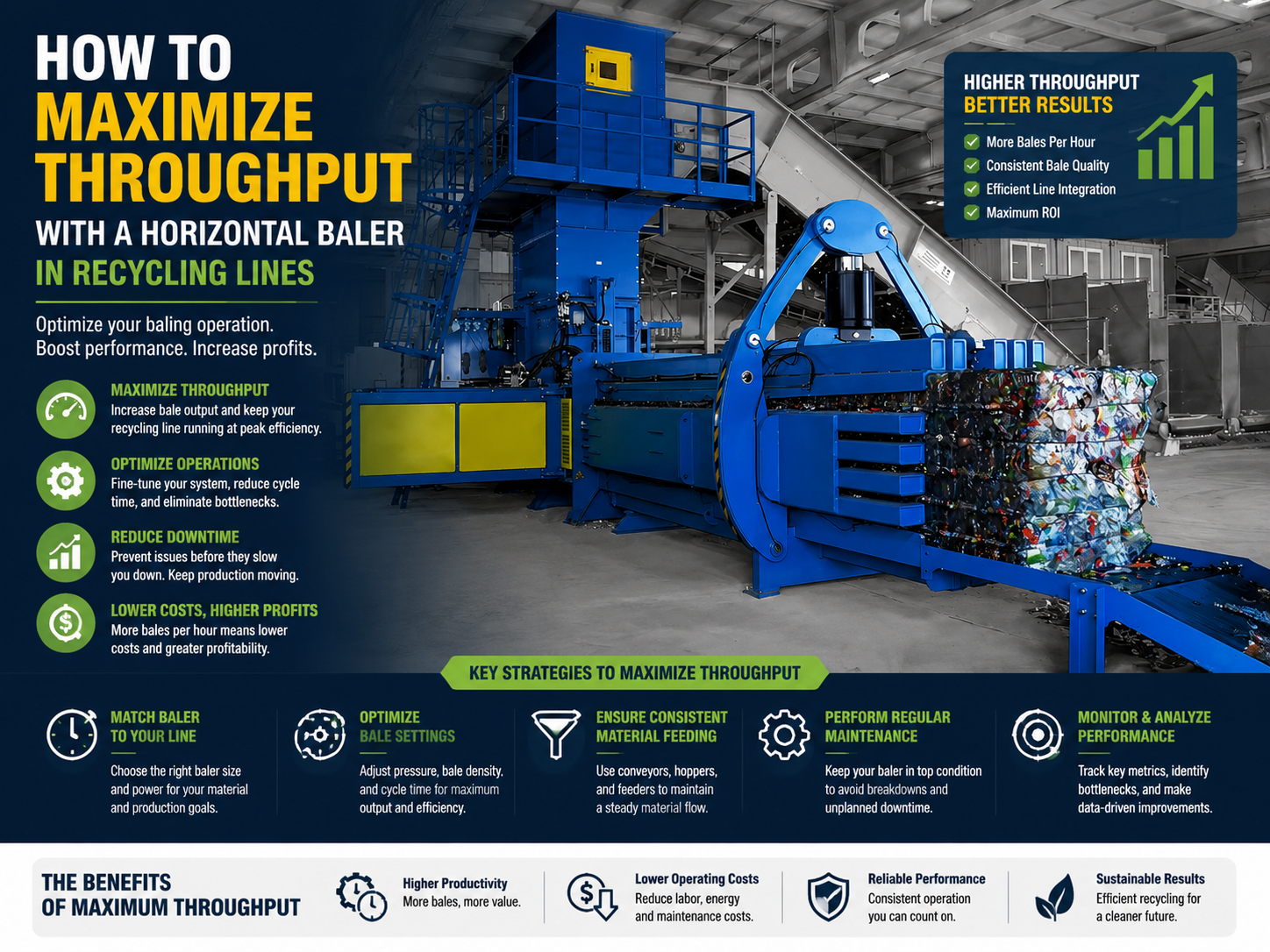
In the high-stakes world of industrial recycling, the horizontal baler stands as the backbone of material processing. Unlike its vertical counterpart, which is often relegated to low-volume retail environments, the horizontal baler is designed for continuous, high-capacity operation. To Maximize Throughput A Horizontal Baler In Recycling Lines, one must first understand the mechanical synergy between the feeding system, the compression chamber, and the tying mechanism. These machines utilize massive hydraulic cylinders to exert force against loose materials—ranging from cardboard (OCC) and plastics (PET/HDPE) to non-ferrous metals—transforming them into dense, stackable cubes ready for transport.
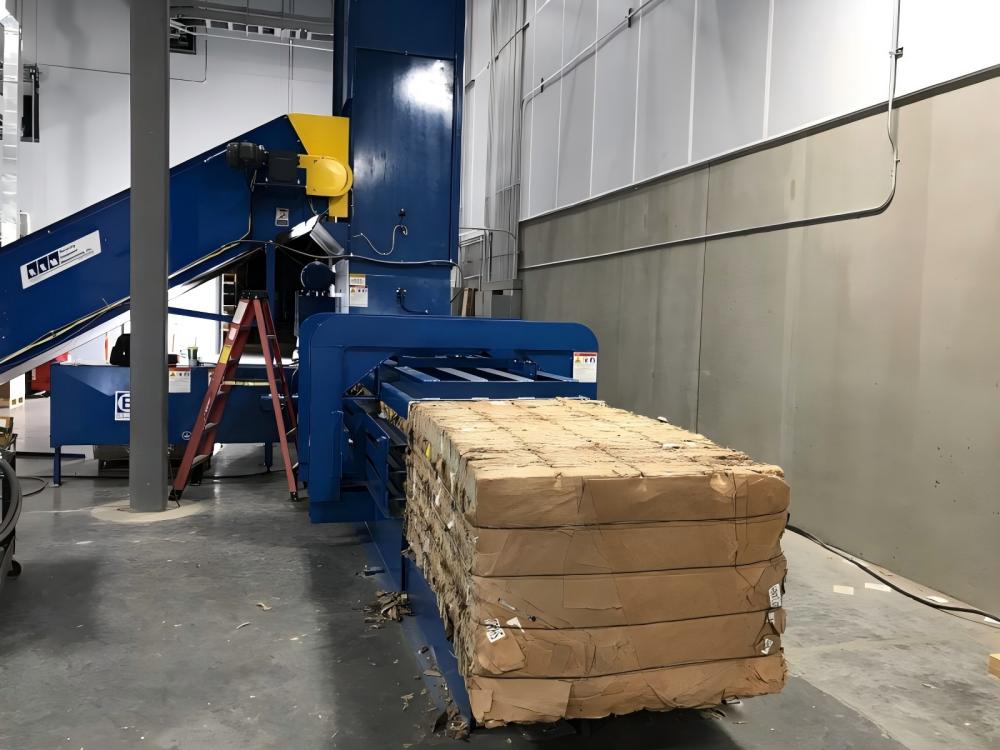
The fundamental advantage of a horizontal configuration is its ability to integrate seamlessly into automated recycling lines. Material is typically fed via a conveyor belt or a pneumatic cyclone system into a large hopper. As the material fills the chamber, a photo-eye sensor triggers the ram. The ram moves horizontally, shearing off excess material with a hardened steel blade before compressing the charge into the bale chamber. This continuous cycle is what allows facilities to process tons of material per hour, a feat impossible with manual-load machines. However, achieving peak efficiency requires more than just turning the machine on; it requires a deep dive into hydraulic flow rates, cycle times, and material density variables.
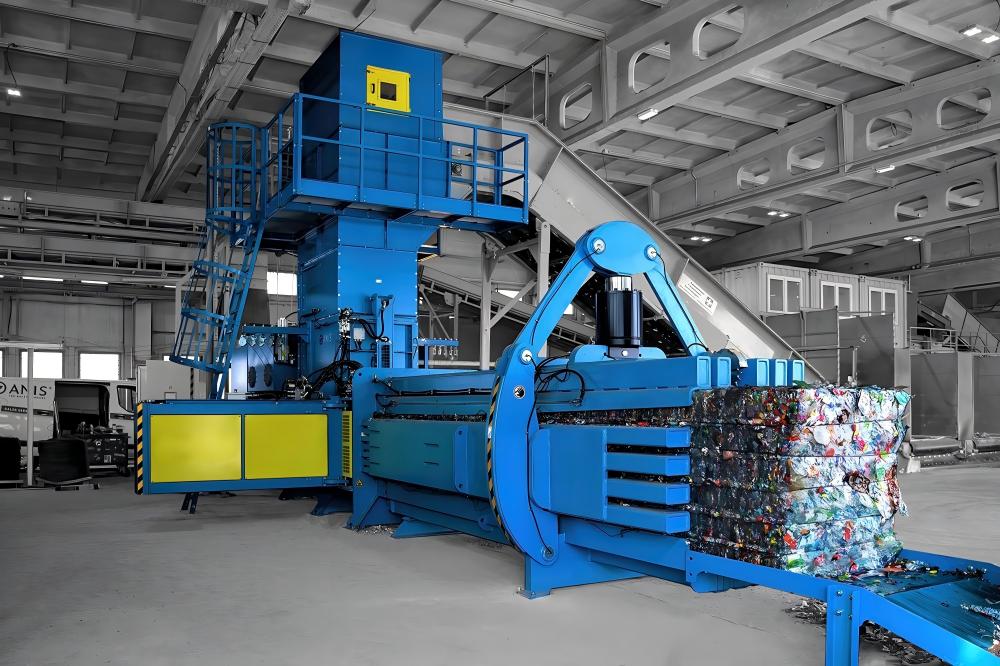
Modern horizontal balers, such as those engineered by HARSLE, often feature advanced PLC (Programmable Logic Controller) systems. These systems allow operators to fine-tune the machine’s behavior based on the specific material being processed. For instance, the pressure required to bale aluminum cans is vastly different from that required for shredded paper. By optimizing these settings, facilities can reduce wear and tear on the hydraulic seals and structural frame while ensuring that every stroke of the ram contributes to maximum bale density. This technical sophistication is the first step in the journey to Maximize Throughput A Horizontal Baler In Recycling Lines.
Furthermore, the structural integrity of the baler plays a critical role in long-term throughput. A machine that flexes under pressure loses energy and risks catastrophic failure. High-quality horizontal balers utilize heavy-duty steel plates and precision-machined guides to ensure the ram travels perfectly straight. This minimizes friction and ensures that the maximum amount of hydraulic force is directed toward material compaction. When we discuss throughput, we are not just talking about speed; we are talking about the consistent production of high-quality bales over thousands of operational hours.
Core Parameters Influencing Throughput
To effectively Maximize Throughput A Horizontal Baler In Recycling Lines, engineers and facility managers must focus on five core parameters: Cycle Time, Ram Force, Feed Opening Size, Motor Horsepower, and Bale Density. Each of these factors is interconnected. For example, increasing the motor horsepower can decrease cycle time by allowing the hydraulic pumps to move more oil per minute, but if the feed opening is too small, the machine will spend half its time waiting for material to enter the chamber.
Cycle Time: This is the duration it takes for the ram to move from its home position, compress the material, and return. In high-throughput environments, every second counts. A baler with a 20-second cycle time will inherently process more material than one with a 30-second cycle. However, the “dry cycle time” (the time without material) is often different from the “loaded cycle time.” Real-world throughput is dictated by how the machine handles the resistance of the material during the final stages of compression.
Ram Force and System Pressure: Measured in tons or kilonewtons, ram force determines how tightly the material is packed. Higher ram force leads to denser bales. Why does density matter for throughput? Because denser bales mean you are moving more weight per bale. If your baler produces 1,000-lb bales instead of 800-lb bales, you are effectively increasing your hourly tonnage without increasing the number of cycles. This is a critical strategy to Maximize Throughput A Horizontal Baler In Recycling Lines while reducing wire consumption and logistics costs.
Feed Opening and Hopper Volume: The physical dimensions of the hopper dictate the volume of material the baler can accept in a single charge. For bulky materials like large cardboard boxes, a large feed opening is essential to prevent bridging—a common issue where material gets stuck in the hopper and prevents the chamber from filling. A well-designed hopper ensures a steady flow of material, keeping the ram constantly engaged and productive.
Calculation Method for Throughput (TPH)
Calculating the theoretical and actual throughput of a horizontal baler is essential for facility planning and ROI analysis. The standard metric is Tons Per Hour (TPH). To calculate this, you need to know the bale weight, the cycle time, and the efficiency factor of your feeding system. The formula is as follows:
Step 1: Determine Bales Per Hour (BPH).
BPH = 3600 / (Cycle Time in seconds + Tying Time in seconds).
Note: Automatic tie balers significantly reduce tying time compared to manual tie models, often taking only 30-45 seconds per bale.
Step 2: Calculate Theoretical TPH.
Theoretical TPH = (BPH × Average Bale Weight in lbs) / 2000.
For example, if a baler produces a 1,500-lb bale every 4 minutes (including tying), it completes 15 bales per hour. 15 × 1,500 = 22,500 lbs, or 11.25 TPH.
Step 3: Apply the Efficiency Factor.
In a real-world recycling line, the baler is rarely fed at 100% capacity every second of the day. Factors like conveyor downtime, material inconsistency, and operator breaks must be accounted for. A typical efficiency factor for a well-managed line is 0.80 to 0.85. Therefore, Actual TPH = Theoretical TPH × 0.85. Understanding this calculation is vital to Maximize Throughput A Horizontal Baler In Recycling Lines because it highlights where the bottlenecks are—whether it’s the machine’s cycle speed or the upstream supply of material.
Horizontal Baler Parameter Table
| Parameter | Standard Duty Model | High-Capacity Model | Industrial Heavy-Duty |
|---|---|---|---|
| Ram Force (Tons) | 60 – 80 Tons | 100 – 120 Tons | 150+ Tons |
| Motor Power (kW/HP) | 22kW / 30HP | 45kW / 60HP | 75kW+ / 100HP+ |
| Cycle Time (Seconds) | 45 – 60 sec | 30 – 40 sec | 20 – 30 sec |
| Bale Size (mm) | 1100 x 750 x Variable | 1100 x 1100 x Variable | 1100 x 1100 x Variable |
| Throughput (OCC) | 2 – 4 TPH | 6 – 10 TPH | 12 – 20+ TPH |
| Tying System | Manual / Semi-Auto | Automatic 4-Wire | Automatic 5-Wire / Dual |
Common Engineering Mistakes in Baler Integration
One of the most frequent mistakes when trying to Maximize Throughput A Horizontal Baler In Recycling Lines is the mismatch between the conveyor speed and the baler’s cycle time. If the conveyor delivers material faster than the baler can process it, the hopper overflows, leading to messy floors and safety hazards. Conversely, if the conveyor is too slow, the baler runs “dry” cycles, wasting electricity and causing unnecessary wear on the hydraulic components. Implementing a variable frequency drive (VFD) on the conveyor that communicates with the baler’s PLC can solve this by adjusting the feed rate based on the hopper’s fill level.
Another common error is neglecting the hydraulic cooling system. Horizontal balers generate significant heat during continuous operation. As hydraulic oil heats up, its viscosity drops, leading to internal leakage in pumps and valves. This results in slower cycle times and reduced ram force. In high-throughput environments, an oversized air-over-oil or water-cooled heat exchanger is not an option; it is a necessity. Failing to maintain the oil temperature within the optimal range (usually 40°C to 55°C) is a guaranteed way to see your throughput plummet during a busy shift.
Material contamination is a third engineering hurdle. For example, if a baler designed for OCC is suddenly fed heavy plastic purgings or metal scraps without adjusting the pressure settings, the shear blades can chip or the frame can suffer fatigue. To Maximize Throughput A Horizontal Baler In Recycling Lines, the system must be robust enough to handle the occasional “non-spec” material, or it must be preceded by a rigorous sorting stage. Furthermore, improper wire tensioning in automatic tie systems can lead to bale breakage. A broken bale in the middle of a production run can cause 30-60 minutes of downtime, instantly negating any gains made through high-speed cycling.
Selection Checklist for High-Throughput Balers
- Material Compatibility: Does the baler feature a shear blade for cardboard or a fluffier for paper? Ensure the machine is built for your specific waste stream.
- Hydraulic Efficiency: Look for regenerative hydraulic circuits. These systems allow the ram to retract faster by redirecting oil, significantly shortening the cycle time.
- Automation Level: For maximum throughput, an automatic tying system is mandatory. Check if the system uses wire or plastic strapping, depending on your end-market requirements.
- Structural Build: Examine the floor liners. High-throughput machines should have replaceable Hardox or similar abrasion-resistant liners to handle the constant friction of material movement.
- PLC and Diagnostics: Does the machine offer remote diagnostics? The ability to troubleshoot a sensor issue via the cloud can save hours of downtime.
- Power Requirements: Ensure your facility’s electrical grid can handle the high startup current of large baler motors, or opt for soft-start/VFD controllers.
- Safety Features: Category 4 safety interlocks and emergency stops are essential when integrating the baler into a larger, automated line.
Frequently Asked Questions (FAQ)
How does bale density affect my overall throughput?
While throughput is often measured in tons per hour, bale density is the secret multiplier. Higher density means you produce fewer bales to reach the same tonnage. This reduces the time the machine spends in the “tying cycle” and reduces the number of times a forklift operator needs to move a bale. To Maximize Throughput A Horizontal Baler In Recycling Lines, always aim for the highest density your transport permits.
What is the most common cause of downtime in horizontal balers?
The most common cause is usually related to the tying mechanism or sensor misalignment. Because horizontal balers operate in dusty, debris-filled environments, photo-eyes can become obscured, and wire-tie needles can get jammed with small pieces of plastic or metal. Regular cleaning and daily inspections of the tying unit are critical for maintaining high throughput.
Can I use one horizontal baler for multiple types of materials?
Yes, but with caveats. Most modern horizontal balers have “recipes” programmed into the PLC. You can switch from “Cardboard Mode” to “Plastic Mode” with the touch of a button, which adjusts the ram pressure and bale length. However, to Maximize Throughput A Horizontal Baler In Recycling Lines, you should group similar materials together to minimize the time spent recalibrating the machine.
How often should the hydraulic oil be changed?
For a machine running 16-24 hours a day in a high-throughput recycling line, hydraulic oil should typically be sampled every 2,000 hours and changed as needed. However, the filters should be replaced much more frequently. Clean oil is the lifeblood of the hydraulic system; contaminated oil will wear out the pump, leading to a gradual and costly decline in throughput speed.
Is a closed-end or open-end baler better for throughput?
Open-end (auto-tie) balers are generally superior for throughput because they allow for continuous extrusion and automatic tying. Closed-end balers require the ram to stop and hold pressure against a door for the bale to be tied and ejected, which creates a significant bottleneck in high-volume recycling lines.