Comprehensive Guide: How to Troubleshoot Start-Up Problems in an Aluminium Extrusion Press

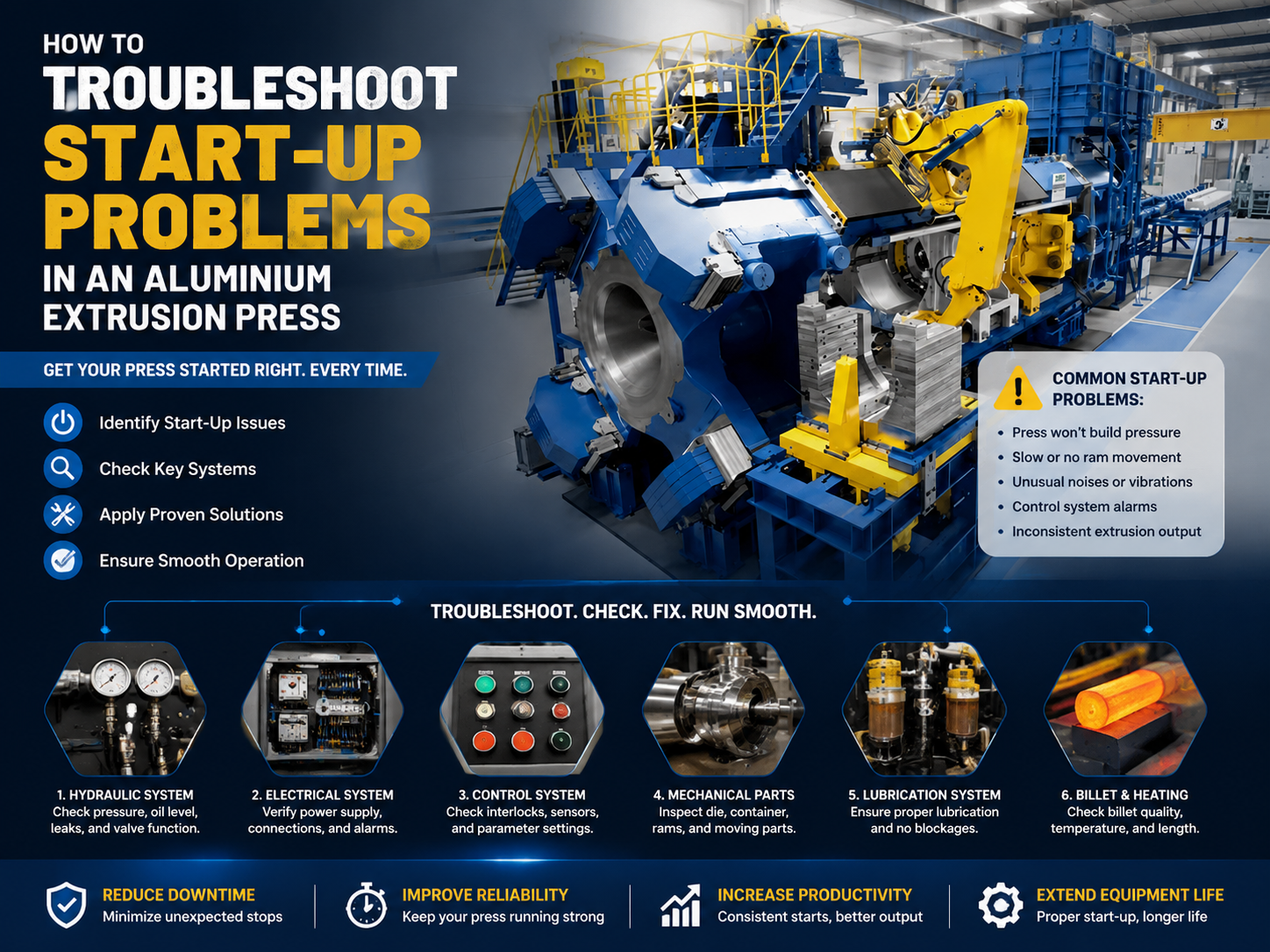
Introduction to Aluminium Extrusion Press Start-Up Challenges
The aluminium extrusion press is the heart of any profile production facility. These massive machines utilize immense hydraulic force to push heated aluminium billets through a precision-engineered die, creating complex shapes used in everything from aerospace components to window frames. However, the complexity of these machines means that the start-up phase is often the most critical and potentially problematic time. When an operator attempts to Troubleshoot Start-Up Problems In An Aluminium Extrusion Press, they are often dealing with a convergence of hydraulic, electrical, and thermal variables that must align perfectly for the machine to function.
At HARSLE, we understand that downtime is the enemy of profitability. A press that fails to start up correctly can delay entire production schedules, lead to wasted energy, and potentially damage expensive tooling. Start-up problems can range from simple sensor misalignments to complex hydraulic pressure failures. Understanding the systematic approach to diagnosing these issues is essential for any maintenance team or machine operator. This guide aims to provide a deep dive into the common hurdles faced during the initial activation of an aluminium extrusion press and how to resolve them efficiently.
Modern extrusion presses are equipped with sophisticated Programmable Logic Controllers (PLCs) and Human-Machine Interfaces (HMIs) that provide diagnostic data. However, the data is only as good as the technician’s ability to interpret it. Troubleshooting is not just about reading error codes; it is about understanding the mechanical and fluid dynamics at play. Whether you are operating a direct or indirect extrusion press, the fundamental principles of start-up remain similar: power, pressure, temperature, and synchronization.
In the following sections, we will explore the key considerations for a successful start-up, the technical details of the press components, and a step-by-step troubleshooting guide. By the end of this article, you will have a comprehensive framework to ensure your HARSLE aluminium extrusion press—or any industrial press—starts reliably every time, maximizing your facility’s throughput and equipment lifespan.
Key Considerations Before Troubleshooting
Before diving into the technical repairs, it is vital to establish a baseline of safety and environmental conditions. The first consideration is the power supply. Aluminium extrusion presses require significant electrical loads to run the main hydraulic pumps and the billet heating systems. Fluctuations in voltage or a missing phase can prevent the motors from starting or cause them to trip the circuit breakers immediately. Always verify that the incoming power matches the machine’s specifications and that all emergency stop buttons are reset.
Another critical factor is the hydraulic oil condition. During a cold start, the viscosity of the hydraulic fluid may be too high for the pumps to move efficiently. Most high-end presses, including those from HARSLE, feature oil pre-heating systems. If the oil is too cold, the PLC may prevent the main pumps from engaging to protect them from cavitation. Conversely, if the oil has been contaminated with air or moisture during a period of inactivity, the system will fail to build the necessary pressure to move the main ram.
Safety interlocks are perhaps the most common cause of start-up failures. These presses are designed with multiple layers of safety, including light curtains, gate sensors, and pressure relief valves. If a single safety gate is not fully closed or a sensor is obscured by debris, the start-up sequence will be inhibited. Troubleshooting should always begin with a physical inspection of all safety devices to ensure they are in their “ready” state. This simple step can save hours of unnecessary technical diagnostics.
Finally, consider the thermal state of the machine. An aluminium extrusion press is not just a mechanical device; it is a thermal one. The container, the die, and the billet must all be at specific temperatures before the press can safely operate. If the container heating elements have failed, the billet will lose heat too quickly upon loading, leading to a “stuck” extrusion or a high-pressure spike that triggers an emergency shutdown. Ensuring that the thermal management system is fully operational is a prerequisite for a successful start-up.
Technical Details of the Extrusion Press System
To effectively Troubleshoot Start-Up Problems In An Aluminium Extrusion Press, one must understand the interaction between the hydraulic circuit and the electrical control system. The hydraulic system typically consists of several high-pressure axial piston pumps driven by large electric motors. These pumps feed a manifold block that directs oil to the main cylinder, the container shifting cylinders, and the shear. If the main pump fails to prime, the system will remain stagnant. This is often caused by a faulty suction valve or a leak in the suction line that allows air to enter the pump housing.
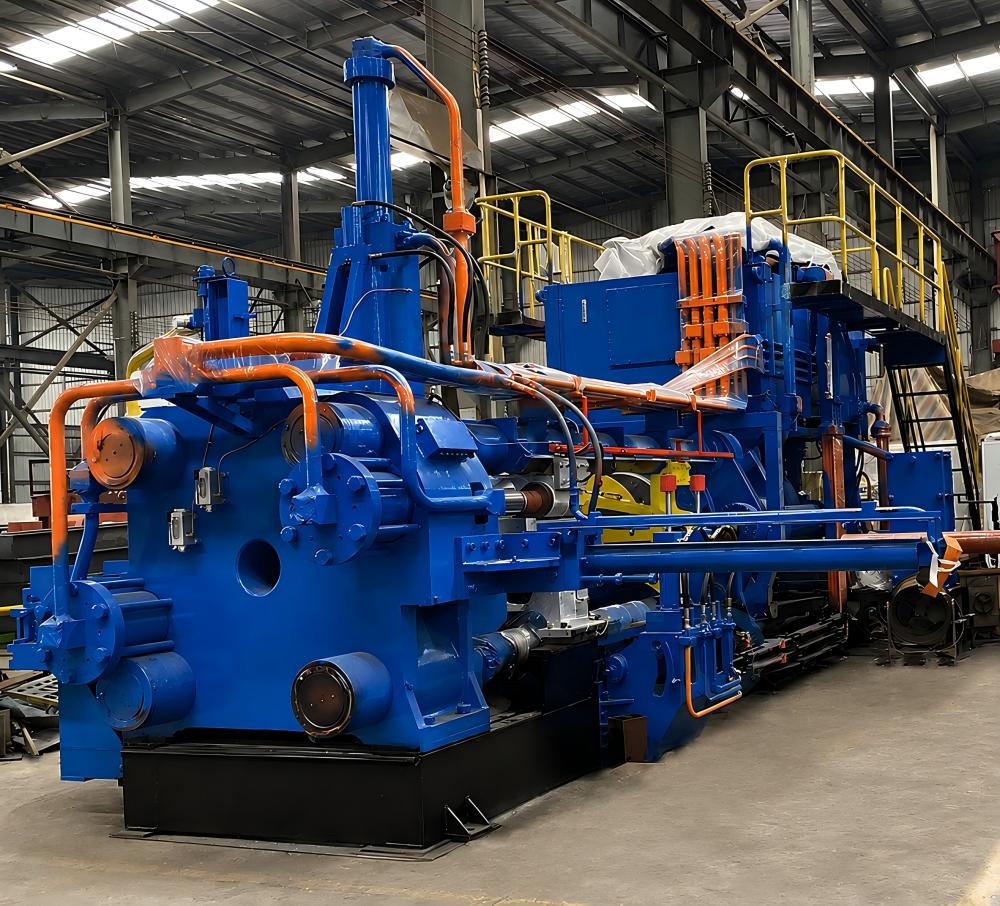
The electrical system acts as the brain of the press. The PLC monitors hundreds of inputs per second. During start-up, the PLC executes a “handshake” protocol. It checks if the ram is in the home position, if the container is sealed against the die, and if the billet loader is retracted. If any of these digital inputs are missing, the sequence halts. Technicians should use the HMI to check the I/O (Input/Output) status. A common technical failure is a proximity switch that has vibrated out of alignment, sending a false signal that a component is not in its correct position.
The mechanical alignment of the press is also a technical hurdle. The main ram must be perfectly concentric with the container. If there is a misalignment, the dummy block may strike the edge of the container during the forward stroke, causing a mechanical jam and an immediate pressure overload. This is often a result of worn wear plates or guide rails. Regular measurement of the press centerline is essential, especially after a long period of shutdown or maintenance where components were moved.
Furthermore, the billet heating and handling system must be synchronized with the press. Modern HARSLE presses often use induction heaters or gas-fired ovens. If the communication link between the heater and the press is broken, the press will not receive the “billet ready” signal. This communication is usually handled via a Profibus or Ethernet/IP link. Troubleshooting this requires checking the network cables and the communication parameters in the PLC software to ensure the two machines are “talking” to each other correctly.
Common Hydraulic Start-Up Issues
- Pump Cavitation: Characterized by a high-pitched whining noise. Usually caused by cold oil or a clogged suction filter.
- Solenoid Valve Failure: If the ram won’t move despite the pump running, a directional control valve may be stuck or its coil may be burnt out.
- Pressure Relief Valve Misadjustment: If the valve is set too low, the oil will bypass back to the tank before the ram can move the billet.
- Air Trapped in Cylinders: Causes jerky or “spongy” movement. Requires bleeding the system through the designated bleed ports.
Electrical and Control System Diagnostics
When the HMI displays a “Start-Up Interrupted” message, the first step is to look at the alarm history. Modern systems categorize alarms into “Warnings” and “Faults.” A fault will stop the machine, while a warning might just prevent the next cycle. Check the 24V DC power supply; if this voltage drops due to a short circuit in a sensor, the entire control logic can become unstable. Additionally, check the grounding of the machine. Electrical noise from the high-power motors can interfere with sensitive sensor signals if the shielding and grounding are not properly maintained.
Selection Advice for Reliable Extrusion Machinery
Choosing the right aluminium extrusion press is the first step in minimizing future start-up problems. When evaluating machinery, look for brands like HARSLE that prioritize component quality. A press is only as reliable as its weakest valve or sensor. Opt for machines that utilize world-class hydraulic components (such as Rexroth or Vickers) and electrical systems (such as Siemens or Schneider Electric). These components have higher tolerances for industrial environments and are easier to find replacements for during urgent troubleshooting.
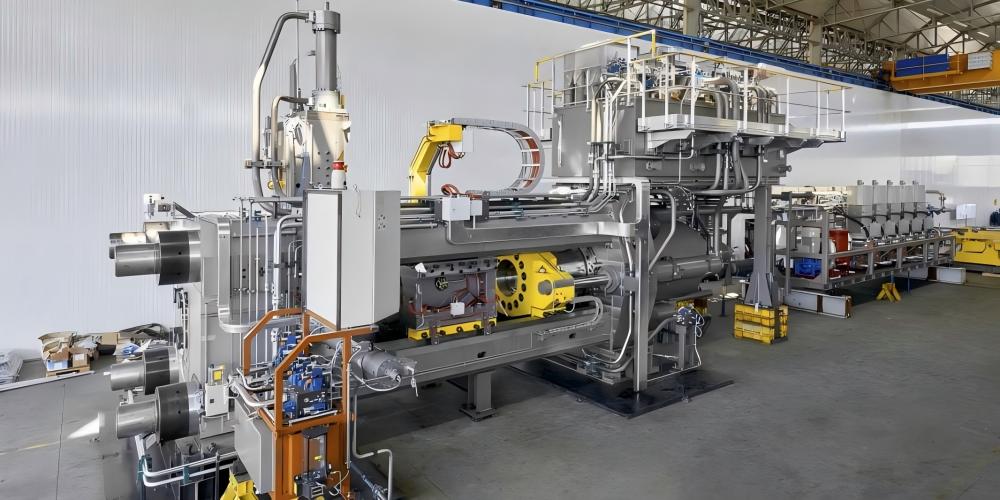
Consider the design of the hydraulic circuit. A well-designed press will have a modular hydraulic manifold, which makes it much easier to isolate and troubleshoot specific valves. Furthermore, look for presses that offer advanced diagnostic software. A system that can provide real-time pressure graphs and I/O status on the HMI allows operators to identify the root cause of a start-up failure in minutes rather than hours. This “smart” functionality is a hallmark of modern metal fabrication equipment.
Another factor in selection is the manufacturer’s support and documentation. A comprehensive manual with detailed hydraulic schematics and electrical diagrams is indispensable when you need to Troubleshoot Start-Up Problems In An Aluminium Extrusion Press. HARSLE provides extensive documentation and technical support to ensure that users can maintain their machines effectively. Additionally, check the availability of training for your staff; a well-trained operator is the best defense against start-up errors caused by improper machine settings.
Finally, evaluate the build quality of the mechanical structure. A rigid, heavy-duty frame reduces vibration, which is a leading cause of sensor failure and hydraulic fitting leaks. A press that is built to last will maintain its alignment for years, preventing the mechanical start-up issues associated with cheaper, lighter models. Investing in a high-quality press upfront significantly reduces the Total Cost of Ownership (TCO) by minimizing downtime and repair costs over the machine’s lifecycle.
Frequently Asked Questions (FAQ)
1. Why does my extrusion press fail to build pressure during start-up?
This is often due to a bypass in the hydraulic system. Check the main pressure relief valve to ensure it isn’t stuck open. Additionally, inspect the piston seals in the main cylinder; if they are severely worn, oil will leak past the piston, preventing pressure build-up. Lastly, ensure the pump is fully primed and not sucking air.
2. What should I do if the HMI shows a “Safety Interlock Not Met” error?
Walk around the machine and check every safety gate, emergency stop button, and light curtain. Ensure that no tools or debris are blocking the sensors. If all physical barriers are closed, check the PLC input for each safety device to identify if a specific sensor has failed or lost power.
3. How does ambient temperature affect the start-up of an aluminium extrusion press?
Cold ambient temperatures increase the viscosity of the hydraulic oil, making it harder to pump and potentially causing cavitation. Most presses require the oil to be at least 20-25°C before the main pumps can be started. Use the built-in oil heaters to bring the fluid to the correct operating temperature.
4. Why is the billet heater not syncing with the press?
This is usually a communication error. Check the Ethernet or serial cables between the heater’s control panel and the press’s PLC. Ensure that the IP addresses or node IDs are correctly configured in the software. Sometimes, a simple reboot of both control systems can resolve communication glitches.
5. Can a misaligned die cause start-up problems?
Yes. If the die is not seated correctly in the die slide, the container will not be able to form a perfect seal. This can trigger a limit switch error or cause a massive pressure drop (and a messy “flash” of aluminium) when the extrusion starts. Always verify die alignment before initiating the cycle.
Conclusion: Ensuring Smooth Operations
Successfully managing an aluminium extrusion facility requires a proactive approach to maintenance and a deep understanding of your machinery. To Troubleshoot Start-Up Problems In An Aluminium Extrusion Press effectively, one must combine technical knowledge with a systematic diagnostic process. By checking the basics—power, oil, and safety—before moving into complex hydraulic and electrical analysis, you can significantly reduce the time the machine sits idle.
HARSLE remains committed to providing high-performance extrusion presses that are designed for reliability and ease of use. However, even the best machines require a skilled hand to keep them running at peak efficiency. Regular training, adherence to maintenance schedules, and using high-quality replacement parts are the keys to avoiding the common pitfalls of press start-up. Remember that every minute saved during troubleshooting is a minute added to your production output.
In conclusion, while start-up problems can be frustrating, they are often solvable with patience and the right tools. By following the guidelines laid out in this guide, you can ensure that your aluminium extrusion press remains a productive asset for years to come. For more technical guides and high-quality metal fabrication machinery, continue to explore HARSLE’s industrial resources and product catalogs.