Comprehensive Guide: How to Fix Profile Twisting in Aluminium Extrusion Press Output

Introduction to Profile Twisting in Aluminium Extrusion
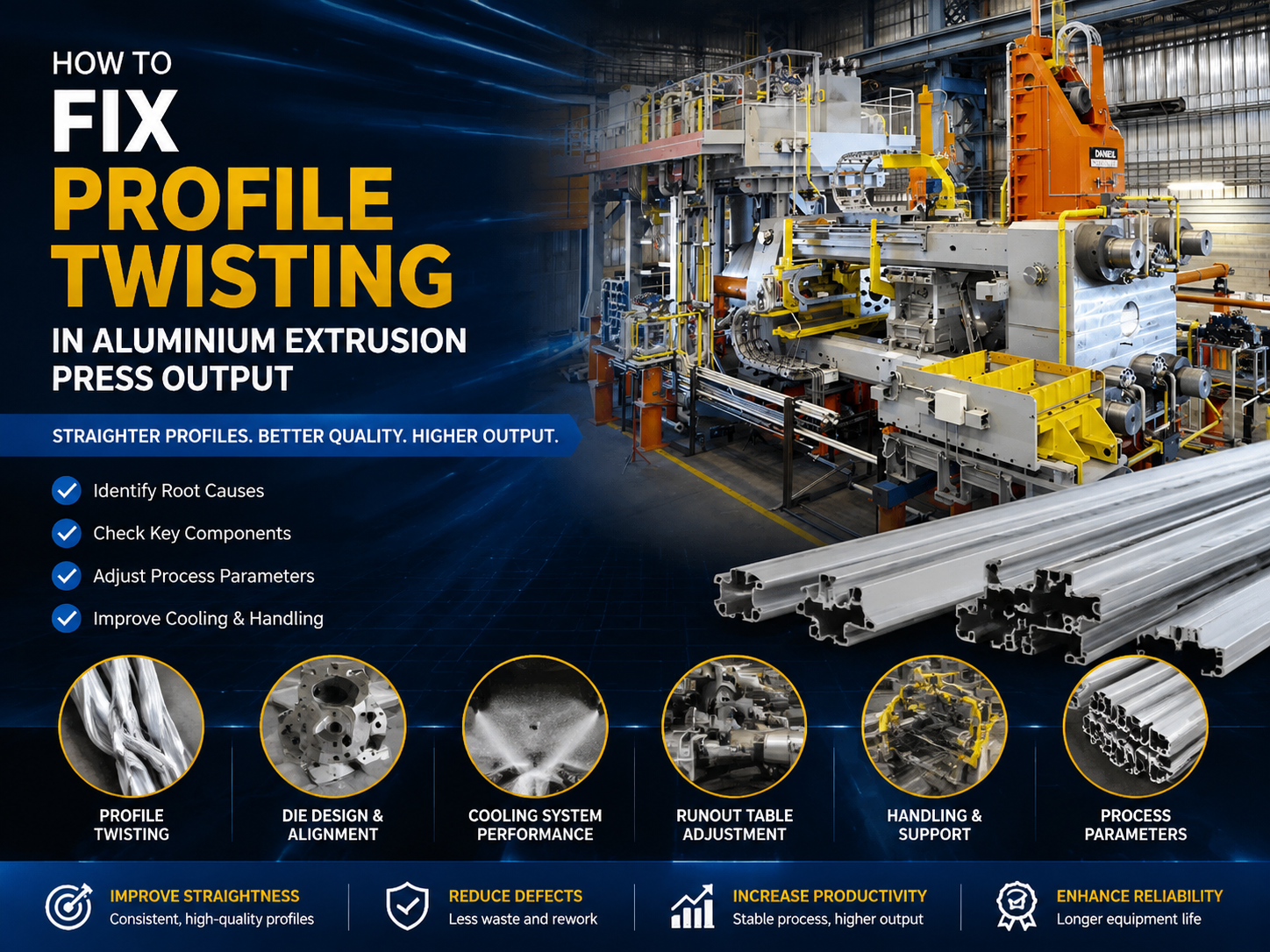
In the high-precision world of metal fabrication, the aluminium extrusion process stands as a cornerstone for producing complex shapes used in everything from aerospace components to architectural window frames. However, one of the most persistent and frustrating challenges faced by operators is profile twisting. When an aluminium profile exits the die and exhibits a rotational distortion along its longitudinal axis, it is referred to as ‘twisting.’ This defect not only compromises the aesthetic quality of the product but also renders it structurally unsound for precision assemblies.
To Fix Profile Twisting In Aluminium Extrusion Press Output, one must first understand that this is rarely the result of a single isolated factor. Instead, it is typically a manifestation of imbalances in flow velocity, temperature gradients, or mechanical misalignment. For manufacturers using high-performance machinery like HARSLE extrusion presses, maintaining tight tolerances is essential to minimize scrap rates and maximize throughput. This guide provides a deep dive into the technical causes of twisting and offers actionable solutions to restore output straightness.
Twisting is particularly problematic in asymmetrical profiles where the wall thickness varies significantly across the cross-section. Because aluminium flows faster through thicker sections and slower through thinner ones, the resulting internal stresses can cause the metal to corkscrew as it leaves the press. Addressing this requires a holistic approach that encompasses die metallurgy, hydraulic stability, and post-extrusion handling. By the end of this article, you will have a comprehensive roadmap to identifying and rectifying these issues in your production line.
Key Considerations for Preventing Profile Distortion
Before diving into mechanical adjustments, it is vital to consider the foundational elements of the extrusion environment. The first consideration is the Billet Temperature Uniformity. If a billet is heated unevenly—for instance, if one side is hotter than the other—the hotter metal will exhibit lower flow stress and move faster through the die. This differential speed is a primary driver of twisting. Modern induction heaters and gas-fired furnaces must be calibrated to ensure a ‘tapered’ heat profile if necessary, but never a side-to-side imbalance.
The second consideration is Die Design and Bearing Length. The bearing is the part of the die that controls the friction and speed of the metal flow. If the bearing lengths are not perfectly calculated to compensate for the profile’s geometry, the metal will exit the die at different velocities. To fix profile twisting in aluminium extrusion press output, die shop technicians often have to ‘choke’ or ‘relieve’ certain areas of the die bearing to equalize the flow. This is a delicate process that requires significant expertise in fluid dynamics and metallurgy.
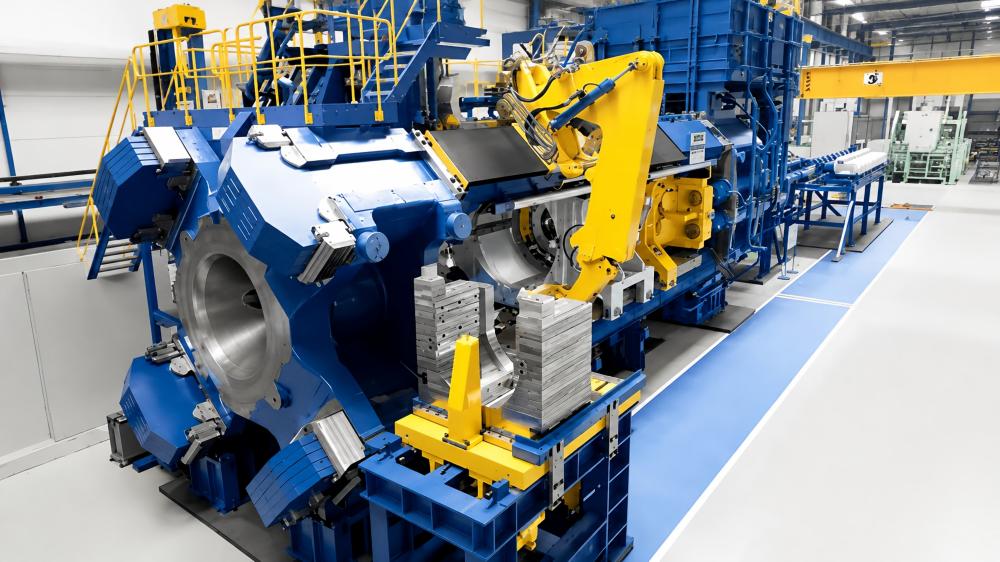
Thirdly, the Alignment of the Press Components cannot be overlooked. The relationship between the container, the die slide, and the ram must be perfectly concentric. Even a few millimeters of misalignment can create lateral pressure on the die, leading to an uneven exit speed. Regular laser alignment checks are recommended for heavy-duty industrial machinery to ensure that the force of the hydraulic ram is distributed evenly across the billet face.
Finally, consider the Alloy Composition. Different alloys, such as 6061 versus 6063, have different flow characteristics and thermal contraction rates. An extrusion speed that works perfectly for one alloy might cause excessive twisting in another due to the way the material reacts to friction at the die interface. Understanding the specific rheology of the material being processed is the first step toward a stable extrusion cycle.
Technical Details: Root Causes and Mechanical Fixes
1. Flow Velocity Imbalance and Die Correction
The most common technical cause of twisting is an imbalance in the velocity of the metal as it exits the die. In a complex profile, the metal naturally wants to flow faster in the center and slower at the edges due to friction against the die walls. To counteract this, die designers use varying bearing lengths. A longer bearing increases friction and slows the metal down, while a shorter bearing speeds it up. If you observe a clockwise twist, it indicates that the metal on one side of the profile is moving faster than the other. To fix this, the die must be removed and the bearings adjusted—specifically, increasing the bearing length on the ‘fast’ side or decreasing it on the ‘slow’ side.
2. Puller Synchronization and Tension
The puller is a critical component in modern extrusion lines. Its job is to guide the profile away from the die and maintain a slight, consistent tension. If the puller is not synchronized with the extrusion speed, or if the puller jaws are not gripping the profile symmetrically, it can actually induce a twist. For example, if the puller applies more force to the left side of a wide profile than the right, the resulting torque will cause a permanent twist as the metal is still in its plastic state. Ensuring that the puller tracks are level and the gripping pressure is balanced is a fundamental mechanical fix.
3. Asymmetric Cooling and Quenching
As the aluminium profile exits the press, it must be cooled (quenched) to achieve the desired mechanical properties. However, if the cooling air or water spray is applied unevenly, the profile will contract at different rates. This thermal contraction creates internal stresses that manifest as twisting or bowing. To fix profile twisting in aluminium extrusion press output caused by cooling, operators should inspect the spray nozzles or air fans for blockages. The goal is to achieve a uniform temperature drop across the entire cross-section of the profile simultaneously.
4. Container and Stem Alignment
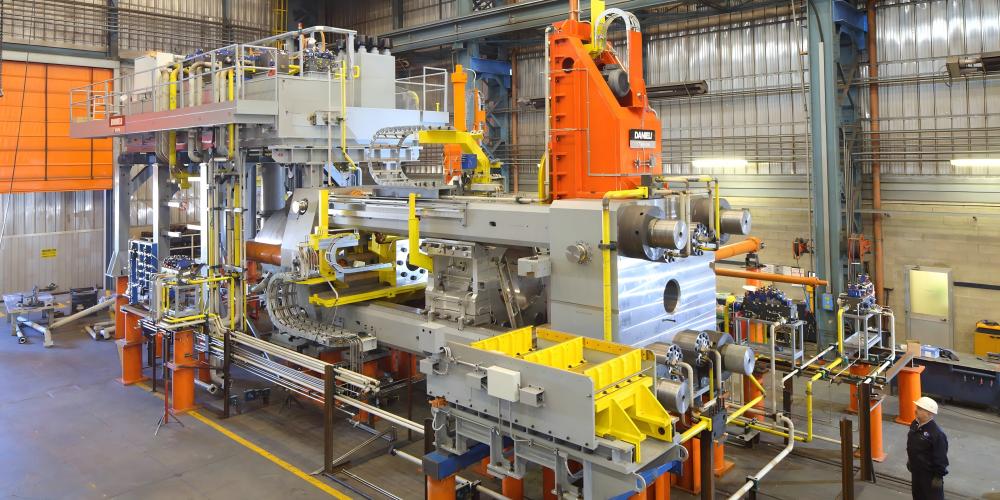
Over time, the heat and pressure of the extrusion process can cause the press frame to shift or the container to wear unevenly. If the container is not perfectly parallel to the die, the billet is compressed at an angle. This creates a ‘dead metal zone’ that is larger on one side than the other, leading to an uneven flow into the die ports. Regular maintenance should include checking the wear plates of the container and ensuring the stem (ram) is not deflected during the high-pressure phase of the stroke. Using high-quality HARSLE machinery ensures that these components are built with the rigidity necessary to resist such deflections.
Selection Advice: Choosing the Right Press to Minimize Defects
When investing in new metal fabrication equipment, selecting a press that offers superior control over extrusion variables is the best way to prevent twisting before it starts. Here are several features to look for:
- Advanced PLC Control Systems: Look for presses equipped with sophisticated software that can monitor and adjust extrusion speed in real-time. A stable, controlled speed is essential for maintaining flow balance.
- Multi-Zone Billet Heating: Systems that allow for precise temperature gradients (taper heating) help compensate for the heat generated by friction during the extrusion stroke, ensuring the metal enters the die at the optimal temperature.
- Rigid Frame Construction: A press with a high-rigidity four-column or pre-stressed frame will experience less deflection under load, maintaining the critical alignment between the ram, container, and die.
- Integrated Puller Systems: Modern HARSLE presses often feature integrated pullers that are digitally synced with the main hydraulic pump, providing the smoothest possible transition from the die to the cooling table.
Furthermore, consider the Hydraulic System Efficiency. Inconsistent hydraulic pressure can lead to ‘surges’ in extrusion speed, which are a major cause of profile defects. High-end presses utilize servo-driven pumps or proportional valves to ensure that the pressure remains constant throughout the entire cycle. When evaluating a supplier, ask for the precision specifications of their hydraulic control and the frequency of their automated alignment checks.
Frequently Asked Questions (FAQ)
Why does my profile only twist at the end of the extrusion cycle?
This is often due to ‘temperature buildup.’ As the extrusion progresses, friction between the billet and the container generates heat. By the end of the stroke, the metal is hotter and flows faster. If your die is not designed to handle this increased flow, or if your press doesn’t have ‘isothermal extrusion’ capabilities (slowing down as heat increases), twisting may occur toward the tail end of the profile.
Can a worn die cause twisting?
Yes, absolutely. As the die bearing surfaces wear down, they lose their ability to regulate friction. If one part of the die wears faster than another—perhaps due to a lack of nitriding or poor lubrication—the flow will become unbalanced. Regular die maintenance and re-nitriding are essential to fix profile twisting in aluminium extrusion press output over long production runs.
How much tension should the puller apply?
The puller should apply just enough tension to keep the profile straight and guided, but not so much that it stretches the metal. Typically, this is a very low force. If the tension is too high and the profile is asymmetrical, the puller will naturally pull the ‘weaker’ or ‘thinner’ side more, inducing a twist. The tension should be calibrated based on the cross-sectional area of the profile.
Is twisting related to the billet’s chemical composition?
While not the primary cause, variations in the alloy (like excess magnesium or silicon) can change the flow stress. If a batch of billets is inconsistent, you may find that a die that worked perfectly yesterday is producing twisted profiles today. Always verify your raw material certificates.
Conclusion: Achieving Precision in Every Extrusion
Fixing profile twisting in aluminium extrusion press output is a technical challenge that requires a systematic approach. By addressing the three pillars of extrusion—die geometry, thermal management, and mechanical alignment—manufacturers can significantly reduce scrap and improve product quality. It begins with a well-designed die that balances flow velocity through precise bearing lengths and continues with a press that maintains absolute structural integrity under pressure.
For those in the metal fabrication industry, the choice of machinery is paramount. High-quality equipment, such as that provided by HARSLE, offers the stability and control necessary to manage the complex variables of aluminium extrusion. Regular maintenance, including laser alignments and die inspections, ensures that your production line remains efficient and your profiles remain straight. By implementing the strategies outlined in this guide, you can master the art of extrusion and deliver flawless components to your clients every time.
In summary, remember that twisting is a symptom of an underlying imbalance. Whether it is a temperature differential in the billet, a friction variance in the die, or a synchronization issue with the puller, identifying the root cause is the only way to implement a permanent fix. Stay diligent with your data monitoring, invest in the right technology, and prioritize precision in every step of the process.