
How Hammer Shredders Are Used In Construction Waste Metal Recovery: A Comprehensive Guide

Introduction to Metal Recovery in the Construction Sector
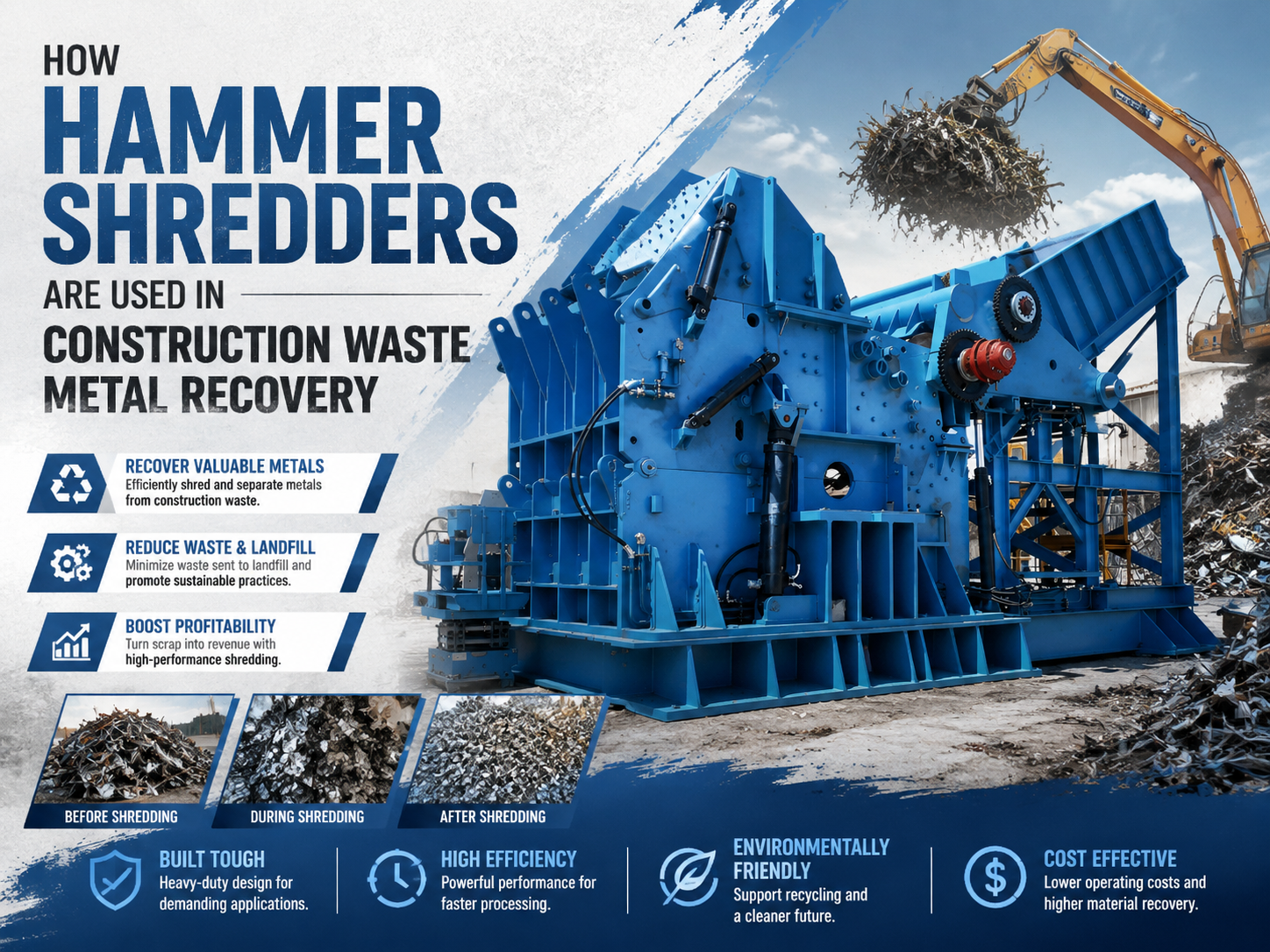
The global construction industry generates millions of tons of waste annually, a significant portion of which consists of valuable metals. As urban redevelopment accelerates, the need for efficient recycling methods becomes paramount. This is where the role of heavy-duty industrial machinery becomes critical. Specifically, understanding How Hammer Shredders Are Used In Construction Waste Metal Recovery is essential for any facility looking to optimize its scrap processing and contribute to a circular economy.
Hammer shredders, often referred to as hammer mills in certain contexts, are high-torque, high-impact machines designed to pulverize bulky materials into smaller, manageable fragments. In the context of construction and demolition (C&D) waste, these machines are the frontline defense against landfill accumulation. They take heterogeneous mixtures of concrete, rebar, structural steel, and aluminum, and through sheer mechanical force, liberate the metal from non-metallic attachments. This process not only cleans the metal for resale but also significantly increases its bulk density, making transportation more cost-effective.
HARSLE has long been at the forefront of providing robust solutions for metal fabrication and recycling. By implementing advanced hammer shredder technology, operators can transform what was once considered ‘debris’ into high-purity raw materials for steel mills and foundries. In this guide, we will delve deep into the mechanics, strategic considerations, and technical specifications that define how these machines revolutionize the recovery of metals from construction sites.
Key Considerations for Construction Waste Metal Recovery
When evaluating How Hammer Shredders Are Used In Construction Waste Metal Recovery, one must first consider the diversity of the input material. Construction waste is notoriously unpredictable. It may contain heavy structural I-beams, tangled rebar, copper wiring, or aluminum window frames, often encased in concrete or coated in lead-based paints. A hammer shredder must be versatile enough to handle these varying hardness levels without frequent mechanical failure.
Economic viability is the second major consideration. The goal of using a hammer shredder is to produce a ‘shredded’ grade of scrap that commands a higher market price than ‘unprepared’ scrap. Shredded metal is preferred by steel mills because it melts faster and contains fewer impurities. Therefore, the efficiency of the shredder directly impacts the ROI of the recycling facility. Operators must balance the energy consumption of the massive electric motors against the throughput of the machine to ensure profitability.
Environmental and regulatory compliance also plays a significant role. Modern construction projects are often subject to ‘Green Building’ certifications like LEED, which require a certain percentage of waste to be diverted from landfills. Hammer shredders facilitate this by ensuring that even the smallest metal fragments are recovered. Furthermore, dust suppression and noise control systems are vital considerations, especially if the recovery facility is located near urban centers where construction waste is most prevalent.
Safety remains the most critical human consideration. Hammer shredders operate at high speeds with immense kinetic energy. Proper housing, ballistic shielding (to prevent ‘fly-out’ of metal fragments), and automated emergency shut-off systems are non-negotiable features. Understanding the safety protocols associated with these machines is as important as understanding their mechanical output.
Technical Details: How Hammer Shredders Function
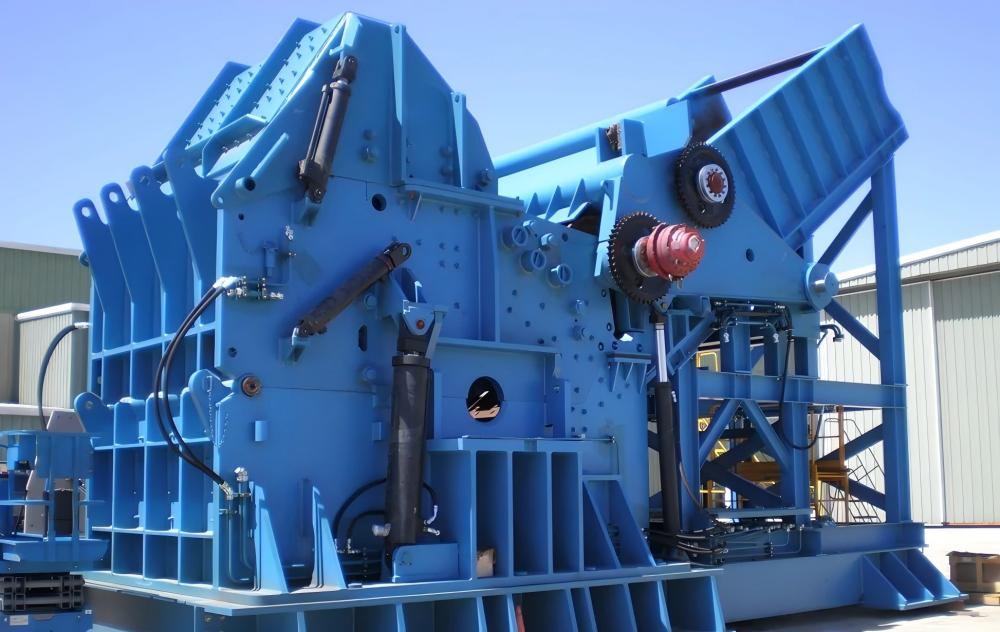
The core mechanism of a hammer shredder involves a high-speed rotor equipped with heavy, free-swinging hammers. As the construction waste enters the shredding chamber, these hammers strike the material with massive force. This is not a cutting action but an impact action. The metal is shattered, compressed, and scrubbed against the internal liners and the grate bars at the bottom of the machine.
The Rotor and Hammer Assembly
The rotor is the heart of the machine. It is typically a massive steel shaft with several discs or ‘spider’ arms that hold the hammer pins. The hammers themselves are usually cast from manganese steel or other high-wear alloys. Manganese steel is unique because it work-hardens; the more it is struck by hard construction scrap, the harder its surface becomes, while the core remains ductile to prevent snapping. This metallurgical property is vital for the longevity of the machine in a C&D environment.
The Grate System and Sizing
Below the rotor lies the grate basket. The size of the openings in the grate determines the final size of the shredded metal. Material stays in the chamber, being continuously struck by the hammers, until it is small enough to pass through the grates. For construction waste, where rebar can be several meters long, the shredder must be able to fold and break the steel until it reaches the desired 50mm to 100mm fragment size. This uniformity is what makes the final product so valuable for secondary smelting.
| Component | Function in Metal Recovery | Material/Specification |
|---|---|---|
| Main Rotor | Provides rotational kinetic energy | Forged Alloy Steel |
| Hammers | Impact and pulverize scrap metal | High Manganese Steel (13-18% Mn) |
| Anvil/Breaker Bar | Initial impact point for large scrap | Reinforced Hardened Steel |
| Grate Bars | Controls output particle size | Heat-treated Carbon Steel |
| Hydraulic Feed Roller | Regulates material flow into the chamber | High-torque Hydraulic Drive |
Separation Post-Shredding
The process doesn’t end once the material leaves the shredder. How Hammer Shredders Are Used In Construction Waste Metal Recovery effectively depends on the downstream separation equipment. Typically, a magnetic drum or overhead belt magnet is used to pull ferrous metals (iron and steel) away from the non-metallic fluff (insulation, wood, plastic). For non-ferrous metals like aluminum and copper, an Eddy Current Separator is employed, using electromagnetic fields to ‘kick’ the non-ferrous metals into a separate collection bin.
Selection Advice for Hammer Shredders
Choosing the right hammer shredder for construction waste requires a deep understanding of your specific waste stream. Not all shredders are created equal, and a machine designed for light aluminum cans will fail miserably when faced with structural steel beams. Here are the primary factors to consider during the selection process:
- Throughput Capacity: Determine how many tons of waste you need to process per hour. For large-scale demolition contractors, a machine capable of 10-30 tons per hour is often the baseline. HARSLE offers various scales of machinery to match these industrial demands.
- Motor Power: Hammer shredders require significant horsepower. Motors can range from 200HP to over 5000HP for mega-shredders. For most construction waste recovery, a mid-range motor (400-800HP) provides the necessary torque to break down rebar without excessive energy costs.
- Feed Opening Size: The ‘mouth’ of the shredder must be large enough to accept the largest pieces of scrap you expect to handle. If the opening is too small, you will spend too much time and money on ‘pre-processing’ (cutting scrap with torches or shears) before it even reaches the shredder.
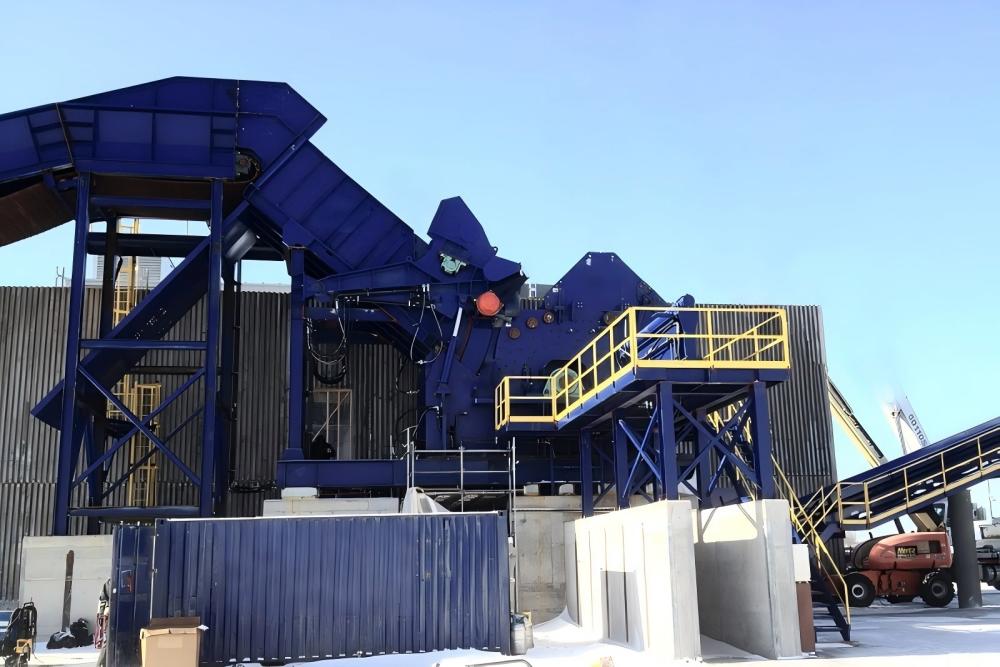
- Maintenance Accessibility: Hammer shredders are high-wear machines. You will need to change hammers, liners, and grates regularly. Look for designs that feature hydraulic ‘top-opening’ housings, allowing easy access to the rotor. A machine that is hard to service will lead to excessive downtime.
- Vibration Dampening: These machines create immense vibration. Ensure the shredder comes with a robust foundation design or advanced vibration isolation mounts to protect the surrounding structure and the machine’s own bearings.
Furthermore, consider the ‘smart’ features of the machine. Modern HARSLE shredders often include PLC (Programmable Logic Controller) systems that monitor the load on the motor. If the shredder becomes jammed or overloaded, the system can automatically reverse the feed or slow down the input to prevent a catastrophic stall. This level of automation is crucial for maintaining a steady flow in the unpredictable world of construction waste.
Maintenance and Longevity of Shredding Equipment
To maximize the lifespan of a hammer shredder, a rigorous maintenance schedule is mandatory. Because How Hammer Shredders Are Used In Construction Waste Metal Recovery involves constant high-velocity impacts, the internal components are essentially ‘consumables.’ The hammers, in particular, require frequent rotation. Most hammers have four wearing corners; by rotating them periodically, you ensure even wear and extend the time between full replacements.
Lubrication of the main rotor bearings is another critical task. These bearings support a rotor spinning at high RPMs while under heavy load. Using high-quality, heat-resistant grease and ensuring the automatic lubrication system is functioning perfectly can prevent bearing failure, which is one of the most expensive repairs a shredder can undergo. Additionally, the internal liners of the shredding chamber should be inspected weekly for thinning. If a liner wears through, the structural frame of the shredder can be damaged, leading to permanent misalignment.
FAQ: Common Questions About Hammer Shredders
1. Can a hammer shredder handle concrete-coated rebar?
Yes, this is one of the primary strengths of a hammer shredder. The impact of the hammers shatters the brittle concrete, causing it to fall away from the ductile steel rebar. The steel is then further processed while the concrete dust and fragments are filtered out through the grates.
2. What is the difference between a hammer shredder and a shear shredder?
A shear shredder (twin-shaft) uses low-speed, high-torque blades to cut material. It is excellent for tires or plastics. However, for metal recovery, a hammer shredder is usually preferred because the high-speed impact ‘cleans’ the metal and creates a denser, more uniform final product that is more valuable to smelters.
3. How often do the hammers need to be replaced?
This depends entirely on the abrasiveness of the material. In a typical construction waste environment, hammers might need to be rotated every 40-80 hours of operation and replaced entirely every 200-400 hours. Using high-manganese alloys can extend these intervals.
4. Is dust control necessary for these machines?
Absolutely. Shredding construction waste, especially material containing concrete or drywall, generates significant dust. Most industrial setups use a combination of water spray misters at the feed/discharge points and large-scale baghouse dust collection systems to maintain air quality and visibility.
5. What is the ROI on a hammer shredder for a construction firm?
While the initial investment is high, the ROI is driven by the difference between the cost of landfilling waste and the revenue from selling high-grade shredded scrap. Many firms find that the machine pays for itself within 18 to 36 months, depending on the volume of waste processed and local scrap prices.
Conclusion: The Future of Metal Recovery
As we have explored, How Hammer Shredders Are Used In Construction Waste Metal Recovery is a multi-faceted process that combines heavy mechanical engineering with strategic material management. These machines are not merely ‘crushers’; they are sophisticated systems that enable the transition from a ‘take-make-dispose’ model to a sustainable circular economy. By effectively separating and densifying metal scrap, hammer shredders ensure that the steel used in today’s skyscrapers can be efficiently recycled into the infrastructure of tomorrow.
For companies looking to invest in this technology, HARSLE provides the expertise and robust machinery needed to tackle the toughest construction waste. By focusing on durability, ease of maintenance, and high-purity output, our hammer shredders stand as a testament to industrial innovation. As environmental regulations tighten and the value of raw materials continues to rise, the hammer shredder will remain an indispensable tool in the global effort to reclaim and reuse our metallic resources.


