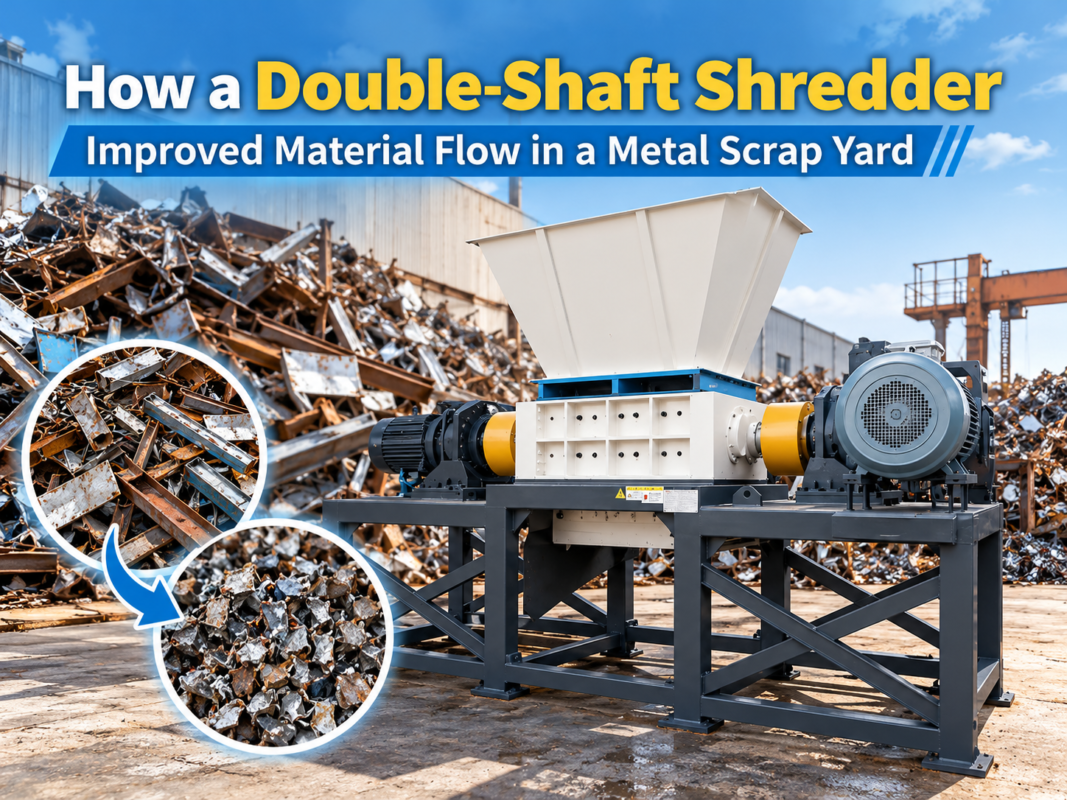
What to Look for Before Buying a Double-Shaft Shredder for Heavy-Duty Material Reduction

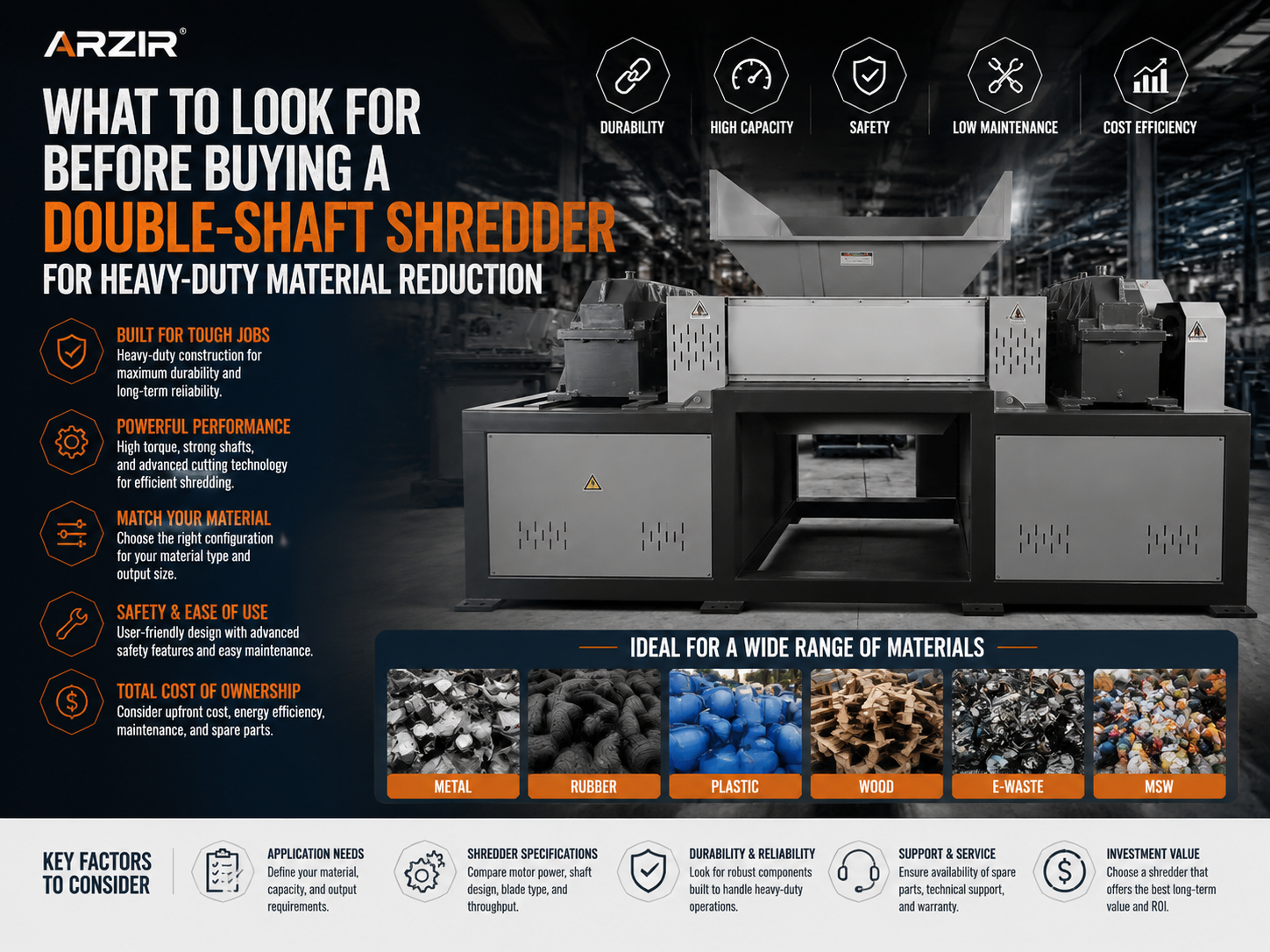
Introduction to Heavy-Duty Material Reduction
In the modern industrial landscape, the management of waste and the recycling of raw materials have become pivotal to both environmental sustainability and operational profitability. For facilities dealing with high volumes of scrap metal, industrial plastics, rubber tires, or electronic waste, the double-shaft shredder stands as the workhorse of the processing line. Unlike single-shaft variants that rely on high speeds and screens, the double-shaft shredder utilizes low-speed, high-torque shearing action to tear through the toughest materials. However, selecting the right machine is a complex process. This guide explores everything you need to Look Before Buying A Double-Shaft Shredder Heavy-Duty Material Reduction to ensure your investment yields the highest possible returns.
Price Range Overview: What to Expect
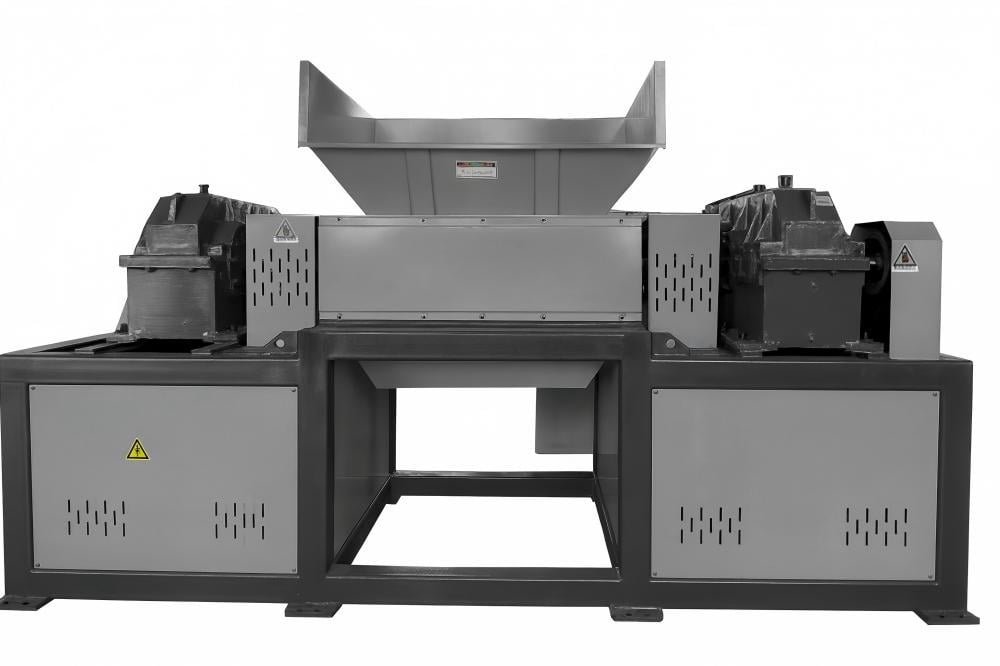
The financial commitment for a double-shaft shredder varies significantly based on capacity, build quality, and intended application. Understanding the price tiers is the first step in budgeting for your facility. Generally, the market is divided into three primary categories: entry-level industrial, mid-range versatile, and heavy-duty custom solutions.
Entry-level double-shaft shredders typically range from $15,000 to $40,000. These machines are often designed for lighter materials such as thin plastics, aluminum cans, or organic waste. While they utilize the same dual-shaft principle, their motors are smaller (often under 30kW), and the blade thickness is limited. They are excellent for small-scale recycling centers but may struggle with continuous heavy-duty metal reduction.
Mid-range shredders, priced between $45,000 and $120,000, represent the bulk of the industrial market. These machines feature robust frames, higher torque gearboxes, and advanced PLC control systems. They are capable of handling car bumpers, light scrap metal, and thick-walled plastic drums. For most medium-sized manufacturing plants, this range offers the best balance between cost and capability.
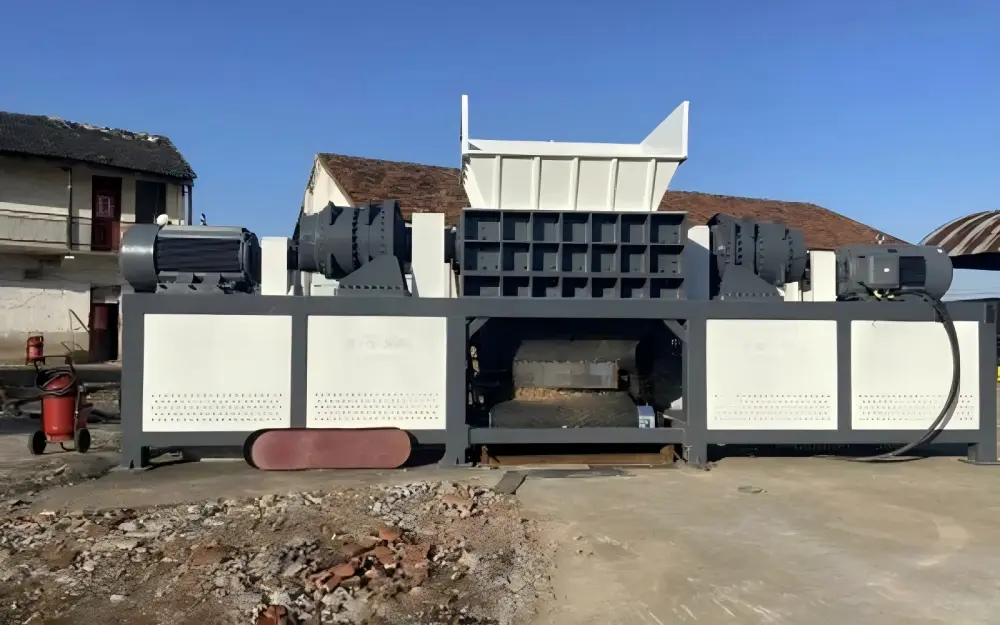
At the top end, heavy-duty and custom-engineered shredders can exceed $250,000. These units are built for the most demanding environments, such as municipal waste processing or large-scale metal smelting prep. They feature massive motors (often dual-drive systems exceeding 150kW), specialized alloy blades, and reinforced structural components to withstand the immense vibrations and stresses of 24/7 operation.
Main Cost Drivers in Shredder Procurement
When evaluating quotes, it is essential to look beyond the bottom line and understand what drives the cost. The primary cost driver is the Blade and Rotor Assembly. High-quality blades are made from specialized alloy steels like D2, SKD-11, or Cr12MoV. The heat treatment process used on these blades determines their hardness and toughness. Cheaper machines often use inferior steel that dulls quickly, leading to frequent downtime and replacement costs.
The Drive System is another significant factor. A double-shaft shredder requires immense torque. This is achieved through a combination of high-efficiency motors and heavy-duty gearboxes. Planetary gearboxes are more expensive than standard spur gearboxes but offer superior torque density and longevity. Furthermore, the inclusion of a variable frequency drive (VFD) or a high-end PLC (like Siemens or Schneider) adds to the initial cost but provides critical protection against motor burnout during jams.
Structural integrity also plays a role. A heavy-duty shredder must have a thick, welded steel frame to absorb the energy of the shearing process. Machines that use thinner plates or lower-grade welding will eventually suffer from frame fatigue or misalignment of the shafts, leading to catastrophic failure. Investing in a machine with a precision-machined cutting chamber ensures that the tolerances between blades remain tight, which is crucial for efficient shearing.
Configuration Impact: Tailoring the Machine to Your Material
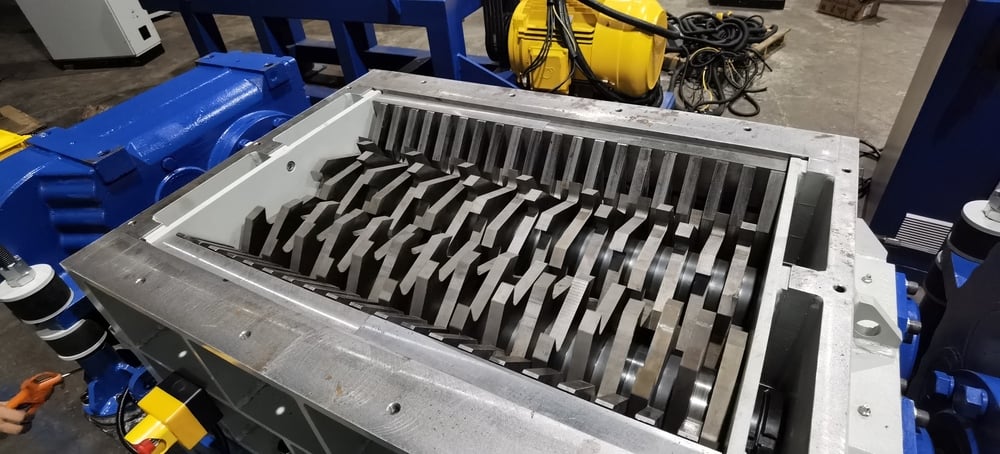
The configuration of a double-shaft shredder must be matched to the specific material you intend to process. One size does not fit all in the world of heavy-duty material reduction. The Blade Geometry is the first consideration. Blades come with different numbers of “hooks” or teeth. For example, a single-hook blade is ideal for thick, bulky items like tires, as it can grab and pull the material into the cutters. Multi-hook blades are better for thinner materials where a smaller output size is desired in a single pass.
The Shaft Diameter and Speed are also critical. For heavy-duty metal reduction, a slower shaft speed (typically 10-20 RPM) combined with a larger shaft diameter provides the necessary torque to shear through steel. If the shafts are too thin or rotate too quickly, the machine may bounce off the material rather than biting into it, reducing throughput and increasing wear.
Hopper and feeding configurations also impact performance. A standard gravity-fed hopper works for most materials, but for bulky or light items that tend to “bridge” (get stuck above the cutters), a hydraulic ram or pusher system may be required. This ensures a constant feed into the blades, maximizing the machine’s efficiency. Additionally, the discharge area must be configured to handle the volume of shredded material, often requiring integrated conveyor belts or magnetic separators for downstream processing.
Hidden Costs of Ownership
The purchase price is only the beginning of the total cost of ownership (TCO). One of the most overlooked hidden costs is Blade Maintenance. In heavy-duty applications, blades will inevitably wear. The cost of sharpening or replacing a full set of blades can be thousands of dollars. Buyers should inquire about the ease of blade removal; some designs allow for individual blade replacement without dismantling the entire shaft, which saves significant labor time.
Energy Consumption is another ongoing expense. A 75kW motor running 16 hours a day adds up quickly on the utility bill. High-efficiency motors and smart PLC programming that idles the machine when not in use can mitigate these costs. Furthermore, the cost of hydraulic oil, filter changes, and general lubrication must be factored into the monthly operating budget.
Installation and site preparation are also frequently underestimated. A heavy-duty shredder requires a level, reinforced concrete pad to handle the weight and vibration. Electrical upgrades may be necessary to provide the required amperage for large motors. Finally, consider the cost of spare parts inventory. Keeping a set of bearings, seals, and a few spare blades on hand is essential to prevent extended downtime during a breakdown.
ROI Calculation: Is the Investment Justified?
Calculating the Return on Investment (ROI) for a double-shaft shredder involves looking at both cost savings and revenue generation. The most immediate benefit is Volume Reduction. By shredding bulky waste, companies can reduce the number of waste hauls by up to 80%. If a facility currently pays for ten dumpsters a month, reducing that to two provides a clear and measurable monthly saving.
For recycling operations, the ROI comes from Material Value Enhancement. Shredded and sorted scrap metal or plastic commands a much higher price than mixed, bulky scrap. A double-shaft shredder allows you to process material into a uniform size that is ready for further separation or direct sale to smelters. In many cases, the difference in material value can pay for the machine within 12 to 24 months.
Labor savings also contribute to ROI. Manually breaking down large items is slow and dangerous. An automated shredding line requires minimal supervision, allowing staff to be redeployed to more productive tasks. When calculating ROI, always include the “avoided costs” of potential workplace injuries associated with manual material handling, as well as the increased throughput capacity that allows your business to take on more contracts.
Buying Advice: Making the Right Choice
Before signing a purchase agreement, there are several steps every buyer should take. First and foremost: Test Your Material. Any reputable manufacturer, such as HARSLE, will offer material testing. Send a sample of your toughest waste to the factory and request a video of the shredding process. This confirms that the blade geometry and motor power are sufficient for your specific needs.
Check the After-Sales Support. Industrial machinery will eventually need parts and technical expertise. Ensure the manufacturer has a robust support network, available spare parts, and clear documentation. A cheap machine from a vendor with no local support can become a very expensive paperweight if a critical component fails.
Finally, look for Safety Features. Heavy-duty shredders are inherently dangerous. Ensure the machine is equipped with emergency stop buttons, safety interlocks on all access panels, and an automatic reverse function. The auto-reverse feature is particularly important; when the PLC detects an overload (a jam), it should automatically stop the shafts and reverse them to clear the obstruction before attempting to shred again. This prevents mechanical breakage and motor damage.
Summary Checklist for Buyers
- Define your material type and required hourly throughput.
- Verify blade material and hardness (e.g., D2 Steel, HRC 55-58).
- Ensure the gearbox is rated for high-torque industrial use.
- Check for PLC integration with auto-reverse functionality.
- Calculate the total footprint and electrical requirements.
- Request a material test video or a live demonstration.
- Review the warranty and availability of wear parts.
Frequently Asked Questions (FAQ)
1. What is the main difference between a single-shaft and a double-shaft shredder?
A single-shaft shredder uses a high-speed rotor with small cutters and a screen to produce a specific, uniform output size. It is best for plastics and materials that need to be granulated. A double-shaft shredder uses two low-speed, high-torque shafts to shear and tear material. It is better for heavy-duty, bulky items like tires, metal drums, and large scrap because it doesn’t rely on a screen that could easily clog or break.
2. How often do the blades need to be sharpened?
Blade longevity depends entirely on the material being processed. If you are shredding clean plastic, blades may last for over 2,000 hours. If you are processing abrasive materials or scrap metal with high impurities, you might need to sharpen or rotate the blades every 500-800 hours. Regular inspection is key to maintaining efficiency and preventing motor strain.
3. Can a double-shaft shredder handle reinforced tires?
Yes, but it requires a specific configuration. For tires with steel belts, you need high-torque motors and blades made from shock-resistant alloy steel. The machine must also be built with a heavy-duty frame to handle the intense vibrations caused by shearing the steel wires within the rubber.
4. What happens if an unshreddable object (like a thick steel beam) enters the machine?
Modern double-shaft shredders are equipped with PLC-controlled sensors. When the machine encounters an object it cannot shear, the current spikes. The PLC detects this and immediately stops the motors, then reverses the shafts to spit the object back up or reposition it. If it fails to shred after several attempts, the machine will shut down and trigger an alarm for manual intervention, protecting the shafts and gearbox from damage.
5. Is it better to have an electric or hydraulic drive?
Electric drives are more common, easier to maintain, and more energy-efficient for most applications. Hydraulic drives offer even higher torque and are better at handling frequent shocks and reversals, making them suitable for extremely heavy-duty or unpredictable waste streams. However, hydraulic systems are more complex and require more intensive maintenance (oil changes, leak prevention).
6. How do I determine the right motor size?
Motor size is determined by the toughest material you plan to shred and your required throughput (tons per hour). A general rule of thumb is that more torque is always better than more speed for heavy-duty reduction. Consult with HARSLE engineers to match the kW rating to your specific material density and volume requirements.