
High-Throughput Recycling
Horizontal Baler Auto-Tie Press
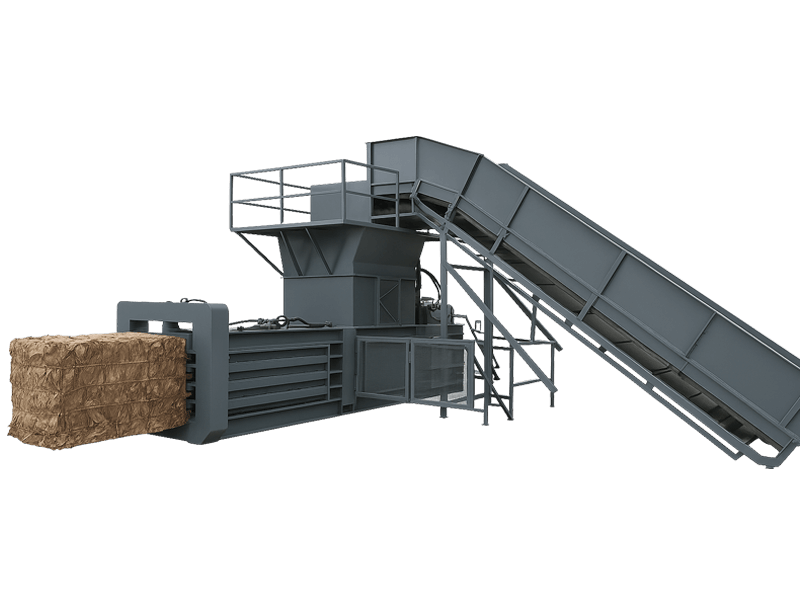
A conveyor-fed hydraulic baling press engineered for continuous, high-volume compaction of OCC, mixed paper, plastic film, PET, HDPE, aluminum cans, and mixed dry recyclables. The horizontal architecture pairs a long-stroke main ram with auto-tie wire knotters to deliver mill-grade, export-ready bales at the throughput levels that MRFs, paper mills, and large-scale recyclers require.
Up to 60 t/h
Continuous Throughput
Auto Wire Tie
4 / 5 / 6-Wire Knotters
Mill Size
Export-Ready Bale Geometry
PLC + HMI
Recipe-Based Automation
Product Overview
Continuous Compaction Built for Mill-Grade, Export-Ready Bales
Buyers searching for a horizontal baler are typically scaling beyond manual loading: they need conveyor infeed, automatic wire tying, and bale geometries that drop straight into trailers or 40-ft HC containers. A horizontal baling press concentrates high cylinder force along a long stroke, then ties and discharges bales without operator intervention — turning steady recyclable streams into a predictable, mill-bound logistics flow.
Conveyor-Fed Continuous Cycle
An inclined or chain conveyor delivers loose material to the hopper while the ram cycles automatically, eliminating manual loading bottlenecks across multi-shift operations.
Auto-Tie Wire Knotter
Twister or knotter heads thread, wrap, and secure baling wire across 4, 5, or 6 ties per bale, delivering tension consistency that meets paper-mill and export-buyer specifications.
High Cylinder Force, Long Stroke
Heavy-wall main cylinders develop the press force needed to drive density on springy OCC, plastic film, and mixed-grade infeed without sacrificing cycle time.
Mill-Size Bale Geometry
Standardized 1100 mm chamber widths and configurable lengths align with paper-mill receiving specs and 40-ft HC container floor patterns for trailer-optimized loading.
PLC Recipe Automation
Stored programs hold compression dwell, ram speed, and tie counts per material grade, so operators switch from OCC to mixed paper to film without re-tuning the line.
Maintenance-Aware Hydraulics
Centralized lubrication points, modular valve blocks, and accessible knife housings shorten preventive maintenance windows on around-the-clock recycling lines.
Technical Data
Representative Specifications
Horizontal baler capacity is governed by cylinder force, ram cross-section, and stroke length combined with the infeed system. The figures below summarize a typical mill-size lineup; final density, motor power, and tie configuration are tuned to your material mix, voltage standard, and target bale weight.
| Model | Press Force | Chamber Size | Bale Size | Capacity | Motor Power |
|---|---|---|---|---|---|
| ARZIR HB-400 | 400 tons | 2.5 x 1.2 x 1.5 m | 1.1 x 1.1 x 0.6-1.6 m | 20-40 tons/hour | 90 kW |
| ARZIR HB-600 | 600 tons | 3.0 x 1.3 x 1.6 m | 1.2 x 1.2 x 0.8-1.8 m | 30-60 tons/hour | 132 kW |
| ARZIR HB-800 | 800 tons | 3.5 x 1.4 x 1.8 m | 1.3 x 1.3 x 1.0-2.0 m | 50-80 tons/hour | 160 kW |
| ARZIR HB-1000 | 1000 tons | 4.0 x 1.5 x 2.0 m | 1.4 x 1.4 x 1.2-2.2 m | 70-100+ tons/hour | 200 kW |
Process
How a Horizontal Baler Works
Material is delivered continuously to the press; the main ram strokes forward to charge each layer into the chamber until the programmed bale length is reached. Auto-tie wires lock the bale, then the next charge ejects the finished package onto a roller table or directly into a trailer staging area.
01
Conveyor Infeed
An inclined chain or belt conveyor with metal detection lifts loose recyclables into the hopper, smoothing surge loads from the sorting line or tipping floor.
02
Hopper Charge & Shear
Material drops into the press chamber where a side knife and ram knife shear oversize OCC and bound stacks, protecting the main cylinder and compaction face.
03
Horizontal Compression
The main ram strokes horizontally, forcing each charge against the bale being formed. Pressure-limited stages target programmed density without overrunning the wires.
04
Auto-Tie & Discharge
Knotter heads thread and twist wires through chamber slots when target length is reached. The next charge ejects the finished bale onto the discharge table for fork or chute pickup.
Feedstock
Materials Suited to Horizontal Balers
Horizontal baling presses handle the broadest range of dry recyclables — single-grade fiber lines, mixed-stream MRF residuals, and dedicated plastics or aluminum lanes. Material grade, moisture, and bale density targets determine cylinder force class and tie count.
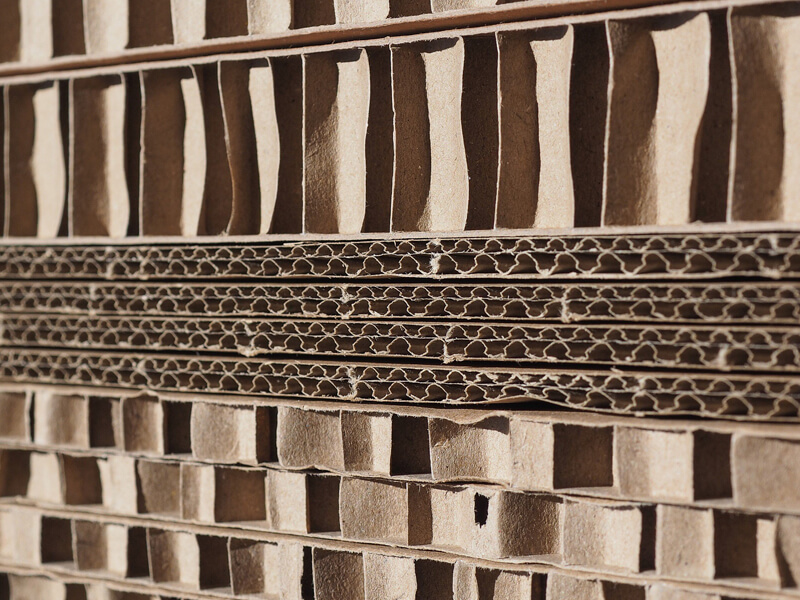
OCC & Cardboard

Mixed Paper & Newsprint
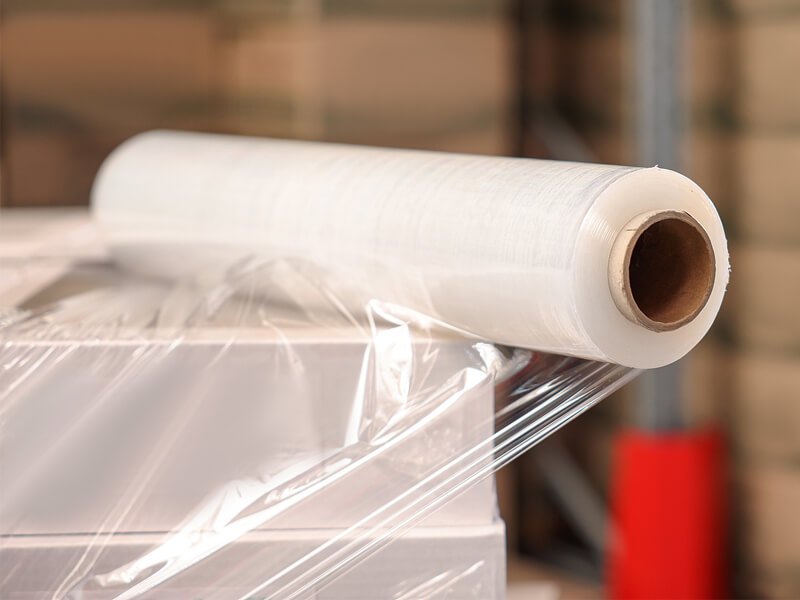
LDPE Film & Stretch Wrap
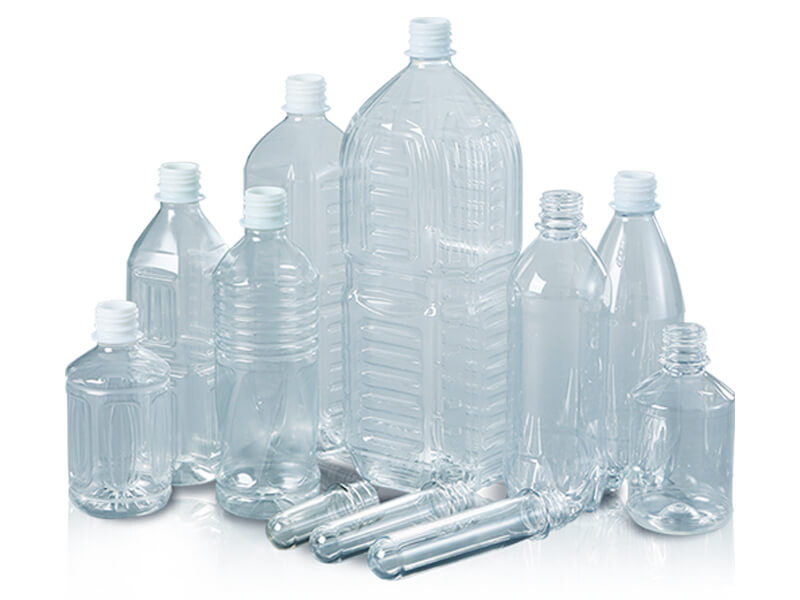
PET & HDPE Bottles
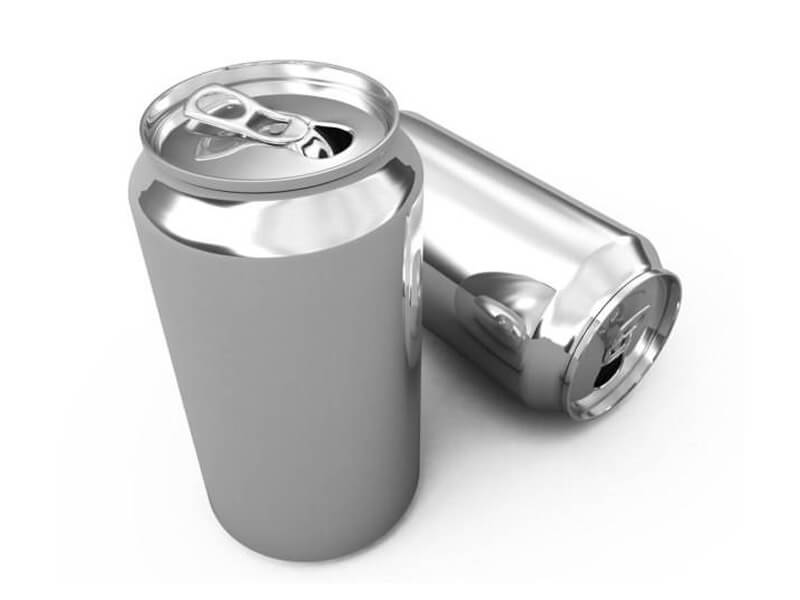
Aluminum UBC Cans

Magazines & SOP

Soft Textiles & Fibers

Mixed MRF Residuals
Why ARZIR
Why Choose ARZIR Horizontal Balers
Most buyers research both formats before specifying. The decision usually comes down to daily tonnage, automation level, and whether bales must meet paper-mill or export buyer specifications. The comparison below summarizes the operational differences that drive equipment selection.
| Comparison Item | ARZIR Horizontal Baler | Traditional Method | ARZIR Advantage |
|---|---|---|---|
| Daily Capacity | 20-100+ tons/day | 5-15 tons/day | 5-10x higher throughput |
| Labor Requirements | 1-2 operators | 4-8 workers | 60-80% labor reduction |
| Bale Consistency | ±2% tolerance | Manual variation | Precise dimensional control |
| Operating Hours | 24/7 continuous | 8-16 hours/day | Maximum facility utilization |
| Energy Efficiency | 15-25 kWh/ton | Manual labor | Automated energy optimization |
Typical Installations
Where Horizontal Balers Add Value
Operations that move tonnage by the trailerload — rather than by pallet — standardize on horizontal balers because they pair continuous infeed with bale geometry that drops cleanly into export logistics. Below are the deployments most commonly served.
Material Recovery Facilities (MRFs)
Bale fiber, plastics, and aluminum streams downstream of optical sorters and ballistic separators — the backbone press in most single-stream and dual-stream MRFs.
Paper Mill & Pulp Receiving Yards
Re-bale, square up, or supplement OCC and DSOCC inventories to meet stillage stack heights and inbound mill-spec moisture and contamination targets.
Recycling Brokers & Export Yards
Produce 40-ft HC container-optimized bales for ocean freight, with consistent length and weight that maximizes payload within road and shipping limits.
Large Distribution & E-Commerce DCs
Replace multiple vertical balers when daily corrugate generation exceeds shift-by-shift manual loading capacity, especially during seasonal volume peaks.
Plastic Recycling Plants
Bale baled-and-flake-line feedstock such as PET bottles, HDPE containers, and LDPE film ahead of wash lines, granulators, and pelletizing systems.
Beverage & Aluminum Recycling Lines
Compact UBC and tin into dense, traceable bales that smelters and aluminum re-melters specify for furnace-charge handling and yard footprint control.
Use Cases
Application Scenarios
Horizontal balers anchor the discharge end of most modern recycling lines, where continuous flow, automatic tying, and trailer-ready bale geometry are required.
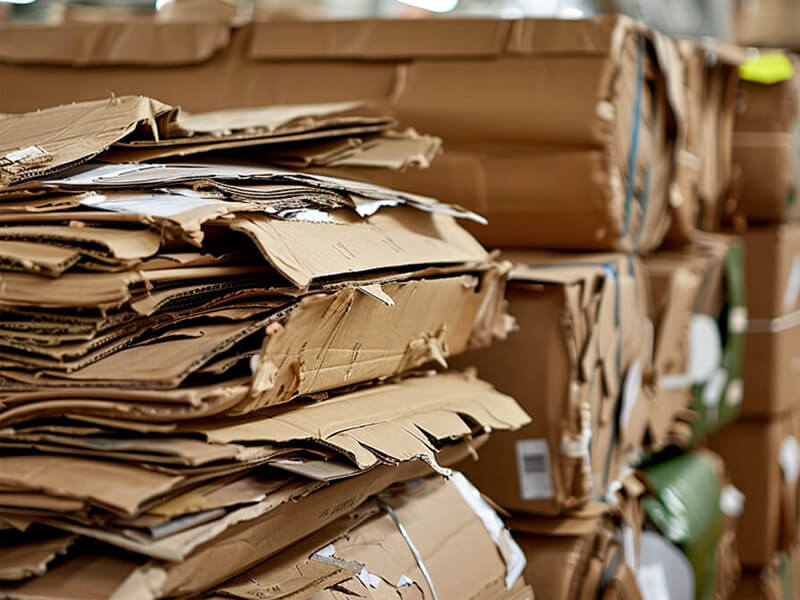
Waste Paper & Cardboard Processing
Compress high volumes of OCC, mixed paper, and newsprint into dense, mill-spec bales at continuous line speed — ideal for paper mills, MRFs, and recycling brokers targeting export markets.

Plastic Recycling Facilities
Bale sorted PET bottles, HDPE containers, and LDPE film ahead of wash lines and granulators, delivering consistent bale weights that simplify downstream material accounting.

Large Warehouses & Distribution
Replace multiple vertical balers when daily corrugate output exceeds manual loading capacity, consolidating packaging waste from inbound docks into trailer-ready bales with no operator intervention.

Light Metal Recycling
Compact aluminum UBC, tin cans, and foil scrap into dense, traceable bales that meet smelter and re-melter charge specifications while reducing yard footprint and fork handling cycles.
FAQ
Common Questions About Horizontal Balers
Structured answers below mirror the FAQ schema on this page and reflect the most common research questions buyers raise when comparing horizontal baler models, configurations, and bale specifications.
What is a horizontal baler?
A horizontal baler is an industrial recycling press in which a hydraulic ram travels horizontally to compress material that is fed continuously from above — typically through a hopper served by a conveyor. Compressed material exits the chamber as a dense, wire-tied bale ready for mill or export shipment, supporting throughput levels well beyond what manual-load vertical balers can sustain.
What is the difference between a horizontal baler and a vertical baler?
Horizontal balers receive material via conveyor or hopper and run continuous, automated cycles, producing mill-size bales at higher tonnage. Vertical balers are manually loaded, occupy less floor space, and suit lower-volume backroom or warehouse applications. Choose horizontal when daily tonnage, automation, and uniform export-grade bales matter; choose vertical when footprint and capital cost dominate.
What is the difference between single-ram and two-ram horizontal balers?
Single-ram (closed-end) horizontal balers use one main cylinder and a hinged chamber door; they are cost-effective for OCC, mixed paper, and predictable single-grade streams. Two-ram (open-end) horizontal balers use a main compression ram plus a separate ejection ram, allowing faster grade changeovers and better performance on aluminum, PET, and mixed materials with variable density.
What materials can a horizontal baler process?
Typical feeds include OCC and mixed paper, newsprint, magazines, LDPE and stretch film, sorted PET and HDPE bottles, aluminum used beverage cans (UBC), tin cans, foils, soft textiles, and many MRF residual streams. Material grade, moisture, and pre-shredding requirements determine cylinder force, chamber profile, and tie configuration.
How are bales tied in an automatic horizontal baler?
Auto-tie horizontal balers use a knotter or twister assembly that draws baling wire across the bale through pre-cut slots, then twists or knots the loops automatically before the next charge enters. Common configurations include 4, 5, or 6 wire ties per bale depending on bale length, density, and downstream handling requirements.
What bale sizes do horizontal balers produce?
Mill-size bales are typically produced at 1100 mm wide × 750–1100 mm tall, with bale length variable from roughly 1.0 m to 2.0+ m. Sizing targets standard truck and 40-ft HC container loading patterns so paper mills and overseas buyers can stack bales efficiently in stillages, trailers, or sea containers.
How much space does a horizontal baler installation require?
Plan for the press body plus an upstream conveyor (typically 6 – 10 m long), hopper clearance above the press, a discharge roller table or chute, and forklift access for bale removal. Total installation length commonly ranges from 12 to 25 m depending on model and infeed configuration.
Can a horizontal baler handle pre-shredded material?
Yes. Pre-shredded streams generally improve bale density and tie consistency, particularly for plastic film and mixed plastics. Some horizontal balers integrate directly downstream of a single-shaft or two-shaft shredder to eliminate intermediate handling.
Get the Right Machine for Your Operation
Tell us about your material type, throughput requirements, and site conditions — our engineers will recommend the ideal equipment and provide a competitive quote within 24 hours.
- Response within 24 hours
- Free technical consultation & quotation
- ISO-certified factory & strict quality control
- Shipped to 100+ countries worldwide