
How a Fabrication Company Improved Waste Volume Reduction Using a Four-Shaft Shredder

Introduction
In the modern landscape of metal fabrication, efficiency is measured not only by the precision of the parts produced but also by the management of the byproducts generated. For many facilities, the accumulation of scrap metal, offcuts, and bulky industrial waste represents a significant logistical and financial burden. Recently, a mid-sized metal fabrication company faced a critical turning point: their waste disposal costs were skyrocketing, and their floor space was being consumed by unorganized scrap piles. By integrating a high-performance four-shaft shredder into their workflow, they successfully transformed their waste management strategy.
This article explores the journey of how a fabrication company improved waste volume reduction using a four-shaft shredder. We will delve into the technical mechanisms that make this equipment superior for industrial applications, the operational benefits realized by the company, and the strategic considerations for other manufacturers looking to optimize their own waste processing capabilities. As HARSLE continues to lead in metal fabrication equipment, understanding the role of shredding technology is essential for any facility aiming for lean manufacturing excellence.
The transition from manual scrap handling to automated shredding is more than just an equipment upgrade; it is a fundamental shift in operational philosophy. By reducing the physical volume of waste, the company was able to lower transportation frequency, increase the value of their scrap metal through better sorting, and create a safer, more organized shop floor. This case study serves as a blueprint for businesses struggling with the hidden costs of industrial waste.
Throughout this guide, we will analyze the specific technical advantages of four-shaft shredders compared to traditional two-shaft or single-shaft alternatives. We will also provide actionable advice for procurement, maintenance, and integration, ensuring that your investment in HARSLE machinery yields the highest possible return on investment (ROI) while contributing to a more sustainable manufacturing environment.

Key Considerations for Industrial Waste Management
When a fabrication company decides to tackle waste volume reduction, the first step is identifying the specific nature of the waste stream. Metal fabrication produces a diverse range of materials, from thin sheet metal skeletons to heavy-duty structural steel offcuts. A four-shaft shredder is uniquely suited for this because it utilizes a multi-stage cutting process that ensures consistent particle size, which is critical for downstream recycling or disposal.
One of the primary considerations is the physical footprint of the equipment. In a busy fabrication shop, space is a premium commodity. The company in our case study had to evaluate whether to install the shredder at the point of generation—near the laser cutters and punch presses—or in a centralized scrap processing area. They ultimately chose a centralized location to streamline logistics, but the modular design of HARSLE shredders allowed for flexible installation options that minimized disruption to existing production lines.
Another vital factor is the throughput capacity. The shredder must be sized appropriately to handle the peak volume of scrap generated during high-production cycles. If the shredder is undersized, it becomes a bottleneck; if it is oversized, the capital expenditure may not be justified. The company performed a detailed audit of their daily scrap output, calculating the weight and volume of materials to ensure the selected four-shaft shredder could operate within its optimal efficiency range.
Finally, safety and environmental compliance cannot be overlooked. Shredding metal generates noise, dust, and potential fire hazards if not managed correctly. The company implemented integrated dust extraction systems and noise-dampening enclosures, which are standard recommendations for HARSLE equipment installations. By addressing these factors early, they ensured that the waste reduction project was not only effective but also compliant with local occupational health and safety regulations.
Technical Details of Four-Shaft Shredders
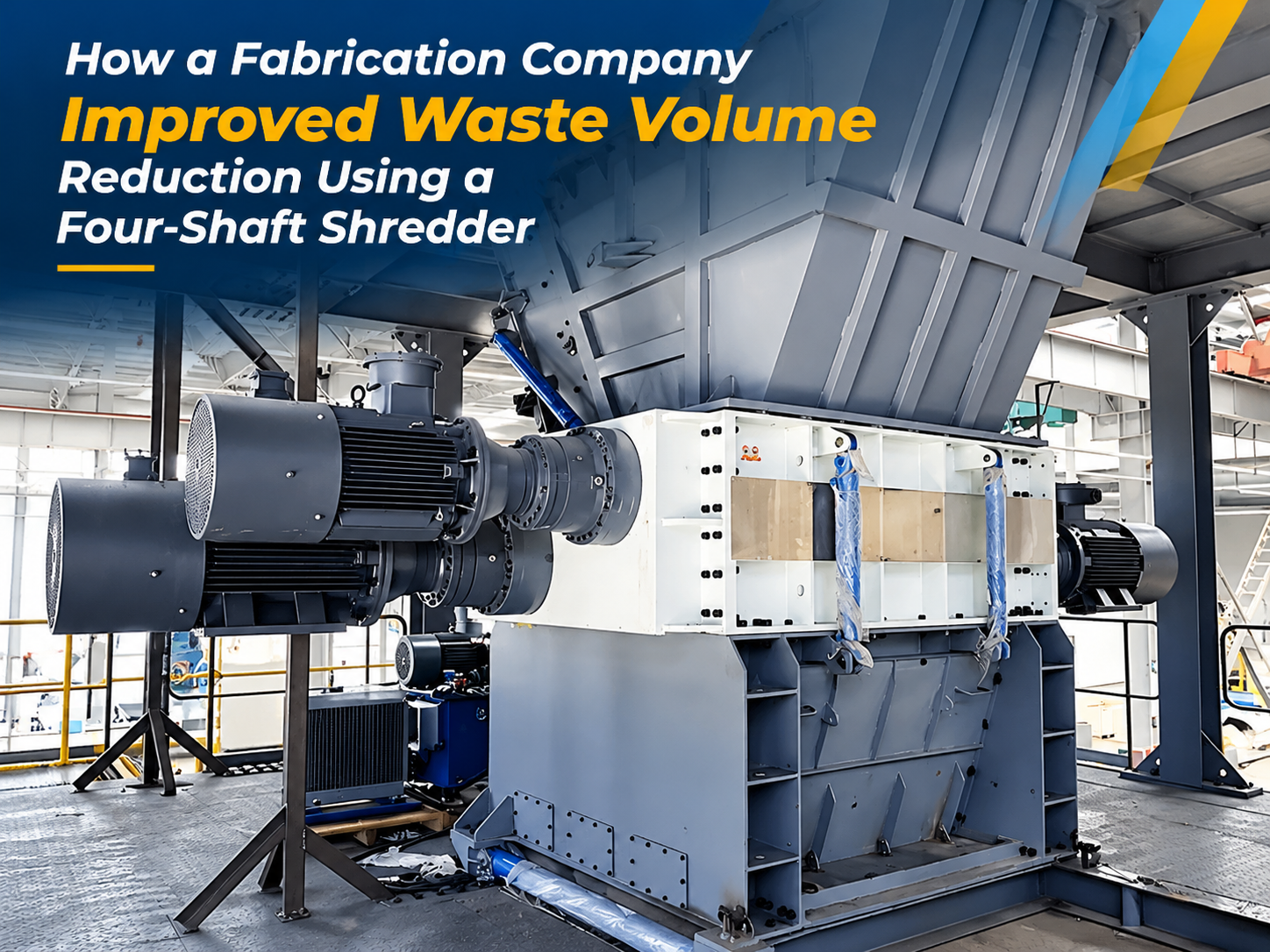
The core of the success story lies in the mechanical superiority of the four-shaft shredder. Unlike two-shaft shredders, which rely on a shearing action between two sets of blades, the four-shaft design incorporates two primary shafts and two secondary shafts. This configuration creates a more aggressive and precise cutting action, allowing the machine to handle complex, tangled, or high-tensile materials that would typically jam simpler shredders.
The primary shafts are responsible for the initial grabbing and tearing of the material, while the secondary shafts act as a sizing mechanism. This dual-stage process ensures that the output material is uniform in size, which is a significant advantage for scrap metal buyers. When scrap is shredded into consistent, small pieces, it is easier to transport, easier to melt in a furnace, and significantly more valuable in the recycling market. This is exactly how a fabrication company improved waste volume reduction using a four-shaft shredder: by turning bulky, low-density scrap into high-density, manageable material.
HARSLE four-shaft shredders are engineered with high-torque, low-speed motors. This design is crucial for metal fabrication because it provides the necessary force to cut through hardened steel or thick aluminum without the high-speed impact that causes excessive wear and tear. The blades are typically manufactured from high-alloy, wear-resistant steel, ensuring a long service life even when processing abrasive materials. The modular blade design also allows for easy maintenance, as individual cutters can be replaced without dismantling the entire shaft assembly.
Furthermore, the control systems on modern four-shaft shredders are highly sophisticated. They feature automatic reverse functions that detect overload conditions, preventing damage to the shafts and motors. If a piece of material is too hard or too large to be shredded, the machine will automatically reverse, clear the obstruction, and resume operation. This level of automation was a game-changer for the fabrication company, as it allowed them to run the shredder with minimal operator intervention, freeing up staff for more value-added production tasks.

Selection Advice: Choosing the Right Equipment
Selecting the right shredder is a strategic decision that requires a deep understanding of your specific waste profile. When looking at HARSLE equipment, the first step is to categorize your scrap. Are you primarily dealing with thin-gauge sheet metal, or are you processing heavy structural beams? The blade configuration, motor power, and shaft speed must be tailored to these materials. A one-size-fits-all approach rarely works in industrial fabrication.
Consider the desired output size. If your goal is to sell the scrap to a recycler, they may have specific requirements regarding the maximum size of the shredded pieces. A four-shaft shredder allows for the customization of the screen size, which dictates the final particle dimensions. By discussing these requirements with your HARSLE representative, you can ensure that the machine you purchase produces the exact output required to maximize your scrap resale value.
Maintenance accessibility is another critical selection criterion. Industrial equipment will eventually require service, and the ease with which you can access the shafts, blades, and drive components will dictate your long-term downtime costs. HARSLE designs its shredders with maintenance in mind, featuring easy-access panels and modular components that simplify routine inspections and part replacements. Always prioritize equipment that offers a clear maintenance schedule and readily available spare parts.
Lastly, consider the integration of the shredder into your existing material handling system. Will you be feeding the shredder via a conveyor belt, a forklift, or a manual hopper? The loading method significantly impacts the efficiency of the operation. A well-designed system will include an automated in-feed conveyor that ensures a steady, controlled flow of material into the shredder, preventing surges that could trip the motor or cause uneven wear. Investing in a complete, integrated system is often more cost-effective than buying a standalone unit.
FAQ: Common Questions About Four-Shaft Shredders
- Q: How does a four-shaft shredder differ from a two-shaft shredder?
A: A four-shaft shredder uses two primary shafts for tearing and two secondary shafts for sizing, resulting in a more uniform output and better handling of difficult materials compared to the two-shaft design. - Q: What types of metal can a HARSLE four-shaft shredder process?
A: These machines are capable of processing a wide range of metals, including mild steel, stainless steel, aluminum, and copper, provided the material thickness and hardness are within the machine’s rated specifications. - Q: How much space does a typical four-shaft shredder require?
A: While the footprint varies by model, HARSLE offers compact designs suitable for medium-sized fabrication shops. It is important to account for both the machine size and the space required for in-feed and out-feed conveyors. - Q: Is the shredding process noisy?
A: Shredding metal is inherently noisy, but modern HARSLE shredders come with sound-dampening features and can be installed in acoustic enclosures to meet workplace safety standards. - Q: How often do the blades need to be sharpened or replaced?
A: Blade lifespan depends on the volume and type of material processed. Regular maintenance and proper operation will extend blade life significantly. HARSLE provides a maintenance guide tailored to your specific usage patterns. - Q: Can the shredded material be sold for a higher price?
A: Yes. Shredded, clean, and uniform scrap metal is generally more valuable to recyclers than loose, bulky, or contaminated scrap, as it is easier to process and transport.
Wniosek
The case of how a fabrication company improved waste volume reduction using a four-shaft shredder highlights the transformative power of the right industrial machinery. By moving away from inefficient, bulky waste management practices, the company was able to reclaim valuable floor space, reduce logistics costs, and turn their scrap into a more profitable asset. The four-shaft shredder proved to be the ideal solution, offering the durability, precision, and throughput necessary for a modern fabrication environment.
For any fabrication business, the path to operational excellence involves looking at every aspect of the production cycle, including the waste stream. HARSLE remains committed to providing the metal fabrication equipment necessary to achieve these goals. Whether you are looking to improve your waste management, enhance your production speed, or increase the precision of your metal forming, our range of machinery is designed to meet the rigorous demands of the industry.
Investing in a four-shaft shredder is not just about waste reduction; it is about investing in the future of your company. By streamlining your operations, you position your business to be more competitive, more sustainable, and more profitable. We encourage you to evaluate your current scrap handling processes and consider how a HARSLE shredder could be the missing piece in your efficiency puzzle. Reach out to our team today to discuss your specific requirements and take the first step toward a cleaner, more efficient fabrication shop.












