Best Vertical Baler for the Money: Price Guide by Bale Size and Output

Price Range Overview: Investing in the Right Vertical Baler
When searching for the best vertical baler for the money, price by bale size output, it is essential to understand that the market is segmented by throughput requirements and material density. For small-to-medium enterprises, entry-level vertical balers typically range from $3,000 to $7,000. These machines are designed for low-volume cardboard and plastic waste, offering a compact footprint and manual operation cycles. They are ideal for retail stores or small workshops where space is at a premium and waste generation is consistent but not overwhelming.
Moving into the mid-range category, prices generally fall between $8,000 and $18,000. These units are the workhorses of the manufacturing sector, featuring semi-automatic tying systems and higher compaction forces. At this price point, you are paying for durability, faster cycle times, and the ability to handle denser materials like light-gauge scrap metal or high-volume corrugated fiberboard. These machines are often the sweet spot for businesses looking to balance capital expenditure with operational efficiency.
For heavy-duty industrial applications, high-capacity vertical balers can range from $20,000 to over $45,000. These machines are engineered for continuous operation, featuring reinforced steel chambers, high-pressure hydraulic systems, and advanced safety interlocks. When evaluating the best vertical baler for the money, price by bale size output in this tier, you must consider the long-term labor savings and the increased revenue generated from high-density, mill-sized bales that command better prices from recycling centers.
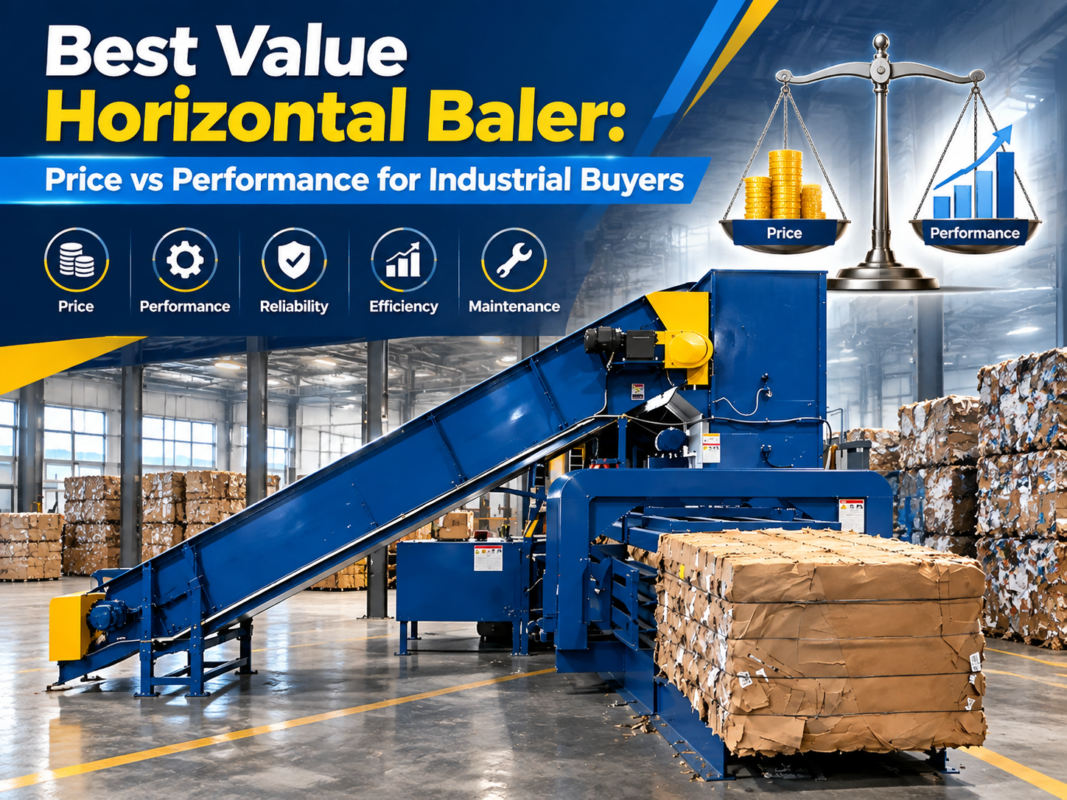
It is important to note that the “best” value is not always the lowest sticker price. A machine that is too small for your output will lead to excessive labor costs and frequent maintenance, while an oversized machine represents wasted capital. By mapping your daily waste volume against the machine’s rated capacity, you can identify the specific tier that offers the highest return on investment for your unique operational footprint.
Main Cost Drivers: What You Are Really Paying For
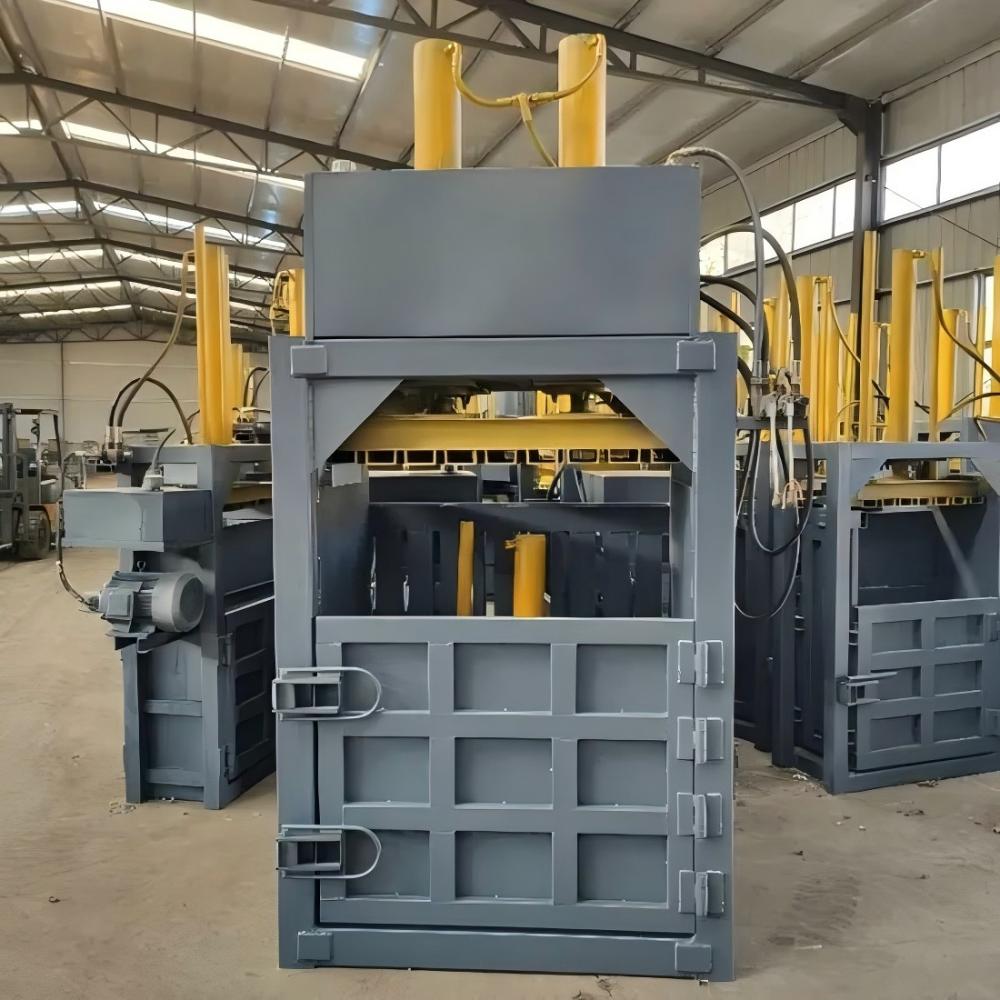
The primary cost driver in any vertical baler is the hydraulic system. The force exerted by the ram—measured in tons—directly correlates to the density of the bale and the price of the machine. High-pressure systems require more robust steel construction to prevent structural fatigue, which increases the manufacturing cost. When you pay for a higher-tonnage machine, you are paying for the structural integrity required to handle heavy-duty materials without bowing or failing under pressure.
Another significant factor is the automation level. Manual balers are the most affordable, but they require significant operator time to tie off bales and clear the chamber. Semi-automatic models include features like automatic bale ejection and integrated strapping systems, which significantly reduce the labor-per-bale metric. While these features add to the upfront cost, they are critical for businesses that need to process multiple bales per day to keep their floor clear of debris.
Material quality and build standards also play a major role. HARSLE and other top-tier manufacturers utilize high-grade structural steel and industrial-grade hydraulic components that are designed for millions of cycles. Cheaper alternatives may use thinner steel or lower-quality seals, which lead to premature hydraulic leaks and structural warping. Investing in a machine with a proven track record of reliability is a key component of finding the best vertical baler for the money.
Finally, safety compliance and certification add to the cost. Modern vertical balers must adhere to strict safety standards, including emergency stop buttons, gate interlocks, and two-hand operation controls. These safety systems are non-negotiable in an industrial environment. When comparing prices, ensure that the quotes you receive include all necessary safety features to meet local labor regulations, as retrofitting these systems later is significantly more expensive than purchasing a compliant machine from the start.
Configuration Impact: Bale Size and Output Capacity
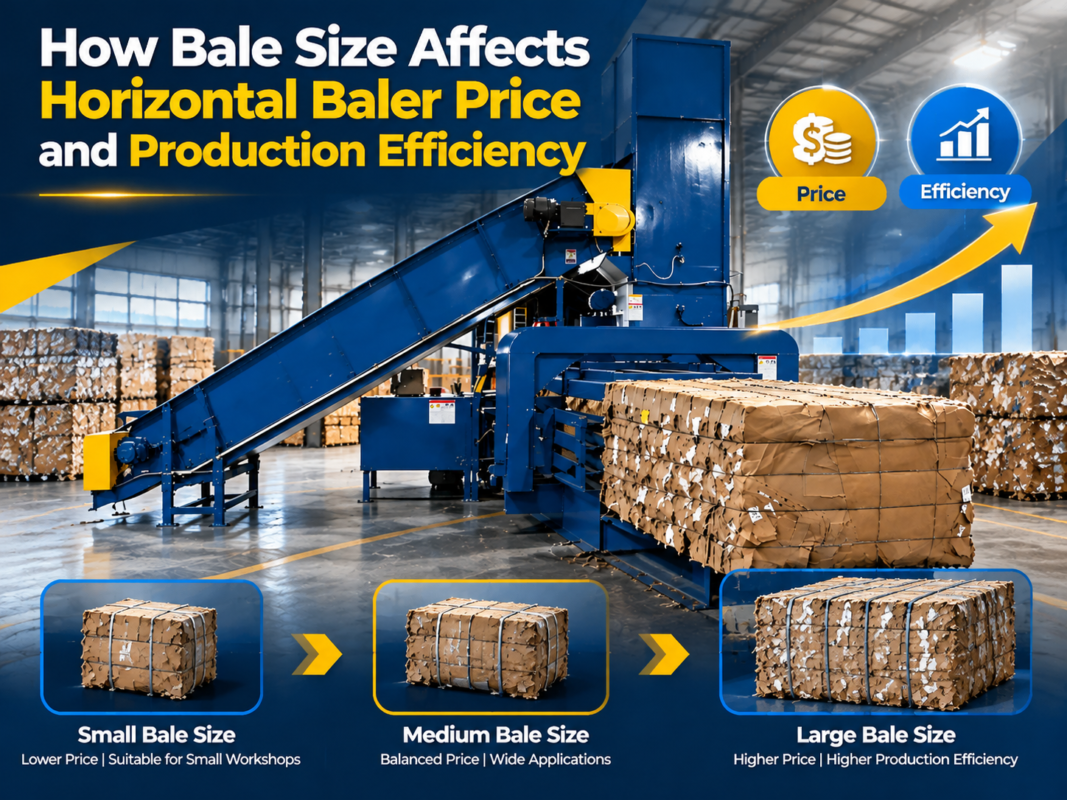
The physical dimensions of the bale are dictated by the chamber size, which is a major determinant of the machine’s price. A standard “mill-sized” bale is the industry benchmark for maximizing shipping efficiency. If your baler produces a bale that is too small, you will pay more in logistics costs because you cannot fill a shipping container to its weight capacity. Therefore, the best vertical baler for the money, price by bale size output, is one that produces a bale size compatible with your local recycler’s requirements.
Output capacity is measured in bales per hour. This is influenced by the cycle time—the time it takes for the ram to descend and retract—and the ease of loading. Machines with larger feed openings allow for faster loading of bulky materials, which reduces the total time an operator spends at the machine. If your facility generates a high volume of waste, a machine with a faster cycle time will pay for itself quickly by reducing labor hours and preventing production bottlenecks.
Consider the material type as well. A baler designed for cardboard will have different pressure requirements than one designed for plastic film or aluminum cans. Multi-material balers are more expensive because they require more versatile hydraulic settings and reinforced chambers. If you are processing a diverse waste stream, you need a machine that can handle the highest density material in your mix, which may necessitate a higher-spec machine than you initially anticipated.
Integration with your existing workflow is also a configuration factor. Some balers are designed for “through-the-wall” loading, where the machine is placed outside the building and loaded from inside. Others are designed for indoor use with low-profile designs to fit under standard ceilings. These configuration choices impact the installation cost and the overall efficiency of your waste management process. Always consult with a HARSLE representative to ensure the machine footprint aligns with your facility layout.
Hidden Costs: Beyond the Initial Purchase Price
When calculating the total cost of ownership, many buyers overlook the installation and site preparation requirements. Heavy-duty vertical balers often require a reinforced concrete pad to support their weight and the vibration of the hydraulic pump. Additionally, you may need to upgrade your electrical service to accommodate the motor’s power requirements, especially for high-tonnage machines that run on three-phase power.
Maintenance is another ongoing cost that must be factored into your budget. Hydraulic fluid changes, seal replacements, and regular inspections are necessary to keep the machine running at peak performance. Choosing a machine with easily accessible components and a reliable supply of spare parts is essential. HARSLE provides comprehensive maintenance manuals and support, which helps minimize downtime and reduces the long-term cost of repairs compared to machines with proprietary, hard-to-find parts.
Consumables such as baling wire or strapping material are a recurring expense. While this might seem minor, the type of wire required depends on the bale size and density. High-density bales require stronger, more expensive wire to prevent the bale from expanding or bursting during transport. When evaluating the best vertical baler for the money, price by bale size output, factor in the cost of these consumables over the expected 10-15 year lifespan of the machine.
Finally, consider the cost of training and safety compliance. While a baler is a relatively simple machine, improper operation can lead to accidents or damage to the hydraulic system. Investing in proper operator training is a hidden cost that pays dividends in machine longevity and workplace safety. Many industrial equipment providers offer training packages that should be included in your initial procurement budget to ensure your team is prepared to operate the equipment safely and efficiently.
ROI Calculation: Justifying the Investment
To calculate the ROI of a vertical baler, start by evaluating your current waste disposal costs. If you are paying for frequent dumpster pickups for loose, uncompacted waste, you are essentially paying to ship air. By compacting this waste into dense bales, you can significantly reduce the number of pickups required, leading to immediate savings on waste hauling fees. In many cases, the reduction in hauling costs alone can pay for the machine within 18 to 24 months.
Next, consider the potential revenue from recycling. Many recycling centers will pay for high-quality, mill-sized bales of cardboard, plastic, or metal. By baling your waste, you transform a disposal cost into a potential revenue stream. The key is to produce a bale that meets the recycler’s specifications for weight and dimensions. A well-baled product is easier to handle, store, and transport, making it more attractive to buyers and increasing your bargaining power.
Labor savings are the third pillar of your ROI calculation. Compare the time spent manually breaking down boxes and managing loose waste versus the time required to operate a baler. A vertical baler streamlines the process, allowing your staff to focus on core production tasks rather than waste management. When you quantify these labor hours at your current wage rates, the efficiency gains often become the most compelling argument for the purchase.
Finally, consider the environmental and space-saving benefits. A cleaner, more organized facility is safer and more productive. By removing waste from the production floor, you reduce fire hazards and improve workflow efficiency. While these benefits are harder to quantify in a spreadsheet, they contribute to the overall operational health of your business. When presenting the case for the best vertical baler for the money, price by bale size output, be sure to include these qualitative improvements alongside the hard financial data.
Buying Advice: Making the Final Decision
Before finalizing your purchase, conduct a waste audit. Measure the volume of waste you generate in a typical week and categorize it by material type. This data will be the foundation of your conversation with a sales representative. If you are unsure about your volume, it is better to slightly overestimate your needs rather than buy a machine that will be constantly pushed to its limit, which leads to premature wear and tear.
Always request a demonstration or visit a facility that uses the model you are considering. Seeing the machine in action will give you a better understanding of its cycle time, noise level, and ease of use. Pay attention to how the operator interacts with the machine—is the loading height ergonomic? Is the control panel intuitive? These human-factor considerations are vital for long-term operator satisfaction and safety.
Check the warranty and support structure. A machine is only as good as the company standing behind it. Ensure that the manufacturer offers robust technical support, readily available spare parts, and a clear warranty policy. HARSLE is known for its commitment to customer service, providing peace of mind that your investment is protected. Ask about the availability of local technicians who can perform routine maintenance or emergency repairs if needed.
Lastly, don’t be afraid to negotiate on the total package. Often, manufacturers can bundle installation, training, and a starter kit of consumables into the purchase price. By looking at the total value rather than just the machine price, you can secure a better deal that sets your business up for success. Remember, the best vertical baler for the money, price by bale size output, is one that integrates seamlessly into your operations and delivers consistent, reliable performance for years to come.
FAQ: Domande frequenti
- What is the difference between a mill-sized bale and a standard bale? A mill-sized bale is specifically dimensioned to fit perfectly into a standard shipping container or trailer, maximizing weight capacity and minimizing shipping costs.
- How often should I perform maintenance on my vertical baler? Routine maintenance should be performed every 3 to 6 months, depending on usage. This includes checking hydraulic fluid levels, inspecting hoses for leaks, and lubricating moving parts.
- Can one baler handle both cardboard and metal? Yes, but you must ensure the baler is rated for the higher pressure required for metal. Always check the manufacturer’s specifications for material compatibility.
- What safety features are mandatory for vertical balers? Mandatory features include emergency stop buttons, gate interlocks that prevent operation when the door is open, and two-hand controls to ensure the operator’s hands are clear of the chamber.
- How do I know if I need a semi-automatic or fully automatic baler? If you are producing more than 5-10 bales per day, a semi-automatic or automatic system will significantly reduce labor costs and improve throughput.