
Case Study On Improving Shredding Consistency A Four-Shaft Shredder: A HARSLE Engineering Analysis

Introduction
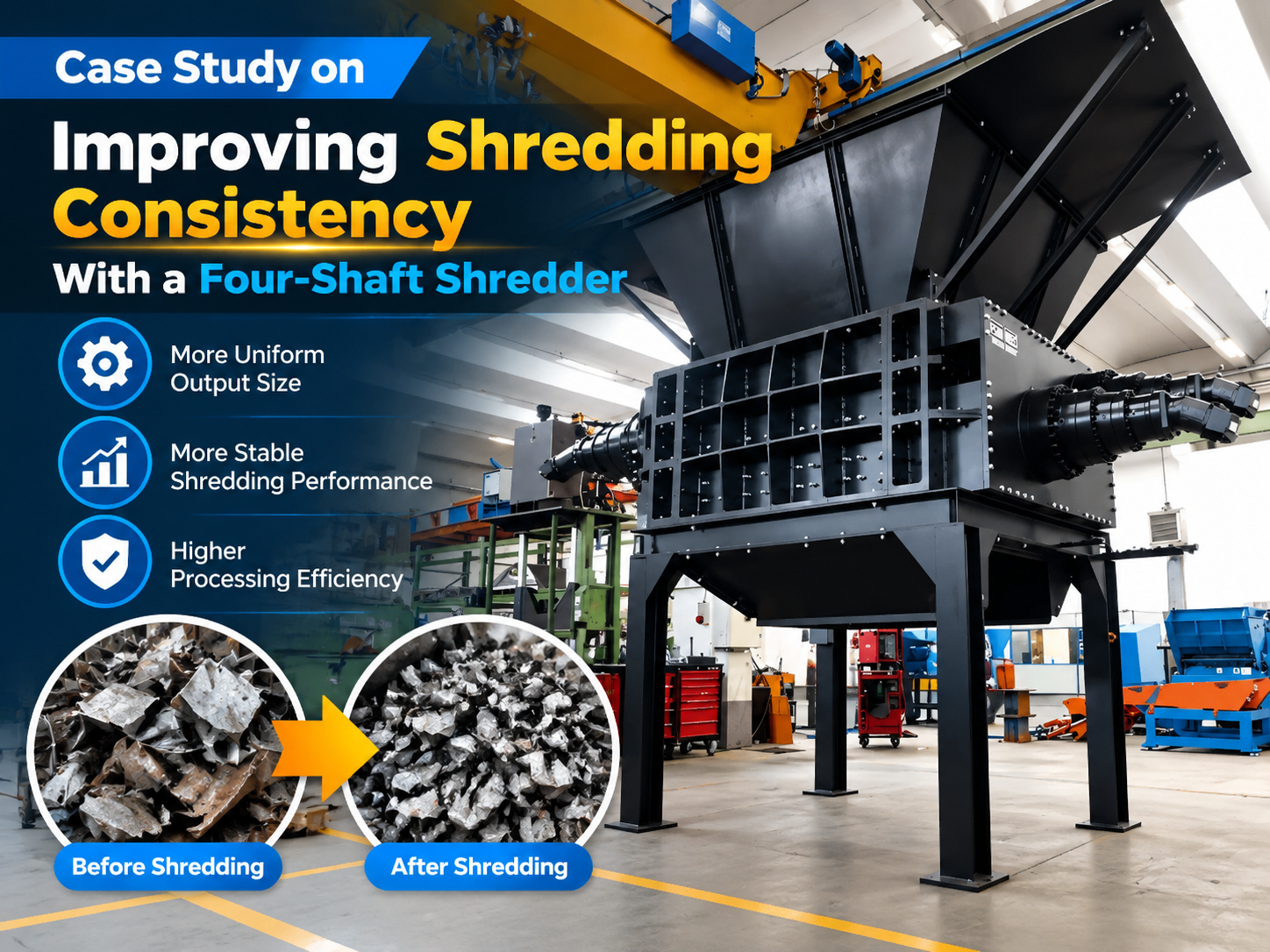
In the modern landscape of industrial waste management and metal fabrication, the demand for uniform output size has never been higher. Achieving consistent shredding results is not merely a matter of efficiency; it is a critical requirement for downstream processing, such as smelting, sorting, or compacting. This Case Study On Improving Shredding Consistency A Four-Shaft Shredder explores how HARSLE engineering solutions address the common pitfalls of inconsistent material reduction.
Many industrial facilities struggle with “bridging” or uneven particle sizes when using traditional two-shaft shredders. The transition to a four-shaft configuration represents a significant technological leap. By utilizing two primary cutting shafts and two secondary sizing shafts, operators can achieve a level of precision that was previously unattainable. This article delves into the mechanics, operational strategies, and real-world results of implementing high-performance four-shaft technology.
Consistency in shredding directly impacts the profitability of a recycling operation. When material is shredded to a uniform size, the bulk density increases, transportation costs decrease, and the efficiency of separation equipment—such as magnetic separators or eddy current systems—is maximized. HARSLE has observed that facilities upgrading to four-shaft systems often see a 30% improvement in throughput quality within the first quarter of operation.
Throughout this guide, we will analyze the technical specifications that make this improvement possible. We will look at how torque distribution, blade geometry, and intelligent control systems work in harmony. Whether you are processing e-waste, scrap metal, or complex industrial composites, understanding the nuances of four-shaft shredding is essential for maintaining a competitive edge in the metal fabrication equipment sector.

Key Considerations for Shredding Consistency
The primary challenge in achieving consistent shredding is the heterogeneous nature of industrial waste. Materials vary in hardness, ductility, and size, which can cause standard shredders to stall or produce irregular “long strips” of material. To combat this, the first consideration must be the feed rate control. An automated, load-sensing feed system ensures that the shredding chamber is never overloaded, which prevents the shafts from slowing down and losing the cutting force necessary for uniform shearing.
Blade geometry is another critical factor. In a four-shaft shredder, the interaction between the primary and secondary shafts is designed to create a “scissor effect.” If the blades are worn or improperly spaced, the material will tear rather than shear, leading to jagged edges and inconsistent sizing. Regular inspection of the blade gap is mandatory. HARSLE recommends a strict maintenance schedule where blade clearance is checked every 500 operating hours to ensure the cutting edges remain sharp and effective.
Material moisture and contamination also play a role in consistency. For instance, oily metal scrap can cause slippage within the cutting chamber. By integrating a pre-shredding stage or utilizing specialized serrated blades, operators can improve the “grip” of the shafts. This ensures that even difficult-to-process materials are pulled into the cutting zone with consistent force, preventing the material from “dancing” on top of the shafts.
Finally, the discharge screen size is the ultimate arbiter of consistency. In a four-shaft system, the secondary shafts act as a forced-sizing mechanism. By selecting the correct screen aperture, the operator can dictate the maximum size of the output. However, if the screen is too small, the machine may experience back-pressure. Balancing the screen size with the throughput capacity is a fundamental skill for any plant manager aiming for high-quality output.
Technical Details of Four-Shaft Systems
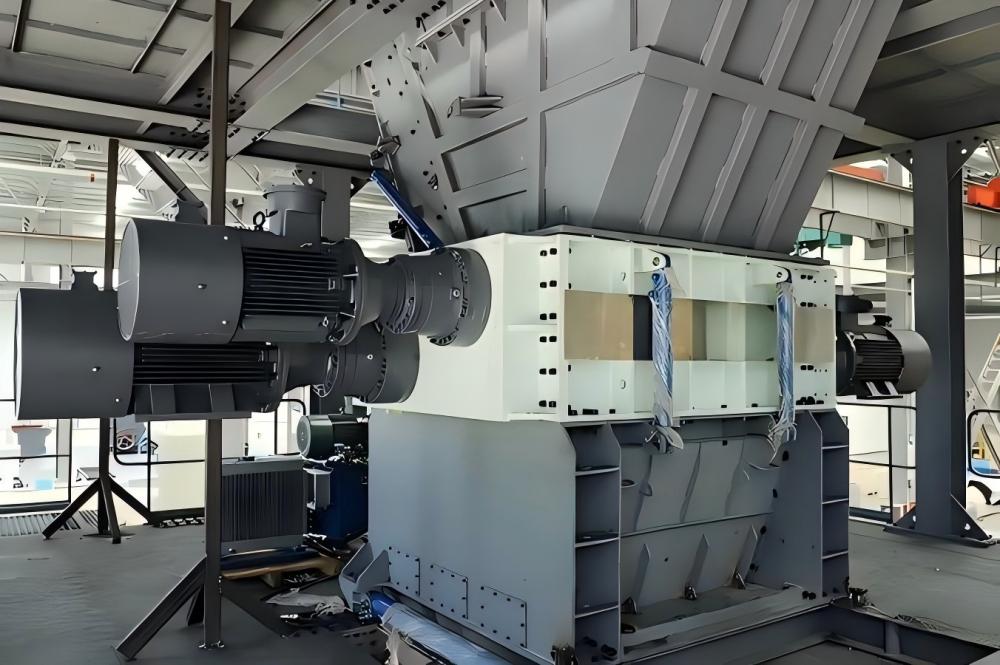
The architecture of a four-shaft shredder is what sets it apart from dual-shaft alternatives. The primary shafts are typically low-speed and high-torque, designed to grab and tear the bulk material. As the material passes through these primary shafts, it is reduced to a manageable size. It then falls into the secondary shafts, which rotate at a slightly higher speed and are equipped with smaller, more densely packed blades. This secondary stage acts as a final “polishing” phase, ensuring that every piece of material meets the required dimensions.
HARSLE’s four-shaft shredders utilize advanced PLC (Programmable Logic Controller) systems to monitor the torque on each shaft independently. If the system detects a hard object that cannot be shredded, the PLC triggers an automatic reverse cycle. This prevents damage to the blades and ensures that the machine remains operational. This intelligent feedback loop is a core component of the Case Study On Improving Shredding Consistency A Four-Shaft Shredder, as it prevents the machine from “choking” on oversized items.
The drive system is equally important. Most high-end four-shaft shredders use planetary gearboxes to deliver massive torque at low speeds. This is essential for metal fabrication equipment where the material might include hardened steel or thick aluminum plates. The gearboxes are designed for continuous duty, meaning they can handle the heat and stress of 24/7 operations without a drop in performance. Proper lubrication and cooling systems are integrated into the frame to maintain the integrity of these components.
Furthermore, the material of the blades themselves—typically high-alloy tool steel—is heat-treated to achieve a specific Rockwell hardness. This hardness must be balanced; if the blades are too hard, they become brittle and prone to chipping. If they are too soft, they wear down too quickly. HARSLE utilizes a proprietary heat-treatment process that ensures the blades maintain their edge profile even after processing thousands of tons of abrasive material, which is vital for maintaining consistent output over the long term.
Selection Advice for Industrial Buyers
When selecting a four-shaft shredder, the first step is to conduct a material analysis. You must know the density, volume, and composition of the waste you intend to process. A shredder designed for plastic or paper will not perform well with heavy-gauge metal scrap. HARSLE provides comprehensive consultation services to help clients match their specific material profile with the correct machine configuration, including blade thickness and shaft speed.
Consider the total cost of ownership rather than just the initial purchase price. This includes energy consumption, spare parts availability, and maintenance labor. A cheaper machine might seem attractive, but if it requires frequent blade replacements or has high downtime, it will cost more in the long run. Look for modular designs where individual shafts or blade stacks can be replaced without dismantling the entire machine. This modularity is a hallmark of high-quality industrial machinery.
Integration with existing infrastructure is also key. Does the shredder need to feed into a conveyor system? Does it require a dust extraction unit? A four-shaft shredder is a powerful piece of equipment that generates significant noise and vibration. Ensure that your facility floor is reinforced to handle the weight and that you have the necessary electrical infrastructure to support the high-torque motors. HARSLE engineers often assist in the layout design to ensure optimal workflow efficiency.
Finally, prioritize manufacturer support. The Case Study On Improving Shredding Consistency A Four-Shaft Shredder highlights that even the best equipment requires expert calibration. Choose a supplier that offers remote diagnostics, readily available spare parts, and on-site training for your operators. A machine is only as good as the team running it, and having access to technical support can be the difference between a profitable operation and a bottleneck.
FAQ
What is the main advantage of a four-shaft shredder over a two-shaft shredder?
The primary advantage is the secondary sizing stage. While a two-shaft shredder is excellent for initial volume reduction, a four-shaft shredder provides a controlled, uniform output size, which is essential for downstream processing and material recovery.
How often should I sharpen the blades on my HARSLE shredder?
The frequency depends on the material being processed. For abrasive metals, we recommend a visual inspection every 200 hours and a professional sharpening or replacement schedule based on the wear patterns observed during these inspections.
Can a four-shaft shredder handle mixed waste?
Yes, four-shaft shredders are highly versatile and are specifically designed to handle heterogeneous waste streams, including mixed metals, plastics, and electronic components, without losing consistency.
What safety features are standard on HARSLE shredders?
Our shredders include emergency stop buttons, automatic reverse functions for overload protection, safety interlocks on access panels, and comprehensive PLC monitoring to prevent mechanical failure.
How does the PLC system improve shredding consistency?
The PLC monitors the load on the shafts in real-time. By adjusting the feed speed and triggering reverse cycles when necessary, it ensures the shredding chamber remains at an optimal capacity, preventing jams and ensuring uniform material flow.
Conclusion
Improving shredding consistency is a multi-faceted challenge that requires a combination of robust hardware and intelligent control systems. As demonstrated in this Case Study On Improving Shredding Consistency A Four-Shaft Shredder, the transition to a four-shaft configuration provides the precision necessary to meet modern industrial standards. By focusing on blade geometry, load-sensing feed systems, and proactive maintenance, facilities can significantly enhance their output quality and operational efficiency.
HARSLE remains committed to advancing the capabilities of metal fabrication equipment. Our four-shaft shredders are engineered to provide the reliability and consistency that modern recycling and manufacturing plants demand. By investing in the right technology and adhering to best practices in maintenance and operation, you can ensure that your shredding process becomes a value-adding component of your production line rather than a source of inconsistency.
We encourage all facility managers and procurement officers to evaluate their current shredding processes against the benchmarks discussed in this article. Whether you are looking to upgrade your existing line or design a new facility from the ground up, understanding the mechanics of four-shaft shredding is the first step toward achieving superior material consistency. Contact the HARSLE technical team today to discuss how our solutions can be tailored to your specific industrial requirements.












