How to Troubleshoot Uneven Cuts on an Alligator Shear: A Comprehensive Industrial Guide


Introduction to Alligator Shear Precision
In the high-stakes world of scrap metal recycling and industrial metal fabrication, the alligator shear stands as a cornerstone of productivity. These robust machines are designed to process heavy-duty steel, rebar, and various profiles with brute force. However, even the most reliable HARSLE alligator shear can occasionally produce uneven or jagged cuts. When this happens, it is not just a minor inconvenience; it is a bottleneck that slows down your entire production line and increases waste.
To troubleshoot uneven cuts on an alligator shear, operators must understand the delicate balance between hydraulic pressure, blade clearance, and structural integrity. An uneven cut often manifests as a burr on the edge of the metal, a diagonal shear line, or the material simply bending rather than snapping cleanly. Identifying the root cause requires a systematic approach, starting from the most common mechanical wear points to more complex hydraulic system diagnostics.
This guide is designed to help maintenance teams and operators navigate the complexities of shear performance. By following these technical steps, you can restore your equipment to factory-standard precision, ensuring that your scrap processing remains profitable and efficient. Whether you are dealing with a minor alignment issue or a more significant mechanical failure, understanding the mechanics of the shear is the first step toward a permanent solution.
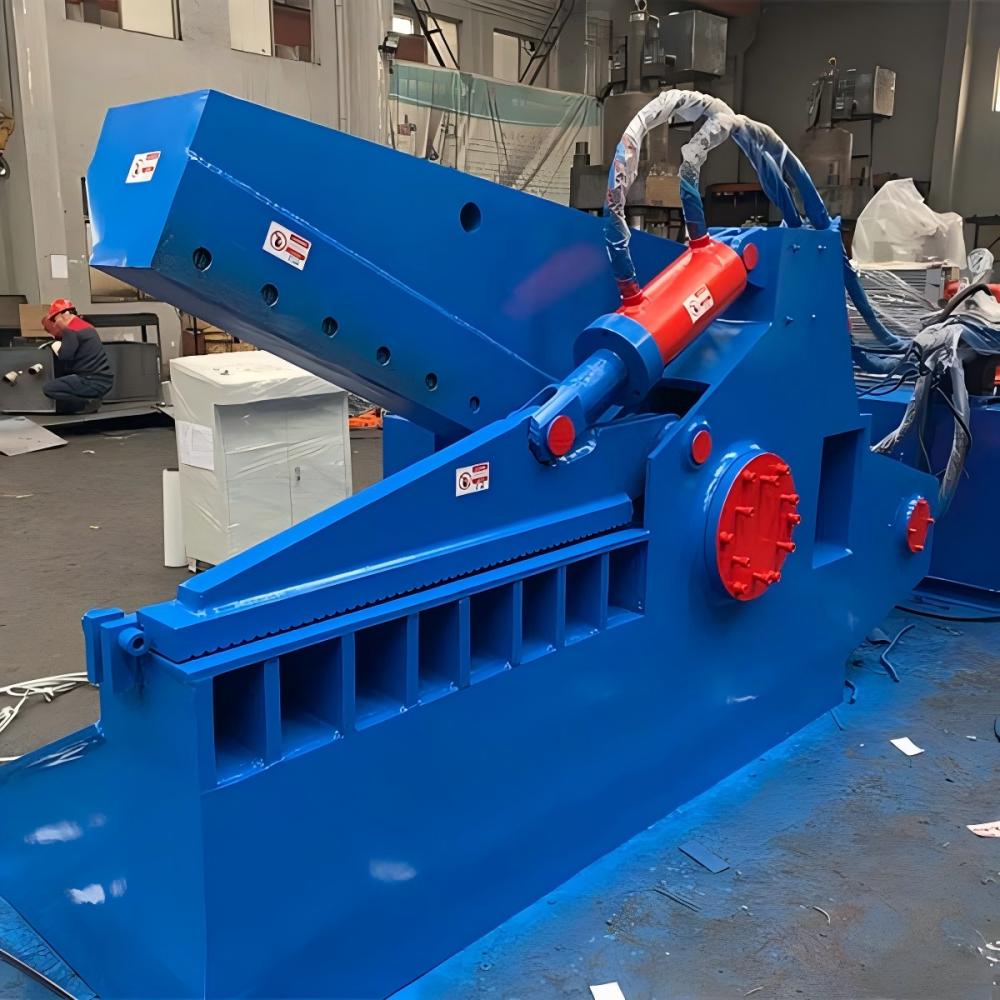
Key Considerations for Shear Performance
Before diving into complex repairs, it is essential to evaluate the operational environment of your alligator shear. Often, uneven cuts are the result of improper material handling or environmental factors rather than internal machine failure. The first consideration is the material being processed. Are you exceeding the shear’s rated capacity? Attempting to cut material that is too thick or too hard for the specific model will inevitably lead to blade deflection and uneven edges.
Secondly, consider the feed angle. The material must be presented to the blades at a consistent, perpendicular angle. If the operator is feeding the metal at an angle, the lateral force exerted on the blades increases significantly, causing them to shift slightly during the cutting stroke. This shifting results in a ‘scissor effect’ where the blades do not meet perfectly, leading to a ragged cut surface.
Thirdly, lubrication plays a vital role. The pivot pin and the sliding surfaces of the shear head require regular greasing. If these areas are dry, the shear head may experience ‘stick-slip’ motion, where the head moves in jerky increments rather than a smooth, continuous stroke. This lack of fluidity is a common culprit when trying to troubleshoot uneven cuts on an alligator shear.
Finally, check the foundation of the machine. Alligator shears generate immense vibration during the cutting cycle. If the machine is not securely anchored to a level, reinforced concrete pad, the entire frame may flex during the cut. Even a millimeter of frame deflection can cause the blades to misalign at the point of contact, resulting in a poor-quality cut that worsens as the blade wears down.
Technical Details: Blade Clearance and Alignment
The most critical technical factor when you troubleshoot uneven cuts on an alligator shear is the blade clearance. Blade clearance refers to the gap between the upper (moving) blade and the lower (fixed) blade. If this gap is too wide, the material will be pulled into the space between the blades rather than being sheared, resulting in a bent, mangled edge. If the gap is too narrow, the blades may strike each other, causing catastrophic damage to the cutting edges.
To adjust the clearance, you must first ensure the machine is locked out and tagged out for safety. Use a feeler gauge to measure the gap along the entire length of the blades. For most standard steel applications, the clearance should be approximately 5% to 10% of the thickness of the material being cut. If you notice the gap is inconsistent, you may need to adjust the blade shims or the guide bolts that hold the blades in place.
Blade sharpness is equally important. Over time, the cutting edge of the blade will round off. A dull blade requires significantly more force to penetrate the metal, which increases the likelihood of the material shifting during the cut. Inspect the blades for chipping or ‘rolling’ of the edge. If the edges are dull, they must be removed and reground or replaced. Always ensure that the blades are shimmed correctly after reinstallation to maintain the proper clearance.
Furthermore, check the pivot pin assembly. The pivot pin is the heart of the alligator shear’s motion. If the pin or the bushings are worn, the shear head will have ‘play’ or ‘slop.’ This lateral movement means that even if the blades are perfectly aligned at the start of the stroke, they will drift apart as the pressure increases. Replacing worn bushings is a standard maintenance procedure that often resolves persistent uneven cutting issues.

Hydraulic System Diagnostics
When mechanical adjustments fail to resolve the issue, the problem often lies within the hydraulic system. The alligator shear relies on a high-pressure hydraulic cylinder to drive the cutting head. If the hydraulic pressure is inconsistent, the speed and force of the cut will fluctuate, leading to uneven results. Start by checking the hydraulic oil level and the condition of the oil. Contaminated or degraded oil can cause the pump to cavitate or the valves to stick.
Next, inspect the hydraulic cylinder seals. If the seals are leaking internally, the cylinder will not be able to maintain the necessary pressure throughout the entire stroke. This is often characterized by a cut that starts clean but becomes ragged or incomplete toward the end of the stroke. A pressure gauge test can confirm if the system is reaching the manufacturer’s specified PSI during the cutting cycle.
The relief valve is another component to investigate. If the relief valve is set too low, the machine will ‘bypass’ pressure when it encounters resistance, preventing it from completing a clean cut through thicker materials. Conversely, if the valve is faulty, it may cause pressure spikes that damage the structural components of the shear. Ensure that the relief valve is calibrated according to the HARSLE technical manual.
Finally, check the hydraulic hoses and fittings for any signs of restriction or bulging. A kinked hose or a partially blocked filter can restrict the flow of hydraulic fluid, leading to a sluggish cutting stroke. A consistent, smooth stroke is mandatory for a clean cut. If the shear head hesitates or slows down mid-cut, the material has more time to deform before the blades fully penetrate, resulting in an uneven edge.
Selection Advice: Choosing the Right Shear for Your Needs
When you are in the market for a new alligator shear, preventing uneven cuts starts with selecting the right machine for your specific application. HARSLE offers a variety of models, each designed for different material types and volumes. If you are processing heavy structural steel, you need a machine with a reinforced frame and a high-torque hydraulic system. Choosing an undersized machine will lead to constant maintenance issues and poor cut quality.
Consider the blade length and the opening size. A larger opening allows for more versatile material processing, but it also requires a more robust pivot assembly to maintain alignment. If your primary goal is high-speed processing of smaller rebar, a smaller, faster-cycling shear may be more efficient. Always consult with a HARSLE representative to match your material throughput requirements with the correct machine specifications.
Look for features like adjustable blade clearance and automatic lubrication systems. These features significantly reduce the time required to troubleshoot uneven cuts on an alligator shear, as they allow for easier maintenance and more consistent performance. A machine that is easy to maintain is a machine that stays in production longer.
Finally, consider the availability of spare parts and technical support. Industrial machinery is a long-term investment. Choosing a manufacturer like HARSLE ensures that you have access to genuine replacement blades, hydraulic components, and expert guidance. When a machine goes down or starts producing poor-quality cuts, having a reliable support network is just as important as the machine’s initial build quality.
FAQ: Common Troubleshooting Questions
- Q: Why does my alligator shear leave a burr on the cut metal?
A: A burr is usually a sign of excessive blade clearance or dull blades. Check your blade gap and sharpen or replace the blades as necessary. - Q: How often should I check the blade clearance?
A: For high-volume operations, we recommend checking blade clearance weekly. For lower-volume use, a monthly inspection is sufficient. - Q: Can I use any hydraulic oil in my HARSLE shear?
A: No, always use the hydraulic oil grade specified in your user manual. Using the wrong viscosity can affect the speed and pressure of the cutting stroke. - Q: What should I do if the shear head feels loose?
A: A loose shear head indicates worn pivot pins or bushings. These should be replaced immediately to prevent further damage to the blades and the frame. - Q: Is it normal for the machine to vibrate during a cut?
A: Some vibration is normal, but excessive shaking suggests the machine is not properly anchored or that the material is being fed incorrectly.
Conclusión
Troubleshooting uneven cuts on an alligator shear is a process of elimination that requires attention to detail and a commitment to regular maintenance. By focusing on the three pillars of shear performance—mechanical alignment, hydraulic consistency, and proper operational technique—you can ensure that your HARSLE equipment continues to deliver clean, precise cuts for years to come. Remember that the quality of your output is a direct reflection of the care you put into your machinery.
If you find that you have exhausted these troubleshooting steps and are still experiencing issues, do not hesitate to contact the HARSLE technical support team. Our experts are equipped to handle complex diagnostics and can provide the specific guidance needed to get your production line back to peak efficiency. Investing time in proper maintenance today will save you significant downtime and repair costs in the future.
Ultimately, the alligator shear is a workhorse of the metal fabrication industry. By mastering the art of troubleshooting and maintaining your equipment, you turn a potential liability into a reliable asset. Keep your blades sharp, your hydraulic system clean, and your machine securely anchored, and you will consistently achieve the high-quality results that your business demands.