How Bale Size Affects Horizontal Baler Price and Production Efficiency: A Comprehensive Guide

Price Range Overview
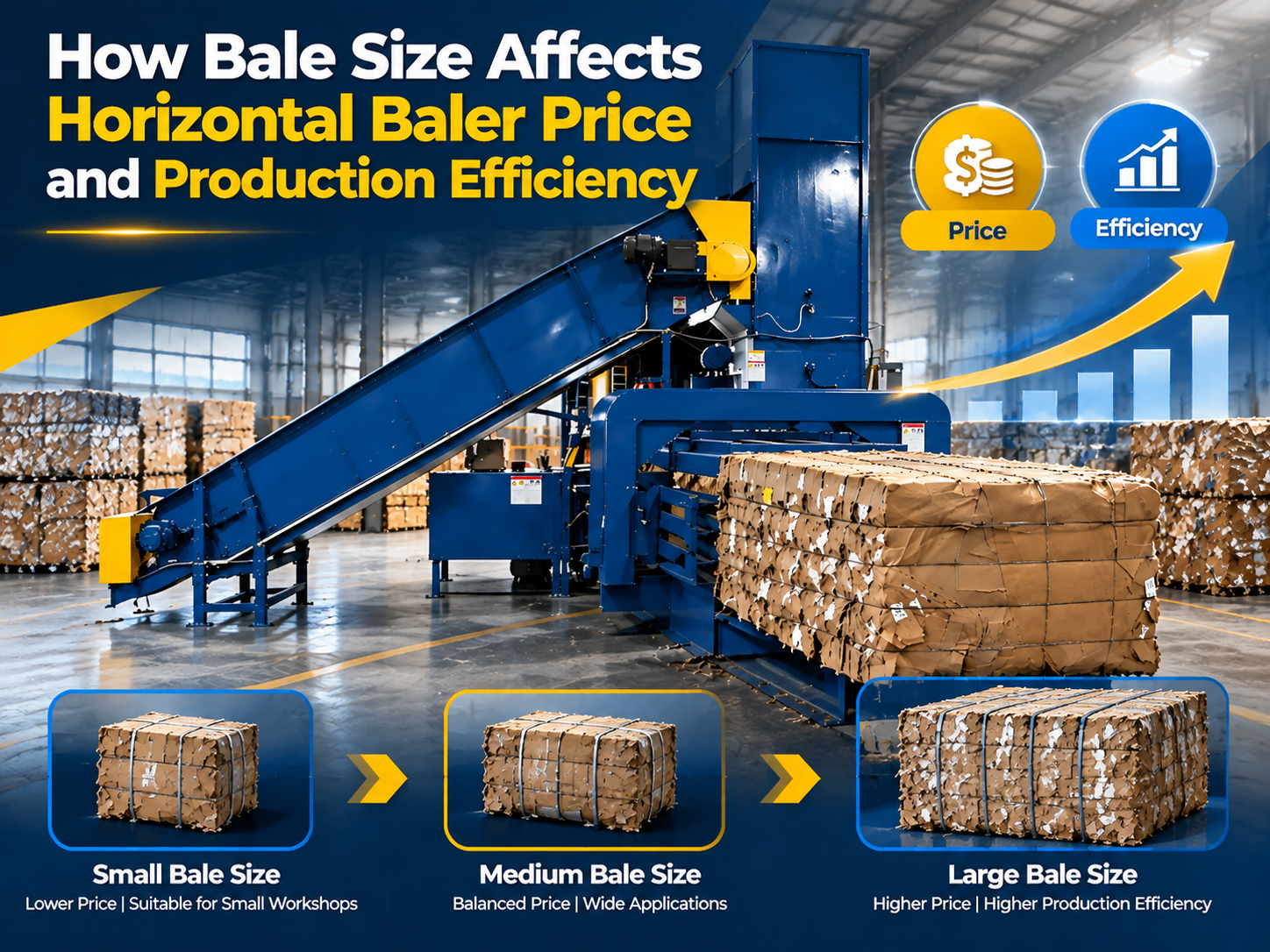
When investing in industrial waste management, understanding how bale size affects horizontal baler price and production efficiency is the first step toward a successful procurement strategy. Horizontal balers are significant capital investments, with prices typically ranging from $25,000 for entry-level semi-automatic models to upwards of $250,000 for fully automated, high-throughput systems. The price is rarely a flat fee; it is a reflection of the engineering required to compress specific volumes of material into standardized, transportable bales.
Small-scale operations often look at compact horizontal balers that produce bales in the 300-500 lb range. These machines are priced lower because they require less structural steel, smaller hydraulic cylinders, and lower-horsepower motors. As you move up the spectrum to mid-sized balers producing 800-1,200 lb bales, the price increases due to the need for reinforced chambers and more robust tying systems. These machines are designed for facilities that process significant volumes of cardboard, plastic, or non-ferrous metals daily.
High-capacity, fully automatic horizontal balers represent the top tier of the price range. These machines are engineered to produce mill-sized bales—often exceeding 1,500 lbs—which are the industry standard for maximizing shipping container capacity. The cost here is driven by advanced PLC controls, automated wire-tying mechanisms, and heavy-duty shear blades capable of cutting through oversized material. Investing in these systems is a strategic decision to reduce logistics costs over the long term.
It is essential to view the price not just as an upfront cost, but as a function of the machine’s duty cycle. A machine designed for larger bales must be built with thicker plate steel to withstand the immense psi (pounds per square inch) required for compaction. When evaluating quotes, HARSLE recommends looking at the ‘cost-per-ton’ of processed material rather than just the sticker price of the machine. A more expensive, larger-bale machine often pays for itself faster by reducing the number of truckloads required to move your waste.
Main Cost Drivers
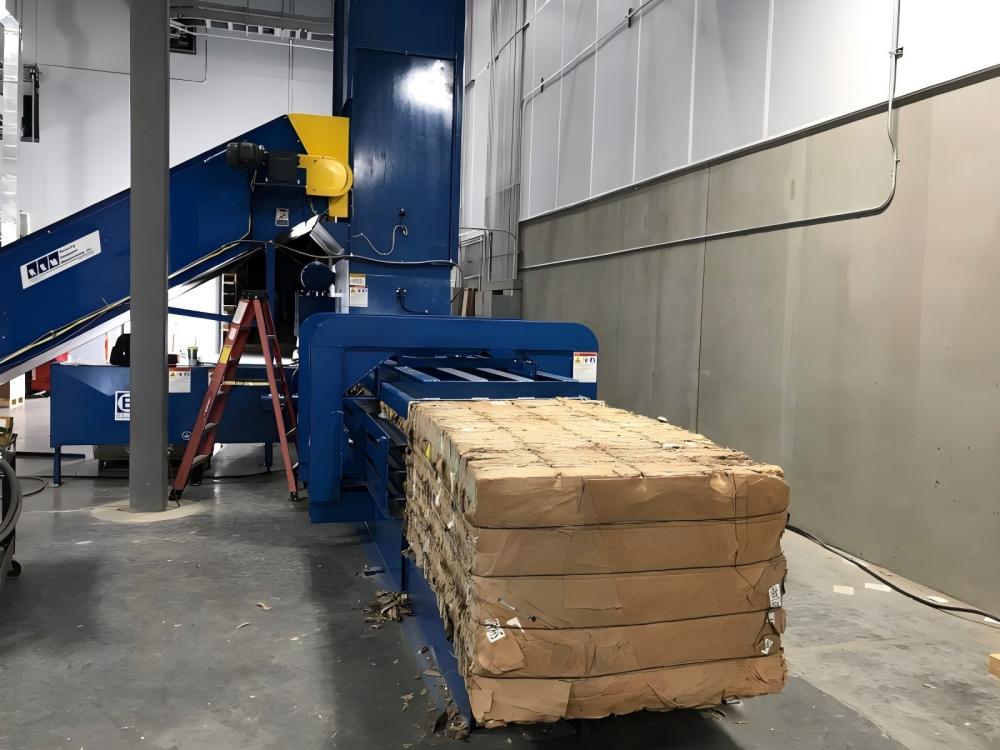
The primary factor influencing the cost of a horizontal baler is the structural integrity required to handle the force of compression. To achieve a specific bale size, the machine must exert a calculated amount of force. If you are baling high-density materials like aluminum cans or thick corrugated cardboard, the chamber must be reinforced to prevent bowing or structural failure. This requires high-grade steel and precision welding, which directly impacts the manufacturing cost.
Hydraulic power is another significant cost driver. The size of the hydraulic pump, the diameter of the cylinder, and the capacity of the oil reservoir are all dictated by the desired bale size and density. Larger bales require longer stroke lengths and higher pressure to ensure the material is compacted uniformly. HARSLE utilizes high-efficiency hydraulic systems that balance power with energy consumption, but the initial cost of these components remains a major portion of the machine’s total value.
The automation level of the tying system is perhaps the most overlooked cost driver. Manual tying systems are cheaper but require significant labor, which increases your operational costs over time. Automatic wire-tying systems, which are essential for high-production environments producing large, dense bales, involve complex mechanical assemblies. These systems must be perfectly synchronized with the ram movement, requiring sophisticated sensors and control software that add to the initial investment price.
Finally, the throughput capacity—the amount of material the machine can process per hour—is inextricably linked to bale size. A machine designed to produce large bales quickly requires a larger feed opening and a faster ram cycle time. This necessitates a more powerful motor and a more robust electrical system. When you pay for a larger baler, you are paying for the ability to process more material in less time, which is the cornerstone of industrial production efficiency.
Configuration Impact
Configuration plays a vital role in how bale size affects horizontal baler price and production efficiency. A standard horizontal baler can be configured with various feed systems, such as conveyor belts, air-conveying systems, or hopper-fed setups. If your goal is to produce large, uniform bales, the feed system must be capable of delivering a consistent volume of material to the chamber. An inconsistent feed can lead to uneven bale density, which can cause issues during transport or storage.
The shear blade configuration is another critical aspect. For facilities processing bulky materials, a heavy-duty shear blade is necessary to cut off material that extends beyond the chamber. This configuration prevents ‘bridging’ and ensures that every bale is the correct size and weight. The quality and hardness of the shear blade material significantly influence the machine’s price, as high-quality alloys are required to maintain sharpness and reduce maintenance frequency.
Control systems are the ‘brains’ of the operation. Modern horizontal balers from HARSLE feature programmable logic controllers (PLCs) that allow operators to adjust bale length, density, and tying frequency with precision. These configurations allow a single machine to produce different bale sizes for different end-markets. While a more advanced PLC system increases the initial price, it provides the flexibility to adapt to changing market demands, which is a major advantage for production efficiency.
Environmental and safety configurations also impact the final price. For instance, if the baler is to be installed outdoors, it requires weather-resistant enclosures and specialized heating or cooling systems for the hydraulic oil. Safety features, such as light curtains, emergency stop zones, and automated gate locks, are non-negotiable in modern industrial settings. These features ensure that the machine operates safely at high speeds, protecting your workforce while maintaining high output levels.
Hidden Costs
When calculating the total cost of ownership, it is vital to look beyond the purchase price. Installation is a significant hidden cost. Large horizontal balers often require specialized concrete pads, heavy-duty electrical upgrades, and professional rigging services. If the machine is not installed on a perfectly level surface, the structural integrity of the baler can be compromised over time, leading to premature wear and expensive repairs.
Maintenance and consumables are ongoing costs that vary based on the machine’s size and usage. Larger balers use more hydraulic fluid, require more frequent filter changes, and consume more baling wire. If you choose a machine that is undersized for your volume, you will find yourself performing maintenance more frequently, which leads to increased downtime. This is a classic example of how bale size affects horizontal baler price and production efficiency—buying a machine that is too small for your needs is often more expensive in the long run.
Energy consumption is another factor that is often underestimated. A high-throughput baler with a large motor will have a higher electrical draw. However, if that machine processes your waste in two hours instead of eight, the total energy cost per ton may actually be lower. It is important to analyze the energy efficiency ratings of the motor and the hydraulic system to ensure that your operational costs remain predictable as your production volume grows.
Training and labor costs should also be factored into your budget. A more complex, automated machine may require a higher level of operator skill. While this might seem like a disadvantage, it usually results in higher production efficiency and fewer errors. Investing in staff training ensures that your team can maximize the machine’s capabilities, reducing the risk of accidental damage and ensuring that the bales produced meet the exact specifications required by your recycling partners.
ROI Calculation
Calculating the Return on Investment (ROI) for a horizontal baler requires a clear understanding of your current waste disposal costs versus the potential revenue from baled materials. Start by calculating your current ‘tipping fees’—the cost you pay to have waste hauled away. By baling your material into dense, standardized bales, you can significantly reduce the number of hauls required, as you are shipping ‘material’ rather than ‘air’.
Next, consider the market value of your baled material. Clean, high-density bales of cardboard, plastic, or metal are commodities that recycling centers are willing to pay for. The price you receive per ton is directly related to the quality and size of the bale. A mill-sized bale is the most valuable because it fits perfectly into standard shipping containers, minimizing the logistics costs for the buyer. This is where the ‘Bale Size Affects Horizontal Baler Price and Production Efficiency’ principle becomes a profit driver.
To calculate the ROI, subtract your total operational costs (labor, electricity, maintenance, wire) from the sum of your savings (reduced hauling fees) and your revenue (bale sales). Divide the total investment cost by this monthly net benefit to determine your payback period. Most industrial horizontal balers have a payback period of 18 to 36 months, depending on the volume of material processed and the efficiency of the machine.
HARSLE suggests performing a ‘waste audit’ before purchasing. Measure your daily volume of waste, the density of the material, and the space available for storage. By matching these metrics to the right baler size, you ensure that your ROI is maximized. A machine that is too large will sit idle, wasting capital, while a machine that is too small will create a bottleneck in your production line. Precision in selection is the key to a fast and sustainable return on your investment.
Buying Advice
When you are ready to purchase, start by defining your material stream. Are you baling corrugated cardboard (OCC), PET plastic, or aluminum scrap? Each material has a different ‘memory’ and density, which dictates the amount of force required to create a stable bale. A baler that works perfectly for cardboard may struggle with the spring-back effect of plastic, requiring a different ram design or higher compression force.
Consider the future growth of your facility. If you anticipate an increase in production volume, it is often wiser to invest in a slightly larger machine now than to replace an undersized one in three years. A horizontal baler is a long-term asset, often lasting 10 to 20 years with proper maintenance. Think about your five-year plan and ensure the machine you choose can handle the projected increase in throughput.
Always request a demonstration or a site visit to see the machine in action. Seeing how the machine handles your specific material is the best way to verify its performance. Ask the manufacturer about the availability of spare parts and the quality of their technical support. A machine is only as good as the service behind it; having a reliable partner like HARSLE ensures that your production remains uninterrupted.
Finally, do not ignore the importance of the baling wire. The type of wire—whether it is galvanized, black annealed, or high-tensile—must match the requirements of your baler and the material being processed. Using the wrong wire can lead to broken bales, which are a nightmare to handle and can result in penalties from your recycling partners. Always follow the manufacturer’s recommendations for consumables to maintain the integrity of your bales and the longevity of your machine.
Часто задаваемые вопросы
How does bale size affect horizontal baler price and production efficiency?
Bale size directly dictates the structural requirements of the baler. Larger bales require more steel, more powerful hydraulics, and more robust tying systems, which increases the initial price. However, larger, standardized bales increase production efficiency by reducing the number of truckloads needed for transport and maximizing the value of the material sold to recyclers.
What is the difference between a semi-automatic and a fully automatic baler?
A semi-automatic baler requires an operator to manually tie off the bales, which is labor-intensive and limits throughput. A fully automatic baler uses an integrated wire-tying system that operates without manual intervention, allowing for continuous, high-speed production, which is essential for large-scale operations.
How do I determine the right baler size for my facility?
The right size is determined by your daily volume of waste, the type of material, and your available floor space. A waste audit is recommended to measure your throughput. HARSLE experts can help you analyze these factors to select a machine that balances your budget with your production goals.
What maintenance is required for a horizontal baler?
Regular maintenance includes checking hydraulic fluid levels, inspecting hoses for leaks, cleaning the photo-eyes and sensors, sharpening or replacing shear blades, and ensuring the wire-tying mechanism is lubricated and free of debris. Following a strict maintenance schedule is critical to preventing downtime.
Can a horizontal baler process different types of materials?
Yes, many horizontal balers are versatile. However, you must ensure the machine has the correct pressure settings and shear blade configuration for the specific materials you intend to process. Some materials, like aluminum, require higher compression forces than cardboard.