
Four-Shaft Shredder Case Study: Handling Tough Industrial Scrap Materials

Introduction to Industrial Shredding Efficiency
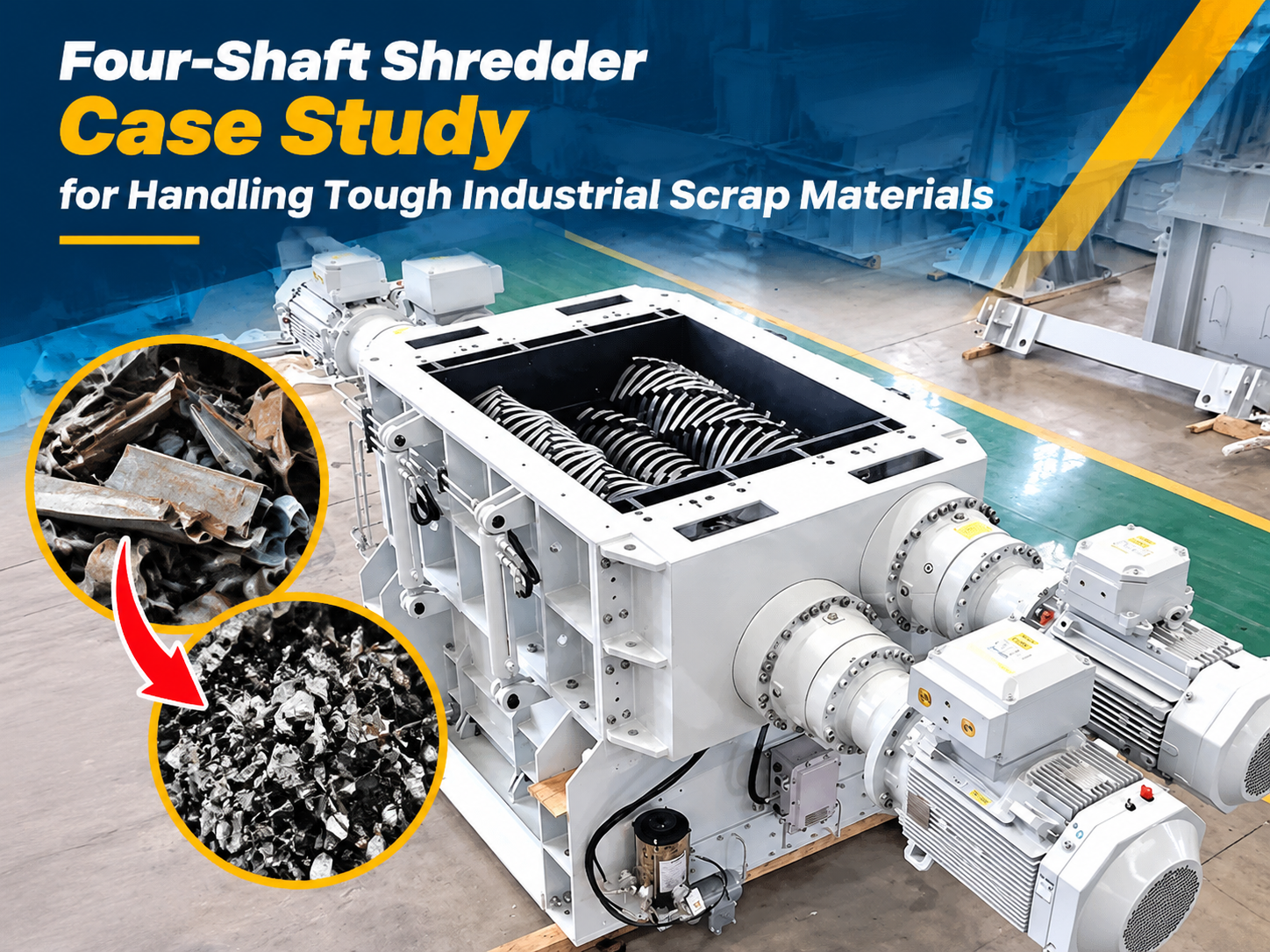
In the modern landscape of metal fabrication, the management of scrap material is not merely a logistical necessity; it is a critical component of operational profitability. As manufacturing facilities scale, the volume of high-tensile steel, aluminum offcuts, and complex composite scrap grows exponentially. This is where the implementation of a high-performance shredding solution becomes vital. This Four-Shaft Shredder Case Study for Handling Tough Industrial Scrap Materials examines how HARSLE’s advanced engineering addresses the challenges of volume reduction and material recovery.
The primary challenge for many fabrication plants is the sheer density and toughness of industrial waste. Traditional two-shaft shredders often struggle with high-alloy materials, leading to frequent jamming, excessive downtime, and increased maintenance costs. By transitioning to a four-shaft configuration, facilities can achieve a more consistent output size and superior torque distribution, which is essential for processing the most demanding scrap streams found in today’s industrial environments.
HARSLE has consistently pushed the boundaries of shredding technology, focusing on durability, throughput, and safety. This article serves as an in-depth exploration of how our four-shaft systems perform under pressure. We will analyze real-world scenarios where our equipment has transformed waste management from a bottleneck into a streamlined, value-added process. Whether you are dealing with bulky metal skeletons or dense bundles of wire, understanding the mechanics of four-shaft shredding is the first step toward operational excellence.
As we delve into this Four-Shaft Shredder Case Study Handling Tough Industrial Scrap Materials, we will look at the technical specifications that differentiate our machines from standard market offerings. We will also provide a comprehensive guide on selecting the right equipment for your specific scrap profile, ensuring that your investment yields the highest possible return on investment (ROI) while maintaining safety standards across your facility.
Key Considerations for Industrial Scrap Management
When evaluating the need for a four-shaft shredder, facility managers must first conduct a thorough audit of their scrap stream. Not all scrap is created equal; the tensile strength, shape, and volume of the material dictate the required torque and cutting force. A common mistake is underestimating the ‘spring-back’ effect of certain high-strength alloys, which can cause significant stress on the shredder’s shafts and bearings if the machine is not properly specified.
Another critical consideration is the desired output size. In many recycling workflows, the scrap must be reduced to a specific particle size to be accepted by smelters or secondary processors. Four-shaft shredders excel here because they utilize a screen system that forces material to be shredded until it reaches the desired dimensions. This secondary sizing capability is a major advantage over two-shaft systems, which often produce irregular, oversized chunks that require secondary processing.
Space constraints and integration into existing production lines are also major factors. A shredder should not be an isolated island; it should be part of a cohesive material handling system. This includes conveyors, magnetic separators, and dust extraction units. HARSLE’s approach involves designing modular systems that can be integrated into existing fabrication workflows with minimal disruption, ensuring that the scrap is moved from the press or laser cutter directly into the shredder.
Finally, the environmental and safety impact of scrap handling cannot be ignored. Manual handling of sharp, jagged metal scrap is a leading cause of workplace injuries. By automating the shredding process, companies significantly reduce the risk of lacerations and musculoskeletal injuries associated with moving heavy scrap bins. Furthermore, efficient shredding allows for better compaction, which reduces the number of truck trips required to haul waste away, thereby lowering the facility’s overall carbon footprint.
Technical Details of HARSLE Four-Shaft Shredders
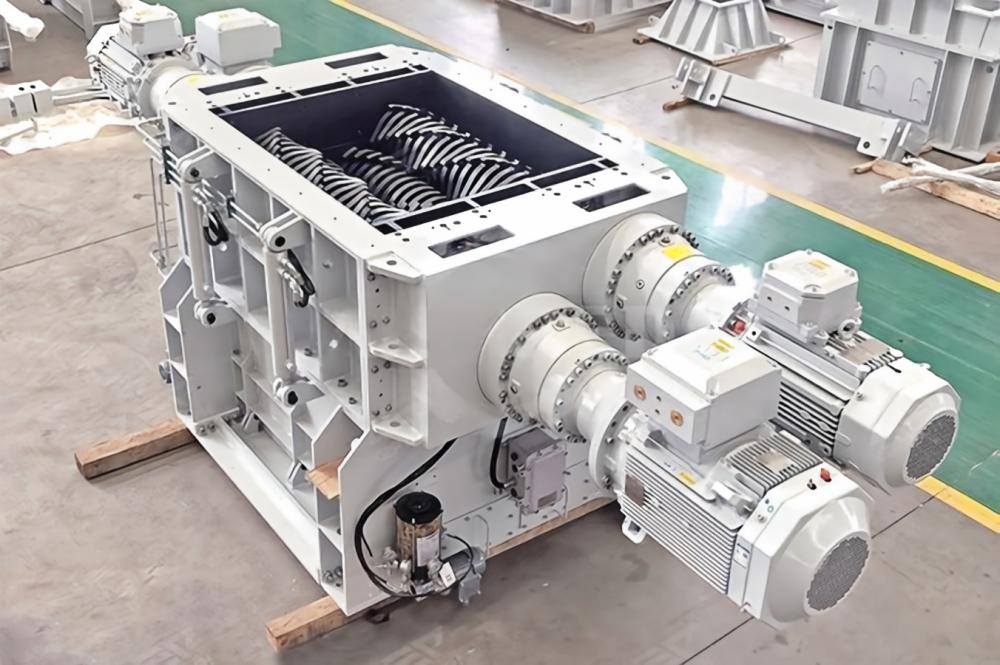
The core of the HARSLE four-shaft shredder lies in its sophisticated gear-driven transmission system. Unlike simpler designs, our four-shaft systems feature two primary shafts and two secondary shafts. The primary shafts are responsible for the initial grabbing and tearing of the material, while the secondary shafts act as a sizing mechanism, ensuring that the material is pulled through the cutting chamber at a controlled rate. This dual-stage action prevents the ‘bridging’ effect common in lower-quality machines.
Material composition is key to our blade design. We utilize high-alloy, heat-treated steel for our cutting discs, which are engineered to withstand the abrasive nature of industrial scrap. These blades are designed with a specific hook geometry that maximizes the ‘bite’ on the material, allowing the machine to pull in dense bundles of wire or thick plate scrap without stalling. The blades are also modular, meaning that if a specific section of the cutting chamber experiences more wear, individual discs can be replaced rather than the entire shaft.
The control system is another area where HARSLE excels. Our shredders are equipped with intelligent PLC (Programmable Logic Controller) systems that monitor the torque on each shaft in real-time. If the machine detects an un-shreddable object—such as a hardened tool steel die or a large piece of tramp metal—it automatically triggers an auto-reverse cycle. This prevents damage to the motor and gearbox, significantly extending the lifespan of the equipment and reducing the frequency of emergency maintenance.
Lubrication and cooling are vital for high-torque industrial machinery. Our four-shaft shredders feature an integrated cooling system that maintains optimal operating temperatures for the hydraulic or electric drive motors. This is particularly important in high-volume environments where the machine may run for multiple shifts per day. By maintaining consistent temperatures, we ensure that the seals and bearings remain lubricated and free from the premature failure often caused by overheating.

Selection Advice: Choosing the Right Shredder
Selecting the right shredder requires a partnership between the buyer and the manufacturer. The first step is to provide a comprehensive sample of your scrap material. HARSLE engineers analyze the material’s density, hardness, and volume to determine the required motor horsepower and shaft speed. A machine that is too small will fail under the load, while a machine that is too large will result in unnecessary capital expenditure and higher energy consumption.
Consider the throughput requirements of your facility. If your fabrication shop operates on a 24/7 basis, you need a machine with a high duty cycle and a robust maintenance schedule. We recommend looking for machines that offer easy access to the cutting chamber for routine inspections. Our HARSLE models are designed with maintenance-friendly access panels, allowing technicians to perform blade checks and lubrication tasks without dismantling the entire unit.
Think about the downstream processing requirements. Are you looking to sell your scrap to a recycler? If so, the purity of the shredded material is paramount. A four-shaft shredder that produces a clean, uniform output is much more valuable to a recycler than a pile of tangled, mixed-material scrap. By producing a high-quality, uniform product, you can often command a higher price for your scrap, turning a waste stream into a revenue stream.
Finally, evaluate the support and service infrastructure of the manufacturer. Industrial shredders are heavy-duty assets that require professional support. HARSLE provides comprehensive training for your operators, ensuring they understand how to manage the machine’s settings for different material types. We also maintain a ready supply of spare parts, ensuring that if a component does wear out, your downtime is kept to an absolute minimum.
Frequently Asked Questions (FAQ)
1. What makes a four-shaft shredder better than a two-shaft model?
A four-shaft shredder provides superior control over the output size due to the secondary shafts acting as a sizing screen. This results in a more uniform product and prevents the machine from jamming on large, bulky items that a two-shaft machine might struggle to pull into the cutting chamber.
2. How often should the blades be sharpened or replaced?
The frequency depends on the type of material being shredded. Abrasive materials like stainless steel will wear blades faster than mild steel. Generally, we recommend a visual inspection every 500 operating hours. With proper maintenance, our high-alloy blades offer an exceptionally long service life.
3. Can the shredder handle non-metal materials?
While our primary focus is metal fabrication scrap, our four-shaft shredders are highly versatile and can handle plastics, wood, and composite materials. However, it is essential to consult with our engineering team to ensure the blade configuration is optimized for your specific material mix.
4. What is the typical ROI for a four-shaft shredder?
ROI is achieved through three main avenues: reduced waste disposal costs, increased revenue from high-quality scrap, and improved operational safety. Many of our clients see a full return on their investment within 18 to 24 months, depending on their scrap volume.
5. Does HARSLE provide installation support?
Yes, we offer full installation and commissioning services. Our team will work with your facility engineers to ensure the shredder is properly integrated into your production line, including electrical and conveyor system synchronization.
Conclusion: Investing in Long-Term Efficiency
In this Four-Shaft Shredder Case Study Handling Tough Industrial Scrap Materials, we have demonstrated that the right equipment is a cornerstone of modern metal fabrication. HARSLE’s commitment to engineering excellence ensures that our four-shaft shredders provide the durability, precision, and reliability required to turn difficult scrap into manageable, valuable resources. By choosing a solution that is tailored to your specific material profile, you are not just buying a machine; you are investing in the long-term efficiency of your entire production facility.
As industrial standards continue to evolve, the ability to process waste efficiently will become an even greater competitive advantage. Whether you are looking to reduce your environmental impact, improve workplace safety, or maximize the revenue potential of your scrap, HARSLE is your partner in industrial machinery. We invite you to reach out to our technical team to discuss your specific scrap management challenges and discover how our four-shaft shredder technology can be the catalyst for your next phase of growth.
Remember that the success of any industrial equipment implementation lies in the details—from the initial material analysis to the ongoing maintenance and operator training. With HARSLE, you have the assurance of a global leader in metal fabrication equipment, dedicated to providing the tools you need to succeed in a demanding market. Let us help you transform your scrap management process today.












