Manual Vs Automatic Scrap Metal Baler Prices: Key Differences

Price Range Overview
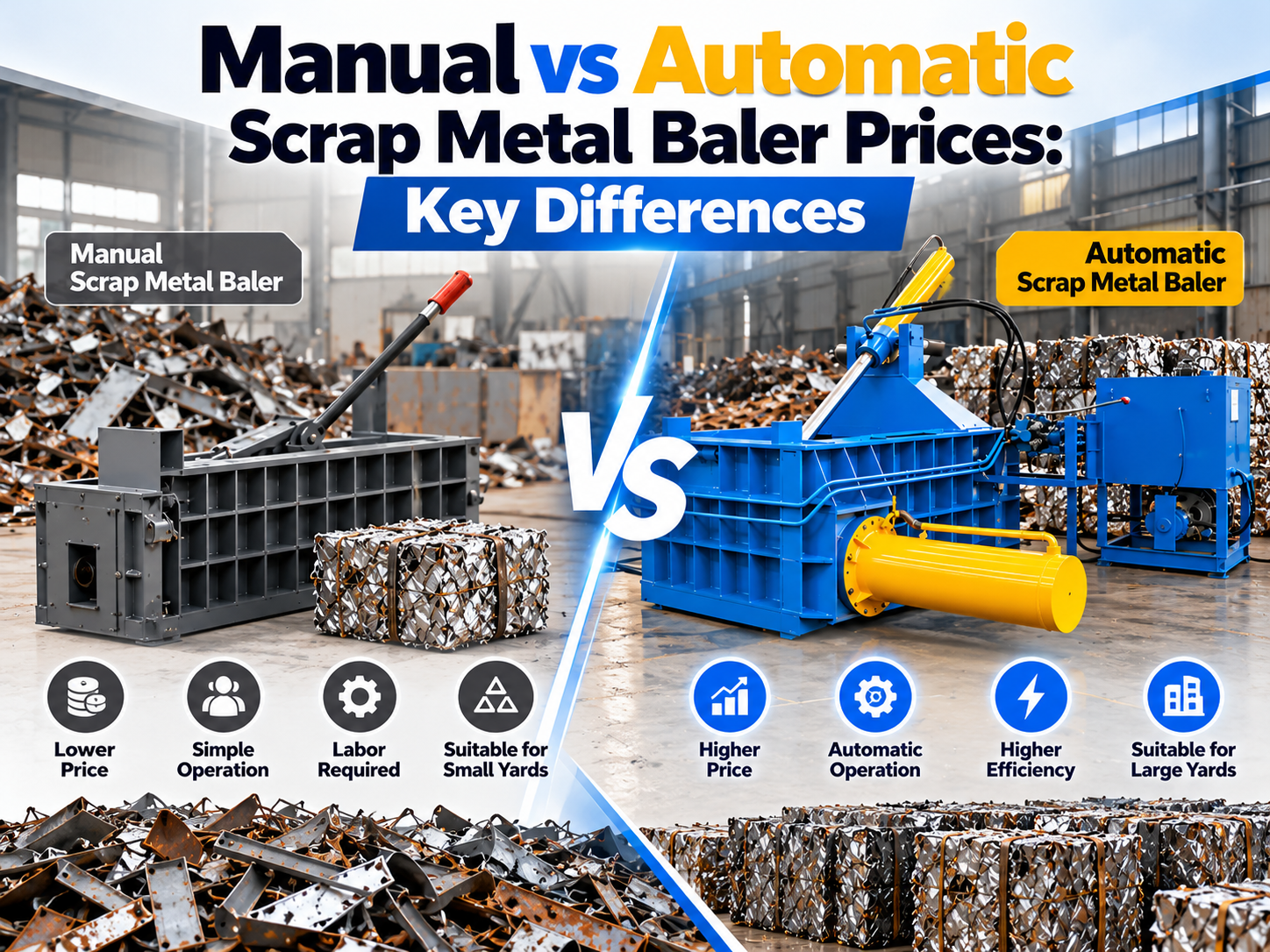
When evaluating the investment required for scrap metal management, understanding the price disparity between manual and automatic balers is the first step for any fabrication facility. Manual scrap metal balers, often categorized as entry-level or low-volume solutions, typically range from $5,000 to $20,000. These machines are designed for smaller workshops where scrap generation is intermittent and labor availability is consistent. The lower price point reflects simpler hydraulic systems, manual door locking mechanisms, and the requirement for an operator to be present during the entire cycle.
Conversely, automatic scrap metal balers represent a significant capital expenditure, with prices ranging from $40,000 to over $150,000 depending on throughput capacity and automation levels. These machines are engineered for high-volume recycling centers, large-scale manufacturing plants, and automotive scrap yards. The higher price tag is justified by sophisticated PLC (Programmable Logic Controller) systems, automated bale ejection, and continuous feeding capabilities that drastically reduce the need for manual intervention.
The market for these machines is highly competitive, and HARSLE provides various configurations that bridge the gap between these two extremes. While the initial investment for an automatic baler is substantially higher, the cost-per-bale over the machine’s lifespan is often lower due to increased efficiency. Buyers must weigh their current scrap volume against their projected growth to determine which price bracket aligns with their operational goals.
It is also important to note that regional pricing, shipping logistics, and installation requirements can influence the final cost. A manual baler is often ‘plug-and-play,’ whereas an automatic system may require professional electrical integration, concrete foundation work, and specialized training for staff. When comparing quotes, ensure you are looking at the ‘total cost of ownership’ rather than just the sticker price of the unit itself.

Main Cost Drivers
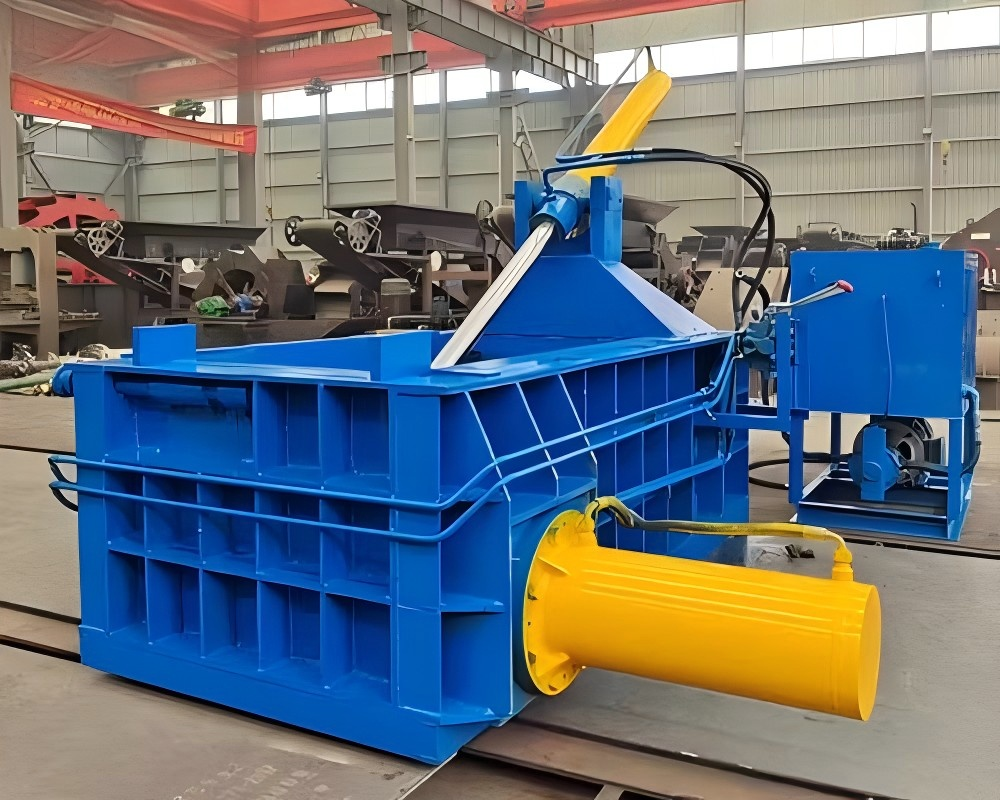
The primary driver of cost in any scrap metal baler is the hydraulic power unit (HPU). In manual balers, the HPU is designed for intermittent use, featuring smaller motors and pumps that are sufficient for occasional cycles. In contrast, automatic balers require robust, heavy-duty hydraulic systems capable of running 24/7. These systems use high-grade seals, larger oil reservoirs, and advanced cooling systems to prevent overheating during continuous operation, which significantly inflates the manufacturing cost.
Structural integrity is another major factor. Automatic balers must withstand immense pressure and constant vibration, necessitating the use of thicker steel plating, reinforced welding, and high-tensile structural components. A manual baler, while durable, does not require the same level of fatigue resistance because it is not subjected to the same cycle frequency. The engineering hours required to design a machine that can operate autonomously without structural failure are a hidden but substantial part of the price.
Automation technology is the third pillar of cost. An automatic baler is essentially a computer-controlled robot. It includes sensors for bale size detection, automated tying systems, and safety interlocks that require complex wiring and software development. The cost of the PLC, the human-machine interface (HMI) screen, and the various proximity sensors adds thousands of dollars to the production cost compared to the simple push-button controls found on manual models.
Finally, the throughput capacity—measured in tons per hour—dictates the size of the machine. Larger machines require more raw material, more labor to assemble, and more complex logistics for shipping. A high-capacity automatic baler is a massive piece of industrial machinery that requires specialized transport, whereas a manual baler can often be shipped on a standard flatbed truck, keeping the delivery and installation costs significantly lower.
Configuration Impact
The configuration of your scrap metal baler can drastically alter the final price. For instance, choosing a vertical manual baler is almost always cheaper than a horizontal manual baler. Vertical models are compact and ideal for facilities with limited floor space, but they require more manual labor to load and tie the bales. Horizontal balers, even in manual configurations, offer higher throughput and are easier to feed using conveyors or forklifts, which increases the price due to the added structural complexity.
When looking at automatic balers, the tying mechanism is a major price differentiator. Manual tying requires an operator to thread wire through the machine after the bale is compressed. Semi-automatic systems might assist with the process, but fully automatic tying systems—which use high-speed needles and knotters to secure the bale without human assistance—are the gold standard. These systems are expensive to manufacture and maintain, but they are essential for high-volume operations where labor costs are the primary concern.
Feed systems also impact the price. A manual baler is typically fed by hand or by a simple chute. An automatic baler, however, is often integrated into a larger material handling system. This might include a vibrating conveyor, a magnetic belt, or a shredder interface. Each of these components adds to the total cost. If your facility requires a custom-engineered feed system to handle specific types of scrap, such as long, stringy turnings or bulky automotive parts, the price will increase further due to the need for custom fabrication.
Safety configurations are non-negotiable but vary in cost. Automatic balers require comprehensive safety guarding, light curtains, and emergency stop systems that meet international industrial standards. While manual balers also require safety features, the complexity of the safety logic in an automatic system is significantly higher. Investing in higher-tier safety configurations not only protects your workers but also reduces insurance premiums and potential liability costs over the life of the machine.
Hidden Costs
When budgeting for a scrap metal baler, many buyers focus solely on the purchase price and overlook the hidden costs of operation. Installation is the most immediate hidden cost. For an automatic baler, you may need to pour a specialized reinforced concrete pad to handle the weight and vibration. You may also need to upgrade your facility’s electrical service to accommodate the high-voltage requirements of a large hydraulic motor, which can cost thousands of dollars in electrician fees and permits.
Maintenance is a recurring cost that differs significantly between the two types. Manual balers are relatively easy to maintain; they have fewer moving parts and simpler hydraulic circuits. A standard maintenance schedule involves checking oil levels, cleaning filters, and inspecting hoses. Automatic balers, however, require a more rigorous maintenance program. You must account for the cost of specialized technicians to service the PLC, calibrate sensors, and maintain the complex tying mechanisms. Neglecting this maintenance can lead to costly downtime.
Consumables are another factor. Automatic balers consume significant amounts of baling wire, which must be of a specific gauge and quality to work with the automated tying head. If you use low-quality wire, you risk jamming the machine, which leads to downtime and potential damage. Furthermore, the energy consumption of a large automatic baler is substantial. Over the course of a year, the electricity bill for a high-volume baler can be a significant portion of your operating budget, whereas a manual baler’s energy usage is negligible.
Finally, consider the cost of training. Operating an automatic baler requires a higher skill set than operating a manual one. You may need to invest in training programs for your staff to ensure they can operate the machine safely and troubleshoot minor issues. If your staff is not properly trained, the risk of machine damage and workplace injury increases, leading to higher insurance costs and potential legal liabilities that are often not factored into the initial purchase decision.
ROI Calculation
Calculating the Return on Investment (ROI) for a scrap metal baler requires a clear understanding of your scrap volume and the current market price for processed scrap. Processed, baled scrap metal commands a significantly higher price from recyclers than loose, uncompressed scrap. By baling your own metal, you are essentially adding value to your waste stream. To calculate ROI, start by determining the price difference between loose scrap and baled scrap per ton, then multiply this by your monthly volume.
Next, subtract the operating costs, including labor, electricity, wire, and maintenance. For a manual baler, the labor cost will be high because the machine requires constant attention. For an automatic baler, the labor cost is low, but the capital expenditure and maintenance costs are high. The ‘break-even’ point for a manual baler is usually reached much faster due to the lower initial investment, but the long-term profitability of an automatic baler is often superior if your volume is high enough to justify the cost.
Consider the ‘hidden’ ROI of space savings. Loose scrap takes up a massive amount of floor space, which is expensive in a manufacturing environment. By baling your scrap, you free up valuable square footage that can be used for production equipment. If your facility is cramped, the ability to consolidate waste into compact, stackable bales can prevent the need for facility expansion, which is a massive financial benefit that should be included in your ROI calculation.
Finally, factor in the reduction in logistics costs. Baled scrap is much denser, meaning you can fit more weight into a single shipping container or truck. This reduces the number of trips required to transport your scrap to the recycling center. If you are currently paying for frequent pickups of loose scrap, the savings on transportation costs alone can often pay for an automatic baler within a few years. Always perform a sensitivity analysis to see how changes in scrap prices might affect your ROI over a 5-to-10-year period.
Buying Advice
When you are ready to purchase, start by conducting a thorough audit of your scrap generation. Track your volume for at least three months to get an accurate average. If your volume is less than 5 tons per month, a manual baler is likely the most cost-effective choice. If you are generating 20 tons or more per month, an automatic baler is almost certainly required to maintain efficiency and safety. For volumes in between, consider the labor availability in your area; if labor is expensive or hard to find, the automation of a higher-end machine may be worth the extra cost.
Always request a demonstration or visit a facility that uses the model you are considering. Seeing the machine in action will give you a better understanding of its cycle time, noise levels, and ease of use. Ask the manufacturer about their support network. A machine is only as good as the service behind it. Ensure that the supplier has local technicians or a robust remote support system to help you troubleshoot issues quickly. HARSLE, for example, provides comprehensive documentation and support to ensure that your investment remains productive.
Don’t be afraid to ask for references. Speak to other business owners who have purchased the same model. Ask them about the machine’s reliability, the actual maintenance costs they have incurred, and whether they would buy the same machine again. This ‘real-world’ feedback is often more valuable than any brochure or sales pitch. It can reveal potential issues with specific components or highlight the benefits of certain configurations that you might not have considered.
Finally, consider the future. Are you planning to expand your production capacity? If you expect your scrap volume to double in the next three years, it may be wiser to invest in an automatic baler now rather than buying a manual one and having to upgrade later. The cost of selling a used machine and buying a new one is significant. Plan for your future needs, not just your current ones, to ensure that your investment in metal fabrication equipment remains a strategic asset for years to come.
FAQ
What is the main difference between manual and automatic balers?
The main difference is the level of human intervention. Manual balers require an operator to load, compress, and tie the bale, while automatic balers handle the entire process from feeding to ejection without constant supervision.
How do I know if I need an automatic baler?
If your scrap volume exceeds 20 tons per month or if your labor costs are high, an automatic baler will provide a better return on investment by reducing manual labor and increasing throughput.
Are there hidden costs in buying a scrap metal baler?
Yes, hidden costs include site preparation (concrete, electrical), specialized maintenance, consumables like baling wire, and operator training. Always factor these into your total budget.
How long do these machines typically last?
With proper maintenance, a high-quality industrial scrap metal baler can last 10 to 20 years. The lifespan depends heavily on the frequency of use and the quality of the maintenance program.
Can HARSLE provide custom configurations?
Yes, HARSLE specializes in tailoring metal fabrication equipment to meet specific client needs, including custom feed systems and integrated safety features for unique scrap types.